
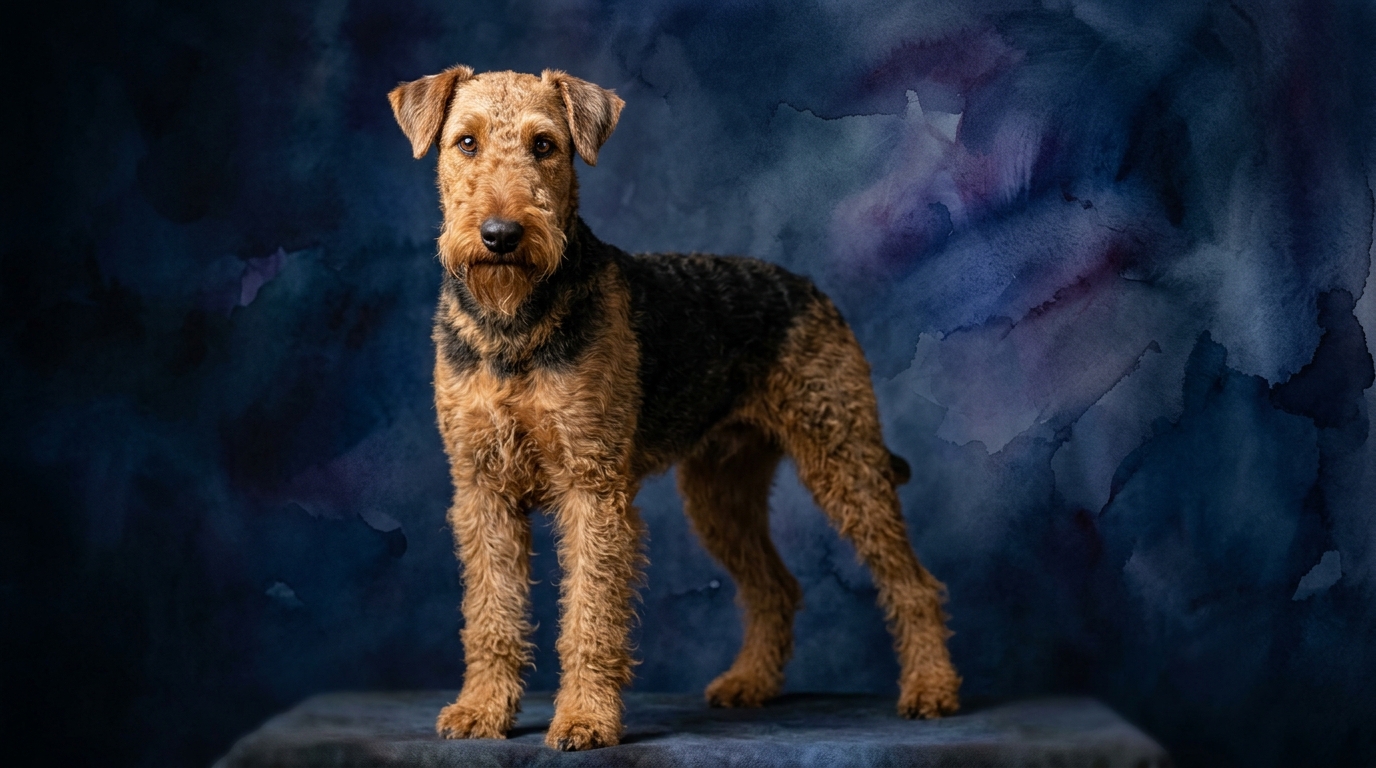
Side-by-Side Cognitive Profile: Rottweiler vs. Airedale Terrier
The Cosmic Pet Pet IQ Lab employs five key dimensions to evaluate canine intelligence, offering a nuanced view of how breeds process information and interact with their environment. For the Rottweiler, ranked #9 on the Coren intelligence scale, their profile paints a picture of robust working intellect: Problem Solving 5/5, Training Speed 4/5, Social Intelligence 4/5, Instinctive Drive 5/5, and Memory 5/5. This suggests a dog capable of complex thought, efficient learning, strong social awareness, profound inherent motivations, and excellent retention of experiences and commands.
In contrast, the Airedale Terrier, a spirited member of the Terrier group and ranked #29 on the Coren scale, presents a different cognitive signature. Their scores are: Problem Solving 4/5, Training Speed 4/5, Social Intelligence 3/5, Instinctive Drive 3/5, and Memory 4/5. While still demonstrating commendable abilities, particularly in problem-solving and training speed, these scores hint at a more independent and less overtly socially driven cognitive style compared to the Rottweiler, with a slightly less pronounced instinctive drive and memory capacity.
Where the Rottweiler Excels Cognitively
The Rottweiler’s cognitive strengths are particularly evident in their superior problem-solving (5/5), instinctive drive (5/5), and memory (5/5). Their exceptional problem-solving ability means they can quickly assess novel situations and devise effective strategies, whether it's navigating a complex obstacle course or figuring out how to access a desired item. This isn't just about brute force; it's about analytical thought applied to practical scenarios, a trait honed over generations of working alongside humans in demanding roles.
Their perfect score in instinctive drive underscores a deep-seated motivation to perform tasks and engage with their environment purposefully. This drive is a powerful engine for learning and work, making them highly receptive to training that taps into their inherent desire to guard, herd, or protect. Coupled with a 5/5 memory, Rottweilers not only grasp new commands and routines quickly but retain them with remarkable consistency, allowing for advanced, multi-stage training and a reliable understanding of boundaries and expectations over their lifetime. Their 4/5 social intelligence also means they are generally adept at interpreting human cues and responding appropriately within a social structure.
Where the Airedale Terrier Demonstrates Unique Cognitive Strengths
While the Airedale Terrier may have lower scores in some dimensions, their cognitive profile reveals distinct strengths, particularly in their robust problem-solving (4/5) and training speed (4/5). An Airedale’s approach to problem-solving is often characterized by a terrier’s independent spirit and tenacity. They are not easily deterred by obstacles and will creatively persist until they find a solution, even if it means thinking outside the box or trying multiple approaches. This isn't always about direct obedience but about self-directed ingenuity, making them adept at tasks requiring independent thought rather than constant human direction.
Their 4/5 training speed, identical to the Rottweiler's, indicates they can learn new commands and routines with efficiency. However, their lower social intelligence (3/5) and instinctive drive (3/5) suggest that while they grasp concepts quickly, their motivation to comply might be more internally driven or dependent on the perceived value of the task to them personally, rather than an innate desire to please. This independent streak, a hallmark of the terrier group, means they excel when tasks engage their natural curiosity and desire for exploration, rather than purely repetitive or compliance-based exercises. Their 4/5 memory ensures they retain what they learn, even if applying it requires more owner persuasion.
Which is Easier to Train and Why?
Despite both breeds scoring 4/5 in training speed, the Rottweiler is generally perceived as easier to train due to significant differences in their social intelligence and instinctive drive. A Rottweiler’s 4/5 social intelligence means they are typically more attuned to human emotions and intentions, fostering a strong desire to cooperate and form a cohesive working unit with their owner. Their 5/5 instinctive drive provides an inherent motivation for purposeful activity, making them eager to engage in structured training that fulfills their natural working inclinations.
The Airedale Terrier, while learning quickly (4/5 training speed), possesses a lower social intelligence (3/5) and instinctive drive (3/5). This often translates into a more independent and sometimes stubborn training approach. An Airedale might understand what you want but will weigh whether it aligns with their own agenda before complying. Their terrier nature means they can be easily distracted by environmental stimuli and require consistent, engaging training methods that acknowledge their spirited independence. Training an Airedale demands patience, creativity, and a strong understanding of positive reinforcement to channel their quick wit effectively, whereas a Rottweiler's inherent desire to work with their handler often streamlines the process.
Cognitive Suitability: Active Owners vs. Relaxed Owners
The Rottweiler’s cognitive profile, characterized by high problem-solving, instinctive drive, and memory, makes them an excellent fit for active owners who relish engaging in structured activities like obedience, protection sports, or advanced trick training. Their profound drive means they thrive on having a job and require consistent mental stimulation to prevent boredom and channel their formidable intellect constructively. Owners who can provide daily challenges, clear leadership, and consistent training will find the Rottweiler a deeply rewarding and cooperative companion, eager to learn and perform complex tasks.
The Airedale Terrier, with strong problem-solving and training speed but lower social intelligence and instinctive drive, suits active owners who appreciate an independent spirit and enjoy varied, less rigid activities. They excel with owners who understand the terrier temperament: intelligent but not always overtly eager to please. Airedales thrive in environments where they can explore, hunt (in a controlled manner), and engage in activities that tap into their innate curiosity and physical prowess, such as agility or earthdog trials. They benefit from owners who can provide consistent, engaging training without expecting robotic obedience, embracing their lively and sometimes willful personality.
The Verdict
Choose the Rottweiler if you seek a highly trainable, deeply bonded working companion eager for structured tasks and consistent mental challenges within a cooperative framework.
Opt for the Airedale Terrier if you appreciate an independent, spirited, and clever companion who thrives on varied activities and requires an owner patient enough to channel their unique terrier tenacity.
🧠 Find Your Pet's IQ Score
Our Pet IQ Lab assessment covers 25+ tests across 5 cognitive dimensions — personalized to your breed.
Take the Full IQ Test →Frequently Asked Questions
Do Rottweilers require more mental stimulation than Airedale Terriers?
Rottweilers, with their 5/5 instinctive drive and memory, generally require consistent and challenging mental stimulation to prevent boredom and channel their working intellect. Airedales also need mental engagement, but their lower instinctive drive means they might be content with more varied, less rigidly structured activities that appeal to their independent curiosity.
Are Airedale Terriers difficult to train because of their independence?
Airedale Terriers are not difficult to train in terms of their ability to learn (4/5 training speed), but their 3/5 social intelligence and instinctive drive mean they can be more independent and less overtly eager to please than some breeds. Training requires patience, consistency, and methods that engage their spirited nature rather than relying solely on compliance.
How does memory impact the training of these two breeds?
The Rottweiler's 5/5 memory means they retain commands and experiences exceptionally well, leading to highly reliable recall and consistent performance over time. The Airedale Terrier's 4/5 memory is still very good, allowing them to learn and remember, but consistent reinforcement might be slightly more critical to overcome their independent streak and ensure reliable application of learned behaviors.