The Cosmic Pet IQ Lab Profiles: Rottweiler vs. American Staffordshire Terrier
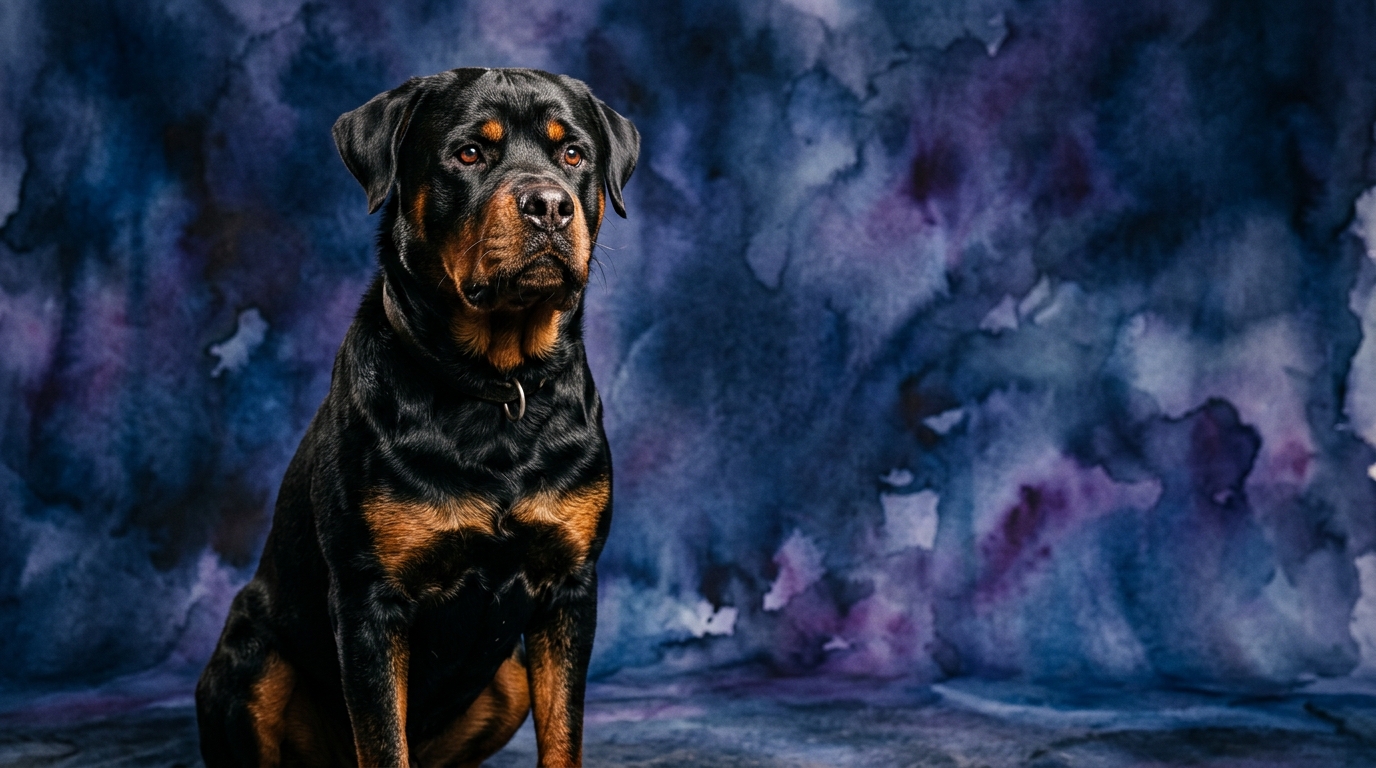
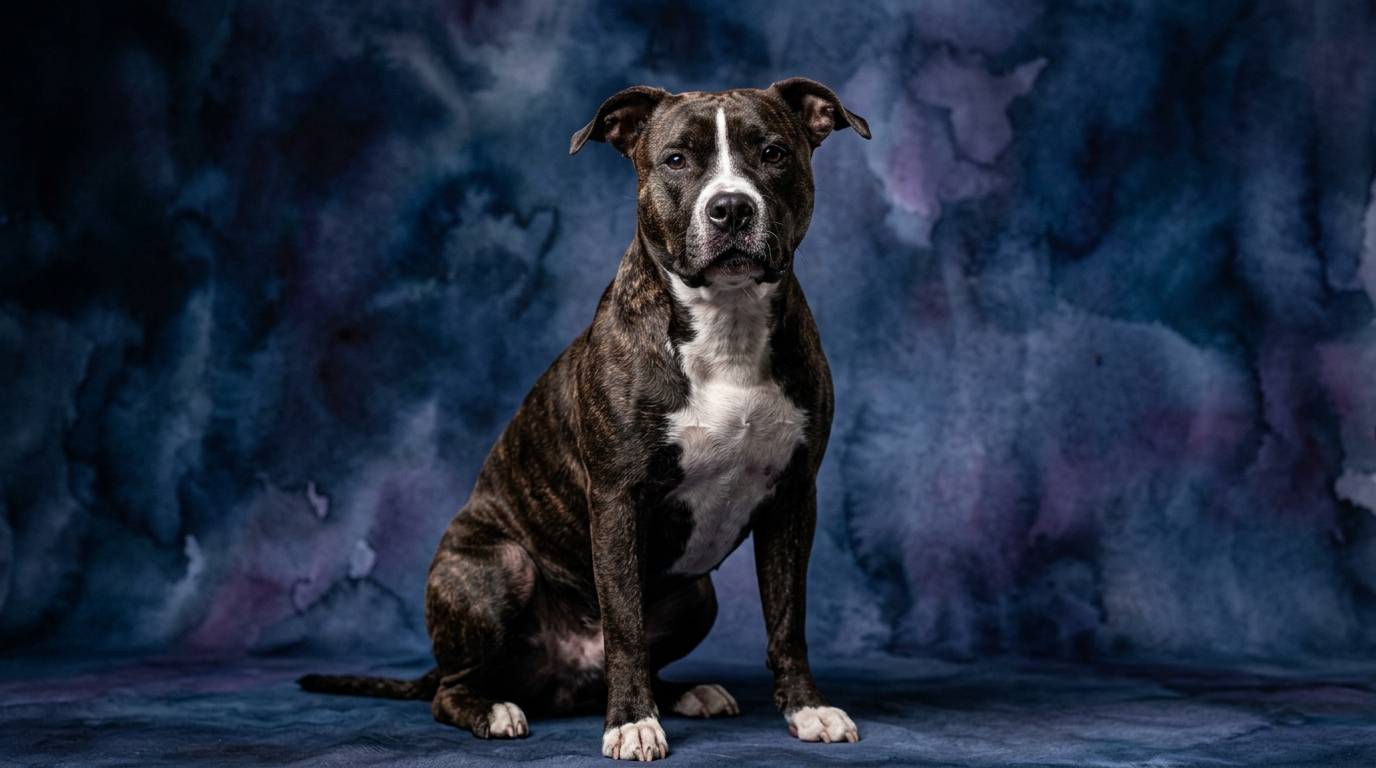
At The Cosmic Pet IQ Lab, we analyze canine intelligence across five key dimensions, moving beyond simple obedience to understand a breed's full cognitive blueprint. Our framework, informed by extensive behavioral studies and adapted from Coren's rankings, offers a nuanced look at what makes each breed tick mentally. The Rottweiler, a Working breed, stands at an impressive Coren rank #9, while the American Staffordshire Terrier, a Terrier breed, is positioned at Coren rank #48.
The Rottweiler's IQ profile presents a formidable picture: Problem Solving 5/5, Training Speed 4/5, Social Intelligence 4/5, Instinctive Drive 5/5, and Memory 5/5. This breed exhibits exceptional capacity for independent thought and complex task resolution, learns new commands with remarkable rapidity, understands social cues effectively, possesses a profound internal motivation for tasks, and retains information over extended periods with high fidelity.
In contrast, the American Staffordshire Terrier (AmStaff) shows a different set of strengths: Problem Solving 3/5, Training Speed 3/5, Social Intelligence 3/5, Instinctive Drive 3/5, and Memory 4/5. The AmStaff demonstrates moderate abilities in tackling novel problems, learns at a steady pace, possesses a solid understanding of social dynamics, exhibits a respectable level of internal motivation, and maintains a strong capacity for recalling past experiences and learned behaviors.
Where the Rottweiler's Cognition Shines Brightest
The Rottweiler's cognitive prowess is particularly evident in its Problem Solving (5/5) and Instinctive Drive (5/5). Originating as drovers and guard dogs, their roles demanded significant independent decision-making, such as moving livestock or protecting property without constant human direction. This translates into a dog that can assess situations, formulate solutions, and act decisively, making them exceptional candidates for complex tasks in protection, search and rescue, or competitive obedience that requires initiative.
Furthermore, the Rottweiler's Memory (5/5) is a standout feature. This superior recall allows them to retain vast amounts of training, remember complex sequences of commands, and recall specific environmental cues with precision. This deep memory contributes significantly to their reliability in advanced working roles, where consistency and long-term retention of intricate protocols are paramount.
Unpacking the American Staffordshire Terrier's Cognitive Strengths
While the AmStaff's overall cognitive profile is distinct from the Rottweiler's, it possesses notable strengths, particularly in Memory (4/5). This robust memory ensures they can effectively learn and retain household routines, specific commands, and the preferences of their human companions. This strong recall, while not quite at the Rottweiler's peak, is more than sufficient for a well-adjusted companion who remembers their place and expectations within the family unit.
The AmStaff's Instinctive Drive (3/5) and Social Intelligence (3/5), while moderate, are often channeled towards strong, personal engagement. Their drive is frequently directed at interaction with their chosen family members, making them eager participants in play and activities that foster connection. Their social intelligence allows them to form deep bonds and understand the emotional states of their close humans, contributing to their reputation as devoted and empathetic companions, even if their problem-solving isn't geared towards complex, abstract tasks.
Training Dynamics: Effort and Engagement
When comparing training ease, the Rottweiler's Training Speed (4/5) generally means a quicker grasp of new commands and concepts compared to the AmStaff's (3/5). Rottweilers often make connections between commands and actions more rapidly, requiring fewer repetitions to solidify learning. Their higher problem-solving also aids in generalizing commands to new environments or variations of a task, making them appear to 'pick things up' faster.
Motivation and handler expectations also play a crucial role. Rottweilers, with their strong instinctive drive (5/5), often thrive on structured tasks and mental challenges, viewing training as an engaging 'job.' They respond well to handlers who provide clear, consistent direction and appreciate the opportunity for intellectual engagement. AmStaffs, while trainable and eager to please their loved ones, might require more patient repetition and motivation strategies that leverage their desire for personal interaction or specific, high-value rewards, rather than relying solely on the challenge of the task itself.
Referencing real behavioral differences, the Rottweiler's combination of high instinctive drive (5/5) and exceptional memory (5/5) means they can be taught highly complex, multi-step tasks and retain them reliably over long periods, making them suitable for intricate working roles like advanced protection or service work. The AmStaff's moderate instinctive drive (3/5) suggests they might be less inclined towards prolonged, highly demanding intellectual work, often preferring shorter, more engaging training sessions that focus on foundational obedience and fun, interactive activities.
Matching Breed to Lifestyle: Active vs. Relaxed Owners
For owners with an active and structured lifestyle, the Rottweiler is often the more fitting choice. Their elevated instinctive drive (5/5) and problem-solving abilities (5/5) mean they require consistent mental and physical engagement to thrive. They are at their best when given a 'job'—be it advanced obedience, protection sports, or extensive outdoor activities that challenge both their bodies and minds. Their need for structure, clear leadership, and ongoing intellectual stimulation is significant to ensure a well-balanced temperament.
The American Staffordshire Terrier, while still needing regular exercise, can often adapt more readily to a moderately active household. Their more moderate instinctive drive (3/5) and problem-solving (3/5) mean they can find contentment with daily walks, play sessions, and being an integrated companion within the family unit, without necessarily demanding constant, intense 'work.' They typically enjoy being a devoted member of the family, relishing opportunities for interaction and companionship, though they certainly can excel in dog sports like agility or obedience if an owner desires.
The Verdict: When to Choose Each
The Verdict
Choose a Rottweiler if you seek a highly capable working partner ready for advanced training, complex problem-solving, and have the dedication to provide consistent mental and physical challenges.
Opt for an American Staffordshire Terrier if you desire a devoted companion who learns well with patience, thrives on personal interaction, and fits into a moderately active lifestyle.
🧠 Find Your Pet's IQ Score
Our Pet IQ Lab assessment covers 25+ tests across 5 cognitive dimensions — personalized to your breed.
Take the Full IQ Test →Frequently Asked Questions
Do Rottweilers require more mental stimulation than American Staffordshire Terriers?
Yes, Rottweilers, with their 5/5 problem-solving and instinctive drive, generally demand more consistent and complex mental engagement. They benefit greatly from learning new commands, engaging with puzzle toys, and participating in structured activities to prevent boredom and ensure their cognitive needs are met.
Is an American Staffordshire Terrier suitable for a first-time dog owner?
An AmStaff can be suitable for a first-time owner who is committed to consistent, positive reinforcement training and early socialization. While their training speed is moderate (3/5), their strong bond with family makes them eager to please their human, given clear guidance and a patient approach to learning.
How does memory impact the long-term behavior of these breeds?
The Rottweiler's 5/5 memory means they retain training and experiences, both positive and negative, very well, making consistency in training and environment vital for good behavior. The AmStaff's 4/5 memory also ensures they learn and recall family routines and commands effectively, though perhaps requiring slightly more reinforcement over time for highly complex tasks compared to a Rottweiler.