
Side-by-Side IQ Profile: Deconstructing Canine Cognition
The Cosmic Pet Pet IQ Lab employs a multi-dimensional approach to assess canine intelligence, moving beyond simple obedience metrics to understand the full scope of a dog's mental capabilities. For the Rottweiler, classified as a Working breed, its Coren rank of #9 places it among the top echelons for understanding new commands. Its individual IQ dimensions are impressive: Problem Solving at 5/5, Training Speed at 4/5, Social Intelligence at 4/5, Instinctive Drive at 5/5, and Memory at a perfect 5/5. This profile paints a picture of a dog that is not only capable of deep thought but also retains information exceptionally well and possesses a strong internal motivation.
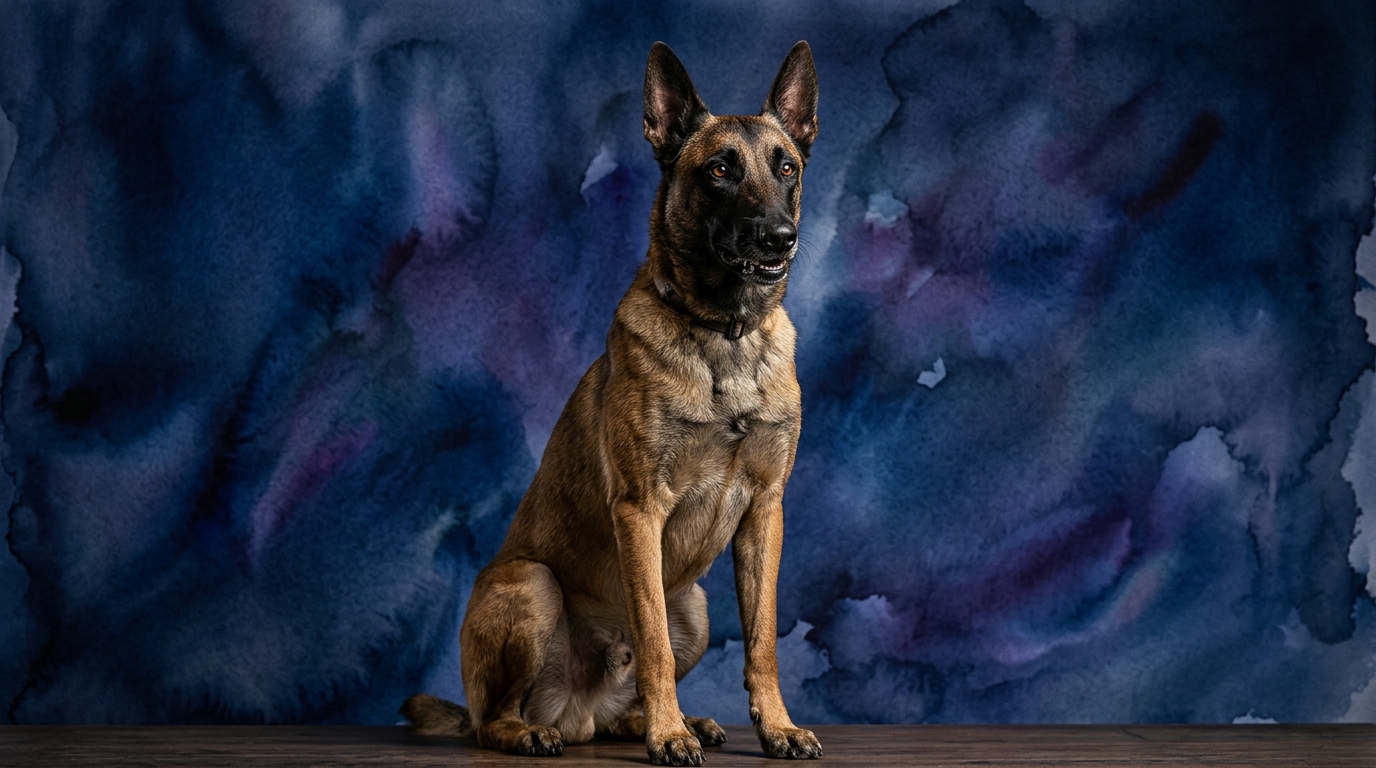
The Belgian Malinois, a Herding breed, holds a Coren rank of #22, still a respectable position indicating its readiness to learn. Its IQ breakdown reveals some key differentiators: Problem Solving matches the Rottweiler at 5/5, but its Training Speed is a perfect 5/5. Social Intelligence is 4/5, identical to the Rottweiler, as is its Instinctive Drive at 5/5, and Memory at 5/5. These scores suggest an equally capable mind in many respects, but with a notable edge in the pace at which it acquires new skills, hinting at a different kind of mental agility and processing power.
Where the Rottweiler Wins Cognitively
The Rottweiler’s Coren rank of #9, significantly higher than the Malinois’s #22, suggests a broader, more generalized capacity for understanding new commands and performing them reliably. While Coren's ranking primarily assesses working and obedience intelligence, the Rottweiler’s superior position implies a more inherent readiness to grasp a wider array of human instructions with fewer repetitions on average. Its perfect 5/5 Memory score, paired with a robust 5/5 Instinctive Drive (often centered on protection and guardianship), means a Rottweiler often forms deep, enduring associations between commands, situations, and appropriate responses. This translates to an unwavering reliability in established routines and protective duties, making them exceptionally consistent in their learned behaviors over the long term. Their problem-solving, while equally high, might manifest in more deliberate, strategic decision-making in complex or novel situations, rather than rapid-fire reactions.
Where the Belgian Malinois Wins Cognitively
The Belgian Malinois truly shines with its perfect 5/5 Training Speed, surpassing the Rottweiler's 4/5. This indicates an unparalleled ability to assimilate new commands and complex behavioral sequences with remarkable efficiency, often requiring fewer repetitions to achieve mastery. This rapid absorption of information, coupled with its equally potent 5/5 Instinctive Drive (frequently manifesting as intense prey or herding drives), makes the Malinois exceptionally adept at highly dynamic and precise tasks. They can channel their rapid learning into intricate routines for competitive sports, police work, or search and rescue operations, where quick processing and immediate application of skills are paramount. Their problem-solving, while rated identically, often manifests in a more agile, adaptable manner, allowing them to quickly adjust strategies in fast-changing environments, leveraging their speed for tactical advantage.
Which Is Easier to Train and Why: Unpacking Behavioral Differences
When considering 'easier to train,' the Belgian Malinois often presents itself as the more facile learner for specific, high-level tasks due to its superior Training Speed (5/5). They pick up new concepts with astonishing quickness, making them the darlings of professional trainers for roles requiring complex, multi-stage commands. However, this speed is often paired with an intense, persistent instinctive drive that, if not properly channeled, can lead to challenging behaviors. Their relentless energy and unwavering focus require an experienced hand to direct them productively, otherwise, their rapid learning can extend to undesirable habits just as quickly.
The Rottweiler, with its 4/5 Training Speed, may take slightly more repetitions to master a new command. Yet, their 5/5 Memory ensures that once a concept is learned, it is deeply ingrained and reliably recalled. Their instinctive drive, while equally strong, often leans towards a more thoughtful, less frenetic application of their energy, making them excellent candidates for roles requiring steadiness and discernment. While not as lightning-fast, their training often results in a dog that is profoundly loyal and consistent in its duties, perhaps requiring more patience upfront but yielding a deeply reliable companion. Neither breed is 'easy' for a novice; both demand consistent, knowledgeable guidance, but the Malinois's intensity and speed demand a more active and agile training approach.
Cognitive Profiles and Owner Lifestyles: Active vs. Relaxed
The cognitive profiles of these breeds offer clear guidance for owner lifestyles. The Belgian Malinois, with its perfect Training Speed and intense Instinctive Drive, is unequivocally suited for highly active owners who are prepared to engage in daily, rigorous physical and mental exercise. Their minds thrive on constant challenges, structure, and a ‘job to do,’ whether it's protection sports, agility, or extensive outdoor adventures. An owner with a more relaxed lifestyle would quickly find themselves overwhelmed by the Malinois’s unyielding need for stimulation, which, if unmet, can lead to destructive behaviors and anxiety.
The Rottweiler, while still requiring significant activity to thrive, offers a slightly more adaptable cognitive profile. Its 5/5 Problem Solving and 5/5 Memory mean it benefits immensely from consistent training and mental puzzles, but its energy output, while substantial, can be integrated into a less hyper-vigilant routine than the Malinois. Owners who are active, enjoy structured training, and seek a deeply bonded companion for walks, hikes, and family activities, but perhaps aren't looking for a dog that needs to be 'working' every waking hour, might find the Rottweiler a better fit. They still require a dedicated owner committed to their mental well-being, but their cognitive needs can be satisfied with a slightly broader range of activities.
The Verdict
Choose the Rottweiler if you seek a steadfast, deeply loyal companion who excels in consistent, reliable duties and protective roles, and you appreciate a thoughtful approach to problem-solving and long-term memory. You should be prepared for steady, consistent training.
Opt for the Belgian Malinois if you are an experienced, highly active owner seeking an intensely driven, lightning-fast learner for advanced training, competitive sports, or demanding working roles, and you can provide constant mental and physical challenges.
🧠 Find Your Pet's IQ Score
Our Pet IQ Lab assessment covers 25+ tests across 5 cognitive dimensions — personalized to your breed.
Take the Full IQ Test →Frequently Asked Questions
Do Rottweilers and Belgian Malinois have similar problem-solving abilities?
Yes, both breeds score a perfect 5/5 in Problem Solving according to The Cosmic Pet Pet IQ Lab. This indicates they are equally capable of independently figuring out how to overcome obstacles or achieve goals, though the specific contexts in which they apply this skill may differ based on their breed drives.
Which breed learns new commands faster, the Rottweiler or the Belgian Malinois?
The Belgian Malinois holds an advantage in Training Speed with a 5/5 score, compared to the Rottweiler's 4/5. This means the Malinois can typically grasp and execute new commands with fewer repetitions, making them exceptionally quick learners for complex routines.
Despite similar social intelligence, are there differences in how they interact?
Both breeds score 4/5 in Social Intelligence, indicating a strong capacity to understand human cues and group dynamics. However, a Rottweiler's social interactions often carry a greater sense of deliberate assessment and loyalty to its family unit, while a Malinois might display its social intelligence through its intense focus and responsiveness within a working partnership, often seeking direction.