
Side-by-Side Pet IQ Profile
The Cosmic Pet Pet IQ Lab offers a nuanced view into the cognitive makeup of these two distinct working breeds. The Rottweiler, ranking #9 on Coren's list, presents a profile marked by formidable intellectual prowess across several domains. Their Problem Solving is rated an exceptional 5/5, indicating an outstanding capacity for independent thought and strategic navigation of complex situations. They demonstrate a Training Speed of 4/5, quickly grasping new commands and routines. Social Intelligence for the Rottweiler stands at 4/5, showing adeptness at understanding human cues, though they often exhibit a more reserved initial approach to new interactions. A powerful Instinctive Drive, rated 5/5, highlights their inherent motivation for purpose-driven tasks and a strong work ethic. Finally, their Memory is rated 5/5, showcasing outstanding recall for learned behaviors, environments, and associations, making them highly reliable.
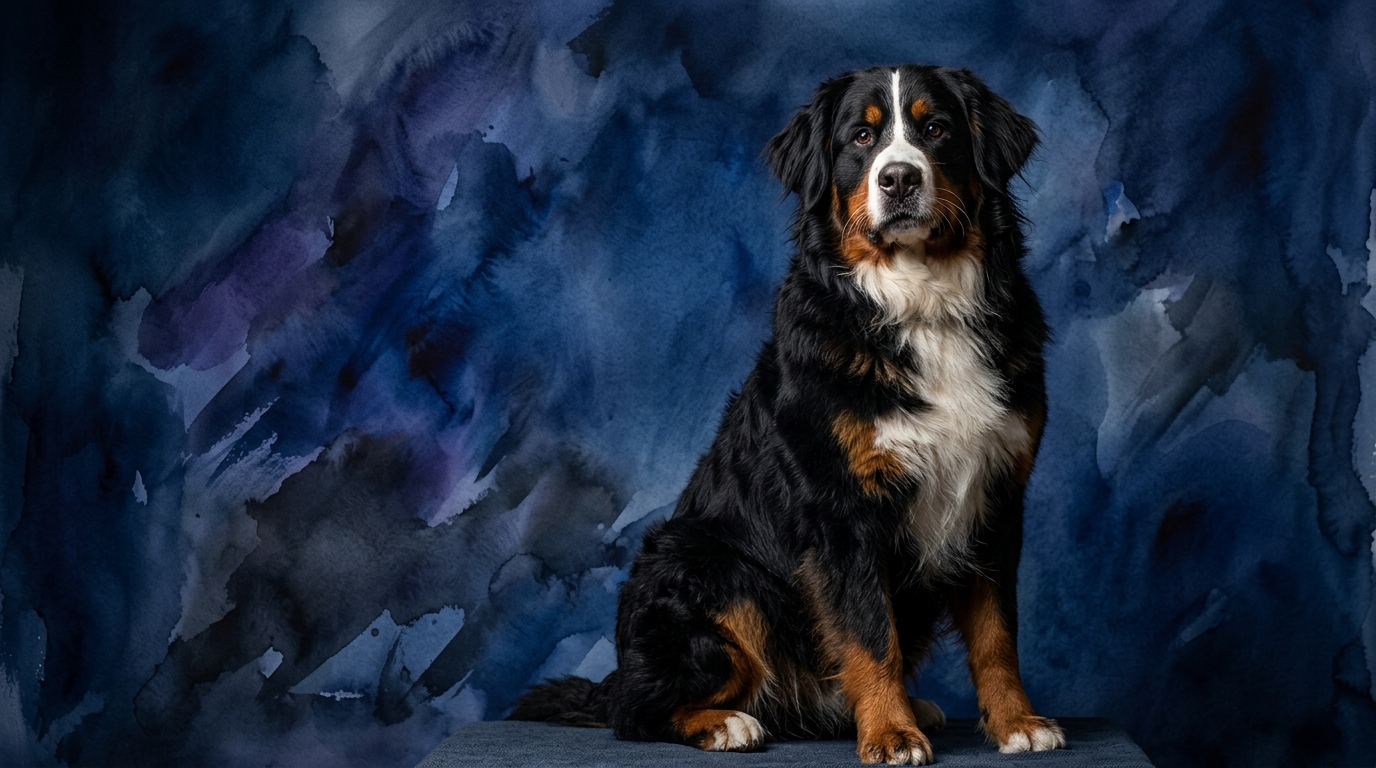
In contrast, the Bernese Mountain Dog, positioned at #27 in Coren's ranking, possesses a different, yet equally valuable, set of cognitive strengths. Their Problem Solving is rated 3/5, indicating competence in familiar situations but less inclination towards novel, independent strategic thinking. Similar to the Rottweiler, their Training Speed is 4/5, meaning they are quick to learn and respond well to positive reinforcement. Where the Bernese truly shines is in Social Intelligence, earning a perfect 5/5. This signifies a profound, intuitive understanding of social dynamics, often leading them to seek close connection and emotional attunement with their human companions. Their Instinctive Drive is rated 4/5, reflecting a strong desire to participate in family activities and perform duties, though perhaps less intensely focused than some working peers. Lastly, their Memory is rated 3/5, demonstrating solid recall for routine and familiar people, but potentially requiring more repetition for complex, less frequently reinforced information.
Where the Rottweiler Wins Cognitively
The Rottweiler’s cognitive architecture shines brightest in areas demanding independent thought and robust recall. With a 5/5 rating in Problem Solving, these dogs exhibit a remarkable ability to analyze situations, devise strategies, and execute solutions without constant human intervention. This translates into an impressive capacity for tasks like navigating unfamiliar environments, figuring out how to open gates, or understanding complex sequences of commands. Their superior memory, also rated 5/5, ensures that once a solution or a command sequence is learned, it is deeply ingrained and readily accessible. This profound memory isn't just about remembering tricks; it extends to recalling people, places, and past experiences with striking accuracy, making them highly reliable in repetitive roles or when revisiting previously learned scenarios. Furthermore, their 5/5 Instinctive Drive fuels a powerful internal motivation to engage with tasks and fulfill their inherent purpose. This isn't merely a desire for activity, but a deep-seated impulse to work, protect, or herd, often leading to persistent and focused effort even in challenging conditions. This combination of strong problem-solving skills, exceptional memory, and intense drive positions the Rottweiler as a breed capable of mastering intricate working roles and excelling in disciplines requiring strategic thinking and sustained mental effort.
Where the Bernese Mountain Dog Wins Cognitively
In contrast, the Bernese Mountain Dog's cognitive strengths are profoundly rooted in their exceptional social intelligence, rated 5/5. This isn't merely about being friendly; it signifies a deep, intuitive understanding of human emotions, intentions, and social cues. A Bernese can often sense a shift in mood, offer comfort without prompting, and adjust their behavior to align with the social environment. This high level of emotional attunement makes them incredibly responsive to their family's needs, fostering an unparalleled bond built on mutual understanding. They excel in collaborative interactions, thriving on positive feedback and connection with their human companions. While their problem-solving might not match the Rottweiler's independent strategizing, their social acumen allows them to navigate complex human relationships with grace and sensitivity. This cognitive advantage makes them superb therapy dogs and family companions, where empathy and responsiveness are paramount. Their strong desire to please and connect, driven by this social intelligence, forms the bedrock of their cooperative nature, making them highly attuned partners in daily life.
Which is Easier to Train and Why
When evaluating ease of training, both the Rottweiler and the Bernese Mountain Dog share an impressive 4/5 rating for Training Speed, indicating that both breeds grasp new commands quickly. However, the underlying cognitive mechanisms and training approaches that yield the best results differ significantly. The Rottweiler’s superior problem-solving ability and exceptional memory mean they not only learn rapidly but also retain complex sequences and understand the 'why' behind actions more readily. Their strong instinctive drive means they are often eager for a job and respond well to task-oriented training that engages their natural working instincts. While they can be strong-willed, their cognitive capacity allows them to master advanced obedience and specialized tasks with precision, provided the trainer is consistent and firm, yet fair. They excel when given clear expectations and a sense of purpose, using their intelligence to anticipate and execute.
The Bernese Mountain Dog, while equally quick to learn, leverages its 5/5 social intelligence during training. They are highly motivated by positive reinforcement that strengthens their bond with their human. Their desire to please and their sensitivity to social cues make them incredibly responsive to praise, affection, and gentle guidance. While they may not independently strategize solutions to novel training challenges as readily as a Rottweiler, their eagerness to cooperate and their emotional attunement make them highly compliant and enjoyable to train, especially in family settings. They thrive on consistency and a positive, encouraging atmosphere, making them very forgiving of minor training inconsistencies due to their eagerness to connect. Therefore, while both learn fast, the Rottweiler's training is often about channeling their independent intellect and drive, while the Bernese's training capitalizes on their desire for social connection and cooperative spirit.
Which Suits Active Owners vs. Relaxed Owners
The cognitive profiles of these breeds offer clear guidance on their suitability for different owner lifestyles. The Rottweiler, with its 5/5 Instinctive Drive and 5/5 Problem Solving, thrives with active owners who can provide consistent mental and physical challenges. These dogs require more than just daily walks; they need purposeful activities such as advanced obedience, protection work, agility, or engaging puzzle toys that stimulate their powerful intellect and inherent drive. An owner who understands the Rottweiler's need for a 'job' and is prepared to dedicate significant time to training and structured activities will find an incredibly devoted and capable partner. Without adequate mental engagement, their problem-solving skills might be redirected towards less desirable behaviors, such as finding ways to entertain themselves through destructive means.
Conversely, the Bernese Mountain Dog, while still a working breed with a 4/5 Instinctive Drive, aligns well with owners seeking a balanced companion that enjoys activity but places a strong emphasis on companionship and connection. Their 5/5 Social Intelligence means they are happiest when integrated into family life, participating in moderate walks, hikes, or yard play alongside their humans. While they appreciate and benefit from regular exercise and mental stimulation, they don't typically demand the same intensity or structured 'work' as a Rottweiler. They are content with being close to their people, enjoying relaxed evenings as much as an outing. Therefore, the Rottweiler is better suited for owners who are prepared for a high-engagement, purpose-driven relationship, while the Bernese Mountain Dog is ideal for those who value a deeply connected, moderately active companion.
The Verdict
Choose a Rottweiler if you seek a highly capable, independent, and driven working partner for complex tasks and are prepared for consistent mental engagement.
Choose a Bernese Mountain Dog if you prioritize a deeply connected, empathetic, and cooperative family companion that thrives on social interaction and moderate activity.
🧠 Find Your Pet's IQ Score
Our Pet IQ Lab assessment covers 25+ tests across 5 cognitive dimensions — personalized to your breed.
Take the Full IQ Test →Frequently Asked Questions
Are Rottweilers difficult to handle due to their drive?
Rottweilers possess a powerful instinctive drive and robust problem-solving skills, meaning they require consistent, confident leadership and extensive socialization from a young age. Their intensity needs appropriate channeling through structured training and mentally stimulating activities to ensure they are well-behaved and balanced companions.
Do Bernese Mountain Dogs require a lot of exercise?
Bernese Mountain Dogs benefit from regular, moderate exercise, such as daily walks or playtime, to keep them healthy and happy. While they are a working breed, their exercise needs are generally less intense than some other working dogs, prioritizing companionship during activities over extreme physical exertion.
How do their Coren ranks reflect their intelligence differences?
Dr. Stanley Coren's ranking places Rottweilers at #9 and Bernese Mountain Dogs at #27, primarily reflecting their 'working and obedience intelligence'—how quickly they learn and obey commands. This aligns with the Rottweiler's superior problem-solving and memory for tasks, while the Bernese excels in social understanding, which Coren's metric doesn't solely capture.