
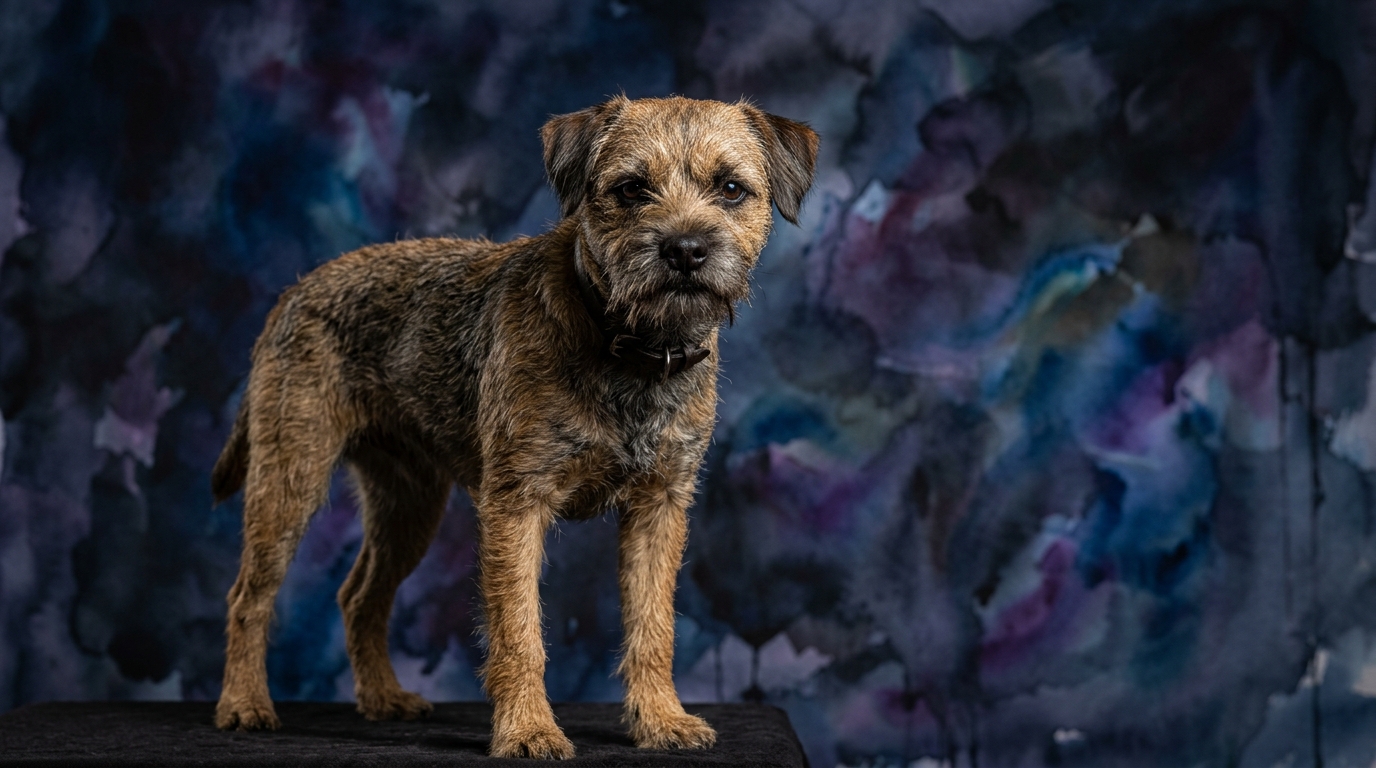
Side-by-Side IQ Profile: Rottweiler vs. Border Terrier
The Cosmic Pet Pet IQ Lab's framework allows us to dissect the distinct mental strengths of these two breeds. The Rottweiler, a Working group dog, registers at Coren rank #9, indicating a significant capacity for understanding and executing commands. Its problem Solving is rated 5/5, reflecting an exceptional ability to analyze complex situations and devise effective strategies, often crucial for tasks demanding discernment and planning. Training Speed for the Rottweiler is 4/5, signifying a quick uptake of new behaviors, provided the training is consistent and purposeful. Social Intelligence, at 4/5, highlights their aptitude for interpreting human cues and forming deep, intuitive bonds, essential for their roles as guardians and companions. An instinctive Drive of 5/5 points to profound, ingrained working behaviors, from protection to herding, which require sophisticated application rather than simple reaction. Finally, their Memory, also 5/5, ensures a lasting retention of learned behaviors, routines, and past experiences, making them highly reliable.
In contrast, the Border Terrier, a member of the Terrier group, holds Coren rank #30, presenting a different, yet equally compelling, cognitive blueprint. Its problem Solving capacity stands at 4/5, demonstrating a clever, resourceful approach to challenges, often involving independent thought to achieve goals, such as navigating obstacles or finding hidden items. Training Speed for the Border Terrier is also 4/5, meaning they learn new commands swiftly, but their terrier tenacity often requires engaging motivation and consistency to maintain focus. Social Intelligence, at 3/5, suggests they form strong bonds but might be less inclined to constantly seek human direction, often valuing their independence in decision-making. Their instinctive Drive, 3/5, is specifically geared towards traditional terrier work—hunting small vermin, digging—rather than broad working tasks. Memory is rated 4/5, indicating good retention of lessons and experiences, though perhaps with a more selective application driven by their independent nature.
Where the Rottweiler Excels Cognitively
The Rottweiler's cognitive strengths are particularly evident in its capacity for complex, multi-layered tasks. Their perfect 5/5 problem Solving score positions them to excel in scenarios requiring strategic thinking, such as threat assessment in protection work or mastering intricate obedience sequences. This isn't merely about brute force but about applying mental acuity to solve dynamic challenges. Their superior memory (5/5) means they retain vast amounts of information, from specific commands to environmental cues, contributing to their consistent performance and reliability in demanding roles. Furthermore, a higher social Intelligence (4/5) allows them to more readily interpret subtle human intentions and emotional states, fostering a deeper partnership crucial for service or guarding duties. The Rottweiler's potent instinctive drive (5/5) is also a cognitive advantage, as these drives are often channeled into specific, complex working roles requiring sophisticated application and control, rather than simple reactive behaviors.
Where the Border Terrier Shows Distinct Cognitive Strengths
While the Rottweiler thrives in structured, complex tasks, the Border Terrier’s cognitive prowess shines in areas demanding resourcefulness and independent thought. Their 4/5 problem Solving ability, though numerically lower, represents a distinct type of intelligence—one focused on ingenious, often self-directed solutions. Border Terriers are adept at figuring out how to get what they want, whether it's outsmarting a puzzle toy or navigating a tricky environment. This isn't about following a script but about creative, on-the-fly thinking. Their robust memory (4/5), combined with a strong sense of self-preservation and curiosity, allows them to recall past successful tactics, making them persistent and effective in their endeavors. The Border Terrier’s specific instinctive drive (3/5), while less broad than a working dog's, manifests as intense focus and determination in tasks like scent tracking or digging, where their single-mindedness becomes a significant cognitive asset for achieving a specific goal.
Training Dynamics: Which Breed is Easier?
When considering ease of training, the Rottweiler generally presents a more straightforward path for formal obedience due to its cognitive profile. Their 4/5 training Speed, combined with a high social Intelligence (4/5) and memory (5/5), means they are eager to engage with their handler, quickly grasp commands, and retain lessons. Rottweilers thrive on purpose and clear direction, making them receptive to structured training methods. Their strong instinctive drives, while powerful, can be effectively channeled into specific tasks under an experienced hand, leading to a highly responsive and dedicated working partner. However, managing their strength and potential for guarding requires consistent, firm, and fair leadership from a young age.
The Border Terrier, also rated 4/5 for training Speed, learns quickly but often requires a different approach. Their lower social Intelligence (3/5) and independent problem-solving style mean they may prioritize their own agenda or environmental distractions over handler directives. Training for a Border Terrier needs to be highly engaging, positive, and consistent, focusing on making it a rewarding game to overcome their tenacious independence. While they excel at specific terrier tasks like earthdog trials, achieving unwavering obedience in all contexts can be more challenging than with a Rottweiler, demanding patience and creative motivation to harness their spirited nature without breaking their independent drive.
Matching Breeds to Owner Lifestyles
Both the Rottweiler and the Border Terrier are best suited for active owners, though their ideal activities differ significantly. A Rottweiler, with its 5/5 instinctive Drive and 5/5 memory, requires an owner who can provide consistent, structured physical exercise and significant mental engagement. They thrive in environments where they have a 'job,' whether it's obedience, protection sports, or service work, which allows them to utilize their problem-solving and social intelligence. An owner who can dedicate time to advanced training, provide clear leadership, and offer ample opportunities for purposeful activity will find the Rottweiler a profoundly rewarding companion. A relaxed owner might find the Rottweiler's intensity and need for stimulation overwhelming, potentially leading to behavioral challenges.
The Border Terrier, with its 4/5 problem Solving and 3/5 instinctive Drive (for specific tasks), also needs an active lifestyle, but one that caters to its tenacious and exploratory nature. They excel with owners who enjoy outdoor adventures like hiking, trail running, or engaging in dog sports such as agility or earthdog trials. Their independent spirit means they enjoy exploring and solving challenges on their own terms, making them excellent companions for owners who appreciate a dog with distinct personality and drive. While they can be calm indoors, their mental and physical needs demand an owner who can provide consistent outlets for their curiosity and energy, making them unsuitable for truly 'relaxed' owners who prefer minimal interaction or engagement.
The Verdict
Choose the Rottweiler if you seek a highly capable, dedicated working companion eager for complex tasks and structured training, thriving under an owner who provides purpose and consistent guidance.
Opt for the Border Terrier if you desire a clever, independent, and tenacious companion for active adventures, valuing their resourceful problem-solving and spirited personality over strict obedience.
🧠 Find Your Pet's IQ Score
Our Pet IQ Lab assessment covers 25+ tests across 5 cognitive dimensions — personalized to your breed.
Take the Full IQ Test →Frequently Asked Questions
Are Rottweilers naturally aggressive?
Rottweilers possess strong protective instincts and can be discerning, but well-bred Rottweilers with proper socialization and consistent training from a young age are typically confident, calm, and devoted family members. Aggression is often a result of poor breeding, lack of socialization, or improper handling.
Do Border Terriers make good apartment dogs?
Border Terriers can adapt to apartment living if their significant exercise and mental stimulation needs are consistently met. Daily vigorous walks, playtime, and opportunities for mental challenges are crucial to prevent boredom and destructive behaviors in a smaller space.
What kind of mental stimulation do these breeds need?
Rottweilers benefit from advanced obedience, protection sports, puzzle toys, and learning new complex commands to engage their high problem-solving and memory. Border Terriers thrive on scent work, earthdog trials, agility, interactive games that require independent thinking, and puzzle toys to satisfy their curiosity and tenacious problem-solving drive.