
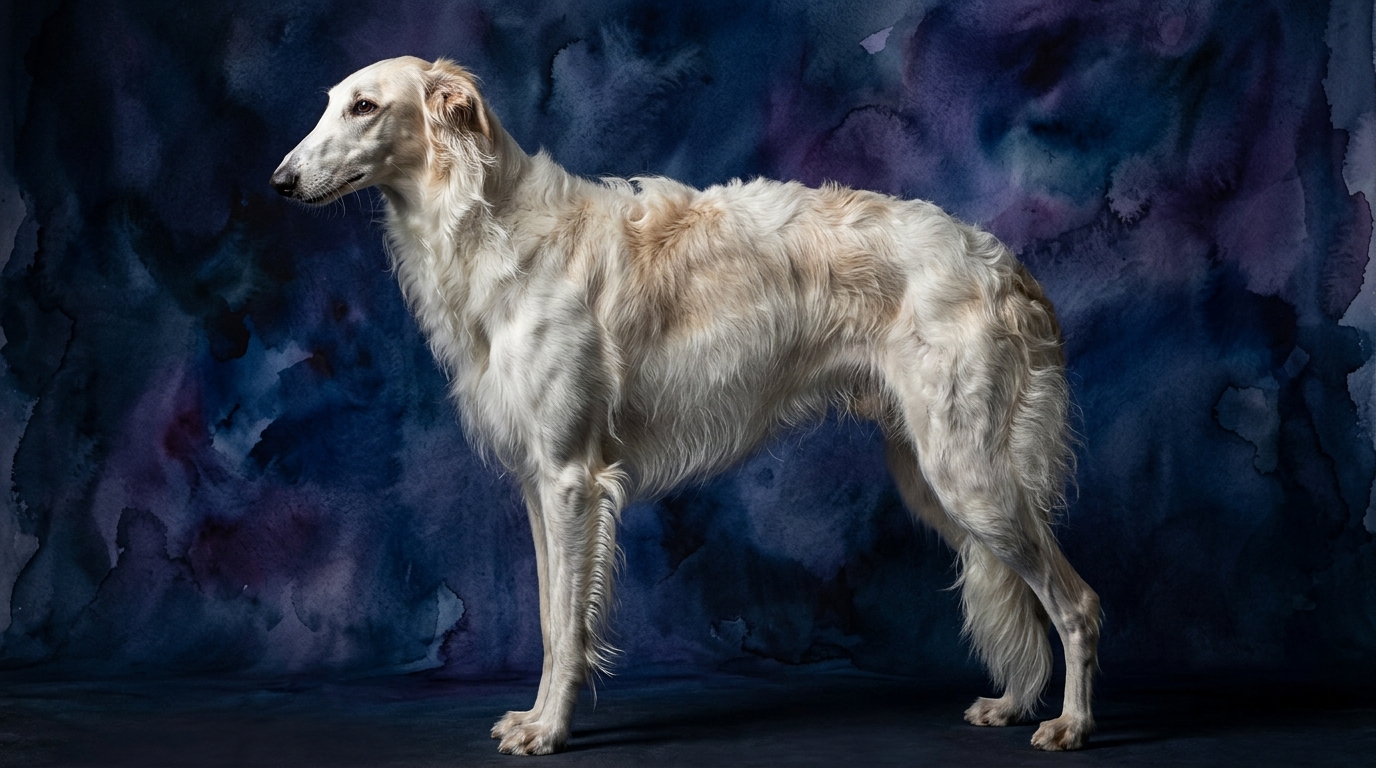
Side-by-Side IQ Profile: Rottweiler vs. Borzoi
To understand the distinct cognitive strengths of these two breeds, The Cosmic Pet Pet IQ Lab employs five key dimensions. For the Rottweiler, a Working group dog with a Coren rank of #9, these dimensions score highly:
**Rottweiler IQ Breakdown:** Problem Solving (5/5): This breed excels at intricate tasks, understanding multi-step commands, and strategizing to achieve goals, whether navigating an obedience course or solving a complex puzzle. Training Speed (4/5): Rottweilers grasp new commands and routines with impressive quickness, driven by purpose and eagerness to please, though consistency is vital to harness this speed. Social Intelligence (4/5): They are highly attuned to human emotions and intentions, forming deep, protective bonds with their family, and capable of discerning friend from perceived threat. Instinctive Drive (5/5): Rottweilers possess strong innate drives for guarding, herding, and protection, channeling these impulses into focused, purposeful work when properly directed. Memory (5/5): They demonstrate exceptional recall for commands, routines, locations, and the faces of those they know, making them reliable companions in structured environments.
The Borzoi, a Hound group dog with a Coren rank of #75, presents a different cognitive landscape:
**Borzoi IQ Breakdown:** Problem Solving (3/5): Their problem-solving leans towards practical, immediate challenges, like navigating terrain during a chase or finding a comfortable napping spot, rather than abstract puzzles. Training Speed (3/5): Borzoi require patience and consistent positive reinforcement; they learn at a moderate pace, often needing more repetition and strong motivation to solidify commands due to their independent nature. Social Intelligence (3/5): While forming profound connections with their chosen humans, their social intelligence is more discerning and less overtly people-pleasing, often observing from a distance before engaging. Instinctive Drive (3/5): Primarily driven by a powerful sighthound prey drive, focused on visual cues and the thrill of the chase, which can sometimes override other motivations. Memory (3/5): They exhibit good recall for familiar routes, home environments, and the general routines of their lives, but their memory for specific commands can be less robust if not consistently reinforced.
Where the Rottweiler Wins Cognitively
The Rottweiler’s cognitive strengths shine in scenarios demanding collaboration, strategic execution, and a strong work ethic. Their 5/5 Problem Solving and 5/5 Instinctive Drive mean they excel at tasks requiring sequential thought and a drive to complete a job for their human partner. For instance, a Rottweiler can be taught to perform complex tracking exercises, discern specific scents from a multitude, or execute multi-stage protection routines with precision, demonstrating a deep understanding of cause and effect and an ability to follow nuanced instructions. Their 4/5 Social Intelligence allows them to anticipate human needs and react appropriately, making them exceptional service or working dogs who can adapt their behavior based on their handler’s non-verbal cues. This cooperative intelligence, honed over generations of working alongside humans, is where the Rottweiler truly distinguishes itself.
Where the Borzoi Wins Cognitively
The Borzoi’s unique cognitive prowess is best observed in environments that value independent action, swift decision-making, and acute sensory perception, particularly sight. Their 3/5 Problem Solving, while not geared towards human-centric puzzles, is highly effective in their ancestral role: spotting fast-moving game at a distance and executing an immediate, unassisted pursuit. A Borzoi's cognitive strengths lie in spatial awareness and autonomous action; they don't need human direction to decide the best path to intercept prey or to navigate complex terrain at high speeds. This breed’s intelligence is less about compliance and more about independent judgment in dynamic, rapidly changing situations. Their memory, while rated 3/5 for commands, is remarkably good for visual cues and familiar landscapes, allowing them to navigate vast outdoor spaces and recall safe running paths.
Which is Easier to Train and Why
Based on their Coren ranks and IQ profiles, the Rottweiler (Coren #9) is generally easier to train than the Borzoi (Coren #75). The Rottweiler’s 4/5 Training Speed and 5/5 Instinctive Drive mean they possess an inherent desire to work and a quicker uptake of commands. They thrive on structure and respond well to clear, consistent direction, seeing training as a purposeful activity that strengthens their bond with their owner. Their social intelligence makes them eager to understand and fulfill human expectations. This is a breed that genuinely enjoys having a 'job' and the mental engagement that comes with learning.
In contrast, the Borzoi’s 3/5 Training Speed and more independent nature often require a different approach. They were historically bred to hunt autonomously, making them less inclined to blindly follow commands if it conflicts with their perceived purpose or comfort. Training a Borzoi demands immense patience, consistent positive reinforcement, and a deep understanding of their sighthound mentality, focusing on making training a rewarding game rather than a strict command-and-obey dynamic. Consistency is paramount, but so is acknowledging their selective hearing when a squirrel dashes by or a distant movement catches their keen eye; their instincts are powerful motivators that can override learned behaviors.
Which Suits Active Owners vs. Relaxed Owners
The Rottweiler, with its high instinctive drive and strong desire for purpose, is best suited for active owners who can provide consistent mental stimulation, rigorous training, and ample physical exercise. They are not content with a sedentary lifestyle; a Rottweiler thrives when given a 'job,' whether it's advanced obedience, protection work, or participating in dog sports. They require an owner committed to channeling their substantial cognitive and physical energy into productive outlets, ensuring they remain balanced and engaged members of the family.
Conversely, the Borzoi, while capable of astonishing bursts of speed, often transitions into a more relaxed, almost regal demeanor indoors. They suit owners who appreciate their independent spirit and who can provide secure spaces for occasional high-speed sprints, followed by long periods of lounging. While they need regular exercise, it’s often in the form of a good run rather than constant, structured activity. A Borzoi owner should be content with a discerning companion who values comfort and quiet companionship over constant engagement, understanding that their bursts of activity are often self-directed and intense.
The Verdict
Opt for a Rottweiler if you seek a highly trainable, purpose-driven companion eager to collaborate on complex tasks and thrive within a structured, active lifestyle.
Select a Borzoi if you value an independent, graceful companion whose intelligence manifests in autonomous action and discerning affection, perfect for an owner who appreciates quiet companionship interspersed with impressive bursts of speed.
🧠 Find Your Pet's IQ Score
Our Pet IQ Lab assessment covers 25+ tests across 5 cognitive dimensions — personalized to your breed.
Take the Full IQ Test →Frequently Asked Questions
Are Borzoi difficult to train due to their independence?
Borzoi can present a unique training challenge due to their independent sighthound nature and moderate training speed; they may not always prioritize human commands, especially if their prey drive is engaged. Success relies on immense patience, positive reinforcement, and making training a rewarding game.
Do Rottweilers require a lot of mental stimulation?
Absolutely, Rottweilers demand significant mental stimulation to prevent boredom, thanks to their high problem-solving ability and strong instinctive drives. Engaging them in advanced obedience, puzzle toys, scent work, or protection training is crucial for their well-being and constructive outlet for their intelligence.
How does a Borzoi’s social intelligence differ from a Rottweiler's?
A Borzoi's social intelligence (3/5) is more reserved and discerning; they form deep bonds with a select few and may be aloof with strangers, valuing quiet observation. In contrast, a Rottweiler’s social intelligence (4/5) is generally more outwardly expressive and protective, keenly attuned to their family's dynamics and readily engaging with familiar individuals.