
Side-by-Side Cognitive Profile: Rottweiler vs. Boston Terrier
**Rottweiler (Coren Rank #9, Working Group)**: This breed demonstrates a significant cognitive aptitude across several domains. Their Problem Solving (5/5) is marked by a strong capacity for independent thought and strategic planning, allowing them to devise solutions to complex challenges. Training Speed (4/5) is swift; they grasp new commands and routines quickly, often requiring fewer repetitions due to their eagerness to work. Social Intelligence (4/5) involves a nuanced understanding of human emotions and social cues, forming deep bonds and often acting as protective, intuitive companions. Instinctive Drive (5/5) is powerful, stemming from historical roles in guarding and herding, manifesting as a strong desire for purpose and keen environmental awareness. Their Memory (5/5) is exceptional, retaining complex command sequences, recognizing individuals, and recalling past problem solutions reliably.
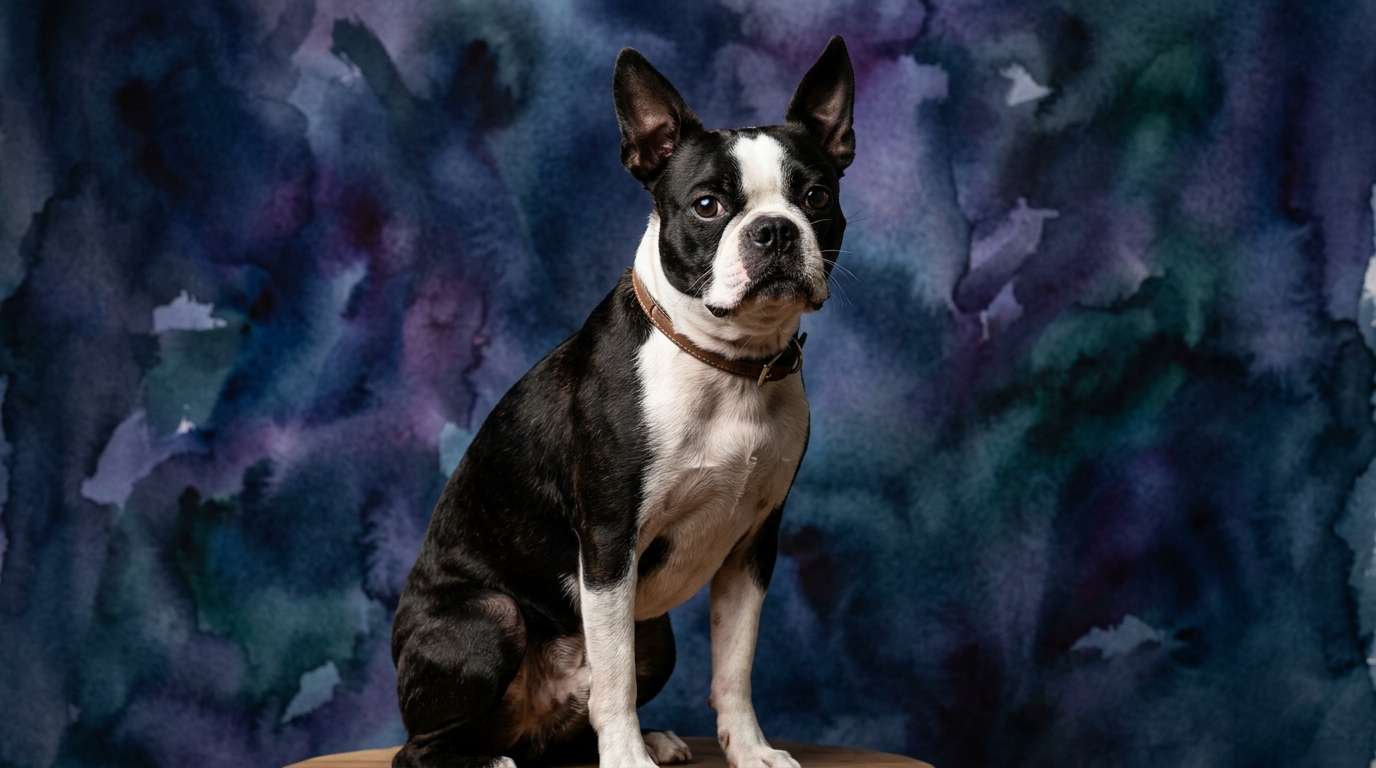
**Boston Terrier (Coren Rank #54, Non-Sporting Group)**: The Boston Terrier's cognitive strengths lean towards companionship. Their Problem Solving (3/5) indicates a moderate ingenuity, where they might rely more on trial and error or human guidance than intricate, independent strategies. Training Speed (3/5) is steady; they learn at a consistent pace, benefiting from positive reinforcement, with their desire to please making them receptive over time. Social Intelligence (4/5) is a highlight; these "American Gentlemen" are highly attuned to human companions, demonstrating empathy to read moods and respond with affection. Instinctive Drive (2/5) is comparatively low, as they were bred for companionship, leading their natural inclinations towards comfort and interaction over intense tasks. Memory (3/5) is functional, remembering commands and routines sufficient for daily living and basic obedience.
Where the Rottweiler Excels Cognitively
The Rottweiler's cognitive strength lies in strategic thinking and robust memory. Their 5/5 problem-solving score reflects an impressive ability to independently analyze situations and devise effective solutions, crucial for their historical roles. This isn't just following commands; it's understanding objectives and adapting. Coupled with a 5/5 memory, they recall intricate learned behaviors and apply past experiences consistently. Their perfect 5/5 instinctive drive provides innate motivation for tasks, powering their cognitive efforts. This combination enables excellence in complex obedience, protection work, and search and rescue, where sustained focus and mental application are paramount. Their Coren rank of #9 highlights their profound capacity for understanding and execution in mentally demanding tasks.
Where the Boston Terrier Shines Cognitively
While not dominating in traditional working intelligence, the Boston Terrier excels in social cognition and adaptability, paramount for a companion animal. Their 4/5 social intelligence indicates deep empathy and attunement to human emotional states, allowing seamless integration into family life. This isn't about complex puzzles, but understanding subtle nuances of human-dog interaction. They interpret social cues with ease, often anticipating their owner's moods, making them incredibly responsive. Their lower instinctive drive (2/5) means less burden from intense working urges, making them naturally content with a relaxed domestic existence. This translates into a dog less prone to destructive behaviors from unfulfilled working needs and more focused on harmonious cohabitation. Their cognitive strengths lie in being charming, adaptable, and emotionally perceptive, excelling in companionship.
Ease of Training: Behavioral Differences Unpacked
For experienced owners, the Rottweiler's superior problem-solving (5/5) and training speed (4/5) often make training straightforward. They grasp commands quickly with fewer repetitions and retain them reliably due to their strong memory (5/5). However, their powerful instinctive drive (5/5) and protective nature demand consistent, firm, positive training from an early age to channel their considerable energy. Without proper guidance, their intelligence can lead to independent decisions challenging for novice owners.
The Boston Terrier, with moderate training speed (3/5) and problem-solving (3/5), requires patience and consistency. They respond well to positive reinforcement and short sessions, though learning may take longer. Their lower instinctive drive (2/5) means less 'work' motivation and more desire for companionship, making them less intensely focused but also less prone to stubbornness. Their social intelligence (4/5) aids understanding, but memory (3/5) may necessitate refreshers. They are more forgiving of inconsistencies and less likely to develop issues from a lack of intense mental stimulation, suiting first-time owners committed to gentle methods.
Matching Breeds to Lifestyles: Active vs. Relaxed Owners
Rottweilers are suited for active owners providing consistent mental and physical challenges. Their 5/5 instinctive drive and problem-solving skills demand engagement beyond daily walks. They thrive with a 'job'—advanced obedience, protection sports, agility, or extensive outdoor adventures. Owners enjoying structured training, with strong-willed breed experience and significant time commitment, will find a rewarding partner. Lack of stimulation for a Rottweiler can lead to boredom, channeled by their intelligence into undesirable behaviors.
Conversely, Boston Terriers are ideal for more relaxed owners or urban dwellers. Their lower instinctive drive (2/5) means they are content with moderate exercise like daily walks and indoor play. Their high social intelligence (4/5) prioritizes companionship, thriving as integral family members, often preferring comfort over intense activity. Owners appreciating a charming, affectionate lapdog adaptable to apartment living, without demanding extensive outdoor adventures or rigorous training, will find a perfect fit. They are excellent companions for those seeking a devoted, easygoing presence.
The Verdict
Opt for a Rottweiler if you are an experienced dog owner seeking a highly capable, trainable, and protective companion for challenging activities and consistent mental engagement.
Choose a Boston Terrier if you desire an affectionate, adaptable companion that thrives on social interaction and requires moderate exercise, suitable for a relaxed home environment.
🧠 Find Your Pet's IQ Score
Our Pet IQ Lab assessment covers 25+ tests across 5 cognitive dimensions — personalized to your breed.
Take the Full IQ Test →Frequently Asked Questions
Do Rottweilers require more mental stimulation than Boston Terriers?
Yes, Rottweilers, with their 5/5 problem-solving and instinctive drive, absolutely require significantly more mental stimulation than Boston Terriers. They thrive on tasks, advanced training, and continuous learning to prevent boredom and channel their cognitive energy constructively.
Are Boston Terriers good for first-time dog owners?
Boston Terriers can be excellent for first-time dog owners due to their adaptable nature, moderate exercise needs, and strong social intelligence (4/5). Their lower instinctive drive makes them generally less demanding, provided owners are committed to consistent, positive training.
How does social intelligence differ between these two breeds?
Both breeds score 4/5 in social intelligence, but its expression differs; Rottweilers use it for discerning intentions and protective bonding, while Boston Terriers leverage it for affectionate companionship and seamless family integration. Rottweilers' social intelligence often intertwines with their protective instincts, whereas Boston Terriers use it to be highly attuned, charming companions.