
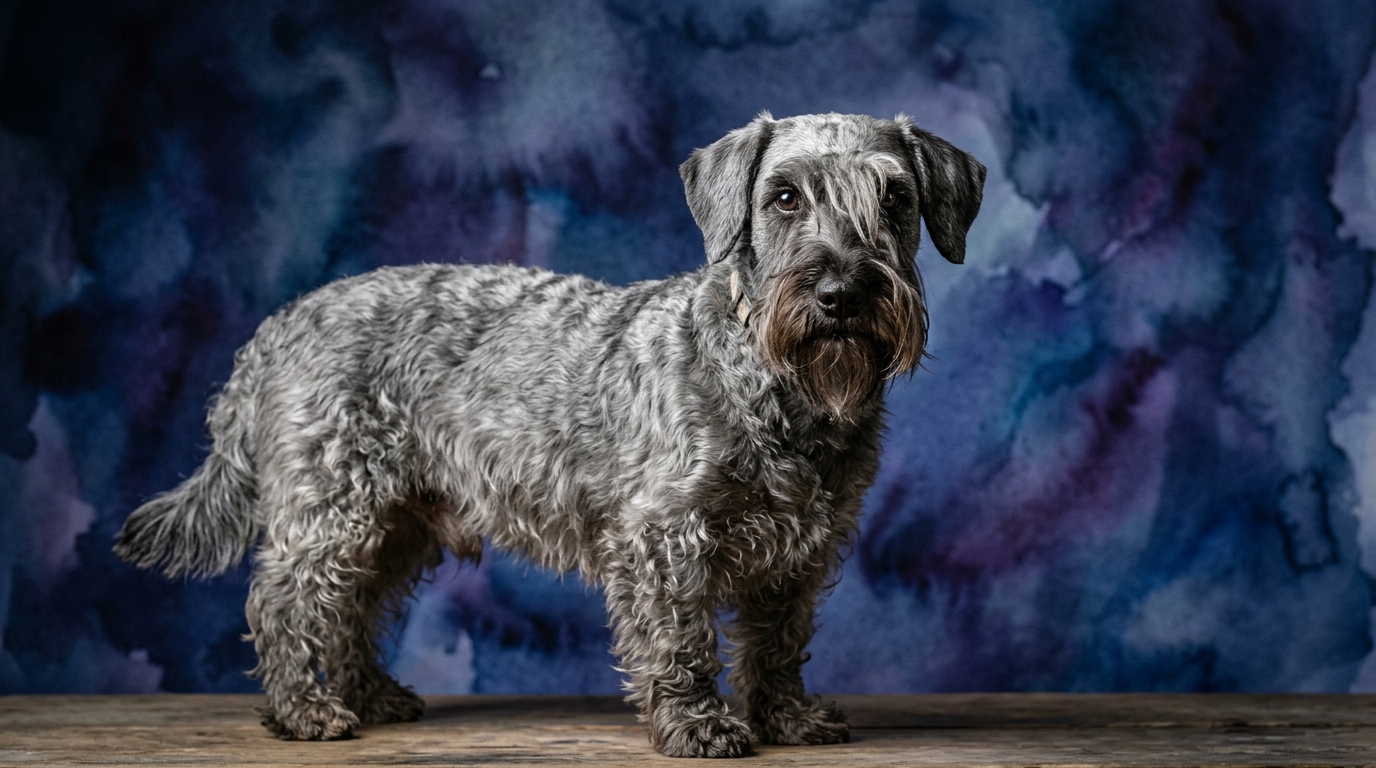
Side-by-Side Cognitive Profiles: Rottweiler vs. Cesky Terrier
At The Cosmic Pet Pet IQ Lab, we evaluate canine intelligence across five critical dimensions to provide a nuanced understanding of each breed's mental makeup. Here’s how the Rottweiler and Cesky Terrier compare:
**Rottweiler (Working Group)**
**Problem Solving (5/5):** Rottweilers demonstrate exceptional aptitude for navigating complex environments and figuring out solutions to novel challenges. This manifests in their ability to quickly adapt to new tasks, learn intricate sequences, and even outsmart perceived obstacles to achieve a goal.
**Training Speed (4/5):** Their capacity for rapid learning means Rottweilers generally grasp new commands and routines with efficiency. While not always instantaneous, their strong desire to work with a handler, coupled with their memory, makes them highly receptive to consistent training.
**Social Intelligence (4/5):** Rottweilers possess a robust understanding of social cues, both canine and human. They can discern moods, respond appropriately to varied interactions, and form deep, nuanced bonds, often exhibiting a keen awareness of their family's emotional states.
**Instinctive Drive (5/5):** Their heritage as herding and guarding dogs means Rottweilers possess powerful, ingrained drives for protection, territoriality, and working. This potent instinct fuels their focus and determination in tasks, making them formidable in roles requiring purpose and resolve.
**Memory (5/5):** An outstanding memory allows Rottweilers to retain learned information, commands, and experiences over extended periods. This contributes significantly to their training retention and their ability to recall complex behavioral patterns and past interactions.
**Cesky Terrier (Terrier Group)**
**Problem Solving (3/5):** Cesky Terriers exhibit a practical, task-oriented approach to problem-solving, often relying on their tenacity and physical prowess rather than complex strategizing. They can figure out how to access small spaces or pursue quarry, but may not excel at abstract puzzles or multi-step, human-designed challenges without guidance.
**Training Speed (3/5):** While capable of learning, Cesky Terriers typically require more repetition and patience in training compared to breeds with higher scores. Their independent terrier spirit means they process information at their own pace and often need compelling motivation to engage consistently.
**Social Intelligence (3/5):** Cesky Terriers are generally affable with their family but can be reserved or discerning with strangers. Their social intelligence is sufficient for harmonious family life, but they may not display the same subtle understanding of complex human social dynamics or group interactions as breeds with higher scores, preferring clear boundaries.
**Instinctive Drive (3/5):** Their instinctive drive centers on their terrier heritage: digging, chasing, and exploring. While present, this drive is often managed and less overwhelming than in some other terrier breeds, allowing them to integrate well into family life without constant outlet demands, though their prey drive remains a factor.
**Memory (3/5):** Cesky Terriers possess a functional memory, allowing them to recall basic commands and routines. They learn from experience, but their retention of complex sequences or infrequently practiced behaviors may require refreshers, indicating a practical rather than encyclopedic recall.
Where the Rottweiler Excels Cognitively
The Rottweiler's cognitive strengths are particularly evident in their superior problem-solving acumen and robust memory. Their 5/5 problem-solving score means they don't just follow instructions; they can analyze situations, learn from outcomes, and even devise novel approaches to overcome obstacles, a trait invaluable in advanced obedience or working roles. This ability is coupled with a 5/5 memory, allowing them to retain vast amounts of information, from intricate command sequences to the precise layout of familiar environments, enabling consistent, reliable performance over time. Furthermore, their powerful instinctive drive (5/5) translates into unwavering focus and determination when engaged in tasks, providing the mental stamina to see complex challenges through to completion, making them formidable partners in demanding endeavors.
Where the Cesky Terrier Shows Its Unique Strengths
While not boasting the high "raw" scores of the Rottweiler, the Cesky Terrier's cognitive profile represents a distinct set of advantages, particularly within their niche. Their problem-solving (3/5) is highly practical, focused on immediate, tangible goals like navigating dense undergrowth or locating hidden scents, requiring less abstract thought but immense persistence. Their instinctive drive (3/5), though lower, is perfectly calibrated for tasks requiring independent initiative without the need for constant human direction, making them self-sufficient explorers or vermin controllers. This balanced drive allows them to channel their energy effectively without becoming overwhelming, a "win" for owners seeking a terrier with a more manageable, yet still purposeful, mental engagement level. Their social intelligence (3/5) means they are discerning rather than universally outgoing, fostering deep, selective bonds that, for their chosen family, are loyal and unwavering, thriving in a close-knit environment rather than a bustling crowd.
Training Dynamics: Which Breed is Easier to Shape?
The Rottweiler is generally easier to train due to its higher scores in training speed (4/5), problem-solving (5/5), and memory (5/5). They process new information quickly, understand complex requests, and retain what they learn over long periods. Their strong social intelligence (4/5) also means they are typically eager to cooperate and form a working partnership with their handler, often finding satisfaction in pleasing their human. This makes them highly responsive to consistent positive reinforcement. In contrast, the Cesky Terrier, with 3/5 across these dimensions, requires more patience and repetition. Their independent terrier nature means they are less inherently motivated by human approval and more by their own interests. Training a Cesky often involves making the task inherently rewarding or engaging their natural prey drive rather than relying solely on their desire to please, as their processing speed and memory for complex sequences are not as robust.
Matching Canine Intellect to Owner Lifestyles
Rottweilers, with their 5/5 instinctive drive and high cognitive capacity, are better suited for active owners who can provide consistent mental and physical challenges. They thrive on having a 'job,' whether it's advanced obedience, protection work, or participating in dog sports, which satisfies their need for purpose and channels their formidable mental and physical energy. Owners who are less active or unable to provide this level of engagement may find a Rottweiler becomes bored and potentially destructive, requiring substantial commitment to structured activities. The Cesky Terrier, with its more moderate 3/5 instinctive drive, can suit a wider range of owners, including those who are more relaxed. While they still enjoy walks, exploration, and engaging in play, their needs for intense, structured mental work are less demanding than a Rottweiler's. They are content with regular, moderate exercise and mental stimulation that taps into their terrier instincts, like scent games or supervised digging, without requiring the rigorous daily 'work' a Rottweiler craves.
The Verdict
Choose a Rottweiler if you are an experienced, active owner seeking a highly capable, engaged canine partner for complex training, working roles, or demanding dog sports. Their exceptional problem-solving, memory, and strong working drive require significant commitment to mental and physical enrichment.
Choose a Cesky Terrier if you appreciate an independent, tenacious companion with a practical intelligence, suitable for moderate activity levels and a family environment where their discerning social nature and manageable terrier drives are valued. They offer loyalty and charm without the intense cognitive demands of a working breed.
🧠 Find Your Pet's IQ Score
Our Pet IQ Lab assessment covers 25+ tests across 5 cognitive dimensions — personalized to your breed.
Take the Full IQ Test →Frequently Asked Questions
Do Cesky Terriers need a lot of mental stimulation despite their lower IQ scores?
While their overall IQ scores are moderate, Cesky Terriers are still intelligent and benefit from mental engagement. They enjoy puzzle toys, scent work, and learning new tricks that tap into their terrier instincts, preventing boredom and promoting a happy disposition.
How does a Rottweiler's high instinctive drive impact their daily life and training?
A Rottweiler's powerful instinctive drive means they possess a strong innate desire to work, protect, and patrol. This drive requires consistent positive outlets through structured training, jobs, or sports; without appropriate channeling, it can manifest as undesirable behaviors like excessive guarding or destructive tendencies.
Can a Cesky Terrier be trained for advanced obedience or competitive dog sports?
Yes, a Cesky Terrier can certainly be trained for advanced obedience and competitive dog sports, particularly those that appeal to their natural instincts like Earthdog trials or agility. However, their independent nature and moderate training speed mean it will likely require more patience, creativity, and consistent motivation from the handler compared to a Rottweiler.