
Side-by-Side IQ Profile
The Rottweiler, a breed historically tasked with demanding work, exhibits a cognitive profile tailored for utility and complex engagement. Ranked #9 by Coren, they are among breeds that understand and execute commands with few repetitions and respond reliably. Their Problem Solving is rated 5/5, indicating an exceptional ability to navigate complex environments, devise multi-step solutions, and outsmart obstacles with remarkable ingenuity. Training Speed scores 4/5, meaning they grasp new commands and routines quickly, often requiring fewer repetitions due to their focus. Social Intelligence is 4/5, reflecting a nuanced understanding of human social cues and pack dynamics, enabling effective guarding and discerning friend from perceived threat. An Instinctive Drive of 5/5 highlights powerful inherent motivations for protection, pursuit, and work, rooted in their herding and guarding history, which needs appropriate channeling. Finally, their Memory is 5/5, showing exceptional recall for learned commands, routines, and experiences, retaining complex sequences and recognizing individuals over extended periods.
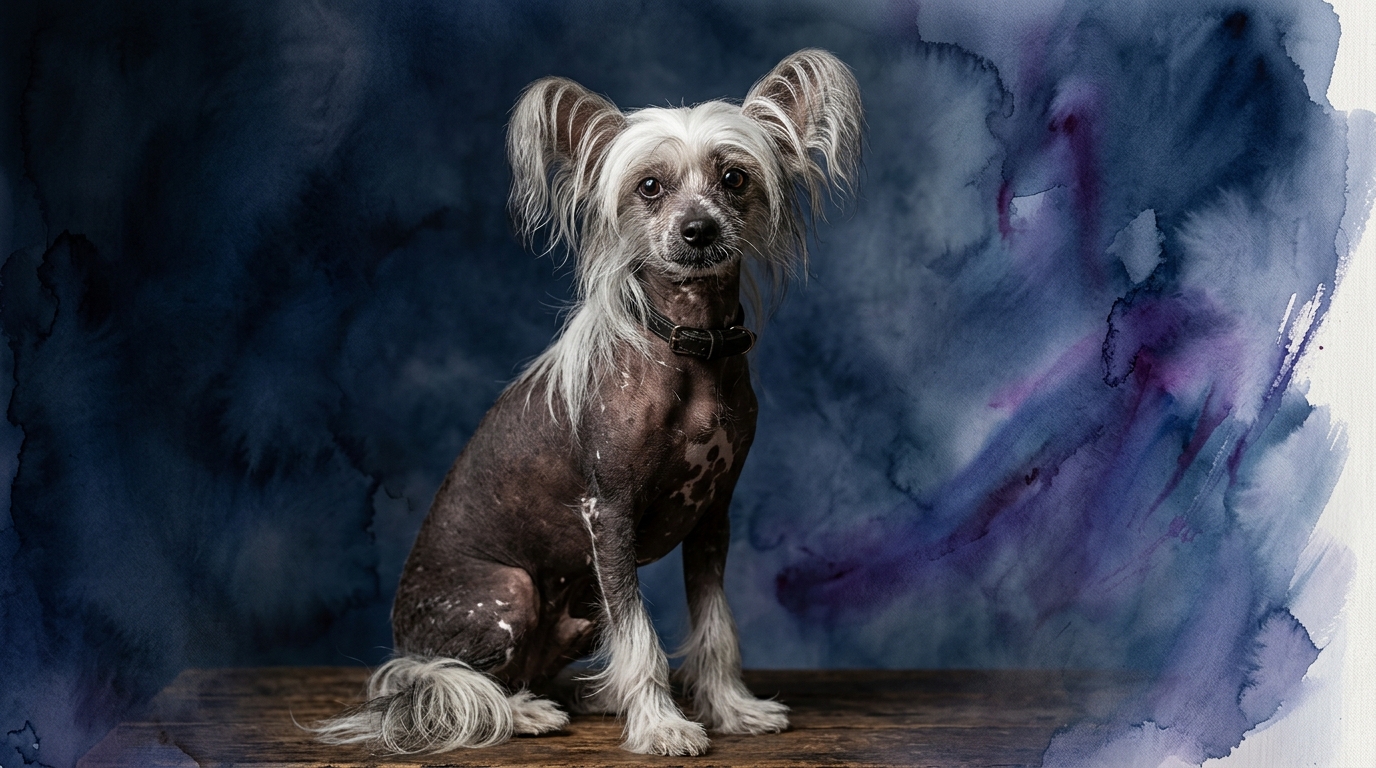
The Chinese Crested, primarily bred for companionship, possesses a cognitive profile better suited for intimate human interaction than strenuous tasks. While not appearing on Coren's list, their unique strengths lie in their role as a devoted pet. Their Problem Solving is 3/5, meaning they can manage basic household challenges and learn simple tricks, but generally lack the drive for intricate, multi-step problem-solving seen in working breeds. Training Speed is 3/5, indicating they learn new commands, though it often requires more patience and repetition; consistency and positive reinforcement are crucial for progress. Social Intelligence scores 3/5, primarily geared towards intimate human companionship, making them adept at reading owner moods and seeking comfort, thriving on close interaction within a family unit. An Instinctive Drive of 3/5 means they exhibit moderate drives, focused on companionship and comfort, with lower prey and territorial instincts making them less demanding in terms of behavioral outlets. Their Memory is 3/5, allowing them to recall routines, basic commands, and familiar people, but with less capacity for extensive or highly complex sequences than breeds with higher memory scores.
Where Rottweiler Wins Cognitively
The Rottweiler's cognitive profile demonstrates clear advantages in areas requiring robust mental engagement and physical application. Their superior Problem Solving (5/5) means they can independently assess situations and formulate effective strategies, whether navigating an agility course or understanding complex commands like 'find the keys.' This cognitive depth allows them to excel in tasks demanding initiative and adaptive thinking. Furthermore, their exceptional Instinctive Drive (5/5) and Memory (5/5) combine to create a dog capable of sustained, purpose-driven work. A Rottweiler can remember intricate scent trails, recall extensive protection protocols, or consistently execute multi-part routines over long periods, driven by their innate desire to perform with precision and retention.
Where Chinese Crested Offers Unique Cognitive Advantages
While the Chinese Crested's raw cognitive scores are generally lower, their specific cognitive profile is uniquely advantageous for a particular lifestyle. Their moderate Instinctive Drive (3/5) means they are less prone to behavioral issues stemming from boredom or unfulfilled working needs that often challenge owners of high-drive breeds. This makes them inherently easier to manage in smaller living spaces and less demanding of constant strenuous mental or physical outlets. Their Social Intelligence (3/5), though scored lower than a Rottweiler's, is exquisitely tuned for close human-animal bonds. They excel at picking up on subtle emotional cues and providing comfort, thriving in an environment where their primary role is that of an affectionate companion. This focused social aptitude, combined with their lower Problem Solving and Training Speed, results in a dog that often prefers simpler, more direct interactions, making them a perfect fit for owners seeking a less mentally demanding, yet deeply connected, pet.
Which is Easier to Train and Why
Training ease is subjective and depends heavily on owner experience and expectations, but comparing the raw cognitive scores, the Rottweiler generally presents a faster learning curve for complex tasks. Their Training Speed (4/5) and Problem Solving (5/5) mean they can grasp new, multi-step commands and abstract concepts with fewer repetitions. They possess an inherent drive to work and please, which, when properly channeled with consistent, firm, and positive reinforcement, makes them capable of learning advanced obedience, protection work, or intricate agility sequences. However, their strong Instinctive Drive (5/5) also means that if their minds aren't adequately stimulated, this intelligence can be redirected into unwanted behaviors, requiring knowledgeable handling.
The Chinese Crested, with its Training Speed (3/5) and Problem Solving (3/5), typically requires more patience and repetition during training. They learn best with short, engaging sessions that are consistently positive and reward-based. While they may not excel at complex multi-stage tasks, they are perfectly capable of mastering basic obedience and house manners. Their lower Instinctive Drive (3/5) can be an advantage as they are less likely to develop destructive behaviors out of an unfulfilled need for "work," but it also means they might lack the intense motivation for rigorous training sessions. Owners must understand their companion-focused nature and adapt training methods to suit a dog that prioritizes comfort and affection over task mastery.
Which Suits Active Owners vs Relaxed Owners
The Rottweiler is unequivocally suited for active, experienced owners who can provide consistent structure, mental stimulation, and physical exercise. Their robust cognitive profile, particularly their Problem Solving (5/5) and Instinctive Drive (5/5), demands engagement. Owners must be prepared for daily challenges like advanced obedience, dog sports, or meaningful "jobs" to prevent boredom and harness their natural abilities. They thrive with owners who understand working dog mentalities and can confidently lead and direct a powerful, thinking animal. A sedentary or inconsistent owner risks a Rottweiler becoming bored, leading to frustration and potential behavioral issues.
Conversely, the Chinese Crested thrives with relaxed, patient, and affectionate owners who prioritize companionship and indoor comfort. Their moderate cognitive needs, particularly their lower Instinctive Drive (3/5) and Problem Solving (3/5), mean they do not require extensive physical or mental exertion to be content. They are perfectly happy with regular walks, playtime, and ample cuddle sessions on the couch. Owners who appreciate a less demanding pet that excels at being a devoted lap dog will find the Chinese Crested an ideal match. They fit seamlessly into homes where their primary role is to be a cherished family member, rather than a working partner.
The Verdict
Opt for a Rottweiler if you are an experienced, active owner seeking a highly capable, mentally engaged partner for advanced training, protection, or dog sports, and are prepared to channel their formidable intelligence and drive.
Select a Chinese Crested if you desire a devoted, less demanding companion who thrives on close human interaction and requires moderate exercise, fitting seamlessly into a relaxed, affectionate household.
🧠 Find Your Pet's IQ Score
Our Pet IQ Lab assessment covers 25+ tests across 5 cognitive dimensions — personalized to your breed.
Take the Full IQ Test →Frequently Asked Questions
Does Coren ranking mean a breed is universally "smarter"?
Coren's ranking primarily assesses "working and obedience intelligence," focusing on a dog's ability to learn and obey commands. It doesn't encompass all forms of canine cognition, such as problem-solving in natural environments or social intelligence with other animals, so it's a specific measure rather than a universal intelligence metric.
Can a Chinese Crested learn complex tricks despite its lower training speed score?
Yes, with patience, positive reinforcement, and consistent training, a Chinese Crested can certainly learn a variety of tricks. Their "training speed" score indicates they may require more repetitions and shorter, more frequent sessions compared to a Rottweiler, but their capacity for learning is still present.
How does a Rottweiler's high instinctive drive impact daily life for an owner?
A Rottweiler's high instinctive drive means they possess strong innate motivations for tasks like guarding, herding, or protection. For owners, this translates to a need for structured activities that channel these drives positively, such as obedience training, protection sports, or consistent mental enrichment, to prevent boredom or misdirection of their natural tendencies.