
Side-by-Side IQ Profile: German Shepherd vs. Chinese Crested
The German Shepherd, a Herding breed ranked #3 by Coren, exhibits an exceptional cognitive profile across the board. Their Problem Solving is 5/5, consistently demonstrating aptitude for complex tasks and adapting strategies when initial attempts fail, showcasing deep strategic thought. Training Speed is 5/5, as they absorb new commands rapidly, often in just a few repetitions, due to their eagerness to learn and strong focus. Social Intelligence is 5/5, indicating a profound ability to interpret human cues and form nuanced bonds, often anticipating handler intentions. Instinctive Drive is 5/5, manifesting as robust protective instincts, an intense desire to work, and a keen sense of purpose. Finally, their Memory is 5/5, showcasing outstanding long-term recall for commands, routines, and experiences.
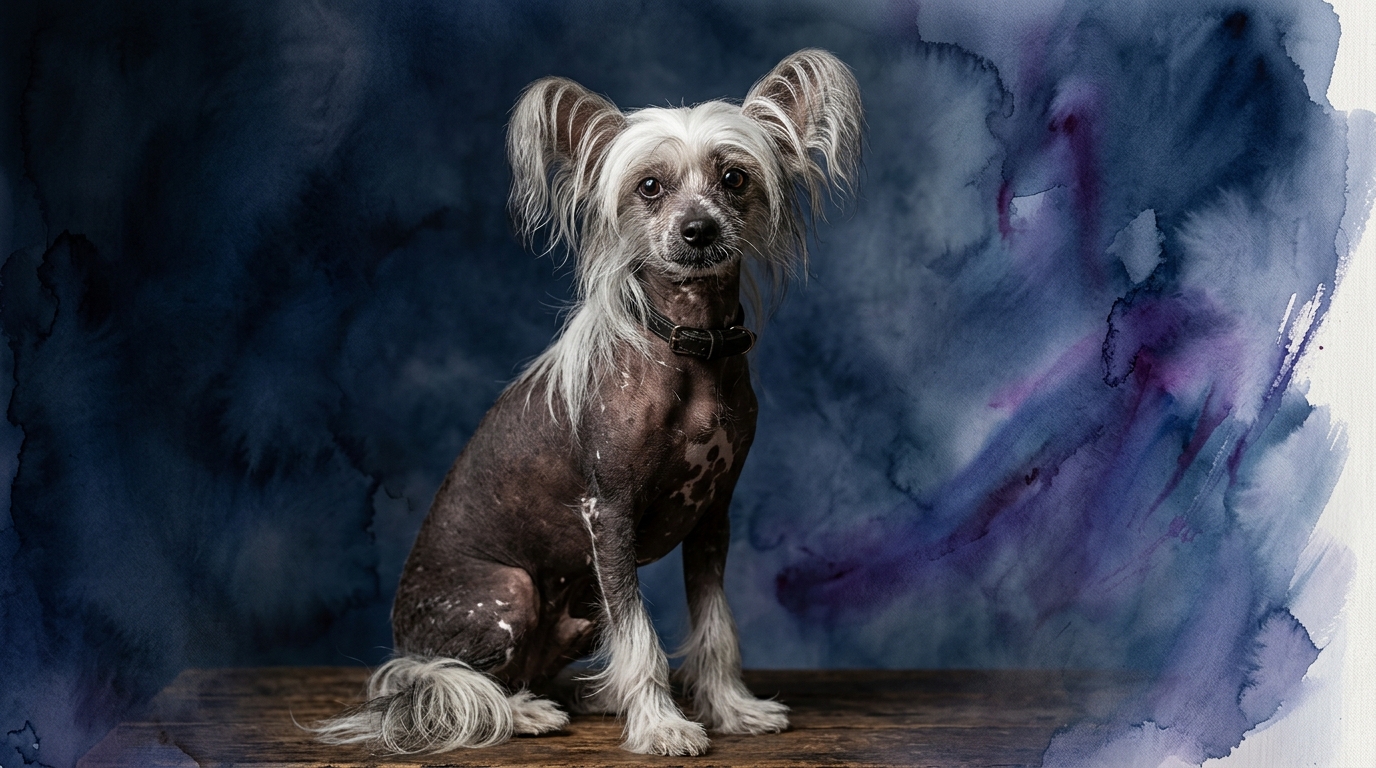
The Chinese Crested, a Toy breed not Coren-ranked, presents a different cognitive landscape. Their Problem Solving is 3/5, approaching challenges with moderate ingenuity and capable of solving straightforward puzzles, though abstract or multi-step tasks may require more guidance. Training Speed is 3/5; they learn at a steady pace but generally require more repetitions, with focus sometimes being more fleeting. Social Intelligence is 3/5; they connect well with their immediate human family, displaying affection, but their interpretation of complex social cues might be less pronounced. Instinctive Drive is 3/5, typically moderate and centered around companionship and comfort rather than intense work or protection. Their Memory is 3/5, demonstrating adequate recall for routines, familiar faces, and basic commands learned through consistent practice, though less extensive than breeds bred for complex work.
Where the German Shepherd Wins Cognitively
The German Shepherd's exceptional problem-solving acumen stands out; they don't just follow instructions but actively process and adapt to novel scenarios, making them adept at tasks requiring critical thinking and independent decision-making, such as search and rescue or complex obedience trials. Their profound instinctive drive translates into an unparalleled work ethic and focus, enabling them to sustain attention and effort on demanding tasks for extended periods, a cognitive advantage rooted in their herding heritage. Furthermore, their superior memory allows for the rapid acquisition and long-term retention of a vast array of commands and experiences, building a rich cognitive database that informs future actions and responses in dynamic environments.
Where the Chinese Crested Wins Cognitively
While not excelling in traditional 'work' intelligence, the Chinese Crested displays a distinct cognitive strength in their refined social attunement within their intimate family unit. Their moderate social intelligence makes them exceptionally sensitive to the emotional nuances of their primary caregivers, often seeking comfort or offering quiet companionship precisely when needed, showcasing a specific type of emotional responsiveness. Their less intense instinctive drive, compared to a Herding breed, means they are often content with less structured mental stimulation, thriving on predictable routines and close, affectionate interactions, which can be a cognitive advantage for owners seeking a calm, emotionally present companion without the demanding mental exercise requirements. They excel in creating low-stress, emotionally supportive environments through their presence.
Which is Easier to Train and Why
The German Shepherd unequivocally presents as the easier breed to train due to their remarkable 5/5 scores across Problem Solving, Training Speed, Social Intelligence, and Memory. Their inherent desire to work and strong handler focus means they grasp new concepts quickly, often requiring only a few repetitions, and their capacity for complex problem-solving allows them to generalize learned behaviors to new situations. For example, a German Shepherd can learn a multi-step retrieve command and then apply the concept to different objects or environments with minimal additional instruction, driven by their deep-seated instinctive drive to perform tasks.
In contrast, the Chinese Crested, with 3/5 in these cognitive dimensions, requires a more patient and repetition-heavy approach to training. While capable of learning, their attention span might be shorter, and their less intense instinctive drive means they are less intrinsically motivated by the 'job' of training itself. They might learn 'sit' reliably in a familiar living room, but transferring that command to a distracting park environment could take significantly more reinforcement and time, as their cognitive framework prioritizes comfort and companionship over task mastery. Trainers need to build strong rapport and make training feel like a positive, interactive game.
Which Suits Active Owners vs. Relaxed Owners
Active owners who thrive on engaging in structured activities, advanced training, and outdoor adventures will find the German Shepherd an ideal cognitive match. Their 5/5 instinctive drive, coupled with their exceptional problem-solving and training speed, means they require and relish consistent mental stimulation and physical challenges, such as agility, obedience, protection work, or long hikes. These dogs are at their best when given a 'job' that taxes their considerable cognitive abilities, thriving on learning new skills and executing complex commands in dynamic environments, making them perfect for dedicated, hands-on individuals.
Conversely, relaxed owners seeking a devoted companion who is content with less rigorous mental demands and a calmer daily routine will find the Chinese Crested more fitting. Their moderate instinctive drive and problem-solving capacity mean they are perfectly happy with daily walks, indoor play, and plenty of lap time, without the constant need for complex cognitive tasks. They derive satisfaction from close proximity and gentle interaction, making them excellent companions for individuals or families whose lifestyle leans towards quiet evenings and leisurely companionship rather than intense, task-oriented engagement.
The Verdict
Choose a German Shepherd if you are an experienced, active owner dedicated to providing consistent mental and physical challenges, and you desire a highly trainable partner for complex tasks or demanding activities. Their advanced cognitive profile thrives on purpose and structured learning, making them exceptional working companions.
Opt for a Chinese Crested if you seek a gentle, affectionate companion content with moderate activity and less intensive mental stimulation, valuing emotional connection and comfort within a relaxed home environment. They excel as devoted lap dogs who thrive on close companionship rather than demanding cognitive work.
🧠 Find Your Pet's IQ Score
Our Pet IQ Lab assessment covers 25+ tests across 5 cognitive dimensions — personalized to your breed.
Take the Full IQ Test →Frequently Asked Questions
Does a Chinese Crested's lower Coren rank mean it can't be trained?
Not at all; a lower Coren ranking simply indicates they typically require more repetitions and patience during training compared to breeds like the German Shepherd. Chinese Cresteds are capable of learning a wide range of commands and tricks, especially when training is made positive, engaging, and focused on building a strong bond.
How does 'instinctive drive' impact daily life for these breeds?
For a German Shepherd, a 5/5 instinctive drive means they possess a powerful internal motivation for purpose, often manifesting as a strong desire to herd, protect, or work, requiring owners to channel this energy constructively through training and activities. For a Chinese Crested, a 3/5 drive means they are generally less driven by intense tasks, preferring comfort and companionship, which translates to a calmer demeanor and less demand for strenuous mental or physical exertion.
Can a Chinese Crested excel in dog sports like agility?
Yes, Chinese Cresteds can certainly participate in and enjoy dog sports like agility, though their approach and training trajectory might differ from a German Shepherd. While they may not achieve the same top-tier competitive speed or complex course mastery as a Herding breed, their agility performance will be driven by their desire for fun and interaction with their owner, rather than an intense drive for task completion.