
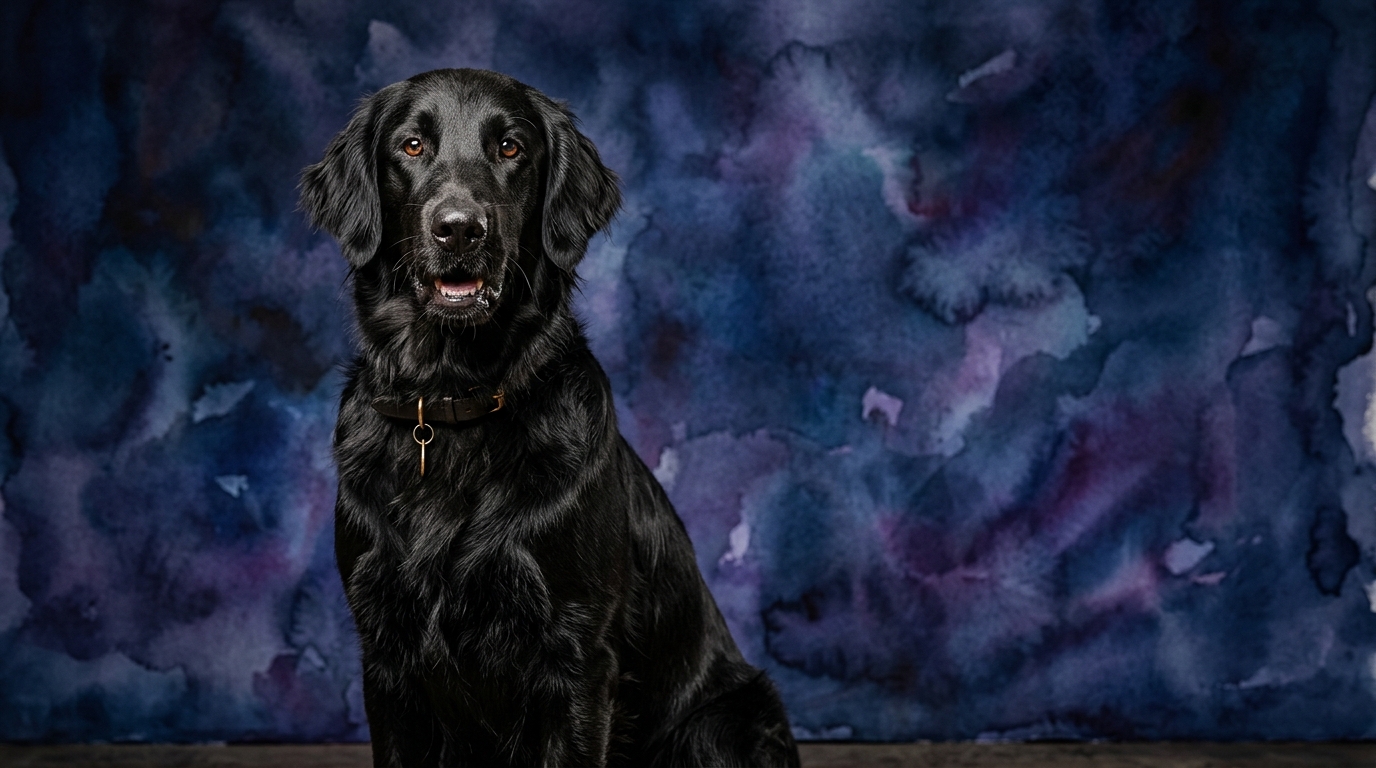
Side-by-Side IQ Profile: Rottweiler vs. Flat-Coated Retriever
Delving into the specific cognitive dimensions of each breed, we uncover how their minds are wired for their respective roles and interactions. The Cosmic Pet Pet IQ Lab provides a unique lens through which to compare these distinct canine personalities.
The **Rottweiler**, ranking #9 on the Coren scale, presents a formidable cognitive profile. Its **Problem Solving (5/5)** demonstrates an exceptional capacity to analyze novel situations and devise effective solutions, often acting proactively to assess threats or navigate complex tasks. A **Training Speed (4/5)** reflects a robust aptitude for rapidly acquiring new commands and routines, driven by a focused nature and desire for purpose. **Social Intelligence (4/5)** highlights a sophisticated understanding of human social cues, intentions, and hierarchical structures within their family unit, allowing them to read moods and anticipate actions. Their **Instinctive Drive (5/5)** is profound, rooted in their working heritage for guarding and protection, fueling vigilance and a commitment to perceived duties. Finally, a **Memory (5/5)** ensures outstanding recall for commands, routines, and experiences, contributing to their reliability and consistency in learned behaviors.
In contrast, the **Flat-Coated Retriever**, ranking #17, offers a distinct set of cognitive strengths. Its **Problem Solving (4/5)** indicates a capability for navigating moderately complex challenges and learning through trial and error, particularly when tasks relate to their retrieving instincts. A **Training Speed (4/5)** shows a strong eagerness to learn and absorb new instructions quickly, often driven by a desire to please and an optimistic outlook. **Social Intelligence (3/5)** suggests an affable and often joyful engagement with humans, though perhaps more focused on playful interaction and companionship rather than intense protective assessment. Their **Instinctive Drive (3/5)** is moderate but distinct, primarily centered on retrieving, playfulness, and companionship, rather than intense vigilance. Like the Rottweiler, the Flat-Coat possesses an excellent **Memory (5/5)**, demonstrating a robust capacity to remember learned behaviors, locations, and past interactions, which serves them well in field work and consistent obedience.
Where the Rottweiler Wins Cognitively
The Rottweiler's cognitive edge is most apparent in its superior Problem Solving (5/5) and profound Instinctive Drive (5/5). These traits combine to produce a dog capable of independent thought in critical situations, making split-second decisions based on assessment rather than purely learned responses. For instance, a Rottweiler might independently decide to intervene in a perceived threat, demonstrating a high level of situational awareness and strategic thinking that goes beyond rote obedience. Their Social Intelligence (4/5), while shared with other breeds, is uniquely geared towards understanding complex family dynamics and protective roles, allowing them to anticipate human needs related to security and companionship with a focused intensity. This blend of attributes makes them exceptional in roles requiring discernment and autonomous action under pressure.
Where the Flat-Coated Retriever Wins Cognitively
While the Flat-Coated Retriever may not numerically surpass the Rottweiler in many dimensions, its cognitive strengths manifest uniquely in its approach to interaction and learning. Its Training Speed (4/5), coupled with its generally exuberant and optimistic temperament, means it often approaches learning as a joyful collaboration, making the process itself a positive experience for both dog and owner, thereby fostering stronger bonds. Its Memory (5/5) is perfectly aligned with its sporting heritage, allowing it to recall multiple retrieve locations and complex scent patterns with precision, a task where its enthusiasm for the job further enhances its cognitive application and effectiveness in the field. This breed's specific Social Intelligence (3/5), while rated lower for complex, protective assessment, excels in fostering cheerful, engaging family bonds, prioritizing playful connection and companionship over vigilance, which is a distinct advantage for certain family dynamics.
Which is Easier to Train and Why
Both breeds share an impressive Training Speed (4/5), indicating a strong capacity to learn new commands quickly. However, their ease of training diverges based on their underlying motivations and drives. The Rottweiler, with its intense Instinctive Drive (5/5) and high Problem Solving (5/5), learns rapidly and can master intricate tasks, but requires a handler who can channel its strong will and independent nature. Their training demands consistency, clear boundaries, and purpose-driven tasks to prevent them from "problem-solving" in ways not desired by the owner, potentially making them challenging for the uninitiated.
In contrast, the Flat-Coated Retriever's equally swift Training Speed (4/5) is often fueled by its desire to please and its lower Instinctive Drive (3/5), making it generally more amenable and less prone to challenging authority. While it might require more creative motivation to sustain focus on repetitive tasks, its cheerful disposition and eagerness to engage often make the training journey feel lighter and more collaborative, especially for owners who enjoy positive reinforcement-heavy methods. Its biddability and optimistic outlook can make the early stages of training particularly rewarding.
Which Suits Active Owners vs. Relaxed Owners
The choice between these breeds significantly depends on an owner's lifestyle and energy levels. The Rottweiler, with its profound Instinctive Drive (5/5) and need for purpose, thrives with active owners who can provide consistent mental and physical challenges. They require structured activities, extensive training, and clear leadership to channel their guarding instincts and problem-solving abilities productively. A relaxed owner might find a Rottweiler's inherent drive overwhelming, potentially leading to behavioral issues if not adequately stimulated and directed.
Conversely, the Flat-Coated Retriever, while also an active breed, suits owners who enjoy playful, outdoor activities and companionship without the intense demand for a "job." Their moderate Instinctive Drive (3/5) and social disposition (3/5) make them excellent partners for hiking, fetching, and family outings, but they are generally more adaptable to periods of relaxation after adequate exercise. They are less about intense purpose and more about joyful participation, fitting well into families seeking an energetic, but less demanding, canine companion.
The Verdict
Opt for a Rottweiler if you seek a vigilant companion that excels in independent problem-solving and protective roles, and you are prepared to dedicate significant time to consistent training and purposeful engagement.
Select a Flat-Coated Retriever if you desire an enthusiastic, playful family member for active companionship and enjoy a collaborative, positive-reinforcement-based training journey.
🧠 Find Your Pet's IQ Score
Our Pet IQ Lab assessment covers 25+ tests across 5 cognitive dimensions — personalized to your breed.
Take the Full IQ Test →Frequently Asked Questions
Do Rottweilers require more mental stimulation than Flat-Coated Retrievers?
Yes, Rottweilers typically demand more intense and varied mental stimulation due to their superior problem-solving skills and profound instinctive drive. They thrive on tasks that challenge their intellect and provide a sense of purpose, whereas Flat-Coats enjoy mental engagement through play and retrieving tasks, which are less about independent complex problem-solving.
Which breed is better for a first-time dog owner?
While both breeds benefit from experienced owners, the Flat-Coated Retriever's generally more amenable nature and lower assertive drive might make it a more manageable choice for a dedicated first-time owner. Rottweilers require a confident, consistent handler experienced in managing powerful working breeds and their strong drives.
How do their social intelligence differences impact family life?
A Rottweiler's higher social intelligence is often geared towards understanding and maintaining family hierarchy, leading to a protective yet discerning bond, making them excellent guardians. A Flat-Coated Retriever's social intelligence, while lower in score, manifests as joyful, amiable interaction, prioritizing playful companionship and inclusion in family activities, fostering a more lighthearted family dynamic.