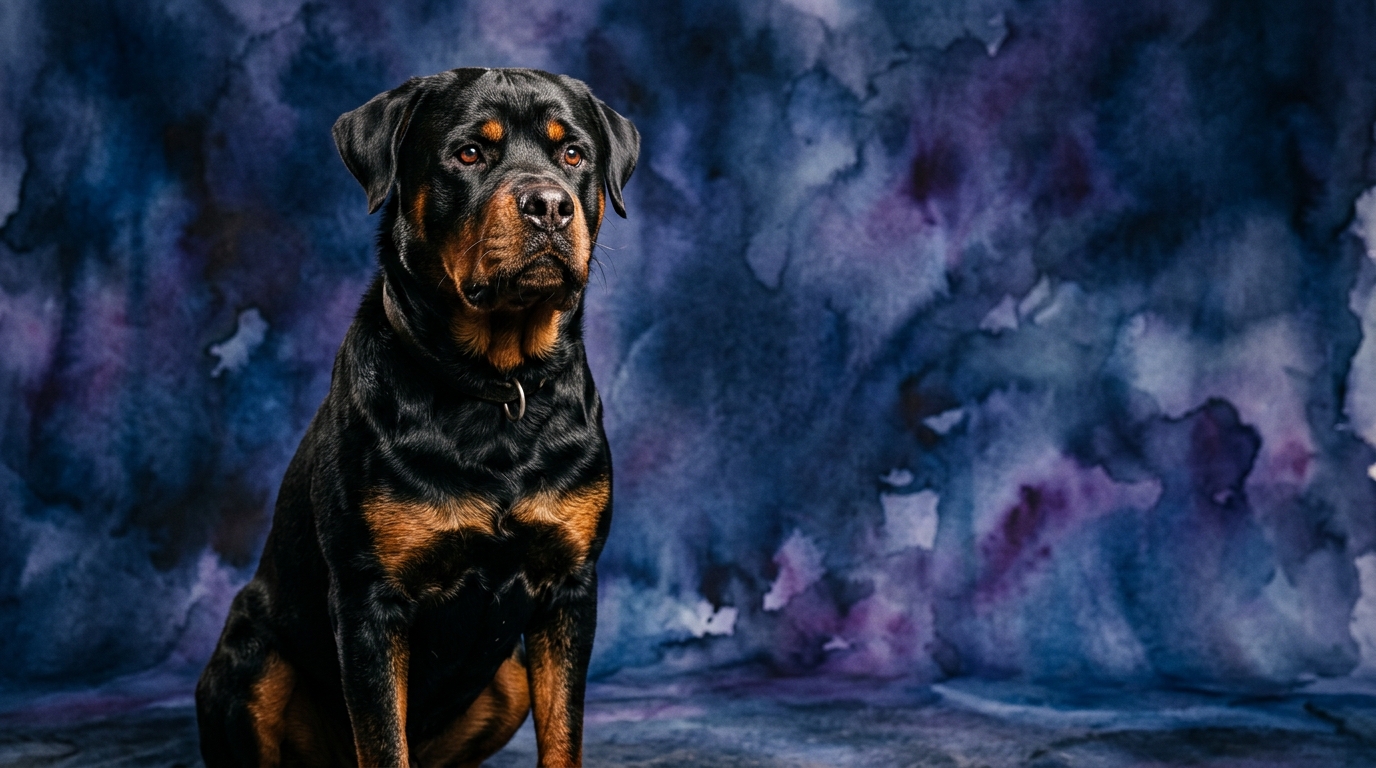
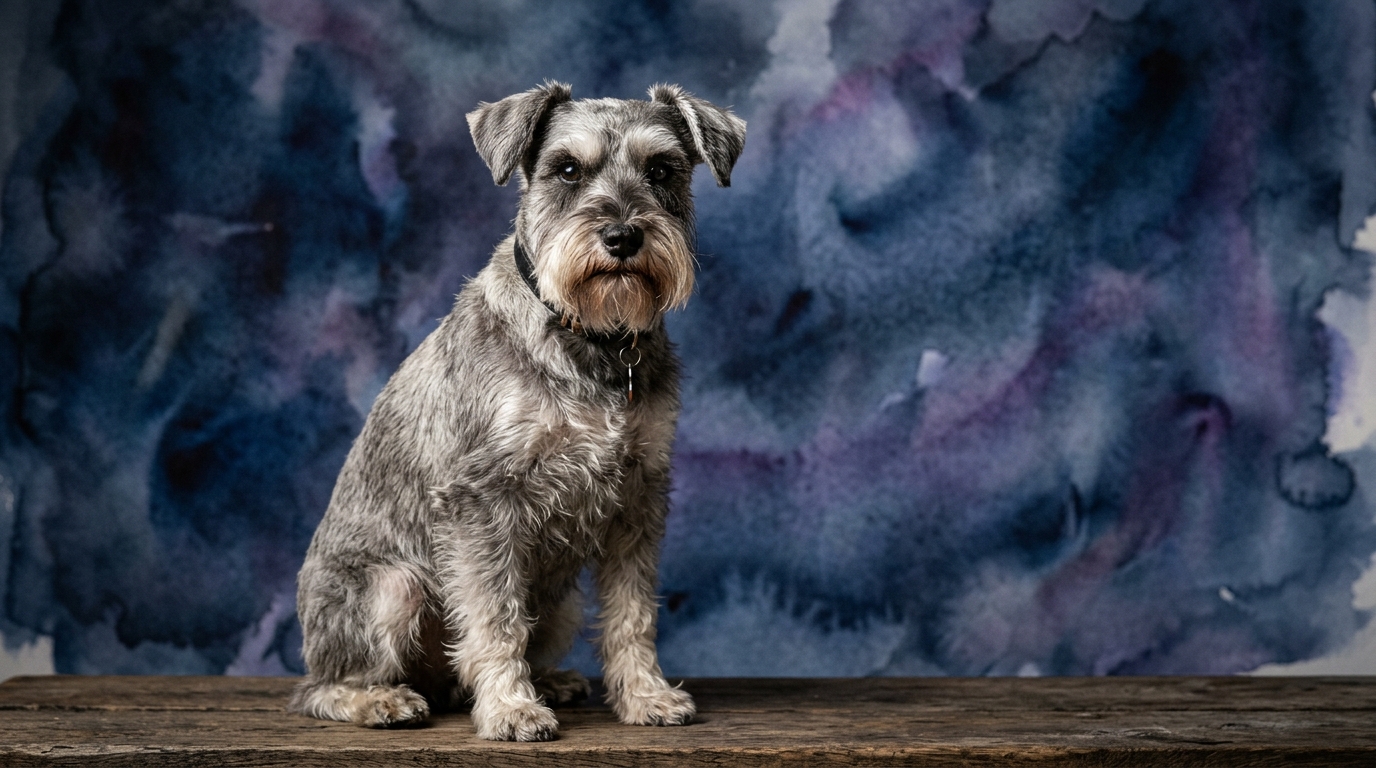
Side-by-Side IQ Profile: Rottweiler vs. Miniature Schnauzer
Rottweiler: A Working group stalwart, the Rottweiler secures a Coren rank of #9, reflecting a profound capacity for understanding and execution. Their problem-solving is rated 5/5, indicating an ability to navigate complex situations and strategize solutions independently. Instinctive drive also scores 5/5, underscoring a powerful innate motivation for tasks like guarding, herding, or protection work, often expressed through unwavering focus and endurance. Memory stands at an impressive 5/5, suggesting they retain learned behaviors and experiences with exceptional fidelity over long periods. While training speed is a solid 4/5, meaning they grasp new commands efficiently, their social intelligence also at 4/5 points to a good understanding of human cues and group dynamics, though perhaps with a more reserved initial approach than some breeds.
Miniature Schnauzer: This Terrier group member, with a Coren rank of #12, presents a different cognitive landscape tailored to its historical role. A standout 5/5 in training speed reveals a remarkable alacrity in picking up new cues and behaviors, making them exceptionally quick learners in structured environments. Their problem-solving is rated 4/5, indicating a good capacity for independent thought and navigating challenges, albeit perhaps with less complex strategic depth than the Rottweiler. Social intelligence also sits at 4/5, reflecting an ability to read and respond to human and canine interactions effectively, often with a bold and outgoing demeanor. Instinctive drive, at 4/5, signifies a persistent motivation for their terrier tasks, such as vigilance and pursuit, while memory at 4/5 suggests a strong, reliable retention of learned information, though potentially not with the same long-term depth as their Working group counterpart.
Where the Rottweiler Wins Cognitively
The Rottweiler truly shines in cognitive areas demanding deep processing, sustained focus, and robust recall. Their 5/5 problem-solving isn't just about figuring out simple puzzles; it extends to understanding multi-stage tasks, anticipating outcomes, and adapting strategies in dynamic environments, making them adept at complex service work or protection scenarios where independent judgment is crucial. This cognitive depth allows them to excel in roles requiring more than rote memorization, such as tracking a specific scent over varied terrain or discerning legitimate threats from benign interactions. Furthermore, their perfect 5/5 memory means that once a skill or rule is learned, it's typically retained with remarkable permanence, requiring less frequent refreshers for established behaviors. This steadfast retention underpins their reliability in high-stakes working roles, ensuring consistent performance even after long periods. Their superior instinctive drive, also 5/5, translates into an unwavering commitment to a task once engaged, fueling their endurance and dedication in demanding physical and mental challenges.
Where the Miniature Schnauzer Wins Cognitively
The Miniature Schnauzer's cognitive strengths are rooted in agility and rapid adaptation, particularly evident in their 5/5 training speed. This exceptional quickness means they can acquire new commands, tricks, or sequences of behaviors with fewer repetitions than many other breeds, often grasping concepts after just a few introductions. This makes them particularly well-suited for dog sports like agility, rally obedience, or freestyle, where rapidly chaining different actions is key. Their 4/5 problem-solving, while not as deep as the Rottweiler's, often manifests as cleverness and resourcefulness in navigating their immediate environment or figuring out how to get what they want, sometimes employing creative solutions to bypass obstacles or access desired items. This quick-wittedness, combined with their strong social intelligence, allows them to respond swiftly to handler cues and environmental changes, making them highly responsive companions in dynamic situations. Their ingrained terrier drive, though 4/5, provides a persistent, energetic approach to tasks, ensuring they engage with enthusiasm, especially when their prey drive is channeled into appropriate activities.
Which is Easier to Train and Why?
When comparing ease of initial training, the Miniature Schnauzer holds a distinct advantage due to its 5/5 training speed. This breed demonstrates a remarkable capacity for quickly forming associations between commands and actions, often needing fewer repetitions to solidify new behaviors. Owners report that Miniature Schnauzers frequently pick up basic obedience cues and even complex tricks with surprising alacrity, making early training sessions highly rewarding and efficient. While their terrier independence can sometimes surface, their rapid learning curve generally allows for quick course correction and a faster progression through training milestones. The Rottweiler, with a 4/5 training speed, is still a highly capable learner, but they typically require slightly more consistent repetition and a more structured, methodical approach to fully ingrain new commands. Their profound memory ensures that once learned, behaviors are deeply retained, but the initial acquisition phase may not be as instantaneous as with the Miniature Schnauzer. Therefore, for an owner prioritizing rapid acquisition of a broad repertoire of behaviors, the Miniature Schnauzer generally presents an easier initial training journey.
Which Suits Active Owners vs. Relaxed Owners?
The choice between these two breeds significantly depends on an owner's lifestyle and their preferred level of engagement. Active owners who seek a dedicated working partner, thrive on structured routines, and are prepared to provide consistent, mentally demanding tasks will find the Rottweiler an ideal match. Their powerful instinctive drive and superior problem-solving abilities demand purposeful activities, such as advanced obedience, protection sports, tracking, or even carefully supervised farm work. A Rottweiler thrives when given a job to do, requiring an owner who can channel their robust intelligence and physical stamina into productive outlets, preventing boredom and potential behavioral issues. Conversely, while also requiring mental stimulation, the Miniature Schnauzer's energy and cognitive profile are well-suited for active owners who enjoy teaching a wide array of tricks, participating in agility, rally, or regular brisk walks and interactive play. They adapt well to owners who appreciate a vigilant, spirited companion eager to learn new things and engage in varied activities, but who might not require the same intensity of structured 'work' as a Rottweiler. For truly relaxed owners seeking a low-maintenance companion, neither breed is a perfect fit, as both possess significant cognitive needs. However, the Miniature Schnauzer's smaller size and adaptable nature might make them a slightly more manageable option for active owners who may not have the space or lifestyle for a large working dog, yet still desire a mentally engaging companion.
The Verdict
Choose a Rottweiler if you are an experienced owner seeking a profoundly dedicated working partner, valuing deep problem-solving, steadfast loyalty, and are prepared to invest in consistent, structured training that leverages their exceptional memory and powerful drive for demanding tasks.
Choose a Miniature Schnauzer if you enjoy rapid training, variety in activities, and desire a spirited, quick-witted companion eager to learn new behaviors and remain vigilantly alert to their surroundings, fitting well into active but perhaps less intensely 'working' households.
🧠 Find Your Pet's IQ Score
Our Pet IQ Lab assessment covers 25+ tests across 5 cognitive dimensions — personalized to your breed.
Take the Full IQ Test →Frequently Asked Questions
Is a Rottweiler or Miniature Schnauzer better for first-time dog owners?
Generally, the Miniature Schnauzer might be a more manageable choice for first-time owners due to their smaller size and faster training speed for basic obedience. Rottweilers, while immensely capable, require a confident, consistent handler experienced with strong working breeds to guide their powerful drives and ensure proper socialization.
Do Rottweilers or Miniature Schnauzers require more daily mental exercise?
Both breeds require substantial mental engagement to thrive, but the Rottweiler's 5/5 problem-solving and instinctive drive demand more consistent, structured 'work' and complex challenges to prevent boredom. Miniature Schnauzers also need daily mental puzzles and training, but their needs can often be met with varied play, trick training, and shorter, frequent sessions.
Which breed adapts better to apartment living?
The Miniature Schnauzer generally adapts better to apartment living due to its significantly smaller size, though it still requires regular walks and mental stimulation. A Rottweiler, despite its calm indoor demeanor, needs ample space and outdoor opportunities to expend its considerable physical and mental energy, making apartment living challenging without significant owner commitment to outdoor activities.