
Side-by-Side IQ Profile
The Rottweiler, a member of the Working Group, stands out with a Coren rank of #9, indicating a strong aptitude for understanding and obeying commands. Its Problem Solving score of 5/5 signifies an exceptional capacity to navigate novel challenges and devise solutions independently, often exhibiting strategic thinking. A Training Speed of 4/5 means this breed grasps new tasks efficiently, requiring fewer repetitions than many others. Social Intelligence, also at 4/5, highlights its ability to interpret human cues and adapt its behavior within social structures, crucial for its historical roles. An Instinctive Drive of 5/5 points to a powerful inherent motivation, often channeled into protection, herding, or service. Finally, a Memory score of 5/5 reflects an outstanding ability to retain learned behaviors and experiences over extended periods, making training cumulative and effective.
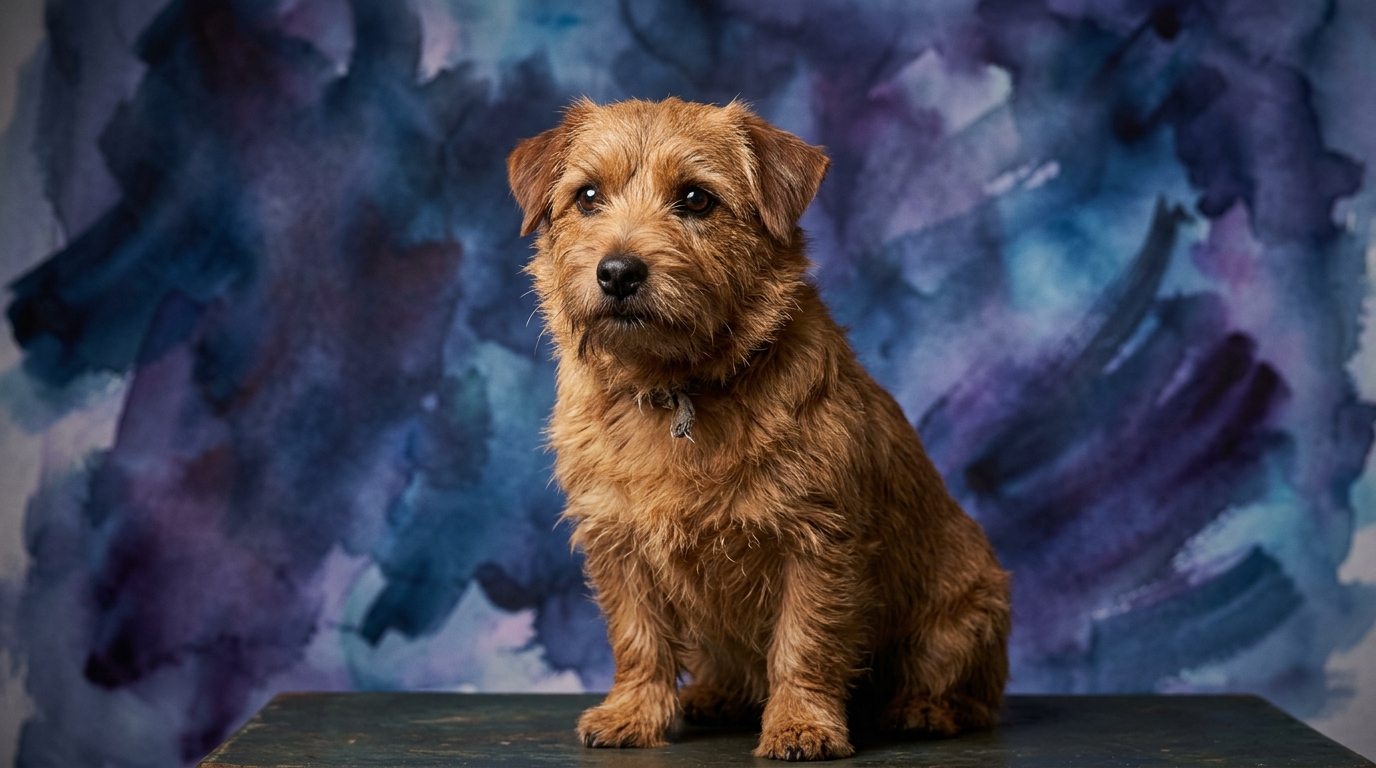
The Norfolk Terrier, a Terrier Group breed, is not Coren-ranked, and its cognitive profile reflects its tenacious heritage. Its Problem Solving score of 3/5 suggests a moderate ability to tackle new puzzles, often relying on persistence and trial-and-error rather than complex planning. A Training Speed of 3/5 indicates it learns at a steady pace, but may require more patience and consistency to solidify new commands compared to breeds with higher scores. Social Intelligence, also 3/5, means it can understand human interactions but might prioritize its own independent motivations over strict adherence to social norms, typical of terriers bred for independent work. An Instinctive Drive of 3/5, while present, is more focused on prey drive and exploration rather than the intense, task-oriented drive of working breeds. Its Memory score of 3/5 suggests a solid capacity to remember, though perhaps not with the same depth or duration as breeds scoring higher, meaning refresher training might be beneficial.
Where the Rottweiler Wins Cognitively
The Rottweiler's cognitive strengths are evident across multiple dimensions, particularly in its capacity for complex problem-solving and memory retention. With a 5/5 in Problem Solving, a Rottweiler exhibits a remarkable ability to analyze situations and formulate effective strategies, whether it's figuring out how to open a tricky gate or understanding the nuances of a multi-step command. This isn't just about brute force or repetition; it involves an analytical approach to obstacles. Furthermore, its 5/5 Memory score means that once a Rottweiler learns something, it tends to stick. This makes long-term training highly efficient and allows for the accumulation of a vast repertoire of skills and commands. For tasks requiring sequential understanding, pattern recognition, or recalling specific instructions over time, the Rottweiler demonstrates a distinct advantage. Its high Instinctive Drive (5/5) also means it possesses an innate motivation to engage in tasks, which, when properly channeled, supercharges its learning and application of cognitive skills. This drive allows them to maintain focus and dedication to a given objective, a trait critical for their historical roles in herding, guarding, and protection.
Where the Norfolk Terrier Wins Cognitively
While the Norfolk Terrier's scores are more moderate, its cognitive profile is perfectly adapted for its original purpose and possesses unique strengths. Its Problem Solving (3/5) and Instinctive Drive (3/5) combine to create a tenacious and independent thinker. Unlike the Rottweiler's strategic approach, the Norfolk often excels in persistent, exploratory problem-solving, particularly when it comes to scent-driven tasks or navigating complex environments to pursue a perceived quarry. This isn't about following complex commands but about independent initiative and determination to achieve a self-motivated goal, like finding a hidden toy or investigating a new smell. Their social intelligence (3/5), while not as geared towards intricate human cooperation as a working dog, allows them to form strong, affectionate bonds while retaining a characteristic terrier self-reliance. This independence means they are less prone to separation anxiety and can be content with their own company for periods, making them resilient in certain social contexts. Their cognitive strengths lie in their self-sufficiency and unwavering focus on tasks that align with their deep-seated terrier instincts, often demonstrating remarkable grit where other breeds might give up.
Which is Easier to Train and Why
Based on the provided metrics, the Rottweiler (Training Speed 4/5) generally presents as the easier breed to train compared to the Norfolk Terrier (Training Speed 3/5). The Rottweiler's higher Training Speed means it typically grasps new commands and concepts more quickly, requiring fewer repetitions to achieve proficiency. This efficiency is further bolstered by its exceptional Memory (5/5), ensuring that learned behaviors are retained for extended periods, reducing the need for constant refreshers. Their high Social Intelligence (4/5) also makes them more attuned to human cues and desires, often eager to please and cooperative in training scenarios. A Rottweiler's strong Instinctive Drive (5/5) can be effectively channeled into motivation for training, especially when tasks align with their natural working predispositions. In contrast, the Norfolk Terrier, with its 3/5 in Training Speed and Memory, may require more consistent, patient, and engaging training sessions. Their independent terrier spirit and moderate Instinctive Drive (3/5) mean they might be less inclined to follow commands if they perceive a more interesting, self-directed activity. Training a Norfolk often involves finding creative ways to make learning fun and rewarding, leveraging their natural curiosity and prey drive, rather than relying on their eagerness to please. Real behavioral differences include the Rottweiler's tendency to focus intently on a handler during training, absorbing information, versus the Norfolk's occasional "selective hearing" when a fascinating scent or movement captures its attention.
Which Suits Active Owners vs. Relaxed Owners
The choice between a Rottweiler and a Norfolk Terrier depends significantly on an owner's lifestyle and energy levels. The Rottweiler, with its 5/5 Instinctive Drive and robust physical presence, is better suited for active owners. This breed thrives on purpose and requires consistent mental and physical engagement. Owners who enjoy structured activities like obedience training, protection work, agility, or long, vigorous walks and hikes will find a Rottweiler a willing and capable partner. Their cognitive abilities demand outlets that challenge their problem-solving skills and and memory, preventing boredom and potential behavioral issues. A relaxed owner might struggle to provide the necessary stimulation, leading to a frustrated or under-exercised Rottweiler. Conversely, the Norfolk Terrier, while energetic in bursts, is generally more adaptable to varied activity levels. Its 3/5 Instinctive Drive means it enjoys regular walks and playtime but doesn't necessarily require the same intensity or duration of structured work as a Rottweiler. This makes the Norfolk a good fit for owners who enjoy daily strolls, interactive play sessions, and perhaps some casual dog sports, but who also appreciate a dog that can relax contentedly indoors. While not a couch potato, their smaller size and less demanding work ethic make them more suitable for owners who might describe themselves as relaxed or moderately active, seeking companionship without the need for extensive, high-intensity engagement.
The Verdict
Choose a Rottweiler if you are an active, experienced owner seeking a highly trainable, dedicated working partner eager for complex tasks and consistent mental engagement.
Opt for a Norfolk Terrier if you appreciate an independent, spirited companion that thrives on moderate activity, enjoys exploring, and offers affection without demanding constant intense mental work.
🧠 Find Your Pet's IQ Score
Our Pet IQ Lab assessment covers 25+ tests across 5 cognitive dimensions — personalized to your breed.
Take the Full IQ Test →Frequently Asked Questions
Can a Norfolk Terrier be trained for complex tasks like a Rottweiler?
While a Norfolk Terrier possesses problem-solving abilities, their independent nature and lower training speed mean they generally won't achieve the same level of complex task proficiency as a Rottweiler. Their strengths lie more in persistent, instinct-driven tasks rather than intricate obedience.
Does a Rottweiler's high instinctive drive make them difficult to manage?
A Rottweiler's powerful instinctive drive, while requiring firm and consistent guidance, is a cognitive asset rather than a liability. When channeled through early socialization and structured training, this drive translates into a dedicated and focused partner, eager to work and please its handler.
Is the Coren ranking the only measure of a dog's intelligence?
The Coren ranking primarily measures 'working and obedience intelligence' – how quickly a dog learns and obeys commands. It doesn't encompass all facets of canine cognition, such as problem-solving in novel situations, social intelligence with other dogs, or independent adaptive behavior, which our IQ Lab scores aim to capture.