
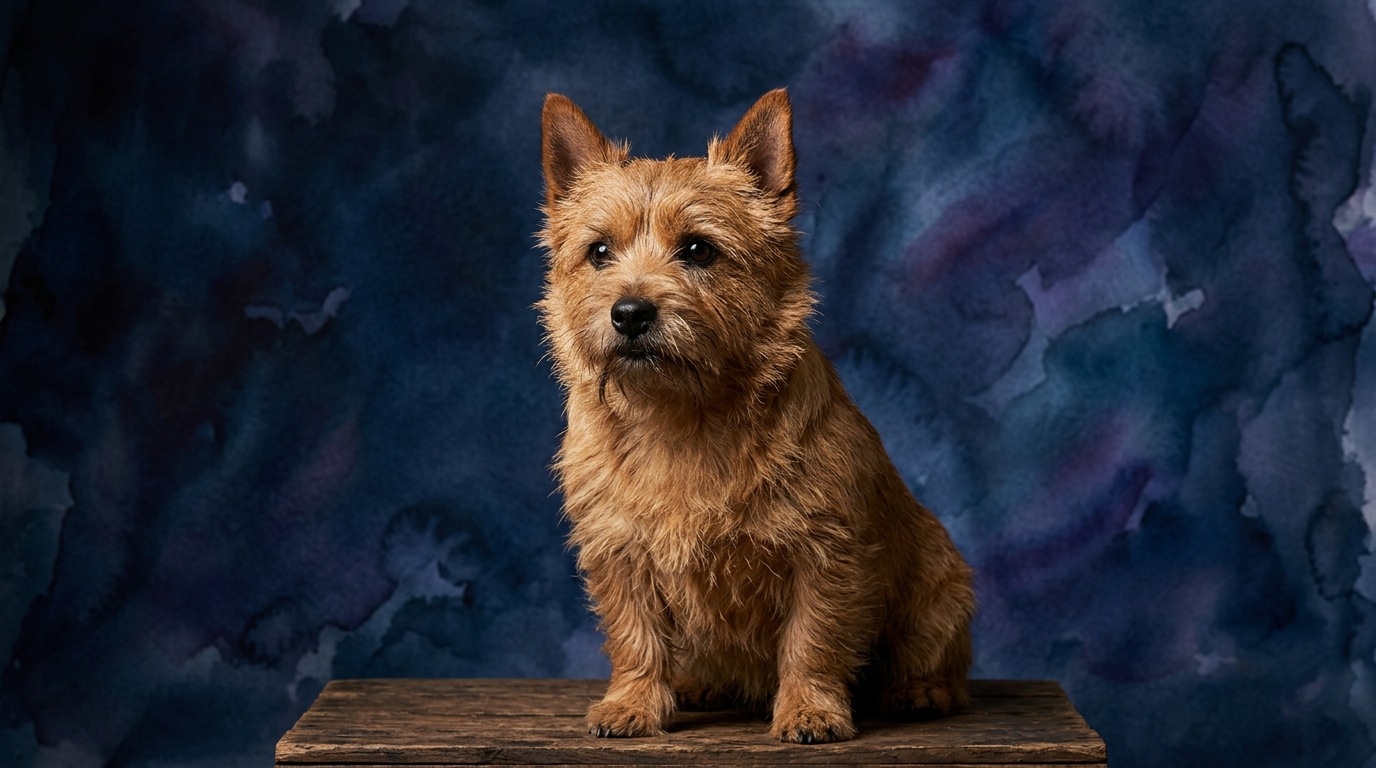
Side-by-Side Cognitive Profiles: Rottweiler vs. Norwich Terrier
The Cosmic Pet Pet IQ Lab offers a detailed look into the cognitive dimensions of various breeds, providing a framework to understand their mental strengths. For the Rottweiler, a breed traditionally known for its working capabilities and ranked #9 by Coren, we observe a profile built for complex engagement. Its Problem Solving is rated 5/5, indicating an exceptional capacity to navigate novel situations and devise solutions. Training Speed also scores well at 4/5, suggesting a quick uptake of new commands and routines. Social Intelligence, at 4/5, highlights their ability to interpret human cues and integrate into family dynamics effectively. Their Instinctive Drive is a powerful 5/5, reflecting a strong genetic inclination towards specific tasks, often related to protection or herding. Finally, Memory stands at an impressive 5/5, allowing them to retain information, commands, and experiences over long periods with remarkable fidelity.
In contrast, the Norwich Terrier, a breed from the Terrier group and not Coren-ranked, presents a different cognitive blueprint, tailored to its historical role. Across all five dimensions – Problem Solving, Training Speed, Social Intelligence, Instinctive Drive, and Memory – the Norwich Terrier consistently scores 3/5. This does not imply a lack of mental capacity but rather a distinct prioritization of cognitive resources. Their Problem Solving at 3/5 suggests they can figure things out, but perhaps with less abstract reasoning than a Rottweiler, often focusing on immediate, tangible challenges. A Training Speed of 3/5 indicates they are trainable, though they may require more repetition and patience than a breed with a higher score. Social Intelligence at 3/5 points to their ability to form bonds and communicate, albeit sometimes with a more independent streak. Their Instinctive Drive at 3/5 is still potent, geared towards their terrier heritage of chasing and digging, while Memory at 3/5 means they will remember, but perhaps not with the same depth or detail as a Rottweiler.
Where the Rottweiler Excels Cognitively
The Rottweiler's cognitive strengths are evident across multiple dimensions, making it a formidable presence in tasks requiring depth of thought and retention. Its 5/5 Problem Solving means a Rottweiler can process complex environmental information, analyze scenarios, and execute multi-step solutions, whether it's navigating an obstacle course, figuring out how to open a gate, or understanding an intricate sequence of commands in protection work. This capacity for analytical thought allows them to adapt rapidly to changing situations and learn from past experiences with remarkable efficiency.
Coupled with a 5/5 Memory, the Rottweiler's learning is not fleeting. They can recall a vast repertoire of commands, remember specific individuals or routines over extended periods, and learn from a single, well-executed training session. This exceptional retention is invaluable for working roles where consistency and reliability are paramount. Furthermore, their powerful 5/5 Instinctive Drive fuels their dedication to tasks, manifesting as a strong desire to fulfill a purpose, whether it's guarding their family, engaging in advanced obedience, or participating in dog sports. This drive, channeled correctly, transforms into focused determination, allowing them to push through challenges that might deter other breeds.
Where the Norwich Terrier Shows Its Unique Cognitive Strengths
While the Norwich Terrier's cognitive scores are consistently 3/5, this profile reflects a breed whose mental acuity is finely tuned for specific, instinct-driven tasks, rather than complex abstract problem-solving. Their 3/5 Problem Solving might not involve intricate puzzles, but it excels at practical, immediate challenges – like figuring out how to squeeze through a small opening to pursue a scent, or outsmarting a perceived pest. This manifests as a tenacious, resourceful approach to their environment, driven by an innate curiosity.
The Norwich Terrier's 3/5 Instinctive Drive, while lower than a Rottweiler's, is intensely focused on its terrier heritage. This means a strong, persistent drive for hunting, digging, and exploring, which requires a distinct type of mental engagement. They are adept at using their senses to locate and pursue, demonstrating a sharp, practical intelligence in their chosen 'work.' Their 3/5 Social Intelligence allows them to form strong, though sometimes opinionated, bonds with their human family, often communicating their desires and boundaries with clear, direct signals. They may not interpret subtle human nuances with the same depth as a Rottweiler, but they are masters of assertive and affectionate companionship, making their presence felt within the home.
Training Dynamics: Which is Easier to Train and Why?
Based on their cognitive profiles, the Rottweiler generally presents as the easier breed to train for a wide range of commands and behaviors. Their 4/5 Training Speed means they grasp new concepts quickly, often requiring fewer repetitions to solidify a command. This is significantly aided by their 4/5 Social Intelligence, which fosters a strong desire to understand and please their human handler, making them highly responsive to praise and direction. The Rottweiler's superior 5/5 Memory ensures that once a lesson is learned, it's retained, building a robust foundation of trained behaviors over time. Their 5/5 Instinctive Drive, when properly channeled through training, translates into a powerful motivation to work alongside their human, eager for a purpose and focused engagement.
The Norwich Terrier, with its consistent 3/5 across Training Speed, Social Intelligence, and Memory, requires a different approach to training. They are certainly trainable, but their inherent independence and terrier tenacity mean they may take longer to learn a new command, often needing more consistent and creative reinforcement. Their 3/5 Social Intelligence suggests they might prioritize their own immediate interests over a human's directive if not sufficiently motivated, displaying a charming stubbornness. Their 3/5 Instinctive Drive, geared towards independent hunting and exploration, means that off-leash reliability or ignoring a tempting scent might be a greater challenge. Training a Norwich Terrier demands patience, consistency, positive reinforcement, and a deep understanding of their terrier motivations, often turning lessons into a game to capture their attention and willingness.
Matching Breeds to Lifestyles: Active vs. Relaxed Owners
For active owners seeking a highly engaged and mentally stimulating companion, the Rottweiler is an exceptional match. Their 5/5 Problem Solving and 5/5 Memory demand consistent mental exercise through advanced obedience, puzzle toys, dog sports like agility or protection work, and varied routines. Their robust 5/5 Instinctive Drive means they thrive on having a job to do, requiring owners who can provide purpose and channel their powerful energies into constructive activities. An owner who enjoys daily training sessions, long walks, or runs, and is prepared for a deeply bonded, working partnership will find the Rottweiler a profoundly rewarding companion, capable of incredible feats of learning and loyalty.
The Norwich Terrier, while not necessarily requiring the same intensity of structured physical exercise as a Rottweiler, suits owners who appreciate a spirited, independent, and curious companion. Their 3/5 Instinctive Drive means they need outlets for their natural terrier behaviors – supervised digging, chase games, or exploring new environments on a leash. Owners should be prepared for a dog with a strong personality and a mind of its own, one who enjoys being involved in family activities but also appreciates its own space. They are well-suited for owners who enjoy brisk walks, interactive play, and can provide consistent, engaging training that respects their independent nature, rather than demanding absolute subservience. They fit well into homes where their distinct character is celebrated, offering lively companionship without the intense working demands of a Rottweiler.
The Verdict
Choose the Rottweiler if you are an engaged owner seeking a highly trainable, protective, and mentally robust companion eager for complex tasks and deep partnership.
Opt for the Norwich Terrier if you appreciate an independent, tenacious, and spirited companion that offers unique terrier charm and thrives with consistent, patient, and engaging interaction.
🧠 Find Your Pet's IQ Score
Our Pet IQ Lab assessment covers 25+ tests across 5 cognitive dimensions — personalized to your breed.
Take the Full IQ Test →Frequently Asked Questions
Can a Norwich Terrier perform complex tasks like a Rottweiler?
While a Norwich Terrier's problem-solving is rated 3/5 compared to a Rottweiler's 5/5, they are capable of learning and performing tasks. Their strengths lie more in practical, instinct-driven challenges rather than abstract, multi-step commands, requiring different training approaches and expectations.
How does social intelligence differ between these two breeds?
A Rottweiler's 4/5 social intelligence often translates to a nuanced understanding of human moods and complex social cues, fostering a deep partnership. A Norwich Terrier's 3/5 social intelligence means they form strong bonds but might communicate more directly and independently, sometimes prioritizing their own desires.
What kind of mental stimulation is best for each breed?
Rottweilers thrive on advanced obedience, puzzle toys, and purposeful 'work' that engages their high problem-solving and memory. Norwich Terriers benefit from scent work, interactive play that mimics hunting, and short, fun training sessions that cater to their independent, curious nature.