Side-by-Side IQ Profile: Standard Poodle vs. Norwich Terrier
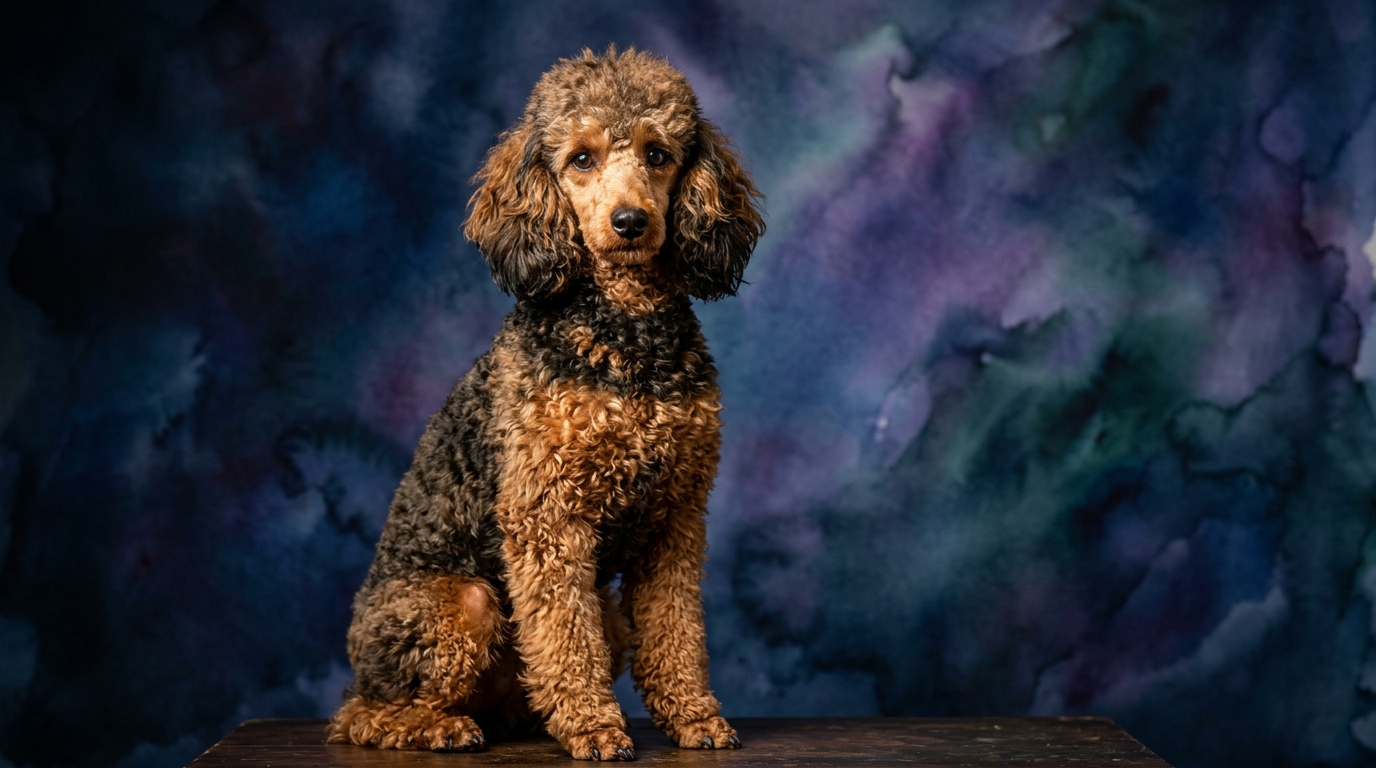
The Cosmic Pet Pet IQ Lab employs a comprehensive five-dimensional framework to assess canine intelligence, offering a nuanced view beyond simple obedience. For the Standard Poodle, a breed often associated with performance and partnership, these scores paint a picture of exceptional cognitive breadth. Their Problem Solving is rated 5/5, indicating an outstanding capacity for understanding complex scenarios, strategizing novel solutions, and adapting learned behaviors to new challenges. Training Speed is also 5/5, reflecting their rapid acquisition of new commands and routines, often requiring minimal repetitions. Social Intelligence, at 5/5, highlights their profound ability to interpret human cues, anticipate intentions, and engage in sophisticated communication. Their Instinctive Drive registers 4/5, signifying a strong, purposeful drive that is readily channeled towards tasks, whether retrieving, agility, or service work, but is less prone to the single-minded focus of some hunting breeds. Memory, a perfect 5/5, underscores their enduring retention of training, experiences, and spatial awareness, allowing them to build upon past knowledge effectively.
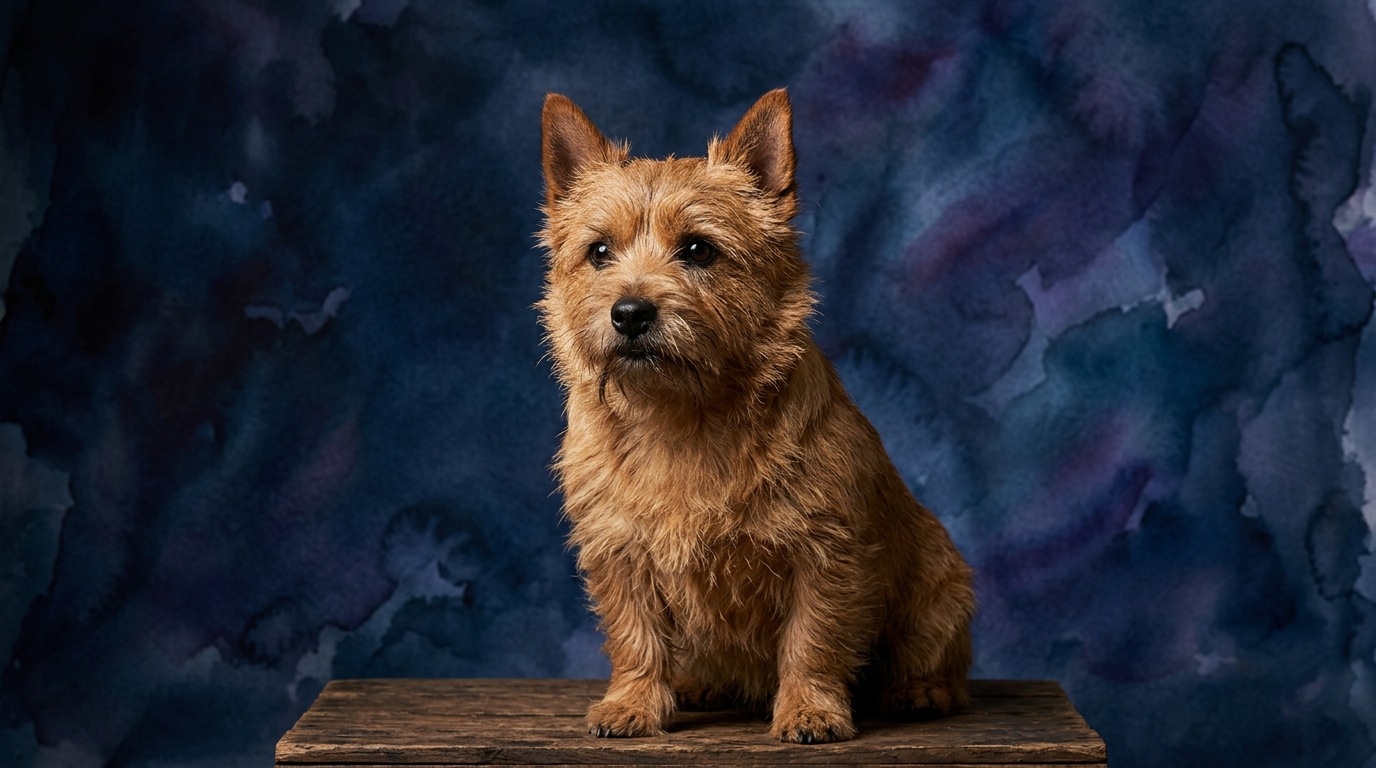
In contrast, the Norwich Terrier, a breed celebrated for its robust terrier spirit, presents a distinct cognitive profile across all dimensions. Their Problem Solving is rated 3/5, suggesting they approach challenges with tenacity and persistence, often relying on trial-and-error rather than complex strategic planning, particularly when the problem doesn't align with their innate motivations. Training Speed also stands at 3/5, indicating that while capable of learning, they typically require more consistent repetition and a patient, engaging approach to solidify new behaviors. Social Intelligence is 3/5, meaning they are attentive to their human companions and form strong bonds, but their interpretation of human directives might be more literal, and they may be less inclined to anticipate subtle emotional shifts or desires without explicit cues. Instinctive Drive is 3/5, which in the context of a terrier, points to a strong, inherent motivation for specific tasks like digging, chasing small prey, and patrolling, which can sometimes supersede human instruction. Memory at 3/5 suggests they retain basic commands and routines but might require occasional refreshers for less frequently practiced skills or complex sequences.
Where the Standard Poodle Wins Cognitively
The Standard Poodle's cognitive strengths lie in their unparalleled adaptability and capacity for abstract thought. Their 5/5 Problem Solving means they can swiftly generalize concepts, applying a solution learned in one context to an entirely new situation without extensive retraining. This makes them exceptional candidates for intricate tasks, such as navigating complex agility courses, performing multi-step service dog duties, or even learning abstract concepts in competitive obedience. Their high Social Intelligence (5/5) allows them to form a deeply collaborative partnership with their human, often appearing to "read minds" due to their keen observation of subtle body language and vocal inflections. This nuanced understanding enables them to anticipate needs and respond proactively, fostering a profound connection. Furthermore, their superior Memory (5/5) ensures that once a lesson is learned, it is retained long-term, building a robust foundation for continuous learning and skill progression. This cognitive architecture allows Standard Poodles to excel in roles requiring consistent precision and intricate understanding of human directives, making them versatile companions for a vast array of mentally stimulating activities.
Where the Norwich Terrier Wins Cognitively
The Norwich Terrier's cognitive advantages are rooted in their independent spirit and tenacious focus, particularly when engaging with tasks that align with their inherent terrier nature. While their Problem Solving is rated 3/5, this score reflects a practical, persistent approach to challenges, often employing a determined trial-and-error method to achieve a desired outcome, especially when motivated by an instinctive drive. Their 3/5 Instinctive Drive, while presenting training challenges in some contexts, is a significant asset in others; it means they possess an unwavering focus and courage for tasks like vermin control, where self-reliance and grit are paramount. They excel at independent exploration and can entertain themselves effectively, requiring less constant direction than breeds that thrive on human collaboration for every activity. This self-sufficiency, combined with their robust physical capabilities, makes them adept at navigating their environment and pursuing specific interests with formidable resolve. Owners who appreciate a dog with strong self-possession and a clear, independent purpose will find the Norwich Terrier's cognitive makeup to be a distinct advantage, fostering a relationship built on mutual respect for their inherent traits.
Which is Easier to Train and Why
When evaluating ease of training, the Standard Poodle unequivocally holds the advantage, largely due to their combined 5/5 scores in Training Speed, Social Intelligence, and Memory. Their rapid acquisition of new commands means they grasp concepts quickly, often understanding a new cue after just a few repetitions. This is bolstered by their exceptional Social Intelligence, which translates into a strong desire to cooperate and a deep understanding of human intent. A Standard Poodle often seeks to please and actively works to decipher what is expected of them, making training a highly collaborative and rewarding experience. Their excellent memory ensures that lessons stick, requiring fewer refreshers and allowing for the quick progression to more complex behaviors and sequences.
The Norwich Terrier, with 3/5 scores across these same dimensions, presents a different training dynamic. While certainly trainable, they typically require more patience, consistency, and a highly motivating approach. Their independent nature, a hallmark of the terrier group, means they are less inclined to see every human directive as an absolute command and may prioritize their own instincts, particularly if those instincts involve chasing or digging. Their Social Intelligence, while present for bonding, doesn't always translate into the same eager-to-please attitude as the Poodle, meaning trainers must work harder to make training engaging and relevant to the Norwich. Successfully training a Norwich involves understanding and working with their specific instinctive drives, often channeling them into appropriate outlets, rather than expecting them to be easily overridden. Positive reinforcement, short sessions, and a clear understanding of their independent streak are key to successful training.
Which Suits Active Owners vs. Relaxed Owners
For active owners seeking a true partner in a wide array of activities, the Standard Poodle is an ideal match. Their high scores in Problem Solving, Training Speed, and Social Intelligence mean they thrive on mental engagement and physical activity that challenges both their body and mind. They excel in dog sports like agility, obedience, rally, and dock diving, eagerly participating in complex routines and learning new skills. Owners who enjoy teaching intricate tricks, pursuing therapy or service work, or simply having a companion for long, varied excursions that involve mental stimulation will find the Poodle's cognitive abilities perfectly aligned. They require consistent interaction and tasks to keep their sharp minds occupied, preventing boredom and channeling their energy constructively.
The Norwich Terrier, while certainly not a sedentary breed, is better suited for owners who appreciate a dog with a robust, independent spirit and a more focused, intermittent burst of activity. They require regular exercise to satisfy their terrier energy, including walks, playtime, and opportunities to dig or chase in a safe environment. However, their cognitive profile suggests they might not crave the same level of complex, collaborative mental engagement as a Standard Poodle. Owners who enjoy consistent, but perhaps less intense, training sessions and who appreciate a dog that can entertain itself or pursue its own interests for periods will find the Norwich a rewarding companion. They are excellent for owners who value a spirited, self-possessed dog that is content with a good run and then a cozy spot by their side, without the constant need for a "job."
The Verdict
Choose the Standard Poodle if you desire a highly engaged, collaborative canine partner for complex training, dog sports, or service work, thriving on intricate mental and physical challenges.
Opt for the Norwich Terrier if you appreciate a tenacious, independent spirit, valuing a dog with strong self-possession and specific instincts, who thrives on consistent guidance rather than constant complex instruction.
🧠 Find Your Pet's IQ Score
Our Pet IQ Lab assessment covers 25+ tests across 5 cognitive dimensions — personalized to your breed.
Take the Full IQ Test →Frequently Asked Questions
Can a Norwich Terrier learn complex tricks?
Yes, a Norwich Terrier can learn complex tricks, but it may require more patience and repetition than with a Standard Poodle. Their independent nature means motivation must be high, and training should be kept engaging and positive to counteract their natural inclination to follow their own interests.
Are Standard Poodles good for first-time dog owners?
Standard Poodles can be good for first-time owners who are prepared for their significant mental and physical exercise needs. Their trainability makes them responsive, but their intelligence also means they can develop undesirable behaviors if not properly stimulated and guided from a young age.
Do Norwich Terriers have a strong prey drive?
Norwich Terriers do possess a strong prey drive, rated 3/5 in instinctive drive, which is typical for terrier breeds bred for vermin control. This means they may be prone to chasing small animals, and secure leashes or fenced yards are essential to ensure their safety and prevent them from pursuing their instincts.