
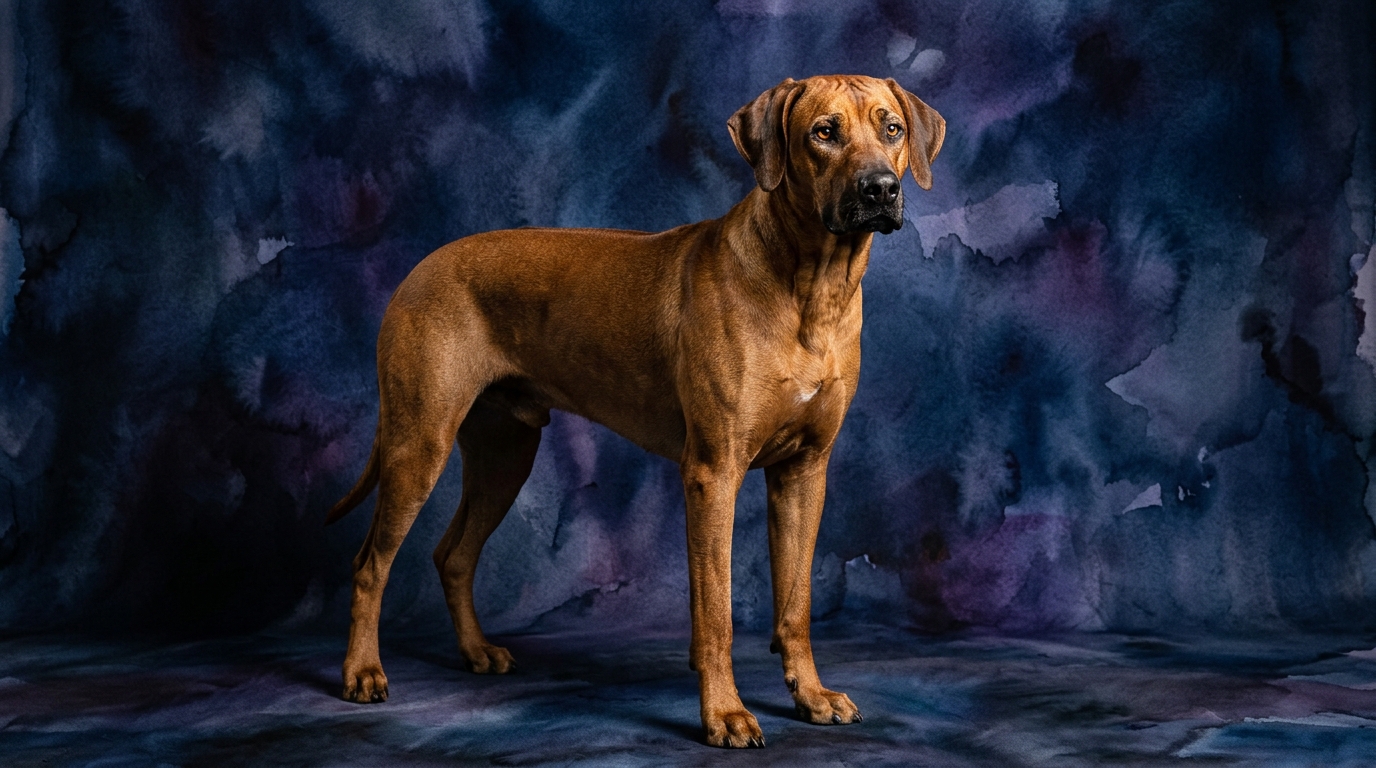
Side-by-Side IQ Profile: Rottweiler vs. Rhodesian Ridgeback
The Cosmic Pet Pet IQ Lab assesses canine intelligence across five key dimensions, providing a nuanced understanding of each breed's cognitive architecture. For the Rottweiler, classified in the Working Group, their Coren rank of #9 places them among breeds demonstrating a profound capacity for learning and task execution. They achieve a Problem Solving score of 5/5, indicating an exceptional ability to analyze situations and devise effective solutions, often with minimal human intervention once a concept is grasped. Their Training Speed is rated 4/5, reflecting a quick uptake of new commands and procedures, while Social Intelligence, also 4/5, points to a strong attunement to human cues and social hierarchies. The Rottweiler’s Instinctive Drive is a robust 5/5, underscoring their potent inherent motivation for specific tasks, and their Memory earns a perfect 5/5, suggesting a remarkable ability to retain learned behaviors and experiences over time.
In contrast, the Rhodesian Ridgeback, a member of the Hound Group, holds a Coren rank of #52, positioning them in a different cognitive tier characterized by a distinct set of intellectual strengths. Their Problem Solving is rated 3/5, indicating competence in navigating challenges, though perhaps with less abstract reasoning than their Working Group counterparts. Training Speed for the Ridgeback is 3/5, meaning they learn new tasks at a moderate pace, requiring consistent and patient instruction. Their Social Intelligence is also 3/5, suggesting they are responsive to human interaction but may display more independence. Instinctive Drive for the Ridgeback is 3/5, reflecting a strong, but often self-directed, motivation rooted in their hunting heritage. Finally, their Memory score is 3/5, implying a solid retention of information, albeit potentially not with the same depth or duration as a Rottweiler.
Where the Rottweiler Excels Cognitively
The Rottweiler's cognitive profile highlights several areas of distinct advantage, particularly in tasks requiring a structured, cooperative approach. Their 5/5 Problem Solving score isn't just about figuring things out; it’s about applying learned principles to novel situations swiftly. This manifests in their capacity for complex multi-step obedience routines, advanced protection work, or even service dog roles where they must make nuanced decisions based on their handler's needs and environmental factors. They don't just follow commands; they understand the objective behind them.
Furthermore, the Rottweiler's perfect 5/5 Memory combined with their 4/5 Training Speed allows for the rapid acquisition and enduring retention of a vast repertoire of commands and behavioral expectations. This means less repetition is needed for them to master a skill, and once learned, it is deeply ingrained. Their high Social Intelligence (4/5) ensures they are highly attentive to their human partners, actively seeking to understand and fulfill requests. This collaborative mindset, fueled by a powerful 5/5 Instinctive Drive to work, makes them exceptionally adept at tasks requiring precision, reliability, and a consistent partnership with their handler, whether it’s in competitive dog sports or practical working applications.
Where the Rhodesian Ridgeback Shines Cognitively
While the Rhodesian Ridgeback's scores might appear lower on a scale designed for general obedience and cooperation, their cognitive strengths are uniquely tailored to their original purpose: independently tracking and cornering dangerous game. Their 3/5 Problem Solving isn't a deficit but rather a preference for autonomous decision-making in specific contexts. They excel at figuring out scent trails, navigating challenging terrain, and assessing situations in the field without constant human direction. This self-reliance was crucial for their survival and success as hunters in vast African landscapes.
The Ridgeback’s 3/5 Instinctive Drive, while not as broadly applied as the Rottweiler’s, is intensely focused on certain tasks like tracking, scent discrimination, and patrolling. This drive allows them to maintain focus on a goal, such as following a scent, for extended periods, demonstrating a specific kind of mental fortitude and persistence. Their 3/5 Social Intelligence, while indicating a more independent nature, also means they are less prone to separation anxiety and can be content with their own company, provided their needs for exercise and mental stimulation are met. They form deep bonds but often express them with a quiet dignity, valuing mutual respect over constant validation.
Training Dynamics: A Tale of Two Temperaments
Training a Rottweiler generally proves to be a more straightforward and rewarding experience for a first-time or moderately experienced owner due to their higher scores in Training Speed (4/5), Social Intelligence (4/5), and Instinctive Drive (5/5). They possess an intrinsic desire to engage with their human partners and a strong capacity to understand and execute commands quickly. Their drive to work and please, combined with their excellent memory, means they often pick up new concepts in fewer repetitions and retain them long-term. Consistency is still paramount, but the Rottweiler's inherent cooperative spirit makes the process feel like a shared endeavor.
Conversely, training a Rhodesian Ridgeback, with scores of 3/5 across these dimensions, demands more patience, consistency, and an understanding of their independent hound mentality. Ridgebacks aren't inherently driven to please in the same way; their motivation often stems from their own interests, particularly scent work or exploration. They may question commands or take longer to process information, requiring creative and engaging training methods to maintain their focus. Their independence means they might choose not to comply if they don't see the immediate benefit or if they are distracted by a more compelling scent. Successful Ridgeback training relies on building a strong, respectful relationship, understanding their motivations, and making training a fun, puzzle-solving experience rather than a drill.
Owner Suitability: Active Partner vs. Independent Companion
For owners seeking an active, engaged canine partner who thrives on collaborative activities and clear direction, the Rottweiler is an exceptional choice. Their cognitive makeup makes them ideal for households that can provide structured training, participate in dog sports like obedience, agility, or protection work, or even engage in service or therapy roles. They flourish with consistent mental and physical challenges that allow them to utilize their problem-solving skills and strong work ethic. A Rottweiler craves purpose and interaction, making them unsuitable for owners who prefer a hands-off approach to dog ownership or cannot commit to their extensive mental stimulation needs.
The Rhodesian Ridgeback, while certainly capable of activity, suits owners who appreciate a more independent and self-assured companion. They are excellent for individuals or families who enjoy hiking, running, or scent work, and who understand that their dog may not always be 'on command' but rather an intelligent, discerning partner. They are not necessarily 'relaxed' in terms of exercise needs, requiring significant physical outlets, but their cognitive approach is less about constant human-directed tasks and more about exploring their environment and making their own judgments. Owners must be patient, consistent, and appreciate a dog that thinks for itself, rather than one that constantly seeks to please.
The Verdict
Choose a Rottweiler if you desire a highly trainable, devoted partner who excels in structured tasks, thrives on collaborative work, and requires consistent mental engagement from their human.
Opt for a Rhodesian Ridgeback if you admire an independent, resilient companion with specific drives, are prepared for patient and creative training, and appreciate a dog that thinks autonomously.
🧠 Find Your Pet's IQ Score
Our Pet IQ Lab assessment covers 25+ tests across 5 cognitive dimensions — personalized to your breed.
Take the Full IQ Test →Frequently Asked Questions
Do Rhodesian Ridgebacks eventually become as obedient as Rottweilers?
While Ridgebacks can achieve a high level of obedience, their approach is often different; they may choose to comply rather than instinctively follow every command. Consistency and strong positive reinforcement can build reliable responses, but their independent streak means they might always retain a degree of self-direction that differs from a Rottweiler's eager partnership.
Are Rottweilers difficult for first-time dog owners due to their strength?
While Rottweilers possess significant physical strength, their cooperative nature and readiness to learn make them manageable for dedicated first-time owners. Their trainability means they respond well to clear guidance, but commitment to early socialization and consistent training is crucial to harness their potential effectively.
Which breed is better for a family with children?
Both breeds can be wonderful family dogs with proper socialization and training. Rottweilers often exhibit a natural protectiveness and patience, while Ridgebacks are generally tolerant but might prefer slightly older, more respectful children due to their less overtly 'people-pleasing' social intelligence. Supervision and teaching children how to interact respectfully with any dog are always essential.