
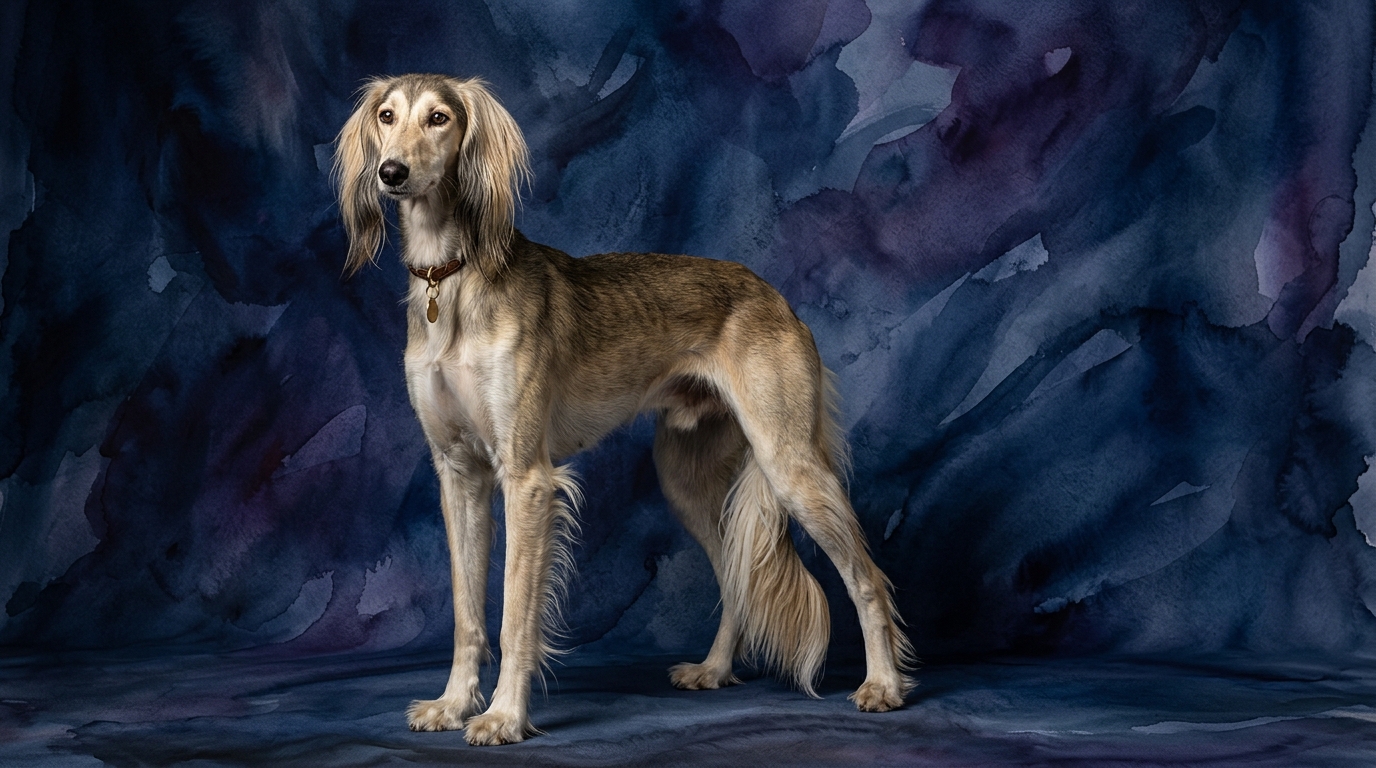
Side-by-Side IQ Profile: Rottweiler vs. Saluki
The Rottweiler, a formidable working breed, showcases a cognitive profile built for purpose and partnership. Their problem-solving capacity, rated 5/5, indicates a strong aptitude for navigating complex situations and learning intricate tasks with a goal-oriented mindset. Training speed, at 4/5, highlights their readiness to absorb and execute commands efficiently, though their strong will requires consistent guidance. Social intelligence, also 4/5, points to their ability to read human cues and form deep, cooperative bonds, crucial for their historical roles as guardians and herders. An instinctive drive of 5/5 underscores their powerful, inherent motivations for protection and work, which, when properly channeled, translate into unwavering dedication. Their memory, a perfect 5/5, ensures they retain learned behaviors and experiences over extended periods, making them reliable partners in various disciplines.
In stark contrast, the Saluki, a sighthound of ancient lineage, presents a cognitive makeup geared towards independent pursuit and sensory acuity. Their problem-solving score of 3/5 reflects an intelligence often applied to self-directed tasks, such as tracking prey visually across vast distances, rather than complex human-assigned puzzles. Training speed, also 3/5, suggests they learn at a moderate pace, often requiring more patience and motivation due to their independent spirit and less inherent desire for constant instruction. Social intelligence, rated 3/5, indicates a discerning nature; Salukis form strong bonds but may not exhibit the same overt eagerness to please or constant engagement as some working breeds, preferring a more reserved companionship. An instinctive drive of 3/5, for a sighthound, is powerfully channeled into the chase—their primary motivation—rather than broad working tasks, making them less inclined towards activities outside their innate predatory focus. Their memory, at 3/5, serves their specific needs, allowing them to recall locations and learned routines, but perhaps not with the same depth or task-oriented recall as breeds bred for complex, multi-stage work.
Where the Rottweiler Wins Cognitively
The Rottweiler's cognitive strengths shine brightest in scenarios demanding structured learning, intricate problem-solving, and unwavering dedication to a task. Their 5/5 problem-solving ability means they excel at understanding and executing multi-step commands, figuring out mechanisms, or strategizing in dog sports like obedience or protection work. This breed's perfect 5/5 memory allows them to retain vast amounts of information, from complex sequences of tricks to the specific routines of their household, making them incredibly consistent once a lesson is learned. Furthermore, their powerful 5/5 instinctive drive, when channeled, provides an unparalleled focus and resilience, enabling them to push through challenges and complete objectives that might deter breeds with less inherent motivation for cooperative work. For owners seeking a dog to engage in advanced training, competitive sports, or even service roles, the Rottweiler's cognitive architecture provides a distinct advantage, allowing them to process and act upon human directives with remarkable precision and loyalty.
Where the Saluki Wins Cognitively
While the Saluki's cognitive profile differs significantly from the Rottweiler's, their intelligence is uniquely optimized for their ancient role. Their 3/5 problem-solving score, rather than indicating a deficit, points to a specialized intelligence focused on independent decision-making during the chase. A Saluki needs to assess terrain, predict prey movement, and adapt its strategy instantly, without human direction, which is a complex form of practical problem-solving. Their 3/5 instinctive drive is intensely concentrated on pursuit, demonstrating an unmatched focus and determination when their sighthound instincts are engaged, allowing them to execute precise, high-speed maneuvers. This drive is not broadly applied but incredibly potent within its specific domain. The Saluki's 3/5 social intelligence often translates into a discerning affection; they are not aloof but selective, forming deep, quiet bonds with their chosen humans, requiring less constant validation and demonstrating a dignified independence. This self-reliance means they are comfortable making their own choices and navigating their environment, showcasing a different kind of cognitive strength—one of self-sufficiency and acute environmental awareness.
Which Is Easier to Train and Why
The Rottweiler is generally easier to train for a broad range of obedience and task-oriented behaviors due to their higher training speed (4/5) and problem-solving aptitude (5/5). They possess a strong desire to cooperate and a natural inclination to please their human companions, making them receptive to structured lessons and consistent reinforcement. Their excellent memory ensures that once a command is learned, it is retained reliably. Rottweilers thrive on having a job and respond well to clear expectations and firm, fair leadership. In contrast, the Saluki, with a training speed of 3/5 and a more independent problem-solving approach, presents a different training challenge. While capable of learning, their sighthound instincts mean they are often more motivated by the thrill of the chase or their own interests than by human directives. Training a Saluki requires immense patience, creativity, and a deep understanding of their independent nature. They may learn more slowly and require more varied motivation, as their focus can easily be diverted by visual stimuli or the urge to run. Success with a Saluki often involves making training a game and appealing to their independent spirit rather than expecting rote obedience.
Which Suits Active Owners vs. Relaxed Owners
The Rottweiler is an ideal match for active owners who seek a highly engaged companion for structured activities. Their robust instinctive drive (5/5) and excellent problem-solving skills mean they thrive on having a 'job,' whether that's advanced obedience, protection sports, agility, or extensive hiking. They require consistent mental stimulation and physical exercise to prevent boredom and channel their powerful energies constructively. A relaxed owner who cannot provide this level of engagement may find a Rottweiler challenging due to their need for purpose.
Conversely, the Saluki, while incredibly athletic when running, often suits owners who appreciate a more relaxed, independent presence indoors. Their bursts of intense activity are typically followed by long periods of quiet lounging. While they need ample opportunity to run in a secure area to satisfy their sighthound instincts, they are not typically 'busy' dogs requiring constant interaction or complex tasks within the home. A relaxed owner who enjoys quiet companionship and can provide secure, open spaces for their Saluki to stretch their legs will find a rewarding partnership, understanding that their activity needs are often specific rather than constant.
The Verdict
Choose a Rottweiler if you are an experienced owner seeking a highly trainable, dedicated partner for structured tasks, dog sports, or protection work, valuing their remarkable memory and cooperative problem-solving.
Choose a Saluki if you appreciate an independent, elegant companion with bursts of athletic energy, valuing their discerning social interactions and specialized sighthound instincts, and are prepared for a patient, creative training approach.
🧠 Find Your Pet's IQ Score
Our Pet IQ Lab assessment covers 25+ tests across 5 cognitive dimensions — personalized to your breed.
Take the Full IQ Test →Frequently Asked Questions
Are Salukis difficult to train compared to Rottweilers?
Salukis are not necessarily 'difficult' but require a different approach than Rottweilers. Their independent nature and sighthound instincts mean they are less inclined to perform tasks purely for human approval, often needing more motivation and patience during training sessions.
Does a Saluki's 3/5 problem-solving score mean they aren't clever?
Not at all; a Saluki's 3/5 problem-solving indicates a specialized intelligence focused on independent, quick decision-making in pursuit scenarios, rather than human-directed puzzles. They excel at practical, real-time problem-solving relevant to their sighthound heritage.
How do their social intelligences differ in daily life?
A Rottweiler's 4/5 social intelligence often means they are highly attuned to their family, eager to engage and cooperate. A Saluki's 3/5 social intelligence suggests a more discerning, independent nature; they form deep bonds but may be less overtly demonstrative or constantly seeking interaction, preferring a quiet companionship.