
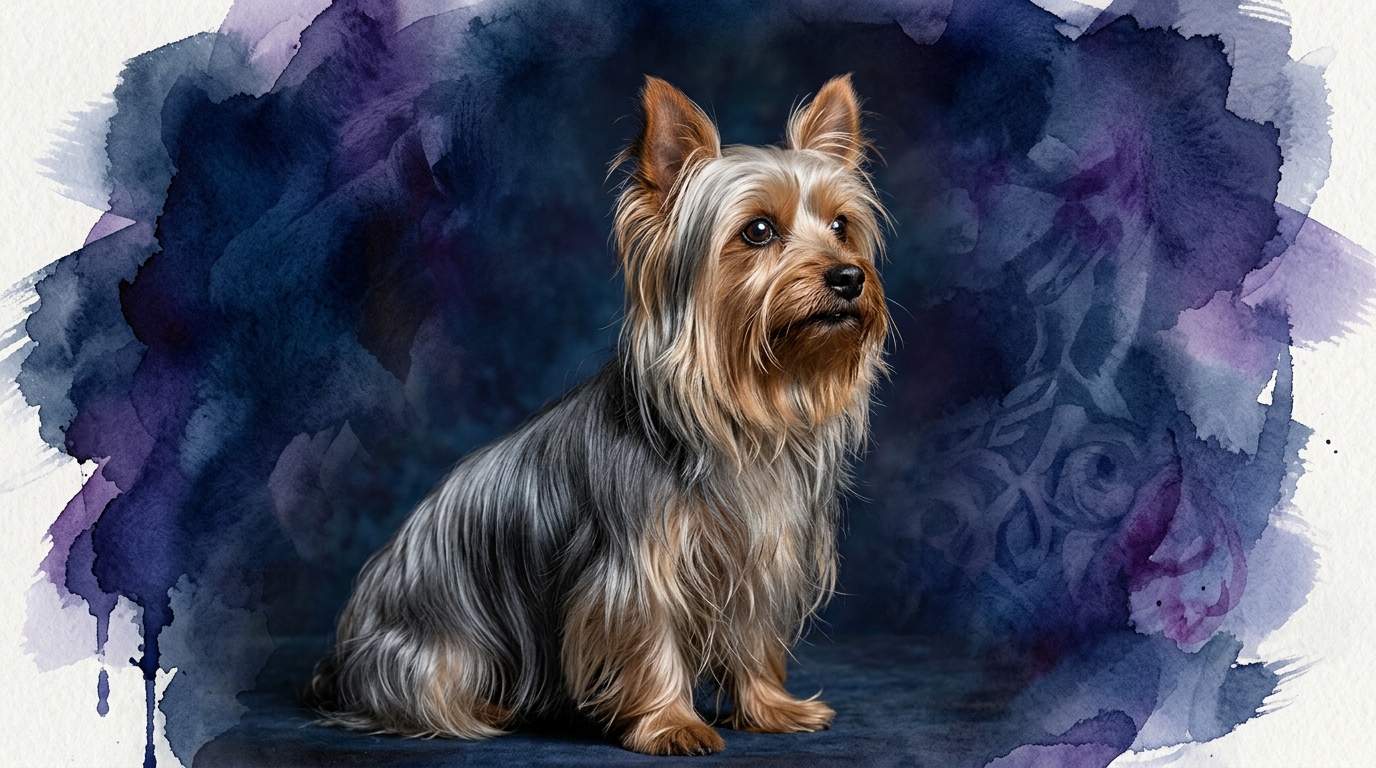
Side-by-Side Cognitive Profile: Rottweiler and Silky Terrier
The Cosmic Pet Pet IQ Lab employs a five-dimensional framework to assess canine intelligence, offering a nuanced view beyond mere obedience. For the Rottweiler, a breed recognized by Stanley Coren as #9 in his ranking of dog intelligence, their profile paints a picture of robust mental acumen: their Problem Solving is rated 5/5, indicating an exceptional ability to understand and navigate complex situations; Training Speed is 4/5, reflecting rapid learning and retention of commands; Social Intelligence scores 4/5, showcasing their adeptness at reading human cues and forming strong bonds; an Instinctive Drive of 5/5 highlights their deep-seated working instincts; and a Memory score of 5/5 underscores their impressive long-term recall.
In contrast, the Silky Terrier, a spirited member of the Toy group and not specifically ranked by Coren, presents a different cognitive blueprint. Across all five dimensions—Problem Solving, Training Speed, Social Intelligence, Instinctive Drive, and Memory—the Silky Terrier consistently scores 3/5. This suggests a moderate, yet wholly functional, level of cognitive ability that is well-suited to their historical role as companion animals and small vermin hunters. While their scores indicate they may not grasp abstract concepts as quickly or retain vast command sets as effortlessly as a Rottweiler, their intelligence is practical and effective within their sphere.
Where the Rottweiler Wins Cognitively
The Rottweiler's cognitive strengths are pronounced, reflecting centuries of selective breeding for demanding working roles. Their 5/5 Problem Solving score means they excel at intricate tasks, quickly understanding multi-step commands or devising novel solutions to environmental challenges, making them adept at advanced obedience, protection work, or even search and rescue operations where adaptive thinking is critical. The Rottweiler’s 5/5 Instinctive Drive gives them a profound innate understanding of roles like guarding or herding; this isn't just physical action, but a cognitive blueprint that allows them to anticipate threats, patrol boundaries, and respond appropriately without constant instruction, making them exceptional partners in purposeful activities. Their 5/5 Memory score ensures that once a Rottweiler learns something, it is deeply ingrained, allowing for extensive repertoires of commands and behaviors, and reliable recall even after periods of inactivity, minimizing the need for constant re-training. Furthermore, with a 4/5 Social Intelligence, Rottweilers are adept at reading human intentions and environmental cues, discerning friend from foe, understanding nuanced body language, and responding appropriately to various social contexts, making them reliable companions in diverse settings.
Where the Silky Terrier Wins Cognitively
While the Silky Terrier's 3/5 scores across the board might seem modest compared to the Rottweiler, these ratings denote a practical, fit-for-purpose intelligence with distinct advantages in their specific niche. Their 3/5 Instinctive Drive manifests as a keen, focused alertness, typical of terriers, making them excellent at detecting subtle changes in their immediate environment, often acting as effective miniature alarm systems. This cognitive strength lies in their sustained focus on small details and sounds, a valuable trait for pest control or simply alerting owners to visitors. Their 3/5 Problem Solving, while not geared towards abstract concepts, is perfectly suited for understanding spatial relationships within a home, finding hidden toys, or maneuvering through tight spaces with agility and precision. This practical application of their cognitive skills is a distinct advantage in a domestic setting. A 3/5 Social Intelligence means Silky Terriers often form intense, personalized bonds with their primary caregivers; while they might be less inclined towards large group dynamics, their cognitive focus on a select few allows for deep emotional connections and a strong understanding of their chosen human's routines and preferences, making them highly attuned personal companions. Finally, their terrier tenacity, even with a 3/5 instinctive drive, means they can exhibit considerable persistence when engaged in tasks that pique their interest, such as digging or chasing small objects. This cognitive staying power, though different from a Rottweiler's broad working drive, is a distinct strength for specific, engaging activities.
Which is Easier to Train and Why
When it comes to ease of training, the cognitive profiles diverge significantly. The Rottweiler, with scores of 4/5 for Training Speed, 5/5 for Problem Solving, and 5/5 for Instinctive Drive, is a breed that typically learns rapidly and understands the "why" behind commands with remarkable clarity. Their strong drive often translates into an eagerness to work and please, especially when given a clear purpose or role. They respond exceptionally well to consistent, fair, and confident training methods, quickly integrating new commands into their behavioral repertoire. Their excellent memory minimizes the need for constant repetition, allowing for progressive learning of complex sequences and tasks.
The Silky Terrier, on the other hand, with consistent 3/5 scores across Problem Solving, Training Speed, and Instinctive Drive, requires a more patient and nuanced approach. They are capable of learning, but might take more repetitions to solidify commands, especially if the task isn't immediately rewarding or tied into their inherent terrier nature. Their drive, while present, is less about broad 'work' and more about specific interests or pursuits, meaning trainers need to discover what truly motivates them, be it treats, toys, or specific activities. Consistency, positive reinforcement, and making training feel like an engaging game rather than a chore are paramount to success. While they can achieve high levels of obedience and excel in activities like agility, it often demands more dedication, creativity, and understanding of terrier temperament from the owner compared to the Rottweiler.
Which Suits Active Owners vs. Relaxed Owners
The cognitive demands of these breeds also dictate their suitability for different owner lifestyles. An owner with an active lifestyle and a desire for a deeply engaged canine partner will find the Rottweiler a profoundly rewarding match. Their 5/5 instinctive drive and problem-solving capacity demand regular, rigorous mental and physical challenges. They thrive on structured activities, advanced training, and a clear sense of purpose, whether that's protection work, competitive obedience, or simply being a vigilant, active companion. A relaxed or sedentary owner might inadvertently foster boredom, frustration, or destructive behaviors, as the Rottweiler's significant cognitive and physical energy needs substantial outlets.
Conversely, while not a sedentary breed, the Silky Terrier's moderate cognitive scores and smaller stature make them suitable for owners who appreciate consistent, moderate engagement rather than intense, high-impact activities. Their need for mental stimulation can be met through daily walks, indoor games, puzzle toys, and consistent trick training, rather than requiring extensive working roles or endurance sports. A relaxed owner who is still committed to daily interaction, consistent training, and providing varied mental enrichment can provide a fulfilling life for a Silky Terrier, provided they understand and respect the breed's spirited terrier nature and its need for a purposeful outlet for its moderate drives.
The Verdict
Opt for a Rottweiler if you seek a highly capable, purpose-driven companion for complex tasks, protection, or advanced obedience, and are prepared to dedicate significant time and effort to their rigorous mental and physical stimulation and consistent training.
Select a Silky Terrier if you desire a spirited, alert, and devoted companion for a moderately active lifestyle, appreciating their focused loyalty and terrier tenacity in a smaller, more adaptable package for a home environment.
🧠 Find Your Pet's IQ Score
Our Pet IQ Lab assessment covers 25+ tests across 5 cognitive dimensions — personalized to your breed.
Take the Full IQ Test →Frequently Asked Questions
Are Rottweilers good family dogs despite their guarding instincts?
Yes, with proper socialization and training from a young age, their 4/5 social intelligence allows them to form strong, protective bonds with their family, understanding household dynamics and being gentle with children. Their instinctive drive is channeled protectively rather than aggressively, ensuring they are reliable and discerning companions.
Do Silky Terriers need much mental stimulation?
Despite their smaller size and 3/5 cognitive scores, Silky Terriers do require consistent mental stimulation to prevent boredom and unwanted behaviors. Engaging them with puzzle toys, regular trick training, and varied daily walks keeps their minds active and satisfied, channeling their terrier energy constructively.
How does the Coren rank for Rottweilers relate to their IQ scores?
The Coren rank of #9 for Rottweilers aligns closely with their high scores in problem-solving (5/5), training speed (4/5), and memory (5/5), indicating their exceptional capacity for understanding and executing commands quickly. This rank reflects a general aptitude for learned intelligence, which our IQ Lab dimensions further detail and break down into specific cognitive strengths.