
Side-by-Side IQ Profile
The Rottweiler's cognitive profile, as assessed by The Cosmic Pet Pet IQ Lab, paints a picture of a profoundly capable dog. Their Problem Solving is an exceptional 5/5, indicating an ability to analyze complex situations and devise effective solutions. Training Speed stands at 4/5, reflecting a quick grasp of new commands and routines. Social Intelligence, also 4/5, suggests a nuanced understanding of human cues and emotional states, crucial for their historical roles. An Instinctive Drive of 5/5 highlights their inherent motivation for tasks, often expressed through guarding or herding behaviors. Finally, their Memory is a strong 5/5, allowing them to retain vast amounts of information and past experiences. This comprehensive profile places them at Coren rank #9, signifying a top-tier working intelligence.
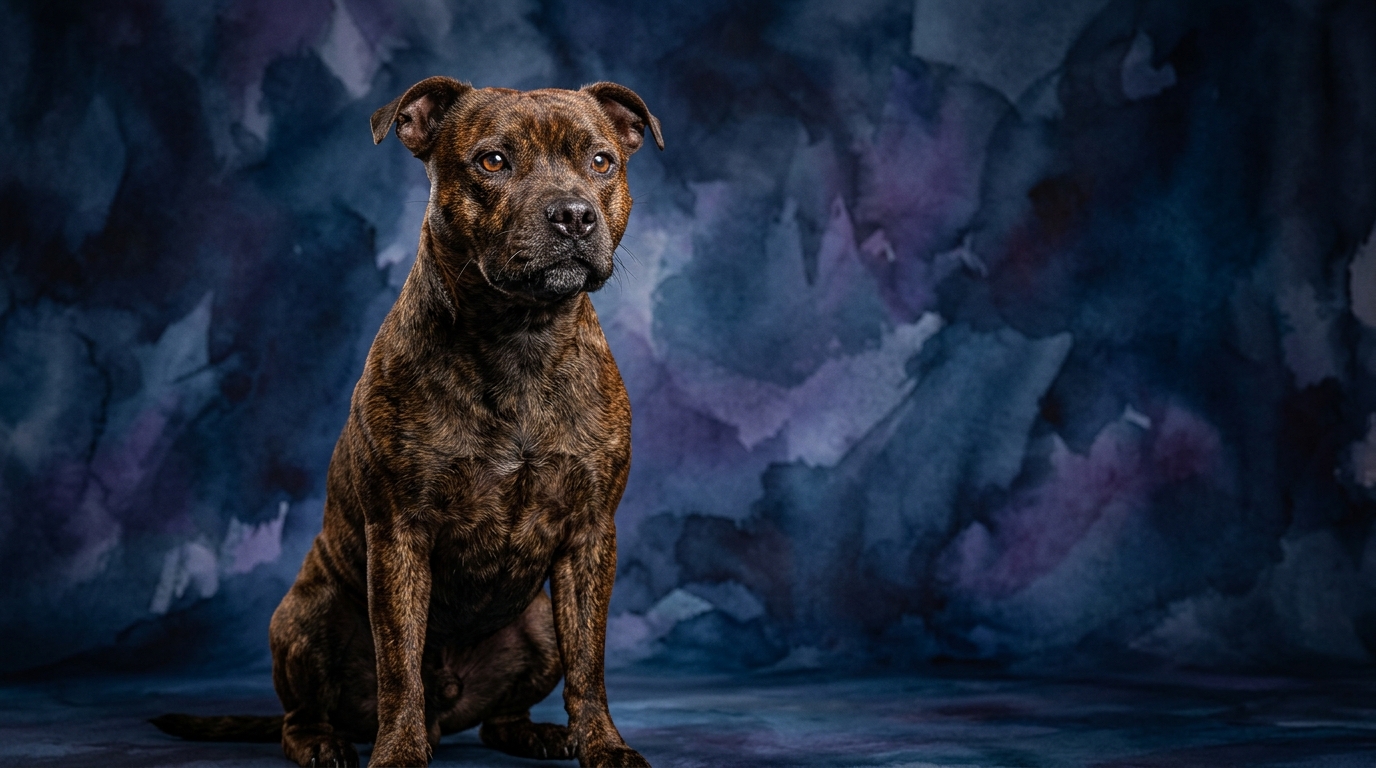
The Staffordshire Bull Terrier presents a different, yet equally compelling, cognitive blueprint. Across all five dimensions – Problem Solving, Training Speed, Social Intelligence, Instinctive Drive, and Memory – they score a consistent 3/5. This rating indicates a functional and practical level of intelligence, rather than the complex problem-solving seen in some working breeds. Their problem-solving involves direct, often physical approaches, while their training speed suggests a need for consistent, clear instruction. Social intelligence at 3/5 means they are highly attuned to their immediate human companions, often forming deep, singular bonds. An instinctive drive of 3/5 points to their historical role as companion and agile athlete, rather than complex task execution. Memory at 3/5 allows them to learn and retain essential routines and relationships effectively. While not Coren-ranked, their cognitive makeup is perfectly suited to their loyal and affectionate temperament.
Where Rottweiler Wins Cognitively
The Rottweiler's cognitive strengths are evident in its superior Problem Solving and Memory, both scoring 5/5. This means a Rottweiler can process intricate information, anticipate outcomes, and strategize solutions to novel challenges with remarkable efficiency. For instance, a Rottweiler excels in tasks requiring sequential steps or understanding cause-and-effect, such as navigating complex agility courses or performing multi-stage protection work. Their exceptional memory allows them to recall specific commands, past experiences, and even the nuances of individual interactions over long periods, making them highly reliable in repetitive or long-term roles. This cognitive advantage translates to a dog that can often “think through” a situation rather than relying solely on learned responses, adapting flexibly to new environmental demands or unexpected changes in routine. Their 5/5 Instinctive Drive further fuels this, providing the motivation to apply their cognitive prowess to achieve goals, whether it's managing livestock or understanding household rules.
Where Staffordshire Bull Terrier Wins Cognitively
While the Staffordshire Bull Terrier's scores of 3/5 across the board might seem less impressive numerically, they represent a distinct cognitive profile that “wins” in different, yet equally valuable, contexts. The Staffy's 3/5 in Social Intelligence, for example, denotes a profound capacity for focused, deep emotional connection with its chosen people. This isn't about understanding complex social hierarchies, but about an unwavering, intuitive bond that excels in companionship. Their cognitive energy isn't dispersed across complex tasks but concentrated on immediate, affectionate interactions. Their 3/5 Problem Solving manifests as a determined, often physical approach to challenges; they might not devise an elaborate plan to open a gate, but they will persistently try various direct methods until success. This tenacity, coupled with their moderate Instinctive Drive (3/5), means they are single-minded and resilient when pursuing something they desire, be it a toy, a treat, or attention from their owner. Their memory (3/5) is perfectly adequate for remembering routines, beloved people, and the location of their favorite toys, fostering a sense of security and predictability essential for their temperament. In essence, the Staffy's cognitive framework prioritizes direct engagement, emotional depth, and persistent effort over abstract reasoning, making them exceptional for specific types of human-animal partnership.
Which is Easier to Train and Why
Based on The Cosmic Pet Pet IQ Lab scores, the Rottweiler (Training Speed 4/5) is generally easier to train than the Staffordshire Bull Terrier (Training Speed 3/5). The Rottweiler's higher training speed reflects its quicker acquisition of new commands and its ability to generalize learned behaviors to different environments and situations. Their strong problem-solving skills and exceptional memory mean they can often anticipate what's expected of them and retain complex sequences of commands with fewer repetitions. For instance, a Rottweiler might master advanced obedience commands like "stay" with distractions or "heel" through a crowd more rapidly, and apply that learning consistently. Their high instinctive drive also means they are often eager to work and please their handler, providing an inherent motivation for training.
In contrast, the Staffordshire Bull Terrier, with a training speed of 3/5, requires more patience, consistency, and clear, concise instruction. While they are capable of learning, their problem-solving approach tends to be more direct and less abstract. They may need more repetitions to solidify a command and might initially struggle to apply a learned behavior in a completely new context. Their social intelligence, while strong for bonding, might mean they are more easily distracted by their environment or other dogs if not properly focused during training sessions. However, their tenacity means that once a behavior is learned and understood, they are often very reliable in performing it. The key difference lies in the *speed* of acquisition and generalization, with the Rottweiler demonstrating a natural aptitude for rapid and broad learning, while the Staffy thrives on consistent, positive reinforcement tailored to its determined, present-focused cognitive style.
Which Suits Active Owners vs. Relaxed Owners
The cognitive profiles of these two breeds align with different owner lifestyles. The Rottweiler, with its high problem-solving capacity (5/5), strong instinctive drive (5/5), and excellent memory (5/5), thrives with active owners who can provide consistent mental stimulation and structured tasks. These dogs excel in activities like advanced obedience, protection sports, tracking, herding, or even complex trick training that challenge their capacity for analysis and recall. A relaxed owner who doesn't engage their Rottweiler's cognitive abilities might find the dog inventing its own (potentially destructive) "problems" to solve out of boredom or under-stimulation. They require an owner who understands the need for purposeful engagement beyond just physical exercise, someone who can act as a consistent leader and guide for their powerful intellect and drive.
The Staffordshire Bull Terrier, with its balanced 3/5 scores across the board, is well-suited for owners who appreciate direct companionship and consistent, moderately active engagement. While they certainly enjoy activity, their cognitive needs are less about intricate problem-solving and more about consistent routines, engaging play, and deep social interaction. A Staffy will be content with daily walks, play sessions with toys, and ample cuddle time on the sofa. Their tenacity and moderate instinctive drive mean they appreciate games of fetch or tug, but they don't necessarily require complex, multi-stage tasks to feel fulfilled. They suit owners who are present, consistent, and happy to provide affection and clear boundaries, without needing to constantly challenge their dog's abstract reasoning. A relaxed owner who offers predictable structure and ample one-on-one attention will find the Staffy to be a devoted and contented companion.
The Verdict
Opt for the Rottweiler if you are an experienced owner seeking a highly capable working companion, eager to engage in advanced training, complex problem-solving activities, and consistent mental challenges. Their exceptional cognitive abilities thrive with structured guidance and a clear purpose.
Select the Staffordshire Bull Terrier if you value unwavering loyalty, direct companionship, and a determined, affectionate dog that thrives on consistent routines, engaging play, and a deep emotional bond with its family. Their cognitive strengths shine in environments where focused attention and simple, joyful interactions are prioritized.
🧠 Find Your Pet's IQ Score
Our Pet IQ Lab assessment covers 25+ tests across 5 cognitive dimensions — personalized to your breed.
Take the Full IQ Test →Frequently Asked Questions
Does a Rottweiler's high problem-solving score mean they are harder to manage?
Not necessarily harder, but it means they require consistent mental engagement and clear leadership. A Rottweiler will use its cognitive abilities, whether for positive training or for figuring out how to get into mischief if bored.
Is the Staffordshire Bull Terrier less capable of learning due to its 3/5 training speed?
No, the Staffy is very capable of learning, but it typically requires more patience, consistency, and repetition than a breed with a higher training speed. Once learned, behaviors are often deeply ingrained.
How does the Rottweiler's 5/5 memory impact daily life?
A Rottweiler's exceptional memory allows it to recall commands, routines, and past experiences with remarkable accuracy, making them highly reliable and consistent in their learned behaviors over time. This also means they remember both positive and negative experiences vividly.