
Side-by-Side IQ Profile
**Saint Bernard:**
**Problem Solving (3/5):** These gentle giants show a moderate capacity for independent problem-solving. They can navigate familiar obstacles or basic puzzles, but complex, multi-step challenges often require guidance, approaching tasks methodically.
**Training Speed (2/5):** The Saint Bernard processes new commands deliberately. Repetition and immense patience are crucial, as they aren't quick to acquire new behaviors. Consistency with clear, simple cues is paramount for these substantial dogs.
**Social Intelligence (4/5):** Here, the Saint Bernard truly excels, demonstrating high social awareness. They adeptly read human emotions and social cues, forming deep bonds and often anticipating family needs without explicit commands, making them empathetic companions.
**Instinctive Drive (5/5):** Their historical mountain rescue role is reflected in a powerful instinctive drive. This manifests as a strong desire to protect, track, and assist, showing innate navigation skills and a keen sense of direction, channeling well into purposeful tasks.
**Memory (3/5):** Saint Bernards possess a solid, average memory. They retain learned commands and experiences reliably over time, especially when reinforced consistently. Significant events and routines stick with them, though minor details might fade.
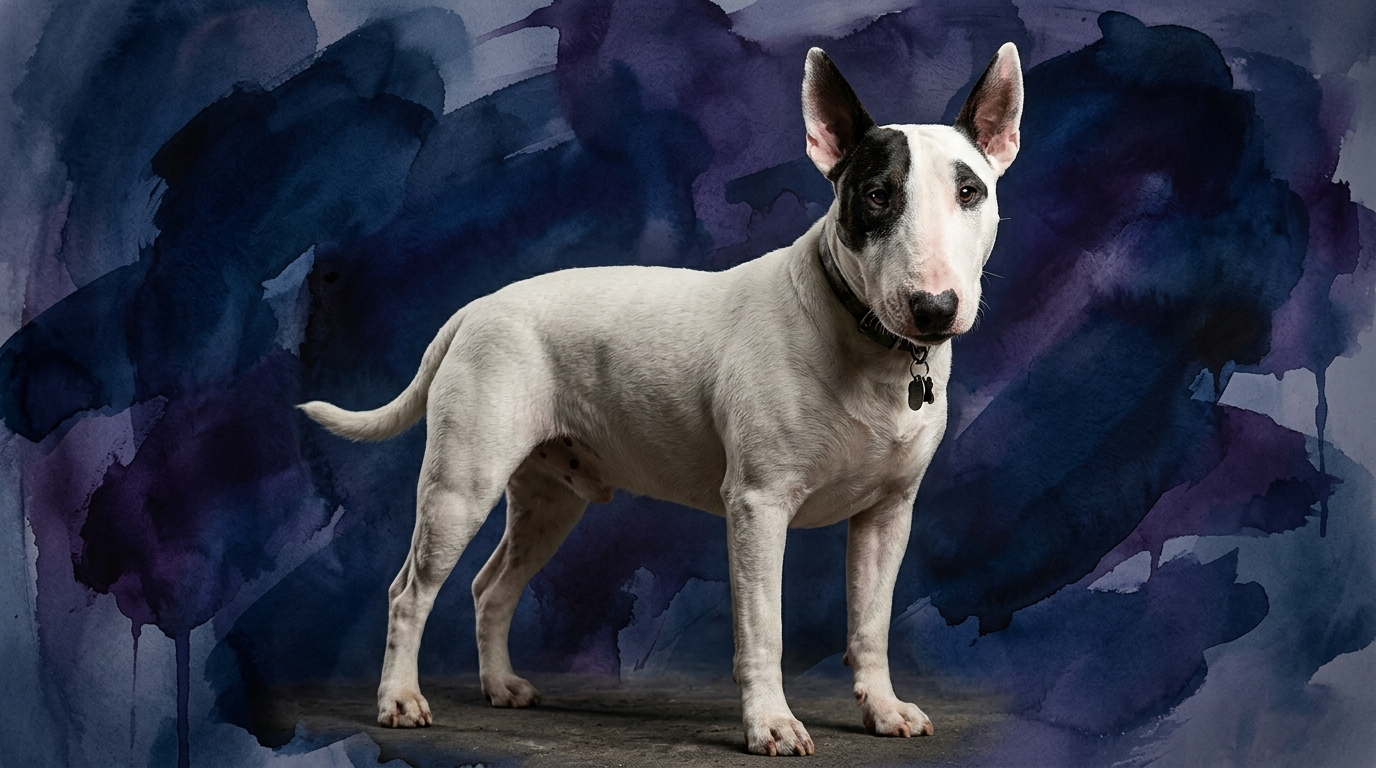
**Bull Terrier:**
**Problem Solving (3/5):** Bull Terriers also score a moderate 3/5 in problem-solving. They approach challenges with determined persistence, often through trial and error, to achieve goals like opening gates or reaching toys.
**Training Speed (3/5):** With a slightly faster training speed, Bull Terriers are moderately receptive to learning new commands. They pick up behaviors at a reasonable pace, especially with engaging, positive reinforcement, aided by their keenness to please when motivated.
**Social Intelligence (3/5):** Bull Terriers exhibit an average level of social intelligence. They connect well with immediate family and read basic human emotions but may lack the nuanced empathy or subtle social awareness seen in some breeds, interacting more directly.
**Instinctive Drive (3/5):** Their instinctive drive is moderate, reflecting a terrier heritage of tenacious vermin hunting. While retaining prey drive and determination, it's less overwhelming or task-oriented than the Saint Bernard’s instincts, channeling well into play or structured activities.
**Memory (3/5):** Bull Terriers also have an average memory capacity. They consistently remember commands, routines, and past experiences. While not forgetting easily, regular reinforcement solidifies recall for less frequent cues.
Where Saint Bernard Wins Cognitively
The Saint Bernard demonstrates clear cognitive advantages in social intelligence and instinctive drive. Their 4/5 social intelligence indicates a profound capacity for emotional resonance, adeptly understanding human cues, surpassing the Bull Terrier's 3/5. This means a Saint Bernard intuitively picks up on moods, offering comfort or space without prompting, fostering a deeply empathetic bond. Furthermore, their superior 5/5 instinctive drive, a testament to their heritage, equips them with an innate, powerful desire for purposeful work, navigation, and strong protective instincts, less pronounced in the Bull Terrier. This translates into a natural inclination for tasks like guarding or emotional support, deeply ingrained rather than purely learned.
Where Bull Terrier Wins Cognitively
The Bull Terrier nudges ahead in a crucial practical dimension: training speed. Scoring 3/5 compared to the Saint Bernard's 2/5, the Bull Terrier generally processes and internalizes new commands and behaviors more quickly. This means an owner might see quicker progress in basic obedience or trick training. Their relatively swifter uptake allows for a broader range of training activities to be introduced and mastered in less time, offering a more responsive training partner for those seeking faster results.
Which is Easier to Train and Why
Considering the specific IQ metrics, the Bull Terrier is generally easier to train, primarily due to its higher training speed (3/5 vs. Saint Bernard's 2/5). Bull Terriers tend to grasp new commands and routines with greater alacrity, making initial obedience work less protracted. Their terrier determination, while sometimes perceived as stubbornness, can be channeled effectively with positive reinforcement, leading to consistent progress. In contrast, the Saint Bernard's deliberate training speed necessitates immense patience and repetition. Their larger size can make physical handling during training more challenging, and slower processing means lessons must be broken down into smaller, more manageable steps. For instance, teaching a "stay" might require fewer repetitions over fewer sessions for a Bull Terrier, whereas a Saint Bernard would likely need more extended, consistent practice.
Which Suits Active Owners vs Relaxed Owners
The Saint Bernard often suits a more relaxed owner, while the Bull Terrier typically thrives with active owners. Saint Bernards, with moderate problem-solving (3/5) and lower training speed (2/5), combined with high social intelligence (4/5), prefer predictable routines and ample family interaction over intense physical demands. Their powerful instinctive drive (5/5) means they appreciate purpose, fulfilled through duties like guarding or being a steadfast companion, not constant, high-octane activities. Conversely, the Bull Terrier's moderate instinctive drive (3/5) and slightly higher training speed (3/5) indicate a need for regular mental and physical engagement. They benefit from consistent activity, structured play, and opportunities to expend energy, making them ideal for owners enjoying hiking, agility, or interactive games; a Bull Terrier without sufficient stimulation might invent its own, often destructive, entertainment.
The Verdict
Choose a Saint Bernard if you value a deeply empathetic companion with a powerful, protective instinct and are prepared for a deliberate training pace, offering a steadfast presence in a more relaxed home.
Opt for a Bull Terrier if you desire a quicker-to-train dog that thrives on consistent activity and mental engagement, providing a spirited companion for an active lifestyle.
🧠 Find Your Pet's IQ Score
Our Pet IQ Lab assessment covers 25+ tests across 5 cognitive dimensions — personalized to your breed.
Take the Full IQ Test →Frequently Asked Questions
Do Saint Bernards make good family dogs?
Yes, Saint Bernards excel as family dogs due to their high social intelligence (4/5) and empathetic nature. They form strong bonds and are typically patient and gentle with children, making them excellent, watchful companions within a family setting.
Are Bull Terriers difficult to manage due to their terrier nature?
Bull Terriers can be assertive, reflecting their terrier heritage, but their moderate training speed (3/5) means they respond well to consistent, positive training and early socialization. With proper guidance and mental stimulation, they can be well-behaved and devoted companions.
How do their memory capacities compare for long-term learning?
Both Saint Bernards and Bull Terriers share an average memory capacity (3/5), meaning they reliably retain learned commands and experiences over time. Consistent reinforcement is key for both breeds to ensure long-term retention of behaviors and routines.