
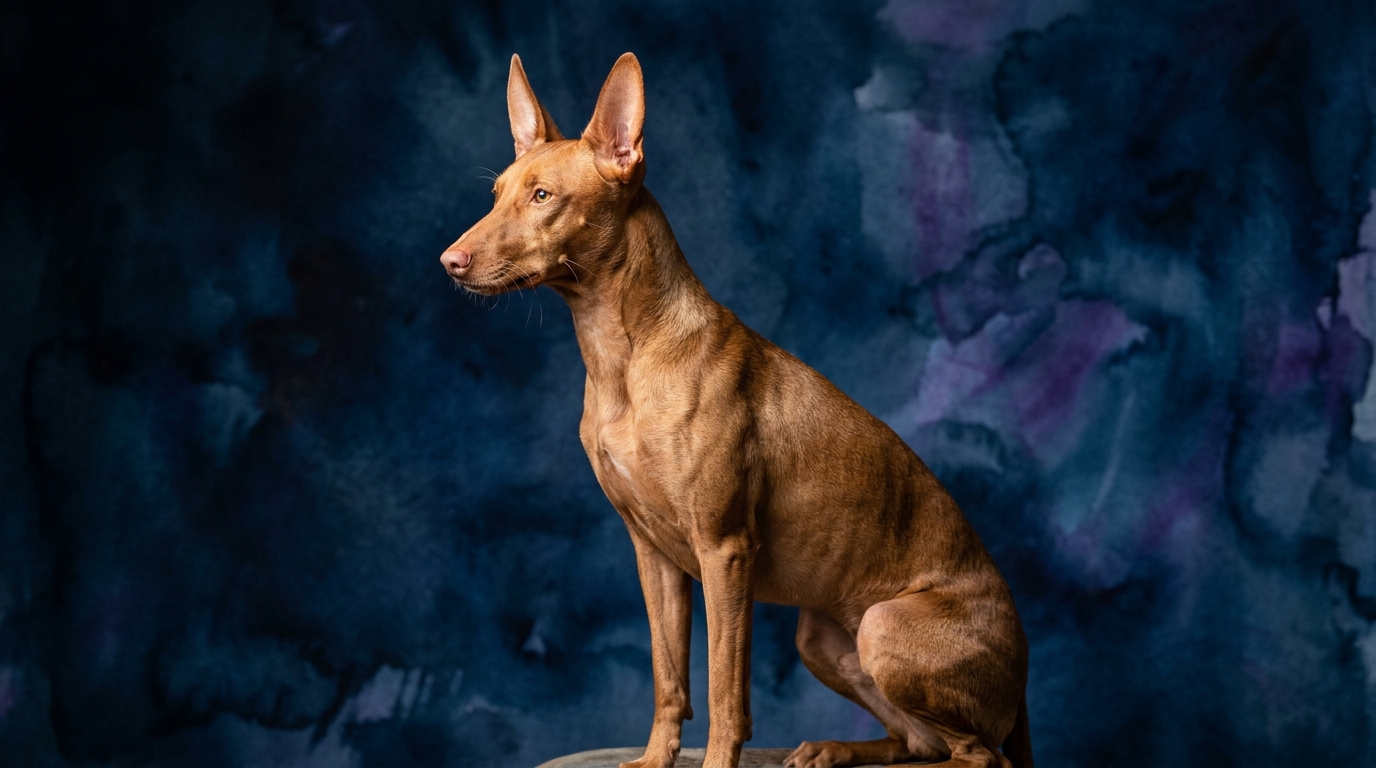
Side-by-Side Cognitive Profiles: Saint Bernard vs. Pharaoh Hound
The Saint Bernard, a working dog, and the Pharaoh Hound, a hound, present distinct cognitive blueprints shaped by centuries of selective breeding for vastly different tasks. Our Cosmic Pet Pet IQ Lab assessment breaks down their cognitive abilities across five key dimensions. For the Saint Bernard, problem-solving scores 3 out of 5, indicating a capacity for situational assessment in complex environments, such as navigating snowy terrain or locating lost individuals, rather than abstract puzzle-solving. Their training speed is rated 2 out of 5, suggesting a deliberate learning pace, where commands are processed and integrated thoughtfully, often requiring consistent, patient repetition. Social intelligence stands at an impressive 4 out of 5, reflecting their exceptional ability to read human emotions and cues, fostering deep cooperative bonds crucial for their historical rescue work and family integration. Instinctive drive is a robust 5 out of 5, encompassing a powerful innate desire for companionship, protection, and a deep-seated inclination to assist, stemming from their heritage as guardians and rescuers. Memory is assessed at 3 out of 5, indicating a solid recall for familiar people, places, and learned routines, essential for their working roles.
In contrast, the Pharaoh Hound's profile, while sharing some similarities, highlights different strengths. Their problem-solving also scores 3 out of 5, but this manifests more as resourcefulness in hunting scenarios, such as independently strategizing to outmaneuver prey or navigate varied terrain with agility. Training speed is a slightly higher 3 out of 5, suggesting a moderately quicker uptake of new commands, though often influenced by their independent sighthound nature. Social intelligence is 3 out of 5, meaning they form strong bonds with their immediate family but can exhibit a more reserved demeanor with strangers; their social interactions are often subtle. Instinctive drive is 3 out of 5, primarily focused on their potent sight-hunting instincts, a strong prey drive, and a requirement for significant physical exertion, rather than complex cooperative tasks. Memory is also 3 out of 5, showing retention of information related to hunting routes, prey patterns, and established routines.
Where the Saint Bernard Excels Cognitively
The Saint Bernard demonstrably excels in areas centered around cooperative interaction and a profound sense of purpose. Their superior social intelligence, rated 4 out of 5 compared to the Pharaoh Hound's 3 out of 5, is a significant cognitive advantage. This allows them to interpret human emotions, body language, and vocal inflections with remarkable accuracy, making them exceptionally attuned companions and partners in tasks requiring close communication. This keen understanding translates to a greater willingness to engage in cooperative endeavors and a more nuanced responsiveness to their human counterparts. Furthermore, the Saint Bernard’s unmatched instinctive drive, scoring 5 out of 5 against the Pharaoh Hound's 3 out of 5, is geared towards protection, companionship, and a deep-seated desire to assist. This powerful intrinsic motivation means they are naturally inclined to form strong, reciprocal relationships and invest themselves fully in roles where they can offer comfort or aid, making them uniquely suited for environments that value profound human-animal bonds and a gentle, watchful presence. Their cognitive architecture is built for selfless devotion and reliable partnership.
Where the Pharaoh Hound Shines Cognitively
The Pharaoh Hound’s cognitive strengths are rooted in their independent hunting heritage, manifesting in a distinct set of advantages. While both breeds score 3 out of 5 in problem-solving, the Pharaoh Hound's manifestation of this ability is particularly acute in dynamic, real-world scenarios. They exhibit exceptional resourcefulness and quick decision-making when pursuing prey, efficiently navigating obstacles and adapting strategies on the fly based on visual stimuli and environmental changes. This type of independent, observational problem-solving is a hallmark of their sighthound lineage. Additionally, the Pharaoh Hound shows a slight edge in training speed, scoring 3 out of 5 compared to the Saint Bernard's 2 out of 5. This indicates a marginally quicker initial grasp of new commands and routines, provided the training methods are engaging and respect their independent spirit. While their focus can be easily diverted by visual cues due to their strong instinctive drives, their capacity for faster initial learning suggests they can pick up new concepts with a bit more alacrity, especially when the tasks align with their natural inclinations for movement and observation.
Training Dynamics: Which Breed is Easier to Shape?
Determining which breed is "easier" to train requires understanding their distinct cognitive approaches. The Saint Bernard, despite a lower training speed score of 2/5, benefits from a high social intelligence (4/5) and an exceptionally strong instinctive drive (5/5) towards cooperation and companionship. This means that while they may take longer to initially grasp a command, their inherent desire to please and work alongside their human partner can make them highly reliable once a concept is learned. Their deliberate nature means they process information thoroughly and, once committed, tend to retain it well. Training a Saint Bernard often involves patience, positive reinforcement, and helping them understand the practical utility of a command, appealing to their purpose-driven nature. They might not offer immediate, eager obedience, but their deep-seated bond makes them committed students.
Conversely, the Pharaoh Hound, with a training speed of 3/5, might pick up basic commands a bit faster. However, their lower social intelligence (3/5) and instinctive drive (3/5) for independent hunting mean they are often more focused on their environment than on their handler. Their sighthound independence can lead to selective hearing, especially if a visual stimulus (like a squirrel) captures their attention. Training a Pharaoh Hound demands consistency, engaging methods, and a strong understanding of their prey drive. While they can learn quickly, maintaining their focus and achieving consistent recall in distracting environments can be a greater challenge. Therefore, for complex, cooperative tasks requiring unwavering handler focus, the Saint Bernard's willingness to partner, despite a slower initial learning curve, might make them ultimately more manageable for owners seeking a deeply connected working relationship.
Matching Breeds to Lifestyles: Active vs. Relaxed Owners
The Saint Bernard, while large, often possesses a surprisingly calm and deliberate demeanor indoors, making them suitable for owners who appreciate a relaxed home environment. Their exercise requirements are moderate; consistent daily walks and opportunities for gentle play are typically sufficient to keep them content. However, their high social intelligence (4/5) and powerful instinctive drive (5/5) for companionship mean they thrive on interaction and being an integral part of family life. They are not dogs to be left alone for extended periods; they require mental stimulation through companionship and gentle engagement rather than intense physical exertion. Therefore, they are an excellent match for relaxed owners who enjoy quiet companionship, gentle strolls, and dedicating time to social bonding and affection.
The Pharaoh Hound, on the other hand, is a breed built for speed and endurance, making them perfectly suited for active owners. Their primary instinctive drive (3/5) is rooted in their sighthound heritage, demanding significant daily physical activity, often including opportunities for open-field running in a secure area to satisfy their natural urge to chase and observe. Their moderate social intelligence (3/5) means they appreciate their family but can be more independent and less outwardly demonstrative than a Saint Bernard. They require mental engagement that taps into their observational skills and athleticism, such as lure coursing or long, varied hikes. Owners who lead an active lifestyle, enjoy outdoor pursuits, and can provide consistent, vigorous exercise will find a Pharaoh Hound to be an enthusiastic and fulfilling companion.
The Verdict
Saint Bernards are ideal for owners seeking a deeply bonded, cooperative companion who values social interaction and a deliberate, protective presence over lightning-fast obedience. They thrive in environments where their calm nature and strong social intellect are appreciated.
Pharaoh Hounds suit active individuals or families who can provide ample physical outlets for their sighthound instincts and appreciate a more independent, visually-driven companion. They are best for those who enjoy engaging in activities that harness their natural athleticism and keen observation skills.
🧠 Find Your Pet's IQ Score
Our Pet IQ Lab assessment covers 25+ tests across 5 cognitive dimensions — personalized to your breed.
Take the Full IQ Test →Frequently Asked Questions
Is a Saint Bernard difficult to train?
Saint Bernards are not inherently difficult but can be deliberate learners, scoring 2/5 for training speed. Their strong independent judgment and instinctive drive mean they often require patient, consistent, and positive reinforcement methods, thriving when they understand the purpose of a command.
Do Pharaoh Hounds have a strong prey drive?
Yes, Pharaoh Hounds possess a significant instinctive drive (3/5) primarily centered around their sighthound heritage, leading to a strong prey drive. This means they are highly motivated by visual stimuli and may pursue small, fast-moving objects, requiring secure environments for off-leash exercise.
Which breed is better with children?
Saint Bernards, with their higher social intelligence (4/5) and strong instinctive drive for companionship, often exhibit a gentle and protective nature towards children, making them excellent family dogs. Pharaoh Hounds (3/5 social intelligence) can be good with children in their own family but might be more reserved with unfamiliar ones.