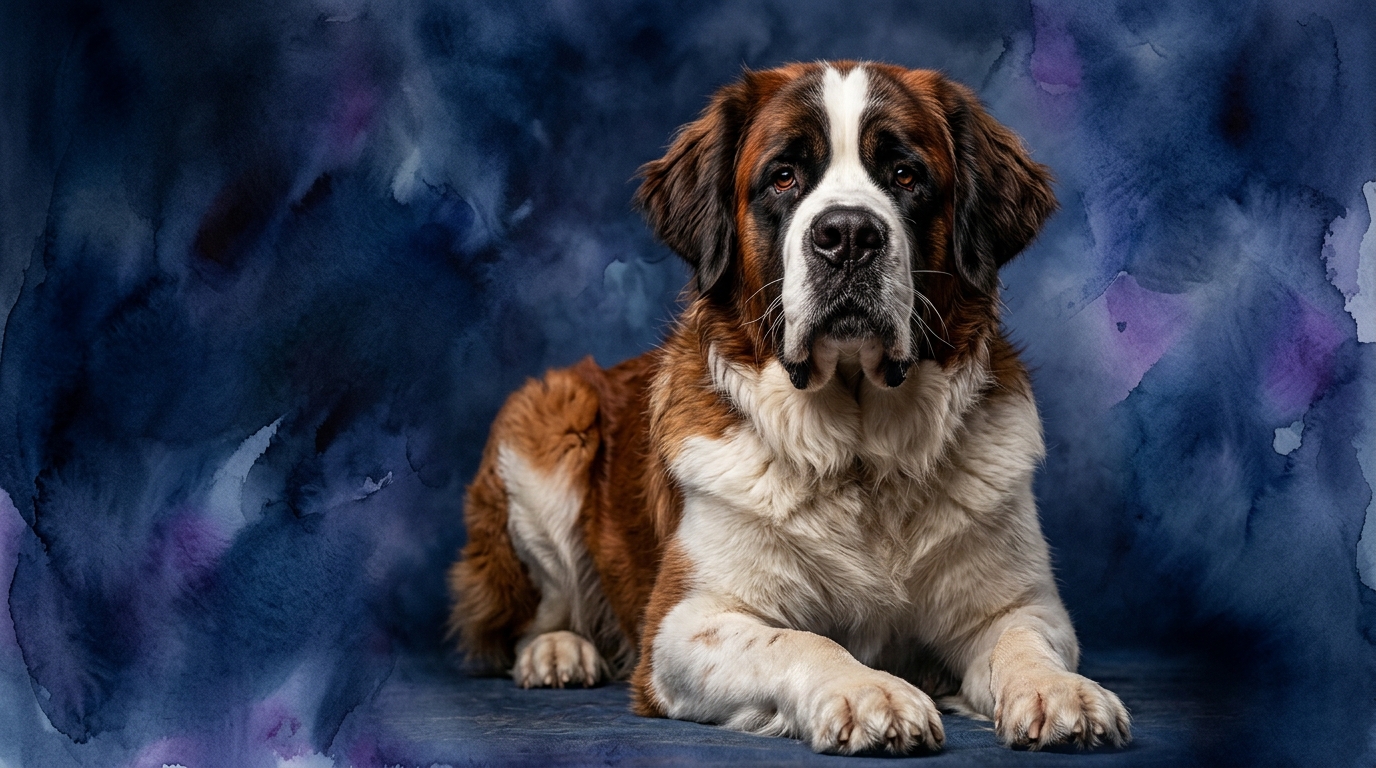
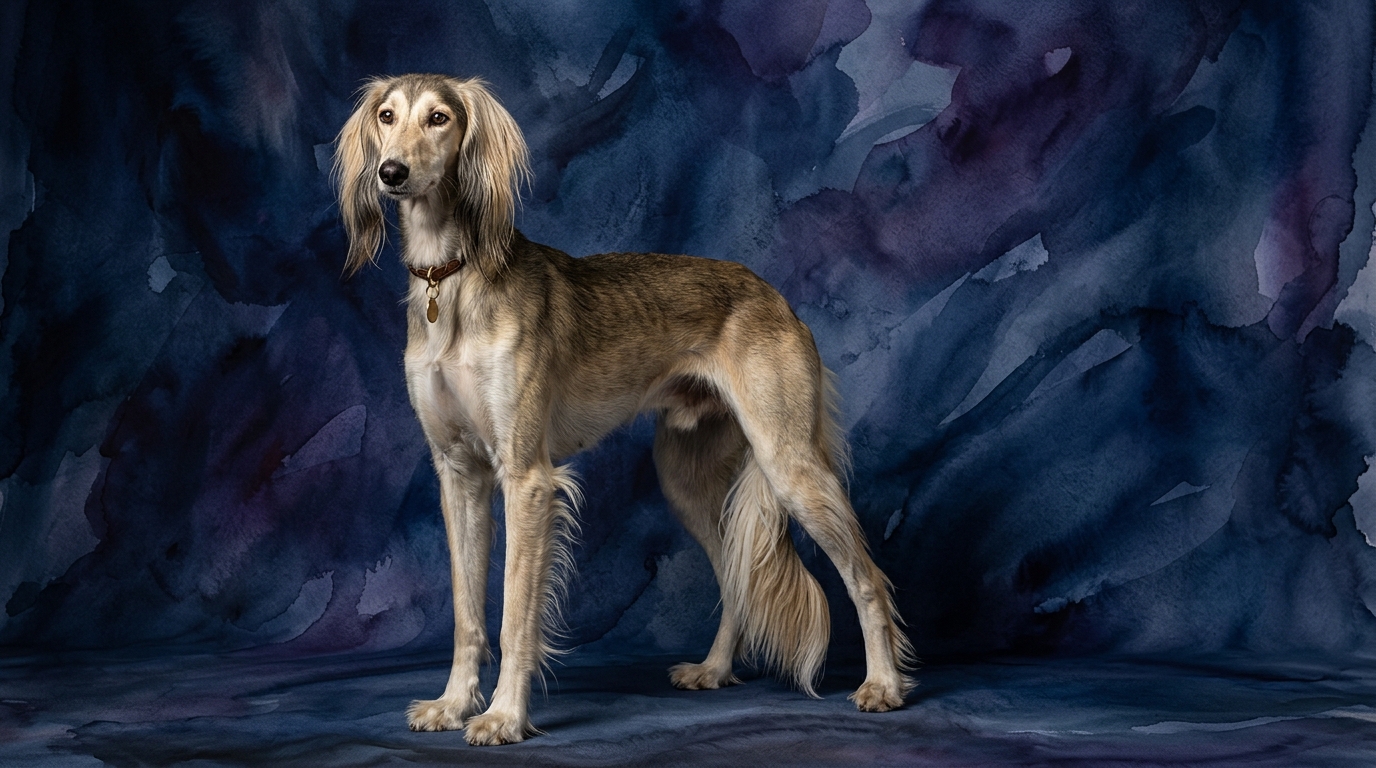
Side-by-Side Cognitive Profiles: Saint Bernard vs. Saluki
The Saint Bernard, a dignified working dog ranked #65 by Dr. Stanley Coren, presents a fascinating cognitive makeup designed for its historical mountain rescue duties. Their problem-solving ability scores a practical 3/5, reflecting a capacity to navigate complex situations and make decisions under pressure, particularly when a human life is at stake. Training speed is a moderate 2/5; while they certainly learn, their sheer size and thoughtful nature mean they often require patient, consistent guidance rather than rapid-fire instruction. Where they truly shine is social intelligence, scoring an impressive 4/5, demonstrating a deep empathy and understanding of human emotions and needs. Their instinctive drive is paramount at 5/5, manifesting as a powerful urge to protect, serve, and connect with their family. Finally, their memory, at 3/5, is solid, allowing them to retain vital information and routines.
In contrast, the ancient Saluki, a swift hound breed not included in Coren's ranking, showcases a different set of mental strengths honed for desert hunting. Their problem-solving registers at 3/5, focused acutely on the pursuit and capture of prey, demonstrating strategic thinking in a chase rather than abstract puzzles. Training speed comes in at 3/5; Salukis are capable learners, but their independent spirit and sighthound instincts mean training must be engaging and positive to hold their interest. Social intelligence for the Saluki is a balanced 3/5; they form deep, quiet bonds with their chosen family but can be reserved and discerning with outsiders, observing rather than overtly engaging. Their instinctive drive, rated 3/5, is predominantly a powerful prey drive and an inherent need to run, differing from the Saint Bernard's service-oriented instincts. Their memory, also a 3/5, is practical, enabling them to recall hunting routes and learned behaviors efficiently.
Where the Saint Bernard's Cognition Excels
The Saint Bernard's cognitive strengths distinctly lean into their role as a compassionate, protective companion. Their superior social intelligence (4/5 versus Saluki's 3/5) means they are exceptionally adept at reading human emotions and anticipating needs, often offering comfort without prompting. This makes them profoundly empathetic family members who integrate seamlessly into household dynamics. Furthermore, their instinctive drive, a perfect 5/5, is geared towards service and protection, giving them a strong intrinsic motivation to be reliable guardians and devoted companions. This manifests as an unwavering loyalty and a natural inclination to stay close to their people, contrasting with the Saluki's more independent hunting drive. While both breeds solve problems, the Saint Bernard's problem-solving (3/5) is often applied to practical, human-centric scenarios, like navigating a complex environment to reach a person in distress, a testament to their working heritage.
Where the Saluki's Cognition Shines
The Saluki's cognitive prowess is a testament to their millennia-old role as a hunter, valuing independence and swift action. While their problem-solving ability is equal to the Saint Bernard's at 3/5, it is applied with a different focus: executing complex chase strategies, navigating varied terrain at high speeds, and making split-second decisions to outmaneuver prey. Their training speed, at 3/5, edges out the Saint Bernard's 2/5, indicating they can grasp new concepts a bit more quickly, provided the training method respects their sensitive and independent nature. This isn't about rote obedience but about understanding and responding to cues in a cooperative manner. The Saluki’s instinctive drive (3/5), while not as high as the Saint Bernard’s, is specifically honed for pursuit, granting them an unparalleled focus and determination when engaging their sighthound nature. This makes them exceptional at tasks requiring precision and speed, such as lure coursing, where their cognitive focus on a moving target is unmatched.
Training Aptitude: Patience vs. Engagement
Determining which breed is 'easier' to train is nuanced, depending on the owner's goals. The Saluki, with a training speed of 3/5 compared to the Saint Bernard's 2/5, might learn individual commands slightly faster. However, their independent nature and lower social intelligence (3/5) mean they often prioritize their own instincts over human directives, especially if a tempting scent or visual stimulus presents itself. Training a Saluki requires creativity, positive reinforcement, and understanding their sighthound heritage; they respond best to methods that feel like a game or a partnership, rather than strict obedience. The Saint Bernard, while slower to train initially due to their deliberate processing and large size, possesses a higher social intelligence (4/5) and a stronger instinctive drive for companionship and service (5/5). This means they are often more eager to please and more motivated by human connection, making them ultimately more responsive to consistent, patient training, particularly for practical tasks or service roles. Their compliance stems from a desire to work with their human, whereas a Saluki's compliance is often conditional on what's in it for them.
Lifestyle Match: Active Pursuit vs. Relaxed Companionship
For active owners, the Saluki is a clear choice, provided their activity aligns with the breed's needs. These graceful hounds thrive on opportunities for explosive sprints and long, supervised runs in secure areas where their powerful instinctive drive for pursuit can be safely expressed. Their mental stimulation often comes from visual tracking and navigating open spaces. While they enjoy comfort indoors, their daily requirement for intense physical exertion is non-negotiable. Relaxed owners, or those seeking a more sedate pace, will find a better fit in the Saint Bernard. Their lower energy levels and strong social intelligence make them content with moderate walks and ample family interaction. They are generally less demanding of vigorous exercise, preferring to be close to their people, making them excellent companions for a quieter household. Their primary 'activity' is often simply being present and involved in family life, offering comfort and companionship.
The Verdict
Opt for a Saint Bernard if you seek a deeply empathetic, protective companion content with moderate exercise and eager to integrate into a family's social fabric. Their profound loyalty and desire to please make them rewarding, albeit patient, training partners for a devoted owner.
Select a Saluki if you are an active owner who appreciates an independent, graceful athlete with a strong prey drive and the ability to provide ample secure space for high-speed runs. Their quiet devotion and unique cognitive approach to the world suit those who value subtle companionship and engaging their sighthound instincts.
🧠 Find Your Pet's IQ Score
Our Pet IQ Lab assessment covers 25+ tests across 5 cognitive dimensions — personalized to your breed.
Take the Full IQ Test →Frequently Asked Questions
Are Saint Bernards good with children?
Yes, Saint Bernards typically exhibit high social intelligence and a gentle, patient nature, making them excellent family dogs. Their calm demeanor and protective instincts usually mean they are very tolerant and careful with children, though supervision is always advised due to their sheer size.
Do Salukis need a lot of grooming?
Salukis have relatively low grooming needs compared to many breeds. Their short, silky coat requires only weekly brushing to remove loose hair and maintain its condition, and occasional baths are sufficient to keep them clean.
What kind of environment is best for a Saluki?
Salukis thrive in environments where they have ample, secure space to run and express their sighthound instincts, such as a large, securely fenced yard or access to safe, open fields. They also appreciate comfortable indoor living as part of their family, as they are sensitive to cold.