Side-by-Side IQ Profile: Saluki vs. Bluetick Coonhound
Despite sharing a consistent 3/5 score across all five cognitive dimensions, the Saluki and Bluetick Coonhound interpret these scores through the lens of their unique breed purposes and physical attributes, leading to distinct manifestations of their cognitive abilities.
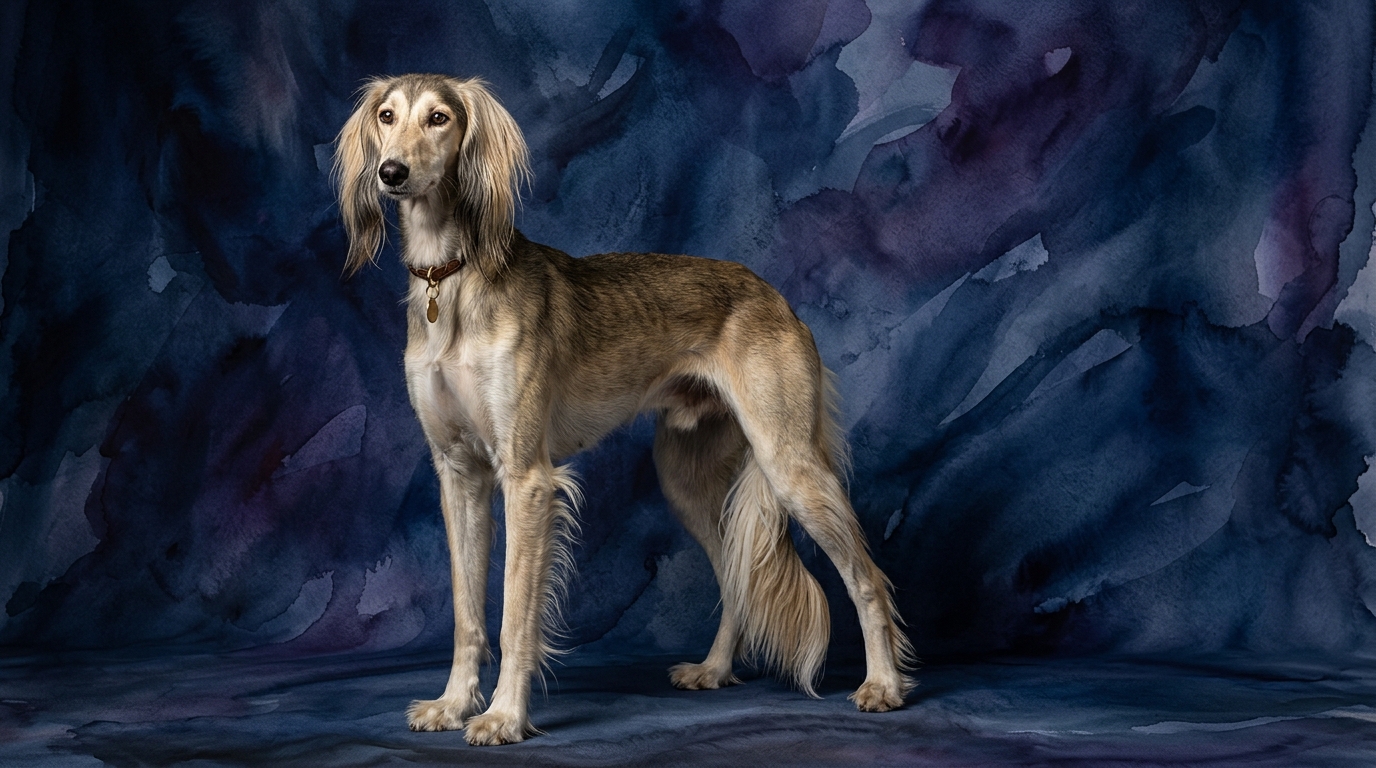
For the Saluki, their IQ profile reflects their heritage as an ancient sighthound: Problem Solving (3/5): Salukis demonstrate a focused ability to strategize during a chase, quickly assessing terrain and anticipating prey movements to intercept. Their problem-solving often involves rapid, intuitive decision-making in open, dynamic environments, such as navigating complex landscapes while maintaining pursuit, rather than intricate, methodical puzzles. Training Speed (3/5): While capable of learning new commands with reasonable efficiency, Salukis possess an independent streak and a discerning nature, sometimes requiring patient, highly rewarding, and engaging methods to maintain their interest and compliance. They respond best when training feels like a collaborative game or a stimulating challenge, rather than rote instruction. Social Intelligence (3/5): These ancient sighthounds typically form deep, often exclusive bonds with their immediate family members, exhibiting a sensitive awareness of their owners' moods, routines, and subtle non-verbal cues. They can be reserved and aloof with strangers, carefully discerning social interactions within their trusted inner circle. Instinctive Drive (3/5): The Saluki's strong instinctive drive centers intensely on sight-based pursuit, showcasing an almost unparalleled focus and swift, explosive action when a fast-moving object catches their keen eye. This drive is a powerful, ingrained impulse to chase, capture, and often, dispatch prey. Memory (3/5): Salukis retain learned commands, household routines, and the layouts of their familiar environments effectively, often recalling specific locations or sequences related to their daily activities or past successful chases. Their memory is practical and serves their immediate environment and their historical legacy as independent hunters.
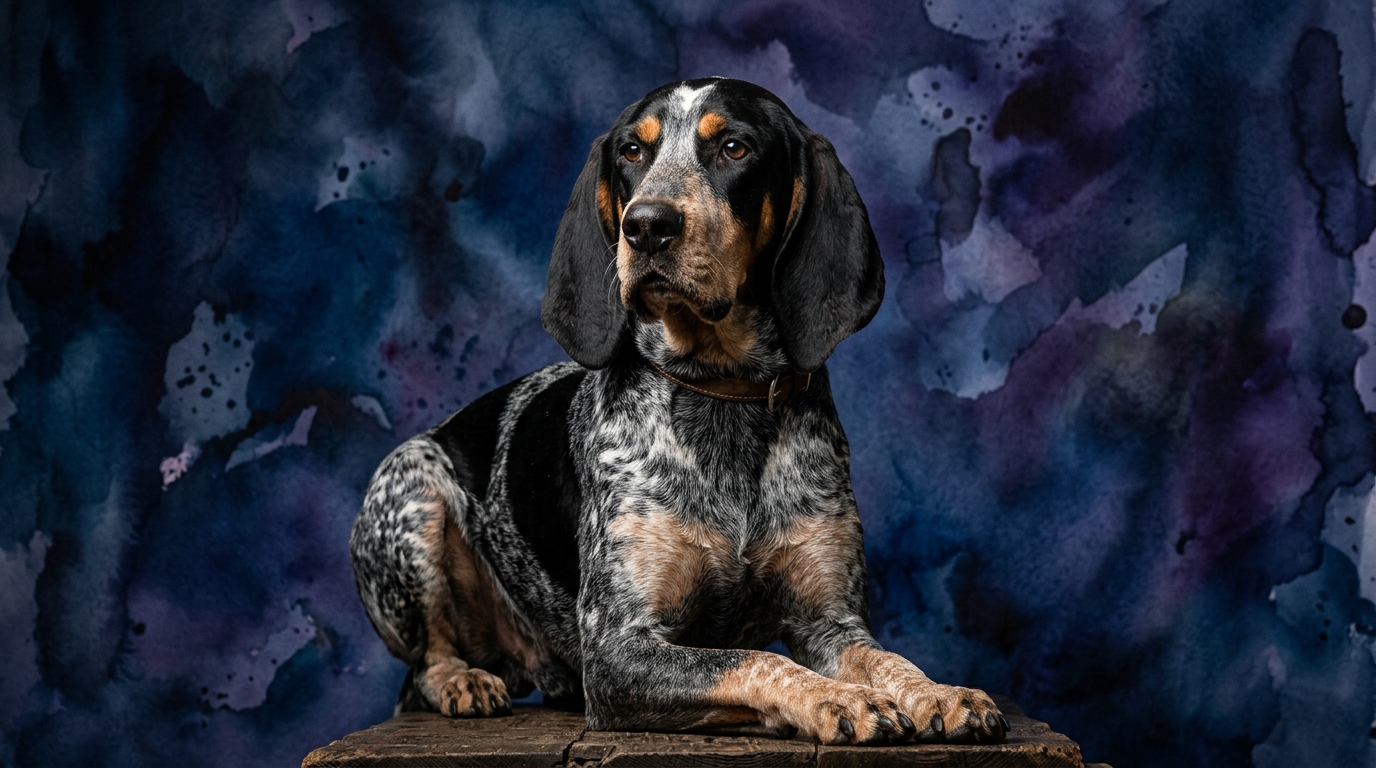
The Bluetick Coonhound's IQ profile, conversely, highlights their prowess as a tenacious scenthound: Problem Solving (3/5): Bluetick Coonhounds excel at unraveling complex scent trails, demonstrating remarkable persistence in navigating varied obstacles and interpreting subtle olfactory clues to locate their quarry. Their problem-solving is characterized by methodical, sustained effort, an impressive ability to "read" an environment through smell, and an unwavering commitment to the trail. Training Speed (3/5): Blueticks can learn commands reliably and are generally eager to please their handlers, but their powerful, all-consuming scent drive often means environmental distractions can easily divert their attention. Consistent, positive reinforcement and a strong foundation in impulse control are crucial to harnessing their focus, especially when competing with compelling smells. Social Intelligence (3/5): As pack-oriented animals, Blueticks generally display a robust social awareness, integrating well into family units and often thriving on constant interaction and companionship. They are typically expressive, communicating their feelings vocally and through body language within their social group. Instinctive Drive (3/5): The Bluetick's dominant instinctive drive is profoundly rooted in scent tracking, demonstrating an unwavering, almost obsessive determination to follow a trail once engaged. This drive is a relentless, deep-seated compulsion to pursue, bay, and ultimately corner their quarry. Memory (3/5): Blueticks possess a solid and enduring memory for scent patterns, accurately recalling specific trails, the locations of past successful hunts, and learned commands. Their memory is particularly acute for information directly related to their primary drive: tracking, finding, and recognizing specific quarry.
Where the Saluki Wins Cognitively
When evaluating cognitive strengths, the Saluki often exhibits superior capabilities in areas requiring rapid visual processing, spatial reasoning, and independent decision-making in open, expansive environments. Their sighthound heritage endows them with an unparalleled ability to scan horizons, identify fast-moving objects from significant distances, and instantaneously calculate intercept courses. This involves a sophisticated spatial awareness, allowing them to navigate complex outdoor terrain at high speeds while maintaining visual lock on their target. Unlike many breeds that rely heavily on handler input for every step, Salukis frequently demonstrate an autonomous problem-solving approach during a chase, making split-second tactical adjustments and adapting to unforeseen circumstances without direct human instruction. This cognitive independence, while sometimes presenting a challenge in structured obedience training, is a distinct advantage in situations demanding swift, self-directed action based primarily on visual stimuli and environmental assessment.
Where the Bluetick Coonhound Wins Cognitively
Conversely, the Bluetick Coonhound’s cognitive strengths shine brightest in domains centered around advanced olfactory processing and sustained, methodical problem-solving. Their incredibly keen sense of smell allows them to interpret complex environmental data, distinguishing between faint, overlapping odors and following intricate, often cold trails over varied landscapes and long durations. This isn't merely about detecting a scent; it's about constructing a detailed mental map of a path, understanding its age, direction, and the nuanced movements of the quarry. Blueticks excel at maintaining an unwavering focus on a challenging task, even when faced with significant environmental distractions, driven by their profound instinctive urge to track. Their cognitive persistence in unraveling complex scent puzzles, combined with an exceptional endurance for prolonged mental engagement, gives them a clear advantage in tasks requiring deep sensory analysis and unwavering dedication to a singular, long-term goal.
Which is Easier to Train and Why
Assessing which breed is 'easier' to train requires understanding their distinct motivations and inherent challenges, despite both having a 3/5 training speed. The Saluki, with its ancient roots as an independent hunter, can be less inclined to perform repetitive tasks purely for human approval. Their training often demands creativity, making sessions feel like engaging games or stimulating challenges that appeal to their natural instincts for movement and pursuit. They might quickly grasp a command but choose not to execute it if they perceive a more interesting visual stimulus or if the reward isn't compelling enough to override their independent thought. This self-reliance means they're not always looking to their handler for direction, which can be interpreted as stubbornness but is rather a reflection of their self-sufficient hunting style. In contrast, the Bluetick Coonhound’s primary training hurdle is their overwhelming scent drive. While often eager to please and social, a compelling smell can completely override any learned command or handler cue, making off-leash reliability particularly challenging in environments rich with scents. Training a Bluetick effectively involves rigorous proofing in various environments, teaching them to 'switch off' their nose when required, and providing consistent mental stimulation through scent work. Their characteristic vocalizations also mean teaching appropriate barking can be a significant, long-term project. Therefore, while both require patience, training a Saluki often involves navigating their independence and seeking high-value, engaging rewards, whereas training a Bluetick is largely about managing and redirecting their powerful, all-consuming olfactory focus.
Which Suits Active Owners vs. Relaxed Owners
When considering an owner's lifestyle, both breeds require significant engagement, but their preferred activities and energy expressions differ substantially. The Saluki, while appearing graceful and sometimes reserved indoors, is built for explosive bursts of speed and requires regular opportunities to run freely and safely in a securely fenced area. They are not typically suited for endless hours of structured obedience work or long, slow jogs, which can bore them. Instead, their activity needs are met through short, intense sprints, followed by periods of luxurious lounging indoors. This makes them suitable for active owners who can provide dedicated, secure spaces for their high-speed exercise, but who also appreciate a calm, often independent companion during downtime. They are not ideal for owners seeking a constantly 'on-the-go' partner for all activities, but rather one who thrives on specific, high-intensity exercise followed by quiet companionship. The Bluetick Coonhound, on the other hand, demands sustained, vigorous activity that engages both their robust body and their incredibly keen nose. They are ideal for active owners who enjoy long hikes, scent work, or activities like canicross, where their endurance and tracking abilities can be fully utilized over extended periods. A Bluetick thrives on having a 'job' that involves their nose and benefits from consistent mental stimulation that challenges their problem-solving instincts. They are less suited for a purely relaxed, sedentary lifestyle, as their unmet physical and mental needs can manifest as destructive behaviors or excessive vocalization. Therefore, the choice hinges on whether an owner prefers intense, specialized bursts of activity followed by calm (Saluki) or sustained, mentally engaging outdoor adventures (Bluetick).
The Verdict
Choose a Saluki if you appreciate an independent companion who thrives on intense, brief bursts of speed in secure environments, followed by quiet, affectionate lounging at home, and value a subtle, discerning social connection.
Opt for a Bluetick Coonhound if you are an active owner eager to engage in sustained outdoor adventures, scent work, or activities that challenge their incredible tracking abilities and robust endurance, providing a vocal, devoted partner.
🧠 Find Your Pet's IQ Score
Our Pet IQ Lab assessment covers 25+ tests across 5 cognitive dimensions — personalized to your breed.
Take the Full IQ Test →Frequently Asked Questions
Do Salukis and Bluetick Coonhounds get along with other pets?
Salukis possess a strong prey drive, which means they can coexist peacefully with cats or smaller dogs if raised with them, but new introductions require careful supervision. Bluetick Coonhounds are generally more tolerant of other dogs due to their pack heritage, but their hunting drive can still pose a risk to smaller, non-canine pets.
Are these breeds good for first-time dog owners?
Neither breed is typically recommended for first-time dog owners due to their distinct needs and strong instinctive drives. Salukis require understanding of their independent nature and exercise requirements, while Blueticks demand significant commitment to managing their scent drive and vocal tendencies.
How do their grooming needs compare?
Salukis generally have relatively low grooming needs, requiring regular brushing to prevent tangles in their feathered coats and occasional baths. Bluetick Coonhounds have short, dense coats that are easy to maintain with weekly brushing, though their droopy ears need regular cleaning to prevent infections.