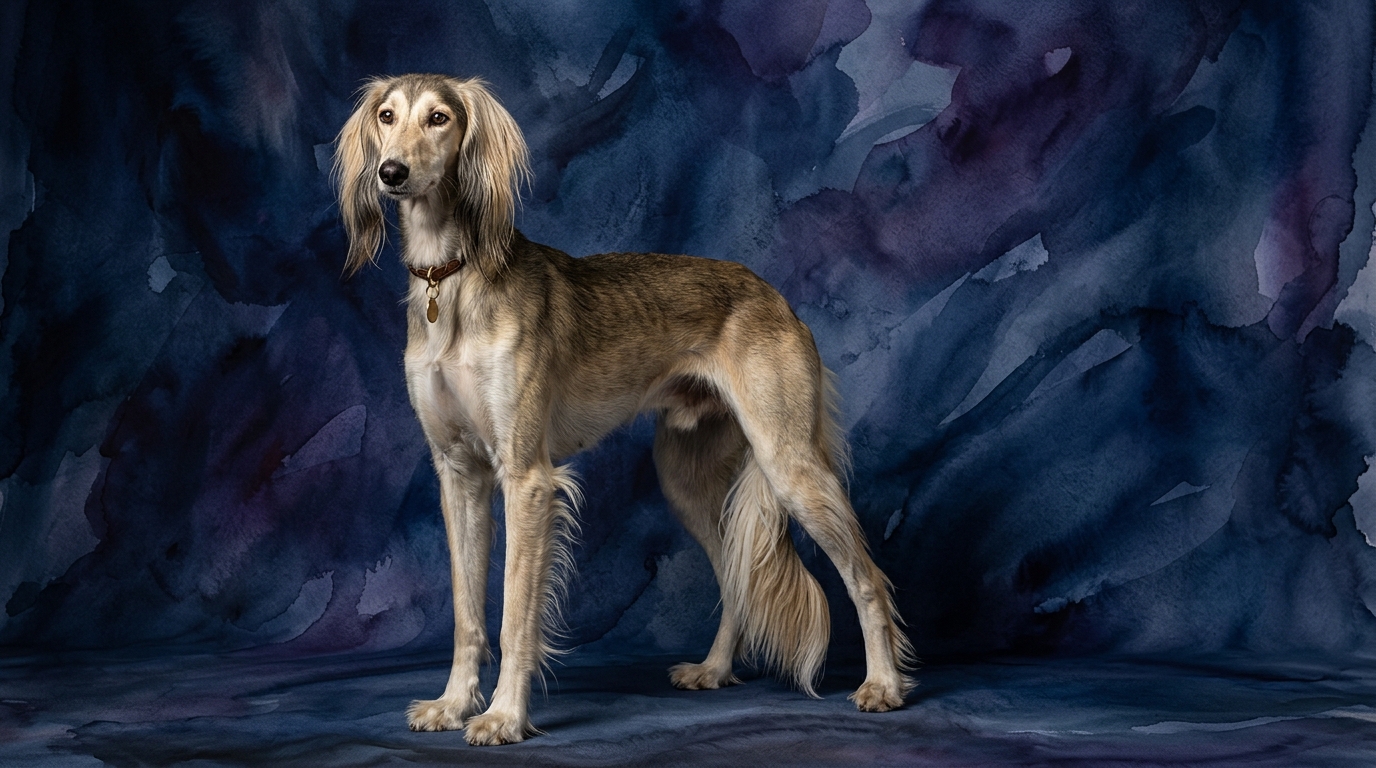

Side-by-Side IQ Profile: Saluki vs. English Toy Spaniel
**Problem Solving (3/5):** The Saluki, as a sighthound, demonstrates problem-solving prowess in dynamic, open environments, where they must rapidly assess and navigate obstacles to pursue perceived prey. This manifests as independent decision-making during a chase, figuring out the most efficient path or anticipating a quarry's movements, rather than solving complex human-devised puzzles. The English Toy Spaniel's problem-solving often centers around their domestic environment and social interactions. They might cleverly figure out how to get a favorite toy from under furniture or subtly manipulate their owner into providing extra cuddles, demonstrating an understanding of cause-and-effect within their immediate social context.
**Training Speed (3/5):** The Saluki's training speed is influenced by their inherent independence; they grasp commands quickly but may choose to comply only if it aligns with their self-interest or current motivation. Consistent, positive reinforcement and making training feel like a collaborative game are crucial to harnessing their learning potential. English Toy Spaniels learn at a moderate pace, often eager to please their beloved human, which can accelerate command acquisition. However, their delicate nature means harsh corrections are counterproductive, and distractions can easily derail a training session, requiring patience and gentle methods.
**Social Intelligence (3/5):** Salukis exhibit a quiet, dignified social intelligence, forming deep, loyal bonds with their inner circle while often remaining reserved or aloof with strangers. They keenly observe their family's moods and routines, offering comfort or companionship subtly rather than overtly. The English Toy Spaniel's social intelligence is profound and central to their existence, making them highly attuned to human emotions and social cues. They excel at comforting, sensing distress, and seamlessly integrating into family dynamics, often anticipating needs and offering affectionate companionship.
**Instinctive Drive (3/5):** The Saluki's primary instinctive drive is the powerful sighthound's urge to chase anything that moves, stemming from centuries of hunting alongside humans in vast desert landscapes. This drive is intensely focused and often overrides other commands once engaged, coupled with a deep desire for comfort and rest. The core of the English Toy Spaniel's instinctive drive is companionship and connection, thriving on close physical proximity and interaction with their chosen people. They possess a natural curiosity within their safe environment, but their most potent drive is to be a devoted, comforting presence.
**Memory (3/5):** Salukis possess a functional memory for routines, commands, and the layout of their environment, particularly outdoor spaces where they might have hunted or exercised. They also recall specific positive and negative experiences, influencing their future responses to people or situations. English Toy Spaniels have a good memory for their daily routines, the faces and voices of their family, and the locations of favorite resting spots or toys. They remember social interactions vividly, recalling who offers affection and who might be less engaging.
Where the Saluki Wins Cognitively
The Saluki truly shines in cognitive scenarios demanding independent thought and rapid, autonomous decision-making in expansive, stimulating environments. Their problem-solving isn't about intricate puzzles but about efficient navigation and strategy during a high-speed chase. For instance, a Saluki can quickly process a changing landscape, anticipate a rabbit's evasive maneuvers, and adjust its pursuit trajectory without direct human input, demonstrating an unparalleled ability to make split-second judgments based on visual cues and instinct. Their memory for terrain and successful hunting patterns is a testament to their operational intelligence in their historical role, allowing them to learn and adapt effective strategies for securing prey. This cognitive strength makes them exceptional at activities like lure coursing, where they must interpret the lure's path and overcome obstacles with minimal guidance.
Where the English Toy Spaniel Wins Cognitively
The English Toy Spaniel's cognitive strengths are profoundly rooted in their capacity for nuanced social engagement and emotional intelligence within a domestic setting. They possess an exquisite ability to read and respond to human moods, often anticipating their owner's needs or offering comfort without explicit prompts. For example, an English Toy Spaniel might sense a family member's distress and gently nudge their hand or settle quietly beside them, demonstrating a sophisticated understanding of social dynamics and empathy. Their problem-solving in this realm involves figuring out how best to elicit positive attention or provide solace, showcasing their adaptability in social situations. Their memory is particularly keen for positive human interactions and established household routines, which allows them to thrive in a structured, companionship-rich environment, making them masters of domestic harmony.
Which is Easier to Train and Why
Between the two, the English Toy Spaniel is generally considered easier to train for basic obedience and household manners. Their strong desire to please their primary caregiver, coupled with their inherent sensitivity, makes them highly responsive to positive reinforcement and gentle guidance. They thrive on praise and connection, often eager to learn new commands that strengthen their bond with their person. However, their delicate nature means they can be easily discouraged by harsh tones or inconsistent training, requiring a patient and encouraging approach. The Saluki, conversely, presents a greater training challenge primarily due to their independent nature and powerful instinctive drives. While they are capable of learning commands quickly, their motivation to comply can be situational. A Saluki might perfectly execute a 'recall' in a calm, enclosed space but completely ignore it when a squirrel darts across their path, their prey drive overriding all learned behaviors. Training a Saluki demands immense patience, creativity, and a deep understanding of their sighthound motivations, often requiring making compliance more rewarding than their natural instincts. Consistency is paramount, as is ensuring their physical and mental stimulation needs are met outside of formal training sessions.
Suitability for Active vs. Relaxed Owners
The choice between these two breeds significantly hinges on an owner's lifestyle and activity level. The Saluki is undeniably suited for active owners who can provide ample opportunities for vigorous exercise, ideally in a securely fenced area where they can stretch their legs at full speed. Their deep-rooted instinctive drive means they need outlets for chasing and running; without it, their energy can manifest as restlessness or destructive behaviors indoors. Owners who enjoy long walks, jogs, or engage in dog sports like lure coursing will find a wonderful, dignified companion in a Saluki. In contrast, the English Toy Spaniel is an ideal match for more relaxed owners. While they enjoy gentle daily walks and playful indoor sessions, their primary need is for companionship and close human interaction. They are content with a cozy spot on the couch, thriving on being near their family members. Their modest exercise requirements make them suitable for apartment living or for individuals with less active lifestyles who prioritize an affectionate, devoted lap dog above all else.
The Verdict
Choose a Saluki if you seek an independent, graceful athlete who thrives on open spaces and values a quiet, dignified companionship after their exercise needs are met.
Opt for an English Toy Spaniel if you desire a highly affectionate, emotionally sensitive companion whose greatest joy is close human connection and gentle domestic life.
🧠 Find Your Pet's IQ Score
Our Pet IQ Lab assessment covers 25+ tests across 5 cognitive dimensions — personalized to your breed.
Take the Full IQ Test →Frequently Asked Questions
Do Salukis require a lot of grooming?
Salukis have a relatively low-maintenance coat, needing only weekly brushing to remove loose hair and prevent mats, especially in their feathering. Their elegant appearance doesn't demand extensive grooming routines, making them quite easy to care for.
Are English Toy Spaniels prone to any specific health issues?
English Toy Spaniels can be predisposed to certain health conditions, including patellar luxation, heart conditions like mitral valve disease, and eye problems. Responsible breeders screen for these issues, and regular veterinary check-ups are essential for early detection and management.
How do Salukis typically interact with other pets?
Salukis can coexist peacefully with other dogs, especially if raised together, but their strong prey drive means they may not be safe with smaller non-canine pets like cats or rabbits unless extensively socialized from a young age and carefully supervised.