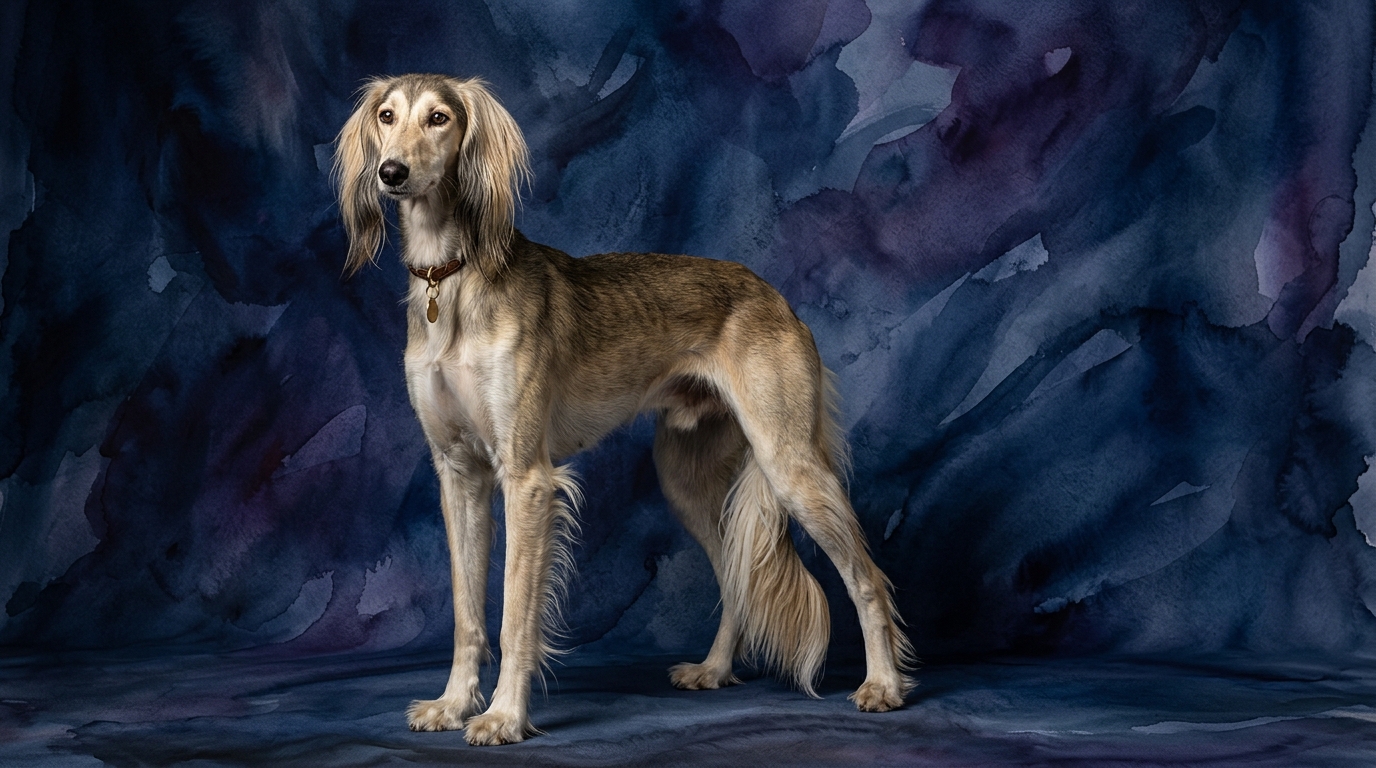
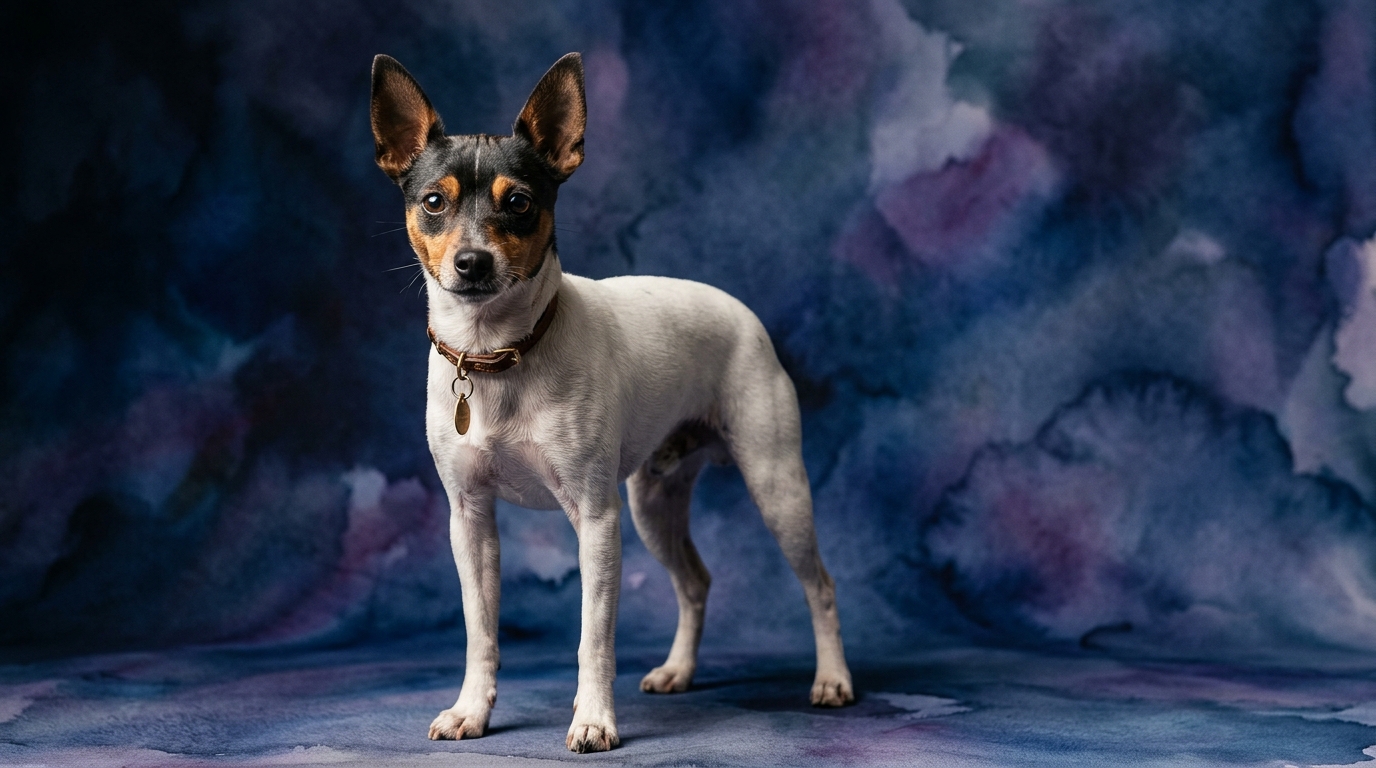
Side-by-Side Cognitive Profile: Saluki vs. Toy Fox Terrier
Despite their vastly different appearances and origins, both the Saluki and the Toy Fox Terrier register identical scores across the five dimensions of The Cosmic Pet Pet IQ Lab. This doesn't mean their minds work identically, but rather that their cognitive strengths, while equal in measure, are channeled through their distinct breed purposes. Understanding these nuances is key to appreciating their individual brilliance.
For the **Saluki**, a regal sighthound with ancient roots:
**Problem Solving (3/5):** Salukis excel at real-time environmental assessment in open spaces, calculating trajectories and anticipating fast-moving objects, crucial for their sighthound heritage.
**Training Speed (3/5):** Learning is deliberate for Salukis. They grasp commands, but their independent nature often means compliance is thoughtful rather than immediate.
**Social Intelligence (3/5):** Salukis form profound bonds with their inner circle, subtly understanding family moods. Reserved with strangers, they observe rather than overtly engage, yet are sensitive to trusted social cues.
**Instinctive Drive (3/5):** This score reflects a powerful, innate visual chase drive. For a Saluki, it's an almost exclusive pursuit of anything that moves quickly, bypassing other cognitive functions when triggered.
**Memory (3/5):** Salukis possess strong spatial memory, recalling specific routes, hunting grounds, and familiar people and objects. They remember experiences, influencing future interactions.
For the **Toy Fox Terrier**, a tenacious and lively terrier:
**Problem Solving (3/5):** The Toy Fox Terrier's problem-solving is marked by adaptability and tenacity in confined environments. They excel at accessing small spaces, manipulating objects, or outwitting perceived "prey" with clever workarounds.
**Training Speed (3/5):** Toy Fox Terriers can be quick learners, picking up tricks with enthusiasm, especially with high positive reinforcement. However, terrier tenacity and distraction can challenge consistency, requiring an engaging handler.
**Social Intelligence (3/5):** These small terriers are highly attuned to humans, using social intelligence to initiate play, seek attention, or subtly influence situations. They are often outgoing, responsive, and eager to engage with family.
**Instinctive Drive (3/5):** For the Toy Fox Terrier, this drive manifests as a fervent desire to hunt small prey, dig, and bark. It's a robust, all-encompassing instinct, difficult to redirect once activated, making them persistent.
**Memory (3/5):** Toy Fox Terriers have excellent recall for routines, training cues, and favored toy locations. They remember past interactions, influencing their behavior in future encounters.
Where the Saluki Cognitively Excels
Salukis exhibit a distinct cognitive advantage in **large-scale environmental assessment and strategic pursuit**. Their problem-solving (3/5) uniquely targets understanding vast open spaces, predicting erratic quarry movements across distances, and executing complex chase patterns. This involves rapid, intuitive processing of visual information and spatial relationships.
Their **memory (3/5) for specific routes and geographical layouts** is particularly refined, honed by centuries of traversing diverse terrains. While a Toy Fox Terrier recalls toy locations, a Saluki excels at remembering efficient paths across fields or a warren observed days prior. The Saluki's **social intelligence (3/5), though reserved, offers subtle communication depth**. They are masters of quiet observation, reading human emotions through nuanced body language, fostering sensitive, non-demanding companionship.
Where the Toy Fox Terrier Cognitively Excels
The Toy Fox Terrier's **problem-solving (3/5) shines in intricate, localized challenges**. They adeptly navigate confined spaces, manipulate objects to achieve goals, and employ clever tactics to "outsmart" obstacles. This quick, persistent, hands-on approach contrasts with the Saluki's expansive-view strategy.
Their **social intelligence (3/5) excels in active, communicative engagement**. Toy Fox Terriers are often more outwardly expressive, using varied vocalizations and body language to communicate desires and read human reactions. They are proactive in initiating interaction and quick to learn how to elicit responses. In terms of **training speed (3/5), the Toy Fox Terrier often displays more immediate enthusiasm for learning novel tricks and interactive commands**. Their eagerness to participate and engage with their handler can make initial learning stages feel faster and more dynamic in a structured, reward-based setting.
Training Dynamics: Saluki vs. Toy Fox Terrier
Assessing ease of training for both breeds, scoring 3/5 for training speed, requires considering motivation and temperament. The **Toy Fox Terrier is generally perceived as easier to train for a wider range of obedience and tricks**. Their terrier heritage instills a desire for interaction and "work," making them receptive to repetitive training with treats or toys. Their social intelligence (3/5) means they often eager to please, responding well to human direction, though their instinctive drive (3/5) for chasing and barking can distract. Consistency and making training fun are paramount.
The **Saluki, while capable, presents a different training challenge**. Their 3/5 training speed is tempered by deep independence and sighthound nature. They learn commands but their problem-solving (3/5) and memory (3/5) are heavily influenced by their primary drive: observing and pursuing movement. This means they might ignore a recall if prey is sighted. Training a Saluki demands immense patience, understanding their independent thought, and making commands appealing enough to override instincts. They respond best to positive reinforcement; harshness can shut them down.
Lifestyle Suitability: Active vs. Relaxed Owners
The **Saluki generally suits active owners who appreciate bursts of intense energy followed by calm relaxation**. Their powerful instinctive drive (3/5) demands regular opportunities for full-speed running in a secure, enclosed space. This physical outlet is crucial. Once exercised, Salukis are dignified companions, enjoying lounging near family. They are not suited for owners unable to provide consistent access to safe, expansive running areas. Their reserved social intelligence (3/5) thrives with owners respecting their space.
The **Toy Fox Terrier suits owners active through interactive play, mental stimulation, and consistent engagement**. Their energy involves bursts of spirited activity, agility, and a desire for "work" via games or agility. While they enjoy walks, their problem-solving (3/5) and social intelligence (3/5) thrive on mental challenges and interaction. They adapt to more relaxed owners if mental and interactive needs are met, but will vocalize boredom if under-stimulated.
The Verdict
Choose a Saluki if you are an owner who values independent companionship, can provide extensive, secure running opportunities, and appreciates a dog whose cognitive strengths lie in observing and reacting to the world with quiet dignity.
Opt for a Toy Fox Terrier if you seek an engaging, interactive companion who thrives on mental challenges, enjoys learning tricks, and whose cognitive drive is expressed through spirited play and clever problem-solving in a more contained environment.
🧠 Find Your Pet's IQ Score
Our Pet IQ Lab assessment covers 25+ tests across 5 cognitive dimensions — personalized to your breed.
Take the Full IQ Test →Frequently Asked Questions
Can a Saluki live in an apartment?
While Salukis are calm indoors, their strong instinctive drive (3/5) for running means they absolutely require regular, high-speed exercise in a securely fenced area. Apartment living can work if dedicated daily access to a large, safe space for sprinting is consistently provided, but it's not ideal for all Salukis.
Are Toy Fox Terriers good with children?
Toy Fox Terriers, with their social intelligence (3/5) and playful nature, can be good with respectful children who understand how to interact with a small, spirited dog. Supervision is key, as their terrier tenacity means they might not tolerate rough play and can be prone to nipping if provoked or startled.
Do Salukis and Toy Fox Terriers get along with other pets?
Both breeds possess a significant instinctive drive (3/5) towards prey. Salukis can coexist with cats they are raised with but will likely chase unfamiliar small animals. Toy Fox Terriers often have a strong prey drive for small rodents and might view smaller pets as targets, requiring careful introductions and supervision, especially with non-canine companions.