
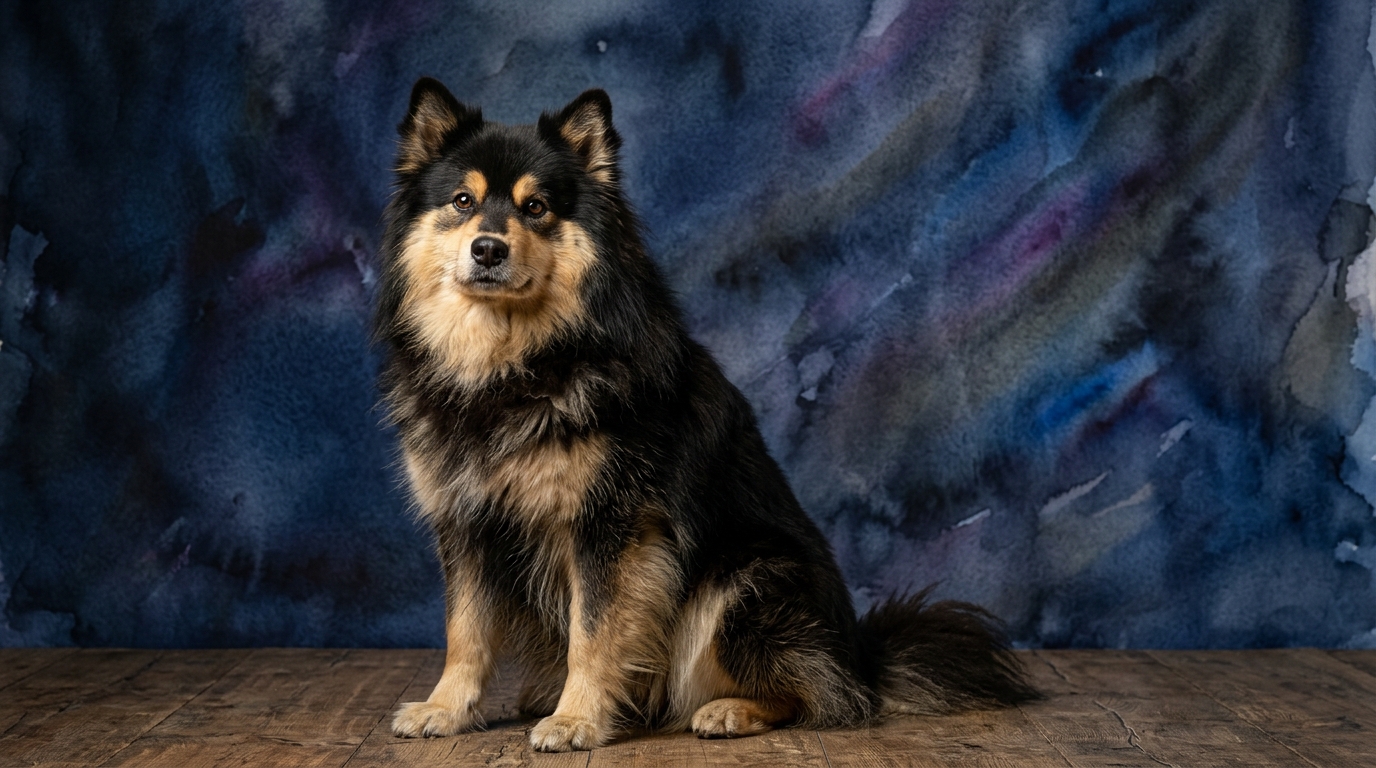
Side-by-Side IQ Profile: Shih Tzu vs. Finnish Lapphund
The Cosmic Pet Pet IQ Lab employs a multi-faceted approach to understanding canine cognition, moving beyond simplistic notions of 'smartness' to evaluate specific dimensions. For the Shih Tzu, a Toy breed, and the Finnish Lapphund, a Herding breed, their profiles offer a detailed look at how they perceive and interact with their world.
The Shih Tzu's cognitive blueprint includes a Problem Solving score of 3/5, indicating a moderate capacity to navigate environmental puzzles or understand cause-and-effect in everyday situations, such as figuring out how to get a favorite toy from under furniture. Their Training Speed is 2/5, suggesting that acquiring new commands requires consistent effort and patience from their human companions. Where they truly shine is in Social Intelligence, earning a remarkable 5/5; this reflects an exceptional ability to read human emotions, intentions, and subtle cues, making them profoundly empathetic companions. Their Instinctive Drive is low at 2/5, meaning they possess minimal inherent urges for complex tasks like hunting or herding, preferring a life centered around human interaction. Finally, their Memory is rated 3/5, allowing them to adequately retain routines and learned behaviors, though not with exceptional recall for intricate sequences.
The Finnish Lapphund presents a different, yet in some ways similar, cognitive makeup. Their Problem Solving score also stands at 3/5, indicating a similar practical intelligence to the Shih Tzu, perhaps manifested in understanding boundaries or navigating varied terrains. Their Training Speed is a solid 3/5, signifying a moderate pace of learning and a greater receptiveness to structured instruction compared to the Shih Tzu. Social Intelligence for the Lapphund is 3/5; they understand human cues and form bonds, but typically with a more independent approach than the Shih Tzu, not being as intensely focused on emotional mirroring. A moderate Instinctive Drive of 3/5 reflects their heritage as herding dogs, which can translate into a desire for purpose, activity, and a natural inclination to 'gather' their family. Their Memory, like the Shih Tzu, is 3/5, enabling them to effectively recall commands and experiences, crucial for their historical working roles.
Where the Shih Tzu Exhibits Cognitive Strengths
The Shih Tzu's undeniable cognitive victory lies in their exceptional Social Intelligence, scoring a perfect 5/5. This isn't merely about being affectionate; it's a deep-seated ability to interpret human body language, facial expressions, and vocal tones with remarkable accuracy. A Shih Tzu can often sense a change in their owner's mood, offering comfort or adapting their behavior without explicit commands. This profound empathetic capacity allows them to form incredibly strong, intuitive bonds, making them superb emotional support animals and cherished family members who anticipate needs rather than just reacting to them. Their history as companions to royalty likely refined this trait, favoring subtle communication and close emotional attunement over physical tasks.
While their Coren rank of #70 might place them lower in 'working and obedience intelligence,' this ranking doesn't fully capture the breadth of their social acumen. A Shih Tzu's intelligence is geared towards interpersonal connection; they excel at the complex 'problem-solving' of human relationships. This means they are masters of communication within a family unit, understanding nuances that many other breeds might overlook. For owners seeking a dog that feels like an extension of their own emotions, the Shih Tzu’s cognitive wiring is uniquely suited to provide this deep, unspoken connection.
Where the Finnish Lapphund Shows Cognitive Advantages
The Finnish Lapphund’s cognitive profile demonstrates advantages primarily in their Training Speed and Instinctive Drive, both scoring 3/5. While their Problem Solving score matches the Shih Tzu, the application of this problem-solving is often tied to their more active and purposeful nature. Their moderate Training Speed means they generally grasp new commands and routines more readily than the Shih Tzu, making them a more straightforward partner for structured learning. This responsiveness is a significant asset for owners interested in progressing through various training levels, from basic obedience to more complex tricks or dog sports.
Furthermore, their Instinctive Drive of 3/5, rooted in their herding heritage, provides a cognitive framework for engagement with tasks and their environment. This isn't an overwhelming drive that requires constant intense work, but rather a moderate impulse for activity and a desire to be involved. This manifests as a greater willingness to participate in games that require strategy, like scent work or retrieving, and a general enthusiasm for outdoor exploration. Their cognitive strengths lean towards a practical, engaged intelligence, making them adaptable to varied activities and more likely to initiate interactions that involve mental stimulation beyond simple companionship.
Which Is Easier to Train and Why?
When it comes to ease of training, the Finnish Lapphund generally holds an edge over the Shih Tzu, primarily due to their higher Training Speed (3/5 vs. 2/5) and moderate Instinctive Drive. Lapphunds were historically bred to work closely with humans, herding reindeer, which fostered a natural biddability and a desire to understand and respond to human directives. They tend to be more eager to please and find satisfaction in the training process itself, often viewing it as a stimulating activity. This means they are likely to pick up basic commands like 'sit,' 'stay,' or 'come' with fewer repetitions and greater enthusiasm, making the initial stages of training less demanding for their owners.
The Shih Tzu, while immensely socially intelligent, can present more challenges in formal training scenarios. Their lower Training Speed and Instinctive Drive mean they may require more patience, consistent positive reinforcement, and a greater understanding of their motivations. They are not inherently driven to perform complex tasks or obey simply for the sake of it; their focus is more on companionship. While they comprehend what you want (thanks to their social intelligence), their inclination to execute it quickly or repeatedly might be lower. House-training, for example, might take longer with a Shih Tzu, as their primary cognitive focus isn't necessarily on adherence to human-imposed rules but on comfortable coexistence. Therefore, owners seeking a dog that will excel rapidly in obedience or dog sports might find the Lapphund a more intuitive training partner.
Which Suits Active Owners vs. Relaxed Owners
The cognitive profiles of these two breeds clearly delineate their suitability for different owner lifestyles. For active owners who enjoy outdoor adventures, structured activities, and consistent engagement, the Finnish Lapphund is a more fitting choice. Their moderate Instinctive Drive and Problem Solving capacity mean they thrive on mental and physical stimulation. Activities like hiking, agility courses, canine freestyle, or even advanced obedience training align perfectly with their cognitive needs and energetic disposition. They enjoy having a 'job' to do, even if it's just a game of fetch with a purpose, and their moderate social intelligence makes them keen partners in these shared experiences, without being overly dependent or demanding of constant physical contact.
Conversely, the Shih Tzu is exceptionally well-suited for relaxed owners who prioritize companionship, emotional connection, and a less demanding daily routine. Their low Instinctive Drive and high Social Intelligence mean they are content with shorter walks, indoor play, and ample cuddle time. Their cognitive focus is squarely on their human family, deriving satisfaction from close proximity and emotional exchange rather than strenuous physical activity or complex tasks. A Shih Tzu will happily spend hours on a lap, content to observe and offer comfort, making them ideal for individuals or families seeking a devoted, low-key companion who deeply understands their emotional landscape without requiring extensive physical output.
The Verdict: When to Choose Each Breed
The Verdict
Choose the Shih Tzu if your priority is a deeply empathetic companion, content with an indoor-centric life, who excels at forming profound emotional bonds and offers intuitive emotional support.
Opt for the Finnish Lapphund if you seek a moderately active, trainable partner for varied activities, who enjoys engaging in purposeful tasks and possesses a more independent, yet cooperative, spirit.
🧠 Find Your Pet's IQ Score
Our Pet IQ Lab assessment covers 25+ tests across 5 cognitive dimensions — personalized to your breed.
Take the Full IQ Test →Frequently Asked Questions
Do Coren rankings fully capture a dog's intelligence?
No, Coren's ranking primarily assesses 'working and obedience intelligence,' focusing on how quickly a dog learns commands and obeys. It doesn't encompass crucial aspects like social intelligence, problem-solving in novel situations, or instinctive drives, which are vital components of a dog's overall cognitive profile.
How does 'instinctive drive' impact a dog's daily life?
Instinctive drive refers to a dog's inherent urge to perform certain breed-specific behaviors, like herding, hunting, or guarding. A higher drive means the dog typically needs more outlets for these behaviors, influencing their exercise requirements, trainability for specific tasks, and overall engagement with their environment.
Is a higher 'social intelligence' score always better?
A higher social intelligence score, like the Shih Tzu's 5/5, indicates exceptional attunement to human emotional states and communication cues, fostering deep bonds. While beneficial for companionship, it might also mean the dog is more sensitive to household moods or changes, requiring a calm and consistent environment to thrive.