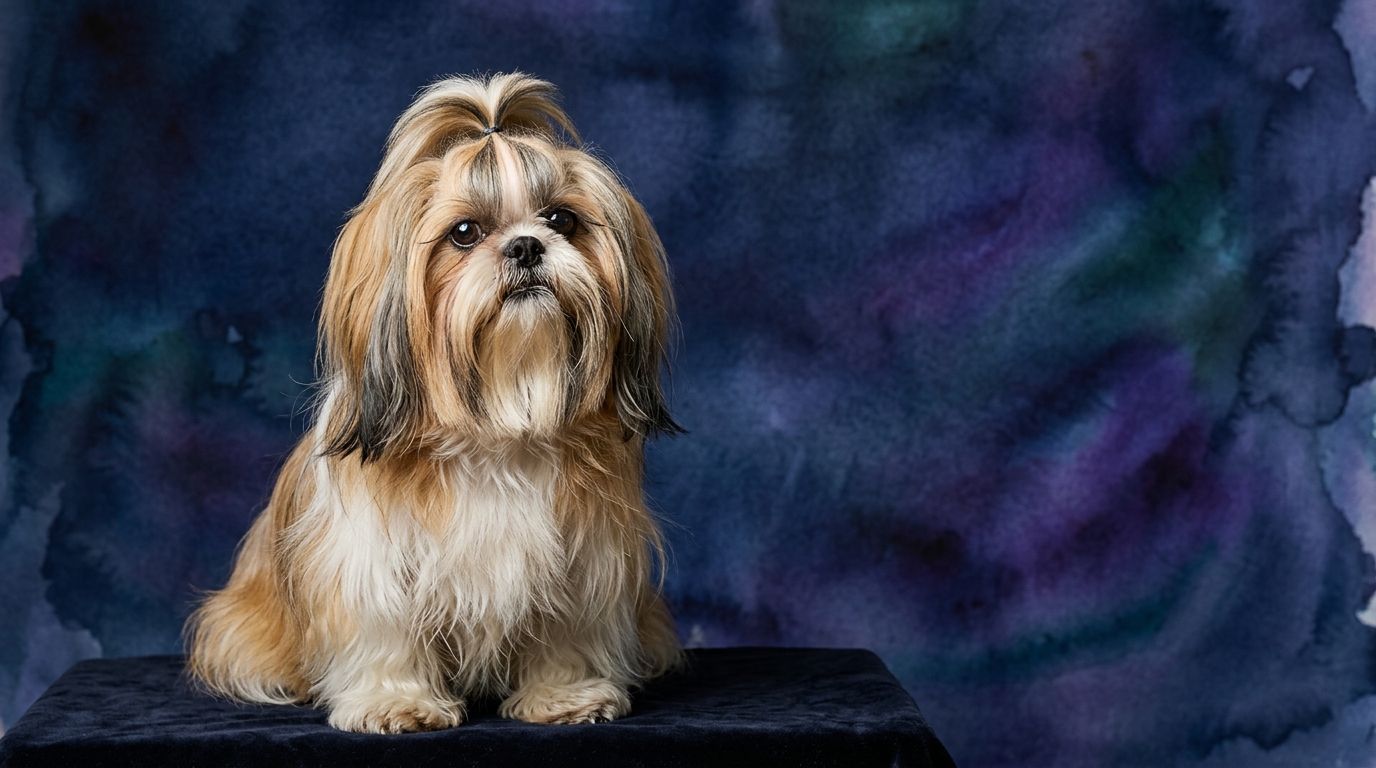
Shih Tzu at a glance
| IQ Rank / Score | #70 |
|---|---|
| Trainability | ★★☆☆☆ (2/5) |
| Social Intelligence | ★★★★★ (5/5) |
| Lifespan | 12-16 years |
| Shedding | Low to moderate |
| Exercise Needs | Moderate (30-45 min/day) |
| Origin | China/Tibet |
More Than Just a Pretty Face: The Shih Tzu's Imperial Intellect
Originating from the Tibetan Plateaus and later refined in Imperial China, the Shih Tzu's intelligence isn't about fetching sticks or complex agility courses; it's about mastering the art of companionship. For centuries, these exquisite small dogs were bred specifically to be royal confidantes, developing a profound understanding of human emotions and social dynamics. This specialized form of intelligence, which we affectionately call 'royal intelligence' at The Cosmic Pet's Pet IQ Lab, is evident in their top-tier social aptitude.
This isn't a breed that thrives on solitary tasks. Their core cognitive strengths lie in their exceptional ability to connect, observe, and respond to human cues. While their problem-solving skills rate a solid 3 out of 5, indicating a capacity for learning and adaptability, their social intelligence shines at a remarkable 5 out of 5. They are masters of reading a room, understanding subtle shifts in mood, and offering comfort or amusement precisely when needed.
Consider their historical role: Shih Tzus were so revered in Imperial China that it was a capital crime for commoners to own one. They slept in the Emperor's bed and were trained to warm his feet. This level of intimacy and constant interaction with powerful, often demanding, individuals honed their ability to anticipate needs and navigate complex human relationships with an intuitive grace. Their memory, at 3 out of 5, supports their ability to retain these social lessons and apply them consistently, ensuring they always know how to charm and console their human companions.
Their training speed, rated at 2 out of 5, and instinctive drive, also 2 out of 5, might suggest a lack of interest in traditional obedience commands compared to breeds designed for working roles. However, this isn't a deficit in intelligence; it's a prioritization. A Shih Tzu's focus is on the human connection, not on blindly following orders. They learn quickly what brings them positive social reinforcement and what maintains harmony within their 'court.' They observe and learn from their environment, often picking up routines and preferences without explicit teaching.
What Royal Intelligence Looks Like in Your Home
A Shih Tzu's intelligence manifests in everyday interactions. You might notice them settling beside you when you're feeling down, seemingly understanding your mood. They might 'herd' you towards the couch when it's cuddle time, or subtly nudge your hand for attention with perfect timing. These aren't random behaviors; they are calculated, empathic responses born from centuries of selective breeding for unparalleled companionship. Their subtle communication and keen observation skills mean they're often one step ahead of your expressed desires, making them incredibly intuitive pets.
Their playful antics, often misinterpreted as simple mischief, are frequently a demonstration of their ability to engage and entertain, a crucial skill for a historical companion breed. They understand the rhythm of household life and often adapt their behavior to fit the family's routine, demonstrating an adaptive social intelligence that few breeds can match. This isn't about raw cognitive power, but rather the highly specialized intelligence of a canine diplomat, adept at ensuring mutual happiness and emotional comfort within their human family.
3 At-Home Tests to Measure Your Shih Tzu's IQ
These tests are adapted from peer-reviewed ethology research. No equipment is needed beyond items you have at home. Run each test 5–10 times for reliable results.
The Myth: "Shih Tzus are too pampered and stupid to be trained."
✅ While not always driven by a desire for rote obedience, Shih Tzus are certainly not stupid and are highly trainable, especially when training taps into their strong social intelligence. They learn quickly through positive reinforcement and thrive on tasks that strengthen their bond with their human, responding well to consistent, fun-based training methods. Their intelligence is simply oriented towards social interaction rather than performing complex commands for the sake of it.
Shih Tzu vs. Similar Breeds
🧠 What's Your Dog's IQ Score?
Our full Pet IQ Lab assessment includes 12+ tests across 5 cognitive dimensions, calibrated for Shih Tzus specifically.
Take the Full IQ Test →Frequently Asked Questions
How smart is a Shih Tzu?
Our Pet IQ Lab framework scores cognition across five dimensions (max 25). The Shih Tzu totals 15/25 — above-average for a domestic dog. The full article breaks down each dimension with at-home tests.
Are Shih Tzus easy to train?
Shih Tzus are independent learners; short, highly-motivating sessions work best. They score 2/5 on Training Speed in our breed profile.
Are Shih Tzus good with children and other pets?
Yes — their Social Intelligence rates 5/5 in our Pet IQ Lab framework. With early socialization and supervised play, most Shih Tzus integrate well into families with respectful children and other pets.
Do Shih Tzus need a lot of mental stimulation?
Shih Tzus benefit from 10-15 minutes of focused enrichment a day: food puzzles, short training drills, or novel toys rotated weekly.
How much exercise does a Shih Tzu need?
Shih Tzus do well with 20-40 minutes of daily walks and play plus a few short training moments.
How good is a Shih Tzu's memory?
Shih Tzus score 3/5 on memory. They remember high-value associations well; less-used cues fade without refresher sessions.
What is the typical lifespan of a Shih Tzu?
Shih Tzus commonly live 12-16 years when kept at a healthy weight.
The Shih Tzu's unique 'royal intelligence' makes them far more than just pretty lapdogs; they are empathetic, intuitive companions with a deep understanding of human social dynamics. By recognizing their specific strengths, you can appreciate the profound connection you share with these ancient, astute canine diplomats.