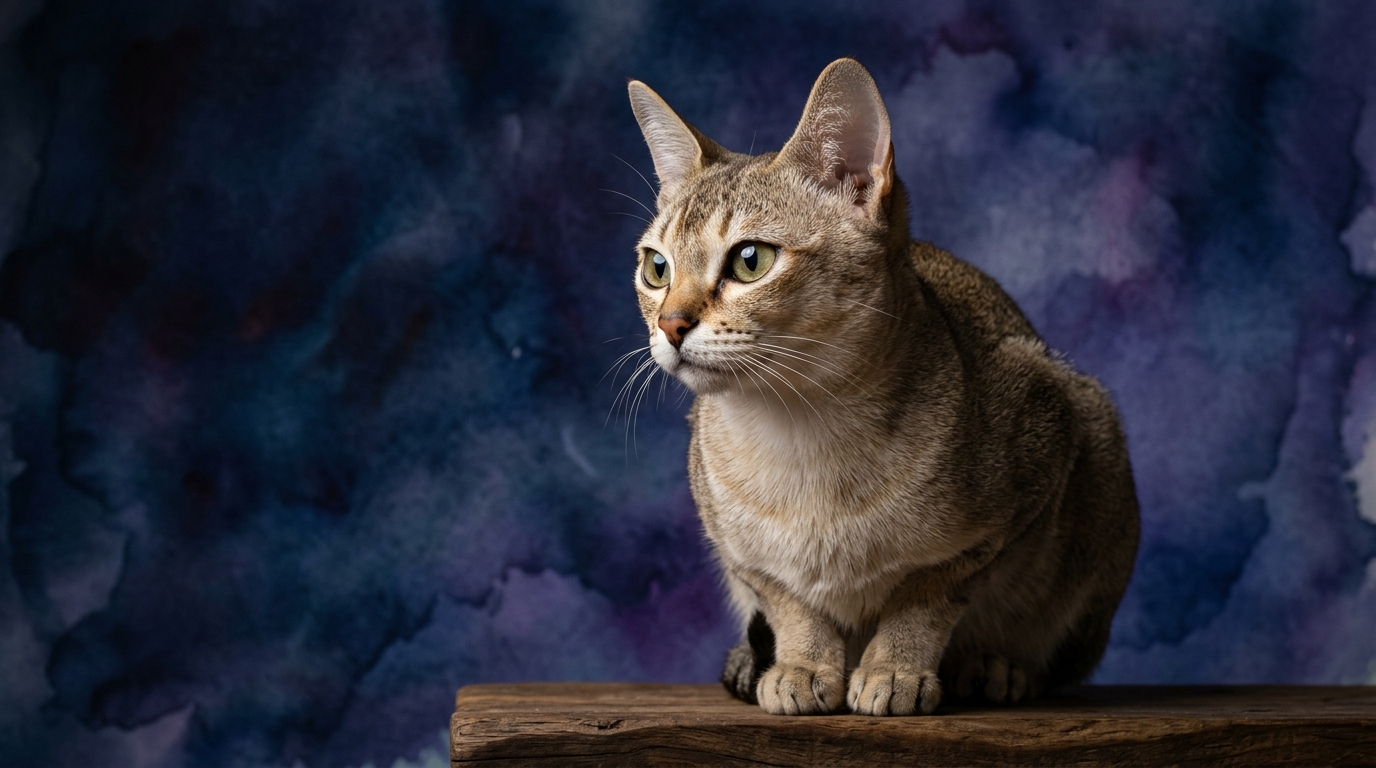
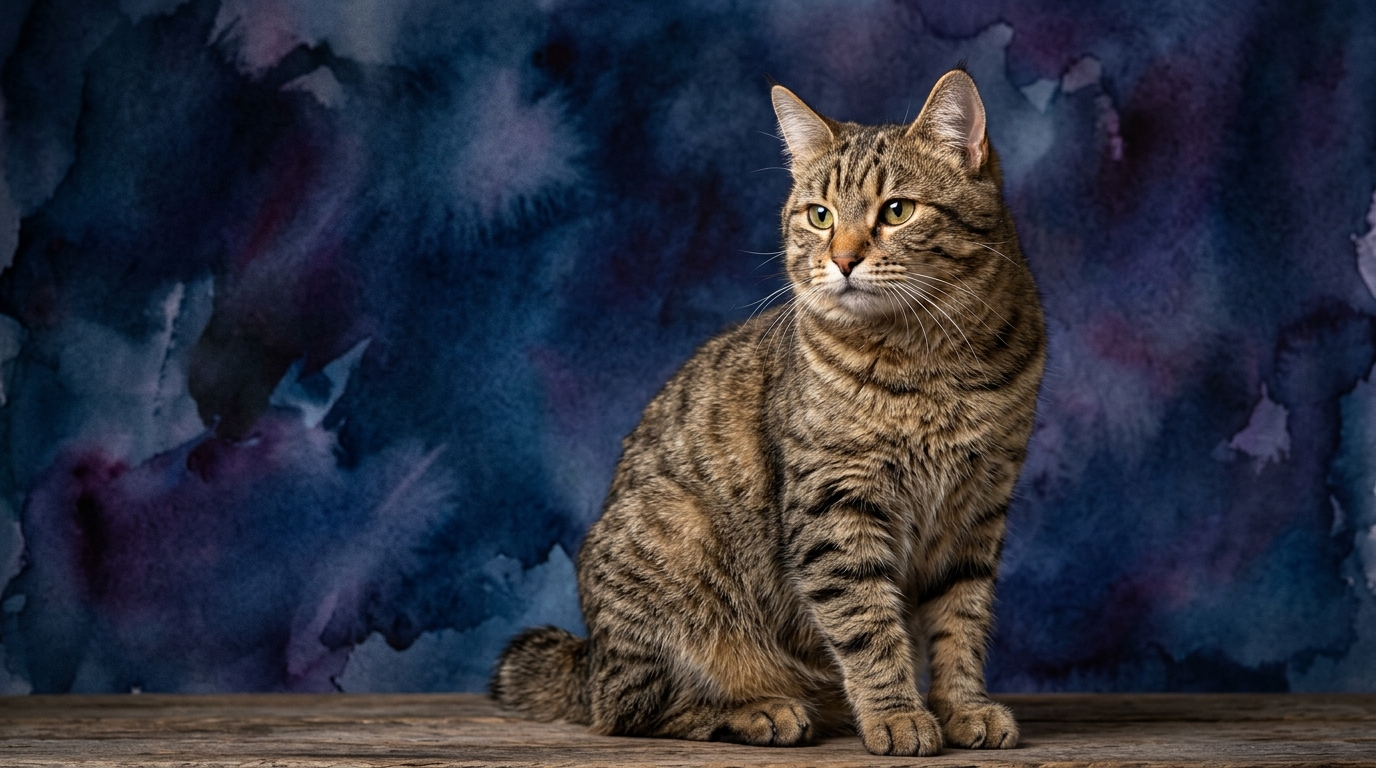
Side-by-Side Cognitive Profile: Decoding Identical Scores
While both Singapura and Pixiebob cats share a consistent 3/5 rating across all five intelligence dimensions, the practical manifestation of these scores within each breed's unique temperament offers a rich area for comparison. Understanding these subtle differences is key to appreciating their individual cognitive styles.
For **Problem Solving (3/5)**, the Singapura’s score indicates a moderate ability to navigate novel situations or overcome simple obstacles, often manifesting as clever strategies to reach desired high places, open accessible cabinets, or retrieve hidden toys, driven by their intense curiosity and agility. They tend to observe and then act, sometimes trying multiple approaches. The Pixiebob’s 3/5 in problem-solving typically translates to a practical, goal-oriented approach; they might figure out how to manipulate a latch to get to a favorite treat or navigate complex indoor-outdoor environments with purpose, showing persistence in tasks that yield a reward, be it food or attention.
In **Training Speed (3/5)**, the Singapura’s moderate rating reflects their capacity to learn new behaviors and commands, but often on their own terms and with consistent, positive reinforcement. They respond well to short, engaging sessions that tap into their playful nature, learning tricks like fetch or leash walking when it feels like a game rather than a chore. For the Pixiebob, a 3/5 indicates a receptive mind, particularly when training involves interaction and clear communication. Their sociable nature makes them generally more amenable to structured training sessions, allowing them to pick up commands such as “sit,” “stay,” or even walking on a leash with moderate repetition, thriving on mental engagement.
Regarding **Social Intelligence (3/5)**, the Singapura’s score signifies a moderate capacity for understanding and responding to human cues and social dynamics. They are often described as highly affectionate and attuned to their family's moods, seeking comfort or offering companionship. Their social intelligence is subtly expressed through their desire to be involved in household activities and their nuanced reactions to different vocal tones and body language, displaying a strong preference for familiar faces. A 3/5 in social intelligence for the Pixiebob points to their strong relational capabilities, often forming deep bonds with their human companions. They are adept at reading their owners' emotions and intentions, frequently initiating interaction or offering solace, and integrate well into multi-pet households, though they can be reserved with strangers.
The **Instinctive Drive (3/5)** in the Singapura is evident in their pronounced curiosity and playful hunting behaviors. They possess a strong prey drive, manifesting as energetic pursuits of toys, insects, or laser pointers, coupled with a natural inclination to explore every nook and cranny of their environment. This drive fuels their active lifestyle. A 3/5 instinctive drive in the Pixiebob often manifests as a keen interest in exploration and interactive play that mimics hunting. They display a robust predatory instinct, enjoying games that involve stalking and pouncing, and can be quite vocal during these activities, also showing territorial awareness.
Finally, for **Memory (3/5)**, the Singapura’s moderate score suggests a good recall for routines, people, and favorite hiding spots. They remember where treats are kept, the schedule for meals, and the specific sounds associated with their owners' return, contributing to their ability to anticipate events and form strong, lasting attachments. A 3/5 in memory for the Pixiebob indicates a solid capacity to retain learned behaviors, recognize individuals, and remember specific locations or events. They readily recall commands learned during training, remember which family member is most likely to play, and can navigate complex environments they've explored before, supporting consistent social interactions.
Where the Singapura's Cognition Shines Brightest
The Singapura, despite matching the Pixiebob's scores, often demonstrates a subtle cognitive edge in observational learning within a familiar domestic environment. Their intense curiosity and keen awareness of their surroundings mean they are exceptionally adept at watching human actions and replicating simple sequences, such as opening certain doors or containers by mimicking what they've seen. This isn't about complex problem-solving, but rather an efficient, almost mimetic understanding of cause and effect in their immediate world, allowing them to adapt quickly to household routines and exploit opportunities for play or comfort. Their small size and agility also contribute to a unique spatial intelligence, allowing them to navigate intricate spaces and discover hidden areas with remarkable precision, mentally mapping their home with a detailed understanding that might surprise some observers.
The Pixiebob's Distinct Cognitive Strengths
Conversely, the Pixiebob often shines with a distinct cognitive advantage in tasks requiring sustained focus and a more direct application of learned behaviors, especially when a clear goal is involved. Their generally more amenable nature to structured interaction means they excel at learning specific commands and performing 'tricks' with a consistency that can exceed many other cat breeds. This isn't just about training speed, but about their ability to mentally connect a vocal cue or hand signal to a desired action and recall it reliably. Their exploratory drive also fuels a practical problem-solving style, where they methodically work through environmental puzzles, such as figuring out how to retrieve a toy from under furniture using various tools (like their paws or noses) or navigating a new outdoor space with a clear sense of direction and purpose, demonstrating a robust spatial memory for new territories.
Training Dynamics: Which Breed Learns More Readily?
When considering ease of training, the Pixiebob generally holds a slight advantage, primarily due to its distinct behavioral inclinations. Their often-described 'dog-like' temperament translates into a greater willingness to engage in structured learning sessions with their human companions. Pixiebobs tend to be more motivated by pleasing their owners and thrive on the mental stimulation that comes from learning new commands, such as 'sit,' 'stay,' or even walking on a leash. This receptiveness stems from their strong social intelligence and their desire for interaction, making them more amenable to repetitive positive reinforcement. They often view training as a collaborative activity, strengthening their bond with their owner. In contrast, while Singapuras are certainly capable learners with a 3/5 training speed, their training often feels more like a cooperative game rather than a directed lesson. They respond best when tasks align with their intrinsic curiosity and playful nature, and while they can learn fetch or come when called, their motivation is more internally driven rather than focused on pleasing an owner. Consistency is key for both, but the Pixiebob's inherent social contract with its human makes formal training generally smoother and more predictable.
Matching Feline Intelligence to Lifestyle: Active vs. Relaxed Owners
For active owners seeking a feline companion to share adventures and engage in interactive play, the Pixiebob makes a compelling choice. Their robust instinctive drive, coupled with their practical problem-solving and eagerness for social engagement, means they often thrive on varied activities like leash walks, puzzle toys, and extended play sessions. They enjoy exploring new environments, whether it's a secured outdoor space or a new room in the house, and appreciate owners who provide ample mental and physical stimulation. Their capacity for structured training also means they can be taught to participate in more complex activities, making them ideal partners for an owner who enjoys teaching and interacting. Conversely, for owners who appreciate a quieter, yet still engaging, presence, the Singapura may be a more fitting companion. While playful and active, their activity often manifests in bursts of high-energy play followed by periods of affectionate lounging. Their curiosity is more focused on observing and subtly interacting within their immediate home environment, making them content with regular, but perhaps less demanding, play sessions and ample lap time. They are excellent companions for relaxed owners who enjoy a cat that is constantly present, observing, and occasionally instigating gentle mischief, without requiring extensive outdoor excursions or rigorous training regimens.
The Verdict
Choose a Singapura if you appreciate a small, highly observant, and subtly clever companion who thrives on close interaction within a familiar home, offering bursts of playful energy and deep affection. Their intelligence shines in quiet observation and adapting to household rhythms.
Opt for a Pixiebob if you desire a more overtly interactive and trainable feline partner, one who enjoys structured play, outdoor exploration, and forming a strong, 'dog-like' bond, engaging actively in shared activities.
🧠 Find Your Pet's IQ Score
Our Pet IQ Lab assessment covers 25+ tests across 5 cognitive dimensions — personalized to your breed.
Take the Full IQ Test →Frequently Asked Questions
Do Singapura or Pixiebob cats typically enjoy puzzle toys more?
Both breeds possess a 3/5 problem-solving score, indicating a moderate enjoyment of mental challenges. The Singapura, driven by curiosity, might approach puzzle toys with a playful, exploratory zeal, enjoying the process of discovery. The Pixiebob, with its goal-oriented nature, will likely engage with puzzle toys to achieve the reward, showing persistence in mastering the mechanism.
Which breed is more likely to learn to walk on a leash?
While both have a 3/5 training speed, the Pixiebob generally shows a greater propensity for leash training due to its 'dog-like' social intelligence and desire for shared activity. They often adapt well to harnesses and enjoy outdoor excursions, viewing it as an extension of their bond with their owner. Singapuras can be leash trained, but it often requires more patience and a playful approach, as they might be less inherently inclined towards structured outdoor adventures.
How do their social intelligence scores (3/5) differ in practical terms?
Both breeds demonstrate a moderate social intelligence, but its expression varies. The Singapura's social acumen often manifests as a deep, subtle attunement to family emotions and a constant, affectionate presence within the household. The Pixiebob's social intelligence is often more outwardly expressed, showing strong loyalty, initiating interaction, and readily reading human cues for play or comfort, sometimes being more reserved with strangers than the generally more open Singapura.