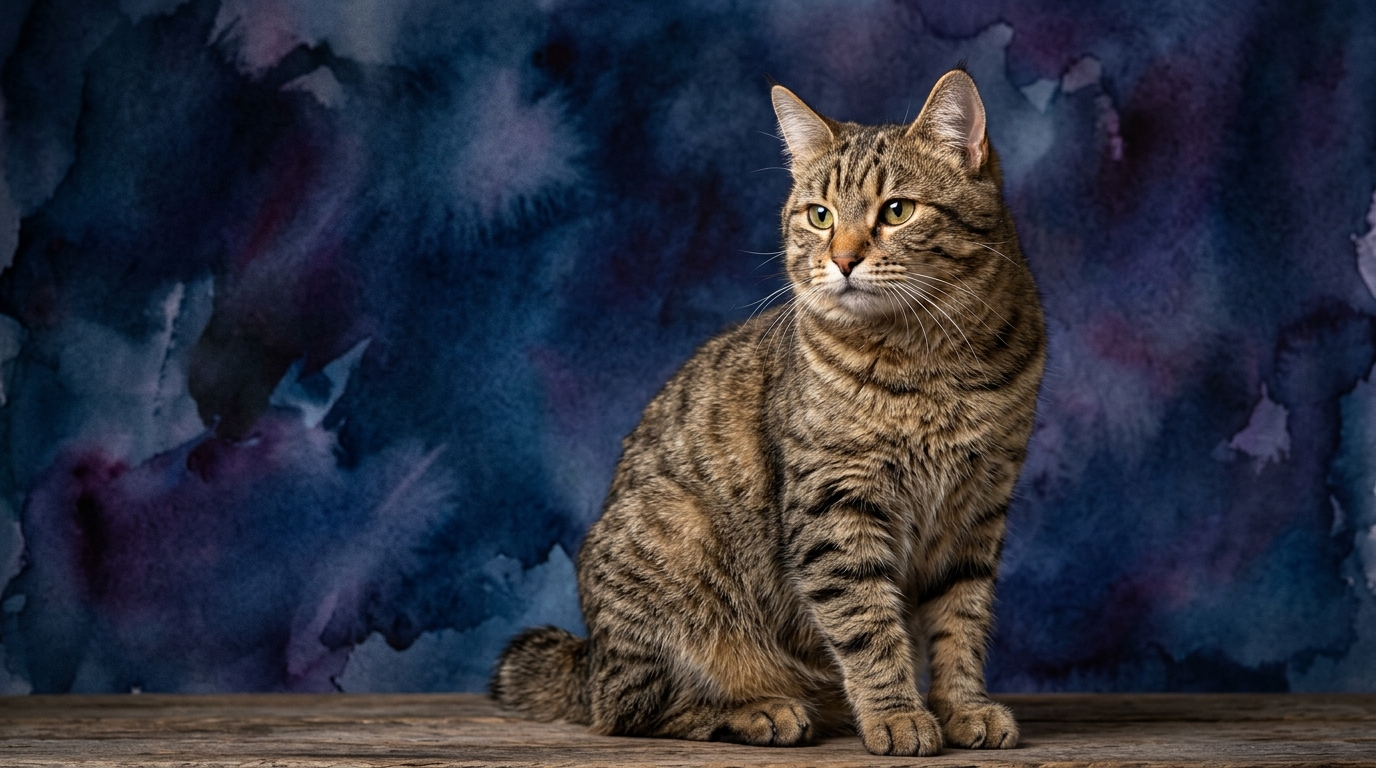
Pixiebob at a glance
| IQ Rank / Score | 19/25 |
|---|---|
| Trainability | ★★★★☆ (4/5) |
| Social Intelligence | ★★★★☆ (4/5) |
| Lifespan | 12-16 years |
| Shedding | Moderate to high |
| Exercise Needs | Moderate (20-40 min play/day) |
| Origin | USA |
The Pixiebob: A Cognitive Conundrum
The Pixiebob stands as a fascinating subject in the realm of feline intelligence, distinctively characterized by an intelligence that thrives on interaction and problem-solving within its human family unit. Unlike many cat breeds that exhibit a more independent cognitive approach, the Pixiebob's mind is often geared towards mimicking human actions, participating in household activities, and forming deep, almost canine-like bonds. This breed’s cognitive profile is a testament to its exceptional adaptability and a keen desire for engagement, making it a truly unique companion in the domestic sphere.
Their cognitive uniqueness lies in their pronounced capacity for observational learning and an almost insatiable curiosity that drives them to understand and manipulate their environment. This isn't just about basic problem-solving; it's about contextually relevant problem-solving rooted in their strong social drive. They learn complex routines and often initiate interactions, demonstrating a level of proactive engagement rarely seen in the broader feline population. This blend of innate intelligence with a highly social inclination sets the Pixiebob apart.
Pixiebob IQ Scores Explained
**Problem-Solving (4/5):** Pixiebobs are remarkably astute at figuring things out, whether it's opening cabinets, escaping enclosures, or navigating complex environments to reach a desired outcome. Their persistent curiosity often fuels their capacity to assess situations, experiment with solutions, and learn from trial and error, making them adept at domestic challenges and interactive toys.
**Training Speed (4/5):** Owners frequently describe Pixiebobs as highly trainable, often paralleling the ease of teaching a dog. They pick up commands quickly, are receptive to positive reinforcement, and readily learn tricks, including walking on a leash, playing fetch, and even coming when called. This exceptional trainability is a key differentiator from many other cat breeds.
**Social Intelligence (4/5):** These cats excel in understanding human cues, expressing their needs, and forming profound emotional connections. Their social intelligence allows them to integrate seamlessly into family life, often communicating through a range of chirps, purrs, and body language. They thrive on companionship and active participation in household activities.
**Instinctive Drive (3/5):** While they possess a distinct, wild 'bobcat-like' appearance, their instinctive drive is well-integrated into a domestic lifestyle. They retain natural hunting instincts, enjoying chase games and puzzle feeders, but these drives are typically balanced by their strong social bonds and trainability.
**Memory (4/5):** Pixiebobs exhibit excellent memory, recalling routines, specific people, learned behaviors, and even past events. They remember where toys are stored, the schedule for meals, and the commands they’ve mastered. This strong memory contributes significantly to their trainability and their ability to navigate their world confidently.
A Surprising Cognitive Twist in Pixiebob History
One of the most surprising aspects of the Pixiebob's cognitive and behavioral profile lies in the enduring paradox surrounding its origin. Despite widespread belief and the breed’s striking physical resemblance to its wild namesake, DNA studies have largely failed to find recent, direct bobcat ancestry in the majority of modern Pixiebobs. This scientific finding challenges the very foundation of the breed's common perception.
Yet, these cats consistently exhibit 'dog-like' behaviors – walking on a leash, playing fetch, and forming intense human bonds – behaviors often intuitively attributed to a close wild heritage. The paradox reveals that while the immediate genetic link to wild bobcats may be less direct than commonly thought, the unique cognitive and behavioral traits of the Pixiebob are a profound testament to either very distant, ancient wild influences or, more likely, careful and deliberate selective breeding for these specific characteristics. It suggests their 'wild' mind is less about direct hybridization and more about a cultivated intelligence that mirrors desirable traits, making them a breed shaped by human intent as much as by myth.
Unmasking the Myth: Pixiebobs Are Part Bobcat
**The Claim:** The most pervasive myth surrounding Pixiebob intelligence and temperament is the assertion that they are direct hybrids, literally 'part bobcat' and inherently wilder than domestic cats.
**Why It Exists:** This belief often stems from their distinctive wild appearance, including a short tail, tufted ears, and a muscular build, alongside anecdotal stories of their foundation cats having wild ancestry. This romanticized origin, coupled with their unique physical traits and 'dog-like' behaviors, naturally fueled the misconception of a recent, direct hybrid status, making them seem more exotic and inherently 'wilder' than they truly are.
**The Truth:** While the breed's appearance is meticulously bred to mimic a bobcat, and initial foundation cats were rumored to have come from natural matings between domestic cats and bobcats, scientific DNA analysis has generally not supported recent hybridization for modern Pixiebobs. They are recognized as a domestic breed (Felis catus). Their distinctive behaviors and appearance are primarily the result of selective breeding over generations, honing traits that make them exceptional companions rather than undomesticated wild animals.
Recommended Cognitive Tests for Pixiebobs
To truly understand the unique cognitive abilities of the Pixiebob, specific tests are needed to evaluate their intelligence beyond basic observation. These tests leverage their known strengths in social interaction, problem-solving, and trainability, providing measurable insights into their remarkable minds.
Elevating Pixiebob Cognition: Breed Comparisons
Compared to the Bengal, another breed often lauded for its intelligence and wild appearance, the Pixiebob's cognitive profile emphasizes a stronger drive for cooperative interaction and domestic integration rather than intense prey drive and independent problem-solving. While Bengals are highly intelligent and agile, often challenging boundaries with their keen hunting instincts, Pixiebobs channel their intelligence more directly into bonding with and pleasing their human companions, making their 'wildness' a façade for a deeply domestic and trainable mind. The Pixiebob’s intelligence is less about untamed instinct and more about sophisticated adaptation to human companionship, making them unique among 'wild-looking' domestic breeds.
Frequently Asked Questions About Pixiebob Intelligence
**Q: Are Pixiebobs good with children and other pets?** A: Yes, their high social intelligence and adaptable nature often make them excellent companions for children and other pets, including dogs, especially when properly socialized from a young age.
**Q: Do Pixiebobs require a lot of mental stimulation?** A: Absolutely. Due to their high problem-solving abilities and intelligence, Pixiebobs thrive on regular mental stimulation through interactive toys, training sessions, and engaging play to prevent boredom and destructive behaviors.
Conclusion: The Dog-Like Cat of Exceptional Intellect
The Pixiebob stands as a testament to the diverse and profound intelligence found within the feline world, offering a companionship that is both deeply interactive and consistently surprising. Their 'dog-like' sociability, exceptional trainability, and keen problem-solving skills make them not just pets, but truly integrated and highly responsive family members whose cognitive abilities continually impress.
3 At-Home Tests to Measure Your Pixiebob's IQ
These tests are adapted from peer-reviewed ethology research. No equipment is needed beyond items you have at home. Run each test 5–10 times for reliable results.
The Myth: "Pixiebobs are actual hybrids, meaning they are part bobcat and inherently wilder than domestic cats."
✅ While carefully bred to *resemble* a bobcat, and early foundation cats *may* have had some distant wild ancestry, scientific DNA analysis has largely not supported recent, direct bobcat hybridization for modern Pixiebobs. They are recognized as a fully domestic breed (Felis catus), with their unique traits being the result of selective breeding for appearance and temperament, making them exceptionally domesticated companions.
Pixiebob vs. Similar Breeds
🧠 What's Your Cat's IQ Score?
Our full Pet IQ Lab assessment includes 12+ tests across 5 cognitive dimensions, calibrated for Pixiebobs specifically.
Take the Full IQ Test →Frequently Asked Questions
How smart is a Pixiebob?
Our Pet IQ Lab framework scores cognition across five dimensions (max 25). The Pixiebob totals 19/25 — very high for a domestic cat. The full article breaks down each dimension with at-home tests.
Are Pixiebobs easy to train?
Pixiebobs are generally easy to train when you use consistent, reward-based sessions. They score 4/5 on Training Speed in our breed profile.
Are Pixiebobs good with children and other pets?
Yes — their Social Intelligence rates 4/5 in our Pet IQ Lab framework. With early socialization and supervised play, most Pixiebobs integrate well into families with respectful children and other pets.
Do Pixiebobs need a lot of mental stimulation?
Absolutely. With Problem Solving 4/5 and Instinctive Drive 3/5, Pixiebobs need daily mental work — puzzle feeders, scent games, training sessions, or interactive wand toys — to avoid boredom.
How much exercise does a Pixiebob need?
Pixiebobs do well with 20-40 minutes of interactive play plus a few short training moments.
How good is a Pixiebob's memory?
Pixiebobs score 4/5 on memory. They remember routines, hiding spots, and learned cues for months, sometimes years.
What is the typical lifespan of a Pixiebob?
Most Pixiebobs live 12-16 years with good veterinary care, quality diet, and indoor living.
The Pixiebob stands as a testament to the diverse and profound intelligence found within the feline world, offering a companionship that is both deeply interactive and consistently surprising. Their 'dog-like' sociability, exceptional trainability, and keen problem-solving skills make them not just pets, but truly integrated and highly responsive family members whose cognitive abilities continually impress.