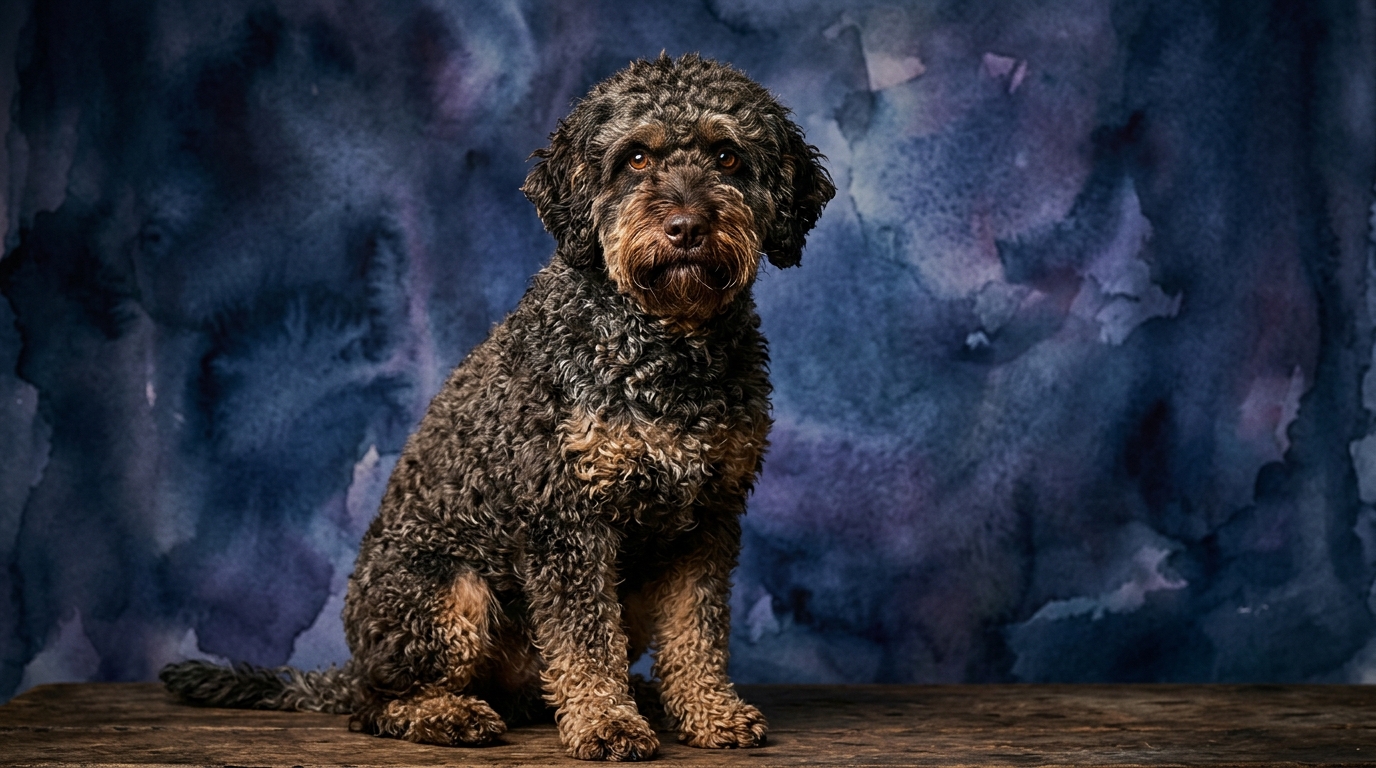
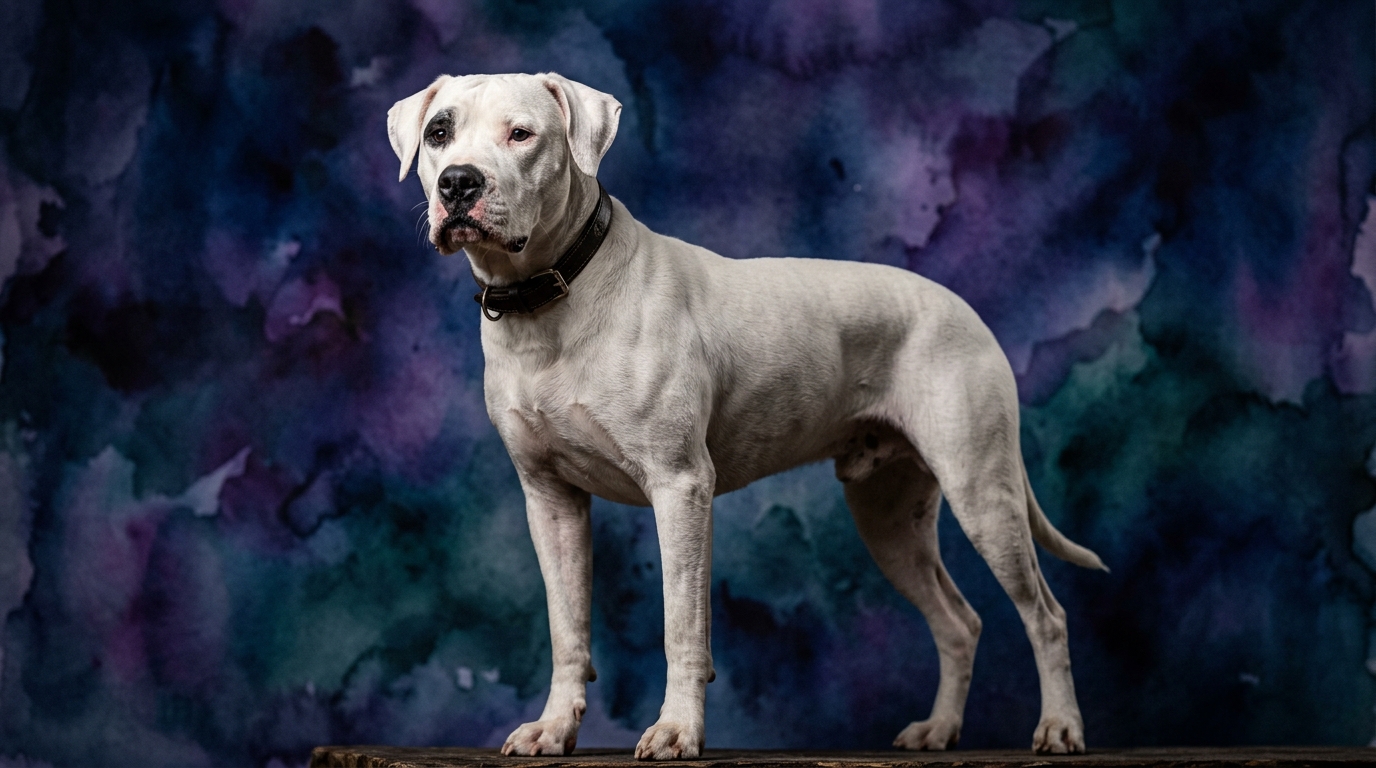
Side-by-Side IQ Profile: Herding Agility vs. Working Prowess
At first glance, the IQ scores for both the Spanish Water Dog and the Dogo Argentino appear identical across the board, each earning a consistent 3 out of 5 in problem solving, training speed, social intelligence, instinctive drive, and memory. However, these identical numerical ratings signify different applications of cognitive ability, deeply rooted in their breed groups and historical purposes. A '3/5' for a herding dog like the Spanish Water Dog manifests differently than for a working dog such as the Dogo Argentino.
For the **Spanish Water Dog (Herding Group)**, a problem solving score of 3/5 reflects their capacity to dynamically assess and manage a scattered flock, finding resourceful ways to keep animals cohesive across varied terrains. Their training speed (3/5) indicates a readiness to absorb commands that are purposeful and engaging, though they may become bored with repetitive, unchallenging drills. Social intelligence (3/5) in SWDs is particularly attuned to reading subtle cues from both livestock and their human handler, essential for effective cooperation. Their instinctive drive (3/5) is strongly oriented towards gathering and controlling, a persistent urge to 'work' their environment. Finally, their memory (3/5) is robust for routines, learned commands, and the specific behaviors of individuals within their 'flock' or family unit.
The **Dogo Argentino (Working Group)**, with a problem solving score of 3/5, demonstrates a strategic mindset geared towards tracking, assessing threats, and executing a plan, often in challenging environments during a hunt. Their training speed (3/5) signifies an ability to grasp complex commands, especially those tied to protection or specific tasks, provided the handler offers strong leadership and motivation. Social intelligence (3/5) for a Dogo involves a keen awareness of intentions, crucial for distinguishing friend from potential foe, and forming deep bonds with their immediate family. Their instinctive drive (3/5) is powerful, focusing on prey pursuit, protection, and a deep desire to work alongside their human partner. Their memory (3/5) is excellent for scent trails, territory boundaries, and recalling past interactions, which is vital for their protective and hunting roles.
Where the Spanish Water Dog Wins Cognitively
The Spanish Water Dog truly shines in scenarios demanding agile, real-time decision-making within a dynamic, fluid group environment. Their problem solving (3/5) is uniquely geared towards managing a scattered flock, requiring them to constantly assess spatial relationships, anticipate movements, and react with precision to keep animals cohesive. This translates to an impressive capacity for multitasking and adapting to unpredictable changes in their environment, a cognitive strength rooted in their herding heritage. Their social intelligence (3/5) is also subtly superior in interpreting nuanced body language, not just from humans but from other animals, allowing them to exert control without aggression, a hallmark of effective herding work that relies on subtle communication and influence.
Where the Dogo Argentino Wins Cognitively
Conversely, the Dogo Argentino demonstrates a distinct cognitive advantage in tasks requiring singular, tenacious focus, strategic pursuit, and unwavering determination. Their problem solving (3/5) excels when a clear, high-stakes objective, like tracking large game or protecting a family, is paramount, enabling them to devise and execute a methodical approach. This breed's instinctive drive (3/5) is a powerful cognitive engine, allowing them to maintain intense concentration on a goal for extended periods, pushing through obstacles with remarkable tenacity and courage. Their memory (3/5) is particularly potent for recalling specific scent trails, identifying individuals, and understanding territory boundaries, crucial for their historical roles in tracking and safeguarding their domain.
Which is Easier to Train and Why
Determining which breed is 'easier' to train is less about raw cognitive capacity and more about alignment with a handler's style and the dog's intrinsic motivations. The Spanish Water Dog, with its strong desire to work cooperatively in a team, often exhibits a quicker training speed (3/5) in foundational obedience, particularly when tasks feel purposeful and engage their herding instincts. They are generally responsive to positive reinforcement and appreciate a clear, consistent leader, though their sensitivity means harsh corrections are counterproductive. However, their innate herding drive can manifest as nipping at heels or trying to 'herd' children, requiring early and consistent redirection to appropriate outlets and mental stimulation.
The Dogo Argentino, while possessing equal training speed (3/5), presents a different training dynamic. Their independent streak and powerful instinctive drive (3/5) for protection and prey pursuit mean they require a handler with exceptional leadership, consistency, and a deep understanding of canine behavior. They learn quickly but may challenge boundaries if not given clear, firm, and fair guidance from an early age. Training for a Dogo Argentino often involves channeling their considerable physical and mental energy into constructive activities, ensuring their formidable protective instincts are appropriately managed and directed rather than suppressed. Their formidable presence and strong will necessitate an experienced hand.
Suitability for Active vs. Relaxed Owners
Neither the Spanish Water Dog nor the Dogo Argentino are suitable companions for truly relaxed owners, as both breeds demand significant engagement and mental stimulation. The Spanish Water Dog thrives with active owners who can provide consistent mental challenges and rigorous physical exercise. Their herding background means they excel in dog sports like agility, obedience, and even dock diving, requiring an owner willing to dedicate time to channeling their abundant energy and problem-solving skills (3/5). A relaxed owner would quickly find a SWD inventing their own 'jobs,' which might include unwanted herding behaviors or destructive chewing out of sheer boredom and under-stimulation.
The Dogo Argentino requires an even more committed and experienced active owner. Their powerful build and historical role as big-game hunters mean they possess immense stamina and a profound need for rigorous physical activity and mental challenges. Owners must be prepared for long, vigorous walks, runs, or engaging in specialized dog sports such as tracking, protection work, or weight pulling. A Dogo Argentino with insufficient exercise and mental engagement is prone to developing behavioral issues stemming from pent-up energy and an unfulfilled instinctive drive (3/5), making them an overwhelming presence for a relaxed or novice owner. Their needs are substantial and non-negotiable.
The Verdict
Choose the Spanish Water Dog if you are an active individual or family seeking a cooperative, versatile partner for dog sports and outdoor adventures, prepared to manage their intelligent herding instincts.
Opt for the Dogo Argentino if you are a very experienced, confident, and highly active owner seeking a loyal, powerful protector and working companion, fully prepared to manage a strong prey drive and ensure extensive, lifelong socialization.
🧠 Find Your Pet's IQ Score
Our Pet IQ Lab assessment covers 25+ tests across 5 cognitive dimensions — personalized to your breed.
Take the Full IQ Test →Frequently Asked Questions
Do Spanish Water Dogs bark a lot?
Due to their herding nature and role in communicating with livestock, Spanish Water Dogs can be quite vocal. They often use barks to alert, communicate, or try to 'manage' their surroundings, making early training crucial to moderate this tendency.
Are Dogo Argentinos good with children?
With proper early socialization, consistent training, and constant supervision, Dogo Argentinos can be incredibly loyal and protective family members. However, their sheer size, strength, and protective instincts mean all interactions with children must be carefully monitored to ensure safety.
Can either breed live in an apartment?
Both the Spanish Water Dog and the Dogo Argentino are generally too high-energy and mentally demanding for apartment living without extraordinary dedication to daily, intensive exercise and mental stimulation. A home with a securely fenced yard is highly recommended for both breeds to thrive.