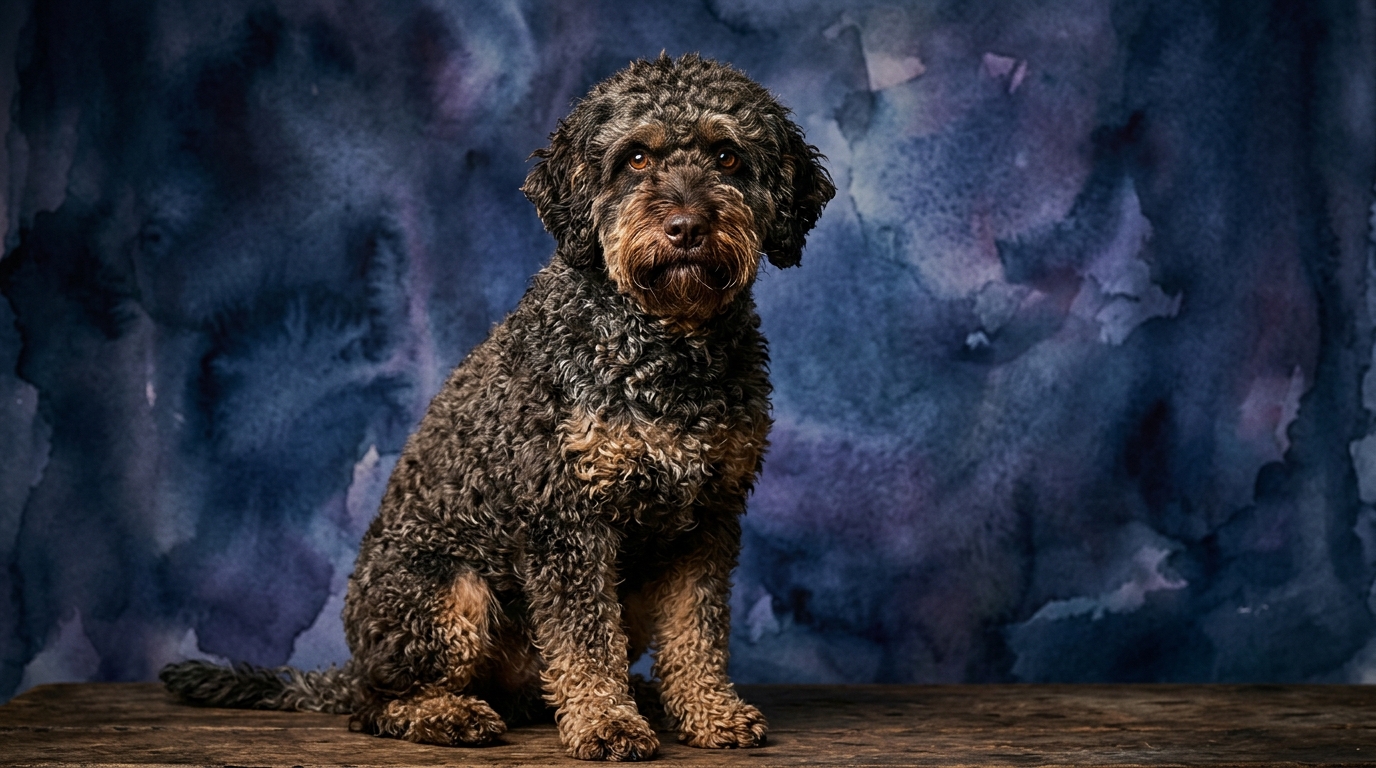
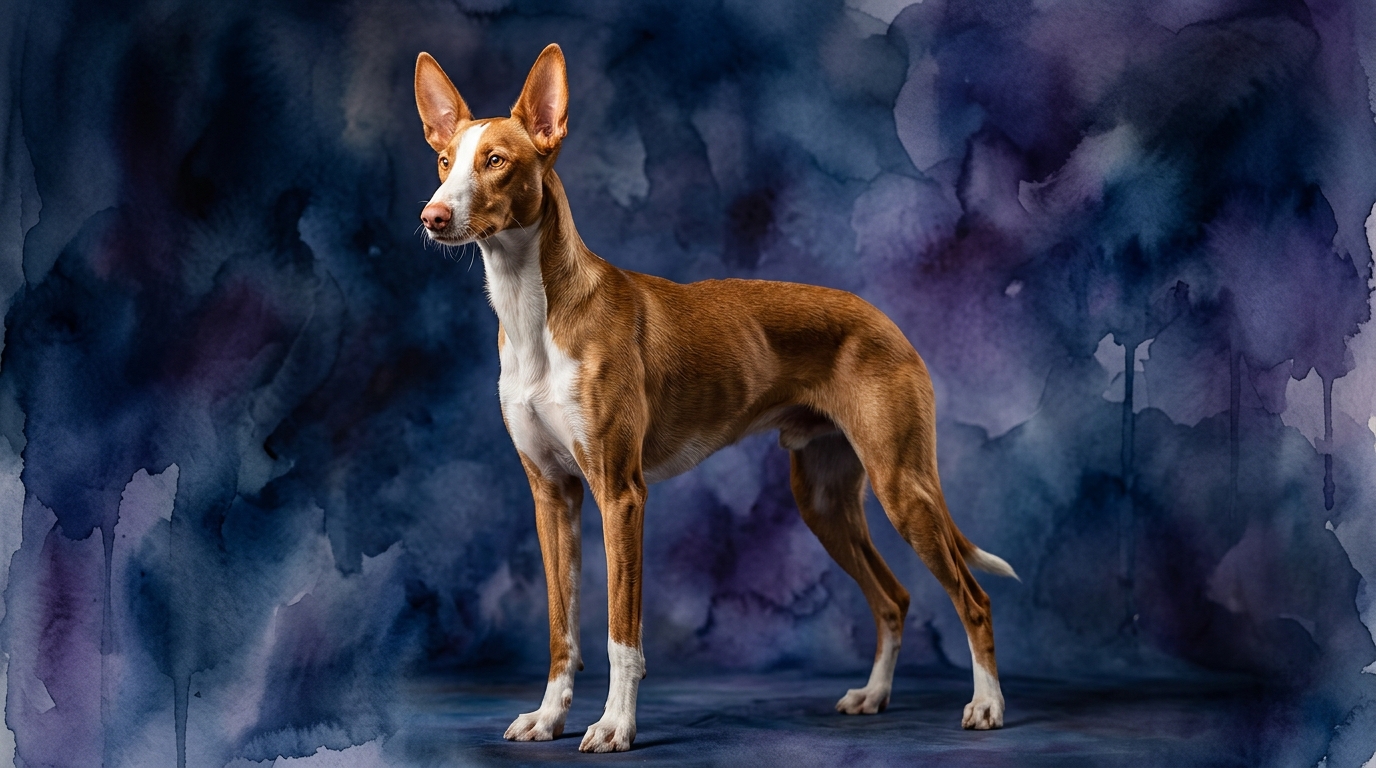
Side-by-Side Cognitive Profile
The Pet IQ Lab provides a standardized framework for understanding canine cognition, and both the Spanish Water Dog and the Ibizan Hound register a consistent 3 out of 5 across all five evaluated dimensions. This uniformity doesn't imply identical mental processes, but rather a similar level of cognitive capacity expressed through divergent breed-specific lenses.
Problem Solving (3/5): For the Spanish Water Dog, this manifests in their historical role of managing livestock, requiring them to quickly assess and react to dynamic situations, often anticipating animal movements or finding solutions to re-gather a scattered flock. Their problem-solving is typically collaborative, aimed at achieving a shared goal with their human handler. The Ibizan Hound, conversely, applies its problem-solving prowess to independent hunting. This involves strategizing pursuit routes, navigating complex terrain, and figuring out how to outmaneuver agile prey, often without direct human instruction. Their solutions are frequently self-directed and focused on the immediate task of the chase.
Training Speed (3/5): Both breeds demonstrate a moderate capacity for learning new commands and routines. The Spanish Water Dog, with its strong desire to work and please, often picks up tasks readily, especially when training is framed as a collaborative activity or a 'job.' They respond well to consistent, structured lessons. The Ibizan Hound also learns at a respectable pace, but their training speed can be influenced by their independent nature and strong prey drive. They might grasp a concept quickly but require significant motivation or repetition to consistently perform if their environment offers more compelling distractions.
Social Intelligence (3/5): The Spanish Water Dog exhibits social intelligence through its strong bond with its family and its ability to read human cues, often anticipating desires or responding to subtle shifts in mood. They are generally attuned to group dynamics and can be quite sensitive to their social environment. The Ibizan Hound's social intelligence often presents as a more reserved, observant nature. They form deep attachments to their chosen people but might not be as overtly demonstrative. They are adept at reading human body language and intentions, but their responses can be less about eager compliance and more about quiet understanding and selective engagement.
Instinctive Drive (3/5): Here, the '3/5' score represents a significant, defining aspect of each breed, albeit with different expressions. The Spanish Water Dog possesses a potent herding drive, which can translate into a desire to 'manage' their human family, other pets, or even inanimate objects. They often exhibit a strong work ethic and a need for mental engagement stemming from this drive. The Ibizan Hound's instinctive drive is overwhelmingly tied to its sighthound heritage: a powerful, innate urge to chase and capture prey. This is triggered primarily by visual stimuli, making them incredibly focused and persistent once a target is sighted.
Memory (3/5): Both breeds possess a solid memory, crucial for their respective roles. The Spanish Water Dog remembers commands, routines, and social interactions, which is vital for consistent performance in working tasks and for navigating their family environment. They build upon past experiences to refine their responses. The Ibizan Hound demonstrates excellent spatial memory, remembering hunting grounds, successful pursuit routes, and the location of specific scents or visual cues. Their memory is often highly contextual, tied to experiences of movement, environment, and prey.
Where the Spanish Water Dog Excels Cognitively
While both breeds share a 3/5 rating for Problem Solving, the Spanish Water Dog often excels in a particular style of cognitive engagement rooted in their herding heritage. They demonstrate superior adaptability in complex, multi-faceted tasks that require rapid shifts in focus and strategy, such as moving different types of livestock or navigating varied terrain while keeping a flock together. Their problem-solving is often proactive, anticipating livestock movements or environmental changes before they become issues, rather than merely reacting. Furthermore, their social intelligence, also rated 3/5, often manifests as an intuitive understanding of human intent and subtle cues. This enhances their ability to collaborate closely with a handler, making them highly responsive to direction and capable of deciphering nuanced commands. This strong inclination towards structured learning and a desire to please a human partner in a working context gives them an edge in tasks requiring sustained, cooperative mental effort.
Where the Ibizan Hound Excels Cognitively
The Ibizan Hound, despite sharing the same cognitive scores, showcases distinct strengths, particularly in areas vital for independent hunting. Their visual acuity, combined with their problem-solving (3/5), allows for exceptional processing of fast-moving objects at a distance, enabling them to make split-second decisions about pursuit trajectories and obstacles. This independent decision-making in the heat of the chase requires rapid assessment of terrain, wind conditions, and prey movement without needing direct human guidance. Their memory (3/5) shines in its spatial application, allowing them to recall vast hunting grounds, successful routes, and the precise locations of previous prey sightings. This is not merely remembering a command, but recalling an entire environmental map. Moreover, their cognitive resilience in problem-solving often involves sustained, independent effort. They can meticulously work through a challenge, such as locating a hidden scent or navigating a complex path to a visual target, relying on their own instincts and sensory input rather than immediate human feedback.
Training Dynamics: Spanish Water Dog vs. Ibizan Hound
When considering ease of training, the Spanish Water Dog generally presents a more straightforward experience for the average owner. Their herding background has ingrained a strong desire to work in partnership with humans, making them naturally more biddable and often eager to please. Their social intelligence (3/5) means they are highly attuned to their handler's cues and emotional state, which facilitates communication during training sessions. They thrive on having a job and respond well to consistent, positive reinforcement, learning complex sequences and commands with relative ease.
For the Ibizan Hound, while their training speed is also 3/5, this often comes with the caveat of their significant independence and potent instinctive drive (3/5) for chasing. They can grasp concepts quickly, but their willingness to perform consistently, especially in the face of compelling distractions like a distant squirrel, can be a lifelong project. Their training requires high-value motivation, engaging methods, and an understanding that compliance might not always be their top priority when their sighthound instincts kick in. Recall, in particular, can be a significant challenge, as their drive to pursue can override learned commands.
Matching Breeds to Lifestyles: Active vs. Engaged Owners
Neither the Spanish Water Dog nor the Ibizan Hound are suitable companions for truly relaxed, sedentary owners; both require substantial engagement, though the nature of that engagement differs significantly. The Spanish Water Dog is a breed that demands both physical and mental stimulation. Their instinctive herding drive needs consistent outlets, meaning owners must be prepared for long walks, engaging play sessions, and regular training or canine sports to prevent boredom and potential destructive behaviors. They thrive with owners who enjoy active outdoor lifestyles, participate in dog sports like agility or herding trials, and are committed to ongoing mental enrichment.
The Ibizan Hound, while appearing calm indoors, requires intense bursts of exercise. They are sprinters, not endurance runners, meaning they need opportunities to gallop at full speed in a safe, securely fenced area. Their powerful instinctive drive for chasing means they are not reliable off-leash in unfenced environments. Owners suited to an Ibizan Hound are those who can provide ample, secure space for these explosive runs, perhaps through lure coursing or dedicated dog parks, understanding that their exercise needs are less about continuous output and more about high-intensity, short-duration activity.
The Verdict
If you desire a highly engaged, biddable working partner who thrives on collaborative tasks and consistent mental stimulation, and you are prepared to provide ample outlets for their intelligent herding instincts, the Spanish Water Dog will flourish.
If you appreciate an independent, elegant companion with bursts of incredible speed and visual hunting prowess, and you can provide secure environments for their natural running and chasing instincts while respecting their sometimes reserved nature, the Ibizan Hound is an excellent match.
🧠 Find Your Pet's IQ Score
Our Pet IQ Lab assessment covers 25+ tests across 5 cognitive dimensions — personalized to your breed.
Take the Full IQ Test →Frequently Asked Questions
Do Spanish Water Dogs and Ibizan Hounds get along with other pets?
Spanish Water Dogs, with their herding instincts, might try to "manage" other pets, but generally coexist well with proper socialization. Ibizan Hounds have a strong prey drive, which means small, fast-moving pets like cats or rabbits might be a challenge unless raised together from a young age, requiring careful supervision.
Are Spanish Water Dogs or Ibizan Hounds good with children?
Spanish Water Dogs can be wonderful family dogs, often forming strong bonds with children, but their herding instincts might lead them to playfully nip at heels, requiring supervision and training. Ibizan Hounds are typically gentle and tolerant with children, especially older, respectful ones, but may be more reserved and less overtly playful than some breeds.
How do their exercise needs differ day-to-day?
The Spanish Water Dog needs consistent, moderate-to-high daily exercise that includes mental stimulation, such as long walks, training sessions, or active play. The Ibizan Hound requires intense, short bursts of high-speed running in a secure area daily, followed by periods of calm rest, with less emphasis on continuous, long-duration activity.