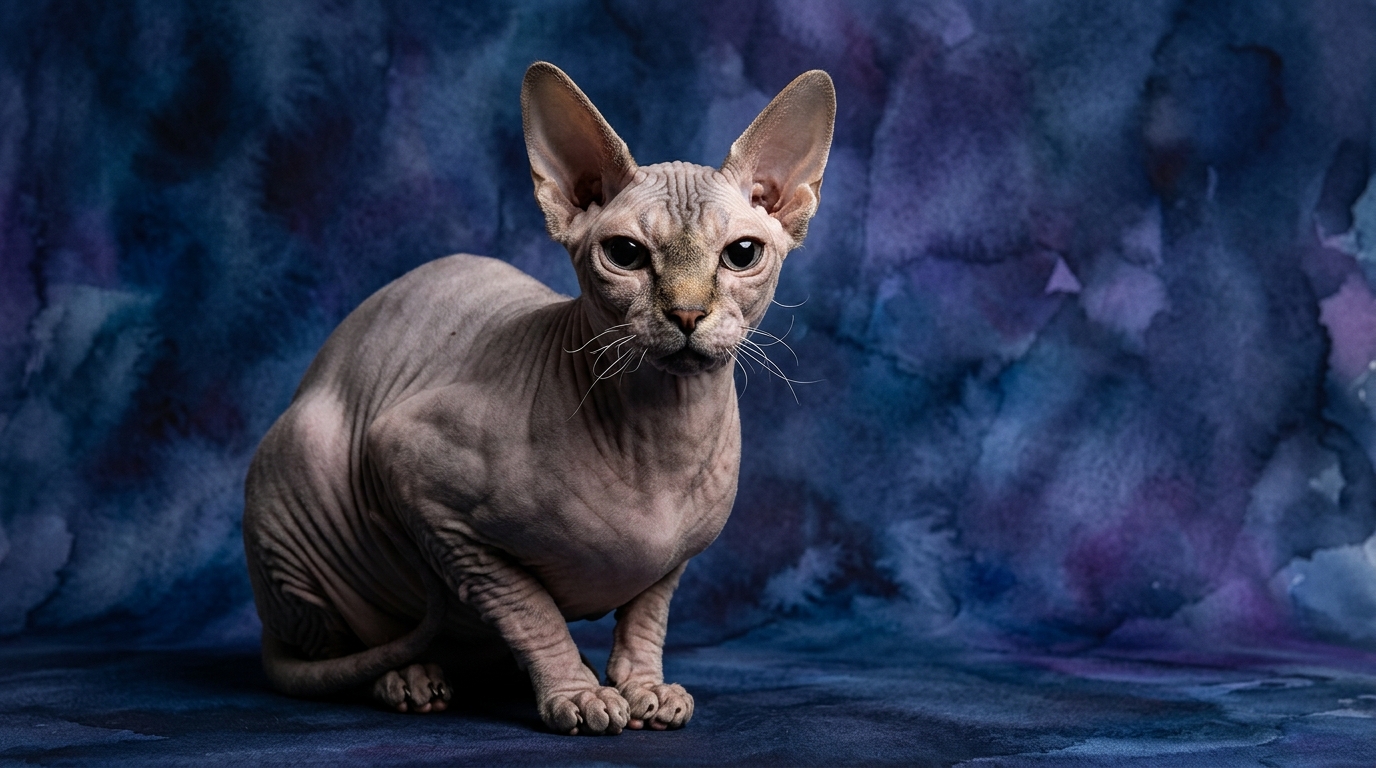
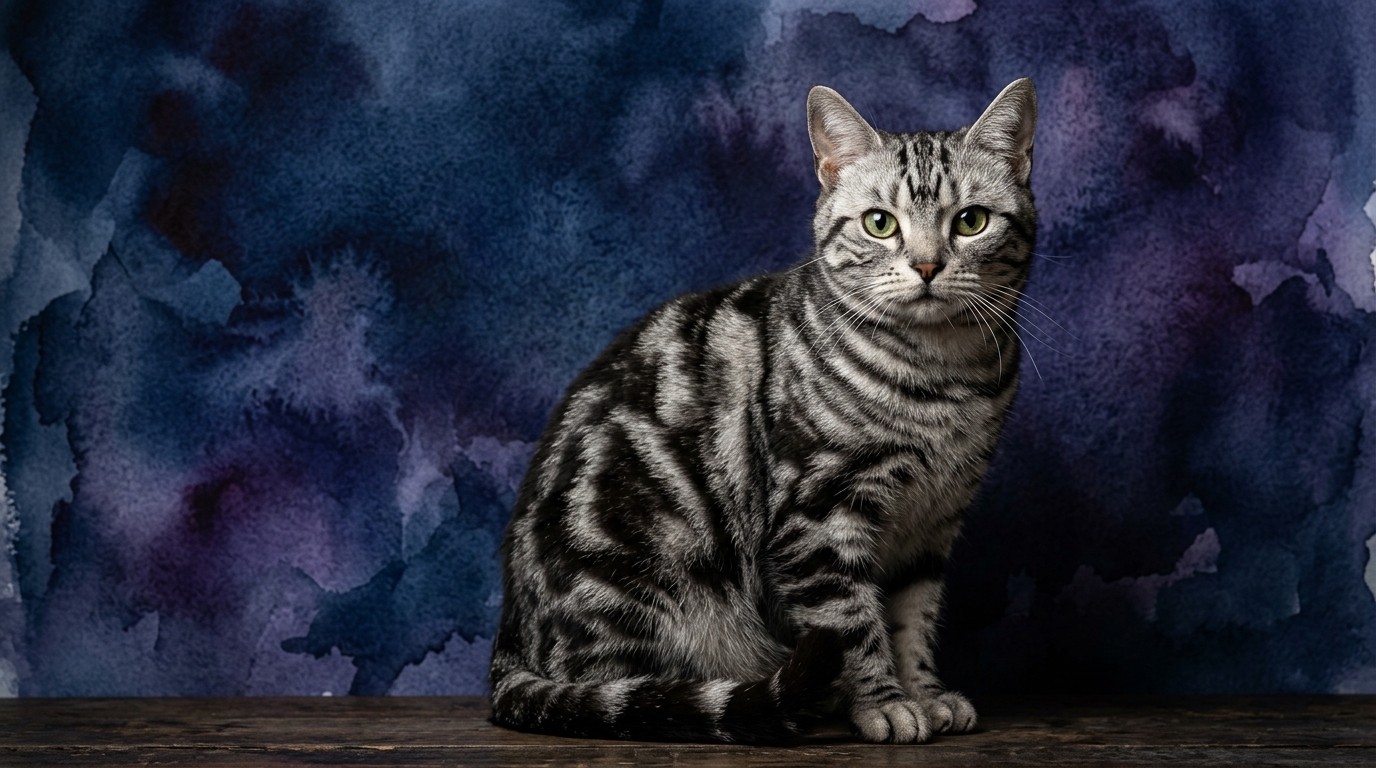
Side-by-Side IQ Profile: Sphynx vs. American Shorthair
The Cosmic Pet Pet IQ Lab employs a five-dimensional framework to assess feline intelligence, offering a nuanced view beyond simplistic notions. For the Sphynx, these dimensions paint a picture of an exceptionally engaging and adaptable companion. Their Problem Solving is rated 4/5, indicating a strong capacity for independent thought and strategic action to overcome obstacles. Training Speed also scores 4/5, showcasing their rapid learning and receptiveness to new commands. Social Intelligence, at a perfect 5/5, highlights their profound ability to connect and communicate with humans. Instinctive Drive is a moderate 3/5, suggesting a balanced approach to their natural feline urges. Finally, Memory scores 4/5, reflecting their excellent retention of routines and learned behaviors.
In contrast, the American Shorthair presents a profile of consistent, well-rounded abilities. Their Problem Solving is rated 3/5, demonstrating practical intelligence for daily challenges. Training Speed also stands at 3/5, indicating a steady, reliable learning pace. Social Intelligence is 3/5, signifying an amiable but more independent nature in their interactions. Their Instinctive Drive matches the Sphynx at 3/5, suggesting a similar moderate engagement with their primal instincts. Lastly, Memory is rated 3/5, reflecting a solid ability to recall important information and routines, contributing to their predictable demeanor.
Where the Sphynx Wins Cognitively
The Sphynx clearly shines in areas requiring active mental engagement and social acumen. Their superior Problem Solving (4/5 vs 3/5) means they are more adept at navigating complex environments, figuring out how to open doors, or mastering intricate puzzle toys. This breed's high Training Speed (4/5 vs 3/5) allows them to quickly form associations between commands and actions, making them remarkably receptive to learning tricks or adapting to new household rules. Perhaps their most striking cognitive advantage lies in Social Intelligence (5/5 vs 3/5). Sphynx cats demonstrate an exceptional capacity to read and respond to human moods, often seeking out interaction and actively participating in family life, almost as if they are trying to understand and engage on a deeper emotional level. This profound social awareness fosters a highly communicative and deeply bonded relationship. Furthermore, their stronger Memory (4/5 vs 3/5) means they retain learned behaviors and social dynamics with greater precision and for longer durations, contributing to a more consistent, interactive partnership.
Where the American Shorthair Wins Cognitively
While the American Shorthair's individual cognitive scores are generally moderate compared to the Sphynx, their collective profile represents a distinct strength: balanced adaptability and steadfast reliability. Their consistent 3/5 across all categories indicates a robust, predictable cognitive foundation, rather than a deficiency. The American Shorthair excels in providing a companion whose intellectual needs are stable and easily met within a typical home. Their Problem Solving (3/5) is practical, allowing them to navigate daily challenges efficiently without constant novelty-seeking. Their moderate Social Intelligence (3/5) means they are affectionate and enjoy companionship but maintain a self-possessed independence, not requiring constant, intense interaction. This self-reliance can be a significant cognitive "win" for owners who appreciate a cat that is present and loving but also content in its own company. Their consistent Instinctive Drive (3/5) contributes to a well-adjusted temperament, offering enough playfulness without being overly demanding or prone to destructive behaviors driven by unfulfilled urges. Their cognitive profile makes them less prone to boredom-induced mischief, thriving on routine and a comfortable, predictable existence.
Which is Easier to Train and Why
Based on The Cosmic Pet Pet IQ Lab data, the Sphynx is demonstrably easier to train than the American Shorthair. The Sphynx's higher Training Speed (4/5 compared to ASH's 3/5) is a primary indicator; they grasp new commands and routines more quickly. This accelerated learning is further bolstered by their superior Problem Solving (4/5 vs 3/5), enabling them to understand cause-and-effect relationships more readily, such as associating an action with a treat reward. Crucially, the Sphynx's exceptional Social Intelligence (5/5 vs 3/5) plays a significant role in their trainability. They are deeply attuned to human cues, eager to please, and thrive on interactive engagement, making them highly motivated to participate in training sessions. Their strong desire for social connection means they view training as a positive bonding experience. In contrast, while the American Shorthair is trainable, their moderate social intelligence means they might not be as intensely motivated by human interaction during training, preferring to learn at their own steady pace and requiring more patience and repetition. The Sphynx's cognitive makeup creates a more receptive and collaborative training partner, capable of learning a wider repertoire of tricks and behaviors with greater ease.
Which Suits Active Owners vs. Relaxed Owners
The Sphynx, with its elevated scores in Problem Solving (4/5), Training Speed (4/5), and especially Social Intelligence (5/5), is a superb match for active owners who desire a highly interactive and mentally stimulating companion. These cats thrive on engagement, seeking out their humans for play, conversation, and even participation in daily activities. An active owner would appreciate their quick learning ability for tricks, enjoyment of puzzle toys, and constant desire for social interaction. They are not content to be mere decorative presences; they want to be involved. Conversely, the American Shorthair, characterized by consistent 3/5 scores, is an ideal fit for relaxed owners seeking a more independent yet affectionate companion. While they enjoy play and interaction, their moderate social intelligence and problem-solving drive mean they are equally content to observe from a distance, enjoy quiet cuddles on their own terms, or entertain themselves. They adapt well to varying levels of household activity, offering a calming presence without demanding constant attention or complex mental challenges. Their balanced cognitive profile makes them a versatile companion for those who appreciate a cat that is present, loving, and self-sufficient.
The Verdict
Opt for a Sphynx if you are an owner who thrives on deep, interactive companionship and is prepared to provide consistent mental stimulation and social engagement. Their quick learning, exceptional social skills, and problem-solving abilities make them a highly rewarding partner for active, involved households.
Select an American Shorthair if you prefer a balanced, adaptable feline friend who offers affection without demanding constant attention, fitting seamlessly into a relaxed home environment. Their reliable and self-sufficient nature makes them a perfect choice for owners seeking a steady, low-key companion.
🧠 Find Your Pet's IQ Score
Our Pet IQ Lab assessment covers 25+ tests across 5 cognitive dimensions — personalized to your breed.
Take the Full IQ Test →Frequently Asked Questions
Are Sphynx cats truly more "affectionate" due to their social intelligence?
Sphynx cats often express affection in more overt and interactive ways, actively seeking out human contact and responding keenly to social cues, which can be interpreted as a higher degree of affection. Their exceptional social intelligence means they are deeply attuned to their human companions, fostering highly communicative bonds.
Does the American Shorthair's moderate problem-solving ability mean they are less capable?
Not at all; the American Shorthair's moderate problem-solving indicates a practical and efficient approach to daily challenges, making them adept at navigating their environment without constantly seeking novel intellectual puzzles. Their cognitive profile promotes a stable and adaptable temperament, well-suited to a comfortable domestic life.
How does "instinctive drive" impact daily life for these breeds?
Both breeds have a moderate instinctive drive (3/5), meaning they enjoy play and exploration but are not overwhelmingly driven by intense hunting or territorial behaviors. This balanced drive contributes to their adaptability as indoor companions, making them generally content with regular play sessions and a stimulating home environment.