
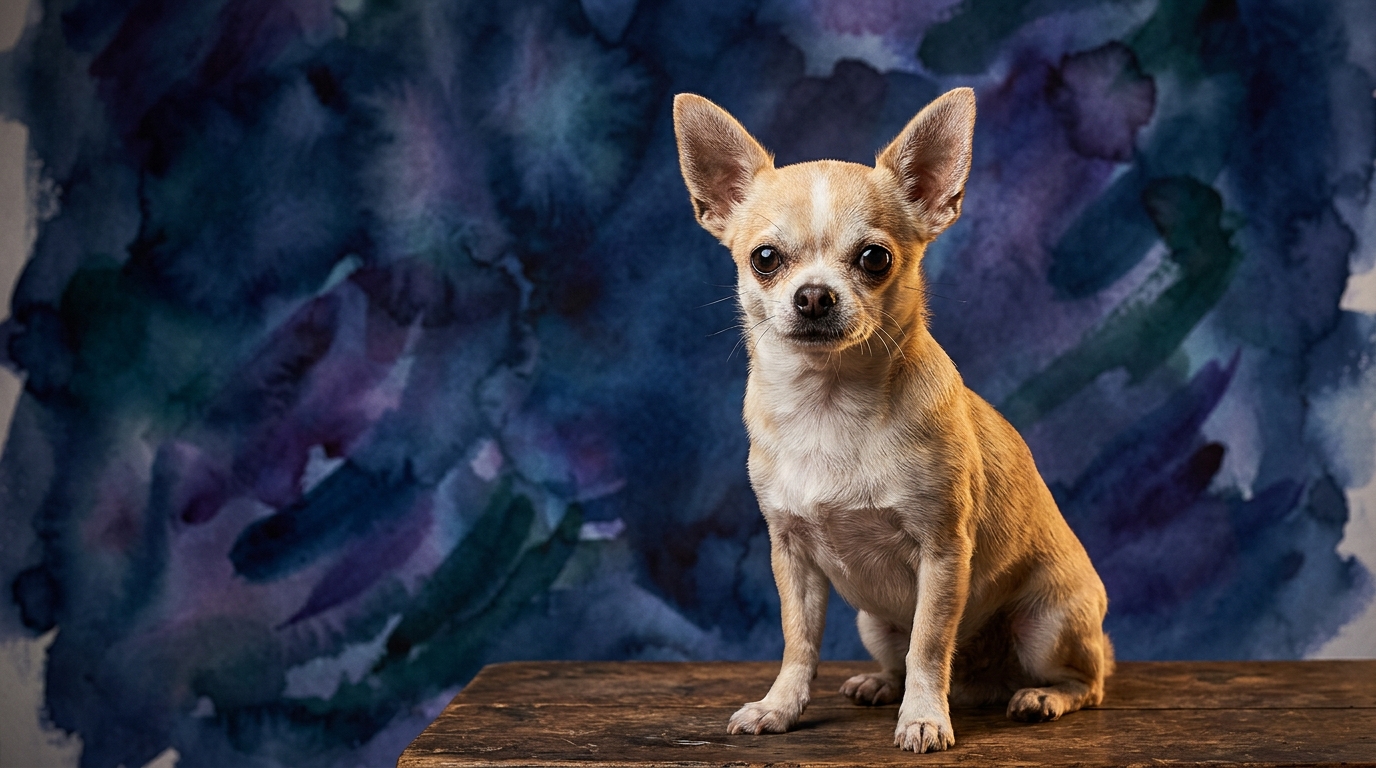
The Cosmic Pet Pet IQ Lab: Weimaraner vs. Chihuahua Cognitive Profiles
At The Cosmic Pet Pet IQ Lab, we analyze canine intelligence across five key dimensions to provide a nuanced understanding of breed-specific cognitive strengths. Our focus today is on two breeds, the Weimaraner (Sporting group, Coren rank #21) and the Chihuahua (Toy group, Coren rank #67), whose vastly different physical forms belie equally distinct mental landscapes.
The Weimaraner, a breed originally developed for hunting, showcases a robust cognitive makeup essential for demanding tasks. Its profile includes Problem Solving 4/5, Training Speed 4/5, Social Intelligence 4/5, Instinctive Drive 5/5, and Memory 4/5. This combination paints a picture of a dog eager to engage with its environment, quick to learn, and possessing a profound innate motivation to pursue tasks.
In contrast, the Chihuahua, a breed treasured for companionship, presents a cognitive profile suited to close human interaction. Its scores are Problem Solving 3/5, Training Speed 3/5, Social Intelligence 4/5, Instinctive Drive 3/5, and Memory 4/5. While exhibiting different strengths in problem-solving and drive compared to the Weimaraner, the Chihuahua demonstrates comparable social perceptiveness and memory, crucial for its role within a family unit.
Where the Weimaraner's Mind Shines Brightest
The Weimaraner's cognitive prowess is most evident in its Problem Solving (4/5) and Instinctive Drive (5/5) dimensions. These dogs possess a remarkable capacity for sequential thought, allowing them to navigate complex environments, deduce solutions to multi-step puzzles, or follow intricate scent trails with unwavering focus. Their high instinctive drive means they are not merely capable but also profoundly motivated to engage in such mentally demanding activities, often displaying a persistent, tireless approach to achieving their objectives, a direct legacy of their hunting heritage.
Further reinforcing their capability for demanding roles are their scores in Training Speed (4/5) and Memory (4/5). Weimaraners typically grasp new commands and complex routines with impressive swiftness, requiring fewer repetitions than many other breeds. This rapid acquisition of skills, coupled with their strong ability to retain learned behaviors over long periods, makes them exceptionally well-suited for advanced obedience, specialized work, or competitive dog sports where consistent performance and intricate understanding are paramount.
Unpacking the Chihuahua's Unique Cognitive Strengths
The Chihuahua's cognitive profile highlights a distinct set of strengths, particularly in Social Intelligence (4/5) and Memory (4/5). These small companions exhibit a keen perceptiveness regarding human emotions and social dynamics, often anticipating their owner's moods or desires with surprising accuracy. This high social intelligence fosters deep, empathetic bonds, making them highly attuned to their family's needs. Their strong memory ensures they recall specific interactions, routines, and preferences, contributing significantly to their seamless integration into household life and their ability to forge lasting, intricate relationships.
While their Problem Solving score of 3/5 is lower than the Weimaraner's, it manifests differently, often with a practical rather than abstract application. Chihuahuas frequently demonstrate cleverness in navigating their immediate environment to achieve comfort, secure attention, or find favored spots. Their problem-solving might involve devising subtle ways to communicate needs or creatively manipulating situations to their advantage, showcasing a functional wit that serves their specific lifestyle and social interactions effectively.
Training Dynamics: Weimaraner's Eagerness vs. Chihuahua's Specificity
Training a Weimaraner often feels like a collaborative effort due to their 4/5 Training Speed and exceptional 5/5 Instinctive Drive. They are typically enthusiastic learners, thriving on tasks that provide both mental and physical challenges. Their innate desire to 'work' means they respond well to consistent, positive reinforcement methods and excel when given a clear purpose or 'job.' Without sufficient mental engagement and physical exercise, their powerful drive can manifest as boredom or destructive behaviors, underscoring the need for an owner dedicated to channeling their energy productively.
The Chihuahua, with a 3/5 Training Speed, requires a more nuanced and patient approach. While capable of learning a wide range of commands, they may need more repetitions and varied motivational techniques to maintain engagement. Their 4/5 Social Intelligence means they are highly responsive to their owner's emotional cues and bond, making positive, reward-based training tied to interaction highly effective. However, their lower Instinctive Drive (3/5) means they might not be inherently motivated by tasks in the same way a Weimaraner is, necessitating creative strategies to make training feel like a fun game or a rewarding interaction rather than a chore. Consistency and making training a positive experience are crucial to overcoming potential stubbornness and ensuring success.
Matching Breed Minds to Lifestyles: Active Explorers vs. Dedicated Companions
For owners with an active lifestyle and a desire for a deeply engaged canine partner, the Weimaraner is an exceptional fit. Their high instinctive drive, coupled with advanced problem-solving capabilities, means they require significant physical exertion and consistent mental stimulation to thrive. They are superb companions for long runs, hikes, dog sports, or any activity that allows them to utilize their natural athleticism and sharp intellect. An owner who enjoys incorporating their dog into daily adventures and providing structured challenges will find a Weimaraner an incredibly rewarding and fulfilling companion.
Conversely, the Chihuahua is perfectly suited for owners who prioritize close companionship and a more relaxed daily rhythm, albeit with plenty of focused attention. While they enjoy walks and playtime, their primary requirement is often deep social interaction and being an integral part of their human's life. Their strong social intelligence makes them highly attuned to household dynamics and emotionally responsive. An owner seeking a perceptive, affectionate, and devoted lap companion who thrives on shared quiet moments and consistent interaction will find the Chihuahua's unique cognitive strengths to be an ideal match.
The Verdict
For individuals seeking a highly engaged, energetic partner capable of mastering complex tasks and thriving on extensive physical and mental work, the Weimaraner offers a fulfilling companionship.
Conversely, for those desiring a perceptive, devoted companion who excels in social interaction and adapts seamlessly to a more relaxed household rhythm, the Chihuahua is an ideal choice.
🧠 Find Your Pet's IQ Score
Our Pet IQ Lab assessment covers 25+ tests across 5 cognitive dimensions — personalized to your breed.
Take the Full IQ Test →Frequently Asked Questions
Does size correlate directly with a dog's cognitive capacity?
Not directly; while larger breeds often have roles requiring complex problem-solving and drive, smaller breeds like the Chihuahua demonstrate equally sophisticated social intelligence and memory, vital for their specific niches. Each breed's cognitive profile is shaped more by its historical purpose and selective breeding rather than just physical size.
Can a Chihuahua be trained for advanced obedience like a Weimaraner?
Chihuahuas can certainly learn advanced obedience, but their training speed and instinctive drive scores suggest it may require more patience and tailored motivation compared to a Weimaraner. Their social intelligence makes them highly responsive to positive reinforcement and owner interaction, which can be leveraged for effective training.
What are the key differences in how these breeds approach novelty?
Weimaraners, with their higher problem-solving and instinctive drive, tend to approach novelty with a curious, investigative energy, eager to understand and interact with new stimuli. Chihuahuas, while curious, might approach novelty with more caution or discernment, often relying on their social intelligence to gauge safety or interest from their human companions before engaging fully.