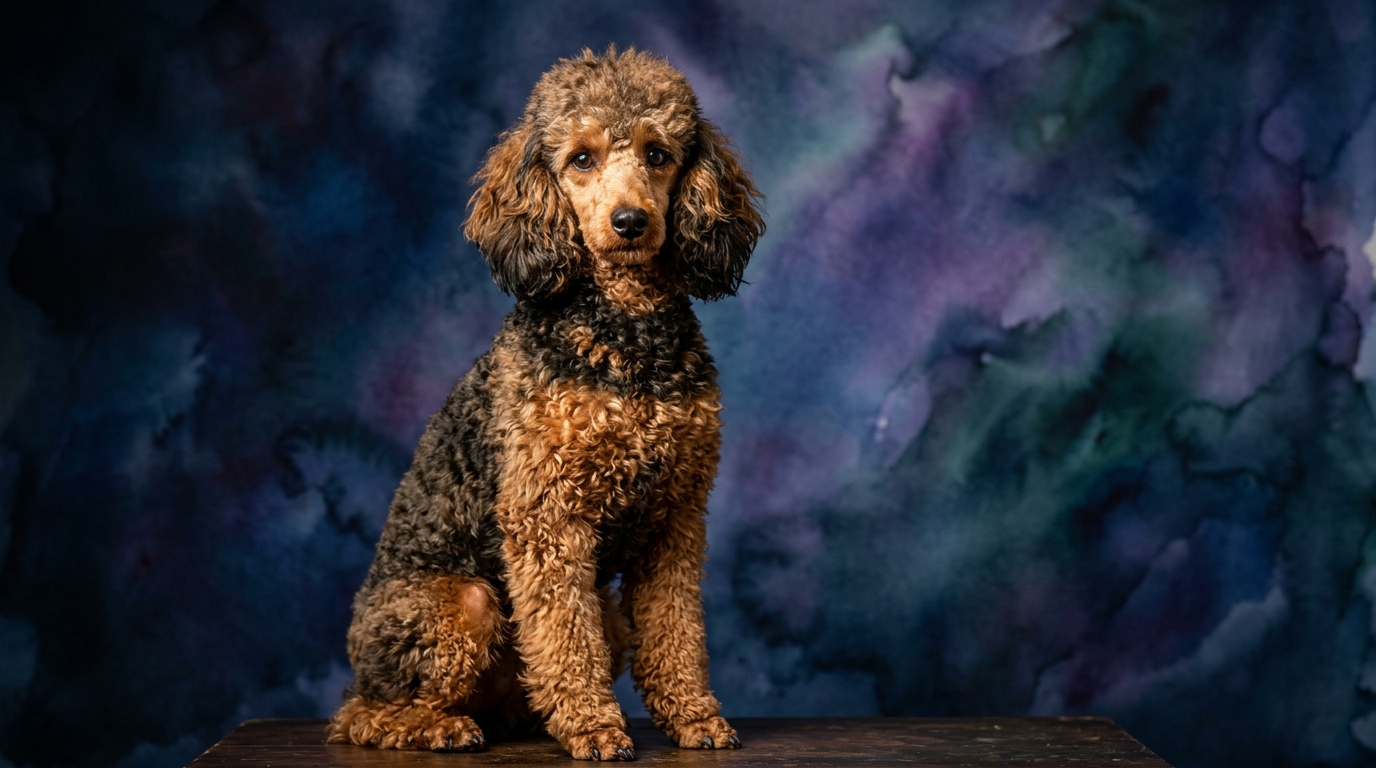
Side-by-Side IQ Profile: Poodle (Standard)
**Problem Solving (5/5):** Standard Poodles exhibit an exceptional capacity for independent thought and creative solutions to novel challenges. They can often devise multi-step strategies to figure out complex puzzle toys, unlock enclosures, or overcome obstacles, demonstrating a sophisticated understanding of cause and effect.
**Training Speed (5/5):** This perfect score signifies a breed that grasps new commands and routines with remarkable swiftness, often requiring minimal repetitions. Standard Poodles process instructions rapidly, making them highly responsive to consistent training and capable of mastering intricate sequences of behaviors.
**Social Intelligence (5/5):** Standard Poodles possess a profound understanding of human communication, emotional states, and social dynamics. They are acutely perceptive of subtle cues, anticipating owner intentions, responding to mood shifts, and demonstrating empathy, excelling in collaborative tasks.
**Instinctive Drive (4/5):** While not singularly focused on a specific working instinct, a 4/5 drive indicates a robust intrinsic motivation for engagement and activity. This drive manifests as a strong desire for mental stimulation, exploration, and participation in family activities, rather than relentless prey pursuit.
**Memory (5/5):** A perfect memory score means Standard Poodles retain learned information, commands, routines, and experiences over long periods with impressive precision. This underpins their rapid training speed and ability to build a vast repertoire of behaviors and associations throughout their lives.
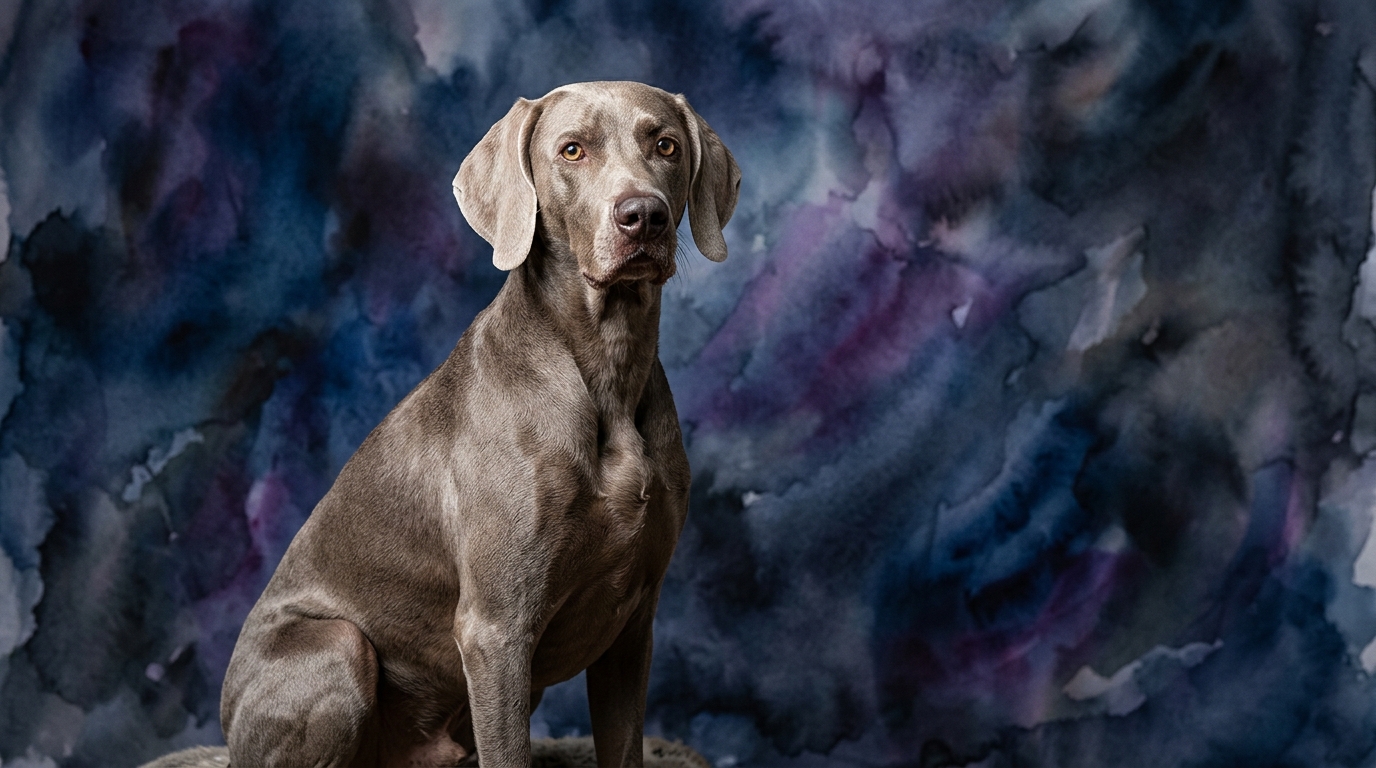
Side-by-Side IQ Profile: Weimaraner
**Problem Solving (4/5):** Weimaraners exhibit strong practical problem-solving skills, particularly when related to their instinctive drives, such as finding hidden objects or navigating terrain. Their approach might be more direct and goal-oriented, leveraging physical prowess and keen senses to overcome obstacles.
**Training Speed (4/5):** This score indicates a breed that learns at a commendable pace, typically picking up new commands with moderate repetition. Weimaraners are eager to please and receptive to instruction, though their intense focus on external stimuli might occasionally require more consistent redirection.
**Social Intelligence (4/5):** Weimaraners demonstrate solid social understanding, forming deep attachments with their human families and responding well to clear communication. They are attuned to their owner's presence, though their responsiveness can be influenced by their strong independent streak and environmental distractions.
**Instinctive Drive (5/5):** This is the Weimaraner's defining cognitive strength, reflecting an exceptionally powerful and persistent motivation rooted in their hunting heritage. It manifests as an intense desire to search, point, and retrieve, fueling their focus and determination in tasks related to their original purpose.
**Memory (4/5):** Weimaraners possess a strong memory for commands, spatial layouts, and experiences, allowing them to recall training and navigate familiar environments effectively. Their memory serves their practical needs well, such as remembering the location of game or a learned field trial course.
Where Poodle (Standard) Wins Cognitively
The Standard Poodle's cognitive profile consistently outshines the Weimaraner in areas related to abstract reasoning and nuanced interaction. Its perfect 5/5 score in Problem Solving means a Poodle is more likely to devise creative, multi-step solutions to novel challenges, adapting flexibly rather than relying solely on brute force or learned patterns. For instance, a Poodle might figure out how to unlatch a complicated crate door using a sequence of pushes and pulls, demonstrating a deeper conceptual understanding of the mechanism.
Furthermore, the Poodle's superior Social Intelligence (5/5 vs. 4/5) allows for a more subtle and empathetic connection with humans. They are acutely aware of non-verbal cues, emotional shifts, and complex social dynamics, making them exceptionally responsive to nuanced communication. This translates to a dog that anticipates needs and reacts to subtle prompts, fostering a highly communicative partnership. Coupled with a 5/5 Memory, Poodles retain these complex social learnings and problem-solving strategies over extended periods, building a vast internal library of experiences and solutions that can be readily accessed and applied, making them highly adaptable companions.
Where Weimaraner Wins Cognitively
Where the Weimaraner truly distinguishes itself cognitively is in its unparalleled Instinctive Drive, scoring a perfect 5/5 compared to the Poodle's 4/5. This isn't merely about physical energy; it's a deep-seated, persistent cognitive engine that fuels intense focus and determination in pursuit of a goal. This drive is a powerful asset in tasks requiring sustained effort, endurance, and single-minded dedication, such as tracking, retrieving, or scent work over vast distances.
While the Poodle might solve a puzzle with elegant precision, the Weimaraner’s cognitive strength lies in its unwavering commitment to a task, often overriding distractions that might deter other breeds. Its problem-solving, though rated 4/5, is often channeled through this powerful drive, making it exceptionally effective in real-world scenarios like locating hidden game or navigating complex terrains with purpose. This intense, task-oriented focus, driven by instinct, allows the Weimaraner to excel in roles demanding relentless pursuit and follow-through, leveraging its physical and sensory capabilities with formidable mental resolve.
Which Is Easier to Train and Why
Evaluating ease of training requires understanding the specific cognitive strengths each breed brings to the learning process. The Standard Poodle, with its 5/5 scores in Training Speed, Problem Solving, Social Intelligence, and Memory, generally presents an easier and more fluid training experience for the average owner. Their rapid assimilation of new commands means fewer repetitions are needed, and their strong social intelligence makes them highly attuned to human instruction and eager to collaborate. If an owner is teaching a complex trick or an obedience routine, the Poodle’s ability to quickly grasp the sequence, remember it long-term, and adapt to subtle cues from the handler makes the process remarkably efficient and rewarding.
The Weimaraner, while possessing commendable 4/5 scores in these areas, presents a different kind of training challenge due to its dominant 5/5 Instinctive Drive. This powerful drive, while a cognitive asset in its intended purpose, can manifest as intense focus on environmental stimuli or a relentless pursuit of its own agenda if not properly channeled. Training a Weimaraner often requires an owner to understand and harness this innate drive, integrating it into the learning process rather than trying to suppress it. For example, a Weimaraner might learn a “stay” command quickly, but maintaining that stay when a squirrel runs by requires significant impulse control training that directly competes with its strong natural urges. Their training is effective when it leverages their drive, such as through scent work or retrieving games, making it less about 'easier' and more about 'different' in terms of required owner approach and consistency in managing their powerful motivations.
Which Suits Active Owners vs. Relaxed Owners
The distinction between these breeds significantly impacts their suitability for owners with varying activity levels. The Weimaraner, with its formidable 5/5 Instinctive Drive, unequivocally demands an active owner. This isn't merely a preference for activity; it's a deep-seated cognitive and physical necessity. Owners prepared for a Weimaraner must be willing to provide extensive daily exercise that often involves purposeful activities like long runs, vigorous fetching, advanced scent work, or participation in dog sports. Without adequate outlets for their profound drive and stamina, Weimaraners can become mentally frustrated and physically restless, potentially leading to undesirable behaviors stemming from their unmet cognitive and physical needs.
In contrast, the Standard Poodle, while certainly enjoying activity and possessing a robust 4/5 Instinctive Drive, is more adaptable to a slightly less intense physical routine, provided their considerable mental needs are met. Their 5/5 Problem Solving and Social Intelligence mean they thrive on mental challenges, complex training, and interactive play that stimulates their keen minds. While they appreciate walks, hikes, and active games, a 'relaxed' owner who can commit to daily mental enrichment through puzzle toys, advanced obedience, or canine sports like agility (which doesn't always demand the sheer mileage of a hunting dog) might find a Standard Poodle a more manageable fit. They are less prone to restlessness from purely physical under-stimulation, but their brilliant minds demand consistent engagement to prevent boredom.
The Verdict
Opt for the Standard Poodle if you seek a highly adaptable, empathetic companion who thrives on complex mental challenges, rapid learning, and nuanced social interaction, fitting well into various active but not necessarily intensely driven households.
Choose the Weimaraner if you are an exceptionally active owner prepared to channel a powerful, persistent instinctive drive into purposeful physical and mental work, valuing a dog whose cognitive strength lies in its unwavering focus and endurance for demanding tasks.
🧠 Find Your Pet's IQ Score
Our Pet IQ Lab assessment covers 25+ tests across 5 cognitive dimensions — personalized to your breed.
Take the Full IQ Test →Frequently Asked Questions
Is a Standard Poodle better for first-time dog owners than a Weimaraner?
Generally, yes. The Standard Poodle's superior training speed, problem-solving, and social intelligence make them more forgiving and easier to guide through initial training phases for novice owners. Weimaraners require a more experienced handler who can consistently manage their strong instinctive drive and high energy levels.
Do Weimaraners need more mental stimulation than Standard Poodles?
Both breeds require significant mental stimulation, but the *type* differs. Weimaraners need activities that engage their 5/5 instinctive drive, such as scent work, retrieving, or field trials, often involving sustained physical output. Standard Poodles, with their 5/5 problem-solving and memory, thrive on complex obedience, puzzle toys, and learning new tricks, which can be less physically demanding but equally mentally taxing.
How does Coren's ranking relate to The Cosmic Pet's IQ scores for these breeds?
Coren's rank (Poodle #2, Weimaraner #21) broadly aligns with the overall pattern of The Cosmic Pet's IQ scores, particularly in areas like Problem Solving and Training Speed, where the Poodle consistently scores higher. However, The Cosmic Pet's detailed breakdown into five specific dimensions offers a more nuanced understanding, highlighting unique strengths like the Weimaraner's exceptional Instinctive Drive, which Coren's general ranking doesn't specifically detail.