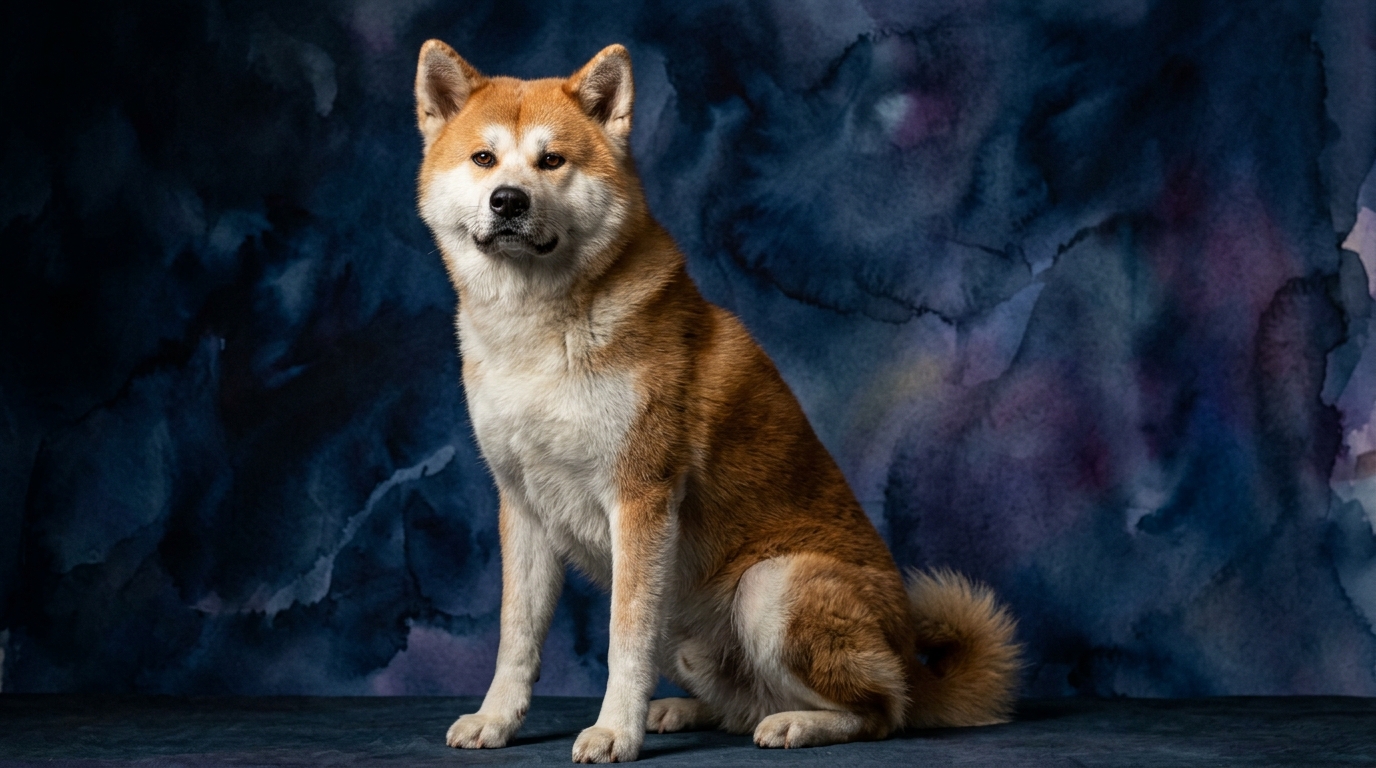
The Akita's Unique Mind: A Deep Dive into Selective Loyalty
The Akita, hailing from the mountainous regions of Japan, belongs to the Working Group, a classification that immediately hints at its purpose-driven nature and independent spirit. Unlike breeds bred for constant human instruction, the Akita's heritage involves hunting large game and guarding, tasks that require significant self-reliance and keen observation. This historical role has sculpted an intelligence profile focused on perceiving threats, making independent decisions, and forming exceptionally strong, albeit selective, bonds.
Stanley Coren's obedience ranking places the Akita at #54 out of 138 breeds, a statistic that might initially suggest a moderate intelligence. However, for an Akita owner, this number reflects not a lack of cognitive capacity, but rather a strong sense of self and an intelligent assessment of whether a command aligns with their own perceived purpose. Their intelligence is less about eager compliance and more about thoughtful, often calculating, engagement with their environment and their most cherished companions.
This breed's cognitive strengths manifest uniquely: while they may appear distant or uninterested in outsiders, they are acutely perceptive to the nuances of their family members. They observe, remember, and react with a profound understanding of their household's dynamics, often anticipating needs or moods long before a verbal cue is given. This selective loyalty isn't a flaw; it's the very foundation of their profound connection and the hallmark of their particular brand of intelligence.
Beyond Obedience: Understanding Akita Intelligence Traits
To truly appreciate Akita intelligence, we need to look beyond traditional obedience metrics and delve into their specific cognitive strengths. Their Problem Solving ability rates at 3/5, meaning they are capable of figuring out complex tasks, especially when motivated by their own goals or the safety of their family. They often find creative, sometimes unexpected, solutions to challenges, demonstrating a thoughtful approach rather than a rush to action.
Training Speed for an Akita is typically 2/5. This isn't because they can't learn, but because they often choose not to, at least not in the same eager-to-please manner as some other breeds. They need to understand the 'why' behind a command and respect the person giving it. Once they commit to learning, they can retain information impressively, but getting that initial buy-in requires patience and a deep understanding of their independent spirit.
Their Social Intelligence scores 3/5, meaning they are adept at reading social cues within their trusted circle. They understand human emotions, intentions, and even unspoken communication from their family. However, this intelligence is heavily filtered through their selective loyalty; interactions with strangers are often met with watchful neutrality, a testament to their guardian instincts. This nuanced social understanding makes them exceptional companions for those within their inner circle.
Instinctive Drive is exceptionally high at 5/5. This encompasses their strong prey drive, protective instincts, and territorial awareness. These drives are powerful motivators and shape much of their problem-solving and social interactions. Understanding and channeling these instincts through appropriate training and socialization is crucial for responsible Akita ownership.
Finally, their Memory is rated at 4/5, a truly remarkable trait that underlies their deep bonds and their capacity for complex relational understanding. This isn't just about remembering commands; it’s about remembering experiences, people, and the emotional significance of those connections. It's a memory that fuels their legendary loyalty.
The Hachikō Phenomenon: A Testament to Akita Memory
No discussion of Akita memory is complete without the poignant story of Hachikō. This Akita, from the 1920s, waited at Shibuya Station for his deceased owner, Professor Hidesaburō Ueno, for nine years. Hachikō demonstrated a form of long-term relational memory not documented in most other breeds, returning to the station day after day, year after year, anticipating his beloved human's return. This isn't just rote memorization; it's a profound, emotional recall of a bond and a routine, illustrating the depth of an Akita's commitment and the power of their relational memory.
Hachikō's unwavering devotion showcases the true essence of Akita loyalty and their capacity for deep emotional bonds. His story stands as a powerful, real-world example of their 4/5 memory rating, emphasizing that their intelligence is profoundly intertwined with their emotional connections. This enduring memory contributes to their reliability as guardians and their unwavering companionship to those they deem family.
Training an Akita: Patience, Respect, and Understanding
Training an Akita is a journey that demands a nuanced approach, far removed from rote commands and endless repetitions. Given their 2/5 Training Speed and position at #54 on Coren's obedience list, it's clear they aren't eager-to-please automatons. Instead, they require a trainer who understands their intelligence stems from independence and a desire for logical consistency. They respond best to clear, fair, and consistent leadership, built on mutual respect rather than dominance.
Positive reinforcement techniques are paramount. Akitas are discerning; they will weigh whether complying with a command offers a worthwhile outcome. Early and ongoing socialization is equally crucial to help them navigate the world confidently and appropriately channel their strong instincts. Training should be viewed as a means to build a stronger relationship and establish clear communication, rather than simply enforcing commands. With the right approach, an Akita's intelligence shines through their thoughtful responses and deep understanding.
Real-World Akita Comparisons: Unique Minds in the Working Group
Comparing the Akita to other breeds can highlight their distinct cognitive traits. While the Shiba Inu, also from Japan, shares a similar independent spirit and cunning, the Akita's intelligence is scaled for a larger, more formidable guardian role, demonstrating a more profound and sustained protective instinct. Conversely, comparing an Akita to a Rottweiler reveals differences in their expression of loyalty; where a Rottweiler often offers more overt and universally friendly deference to its family, an Akita maintains a more reserved, discerning devotion, extending warmth primarily within its inner circle.
3 At-Home Tests to Measure Your Akita's IQ
These tests are adapted from peer-reviewed ethology research. No equipment is needed beyond items you have at home. Run each test 5–10 times for reliable results.
The Myth: "Akitas are unpredictably dangerous and impossible to trust around people."
✅ Akitas are deeply loyal and devoted to their families, and their behavior is far from unpredictable when raised with proper socialization, consistent training, and responsible ownership. Like any large, strong breed with guardian instincts, they require an experienced owner who understands their specific needs and respects their boundaries. With careful rearing, an Akita is a trustworthy and noble companion, not a dangerous one.
Akita vs. Similar Breeds
🧠 What's Your Dog's IQ Score?
Our full Pet IQ Lab assessment includes 12+ tests across 5 cognitive dimensions, calibrated for Akitas specifically.
Take the Full IQ Test →Frequently Asked Questions
Are Akitas stubborn?
Akita behavior often appears stubborn, but it's more accurately described as independent and discerning. They are intelligent enough to assess situations and decide if a command aligns with their own perceived best interest or if the effort is worthwhile. This isn't a lack of ability, but a strong sense of self-will and a requirement for a trusting, respectful relationship with their owner.
Do Akitas get along with other pets?
Akitas possess a strong prey drive and can be dog-selective, often preferring to be the only dog in the household. Introducing them to other pets, especially smaller ones, requires careful, early socialization and constant supervision. Their social intelligence is high within their human family, but their instinctual drives mean that integrating them into a multi-pet home requires significant commitment and understanding.
How easy are Akitas to train?
Training an Akita presents unique challenges due to their independence and selective obedience. While they are capable learners with good memory, their training speed is slower than many breeds because they need to respect the trainer and understand the purpose of a command. Consistency, positive reinforcement, and patience are crucial for successful training, which aims to build a strong partnership rather than simply demanding compliance.
The Akita's intelligence is a compelling blend of self-reliance, perceptive loyalty, and profound memory, making them far more than just a large, stoic dog. For those within their carefully chosen circle, the Akita offers a depth of companionship and understanding that is truly remarkable, revealing a mind as majestic as their appearance.