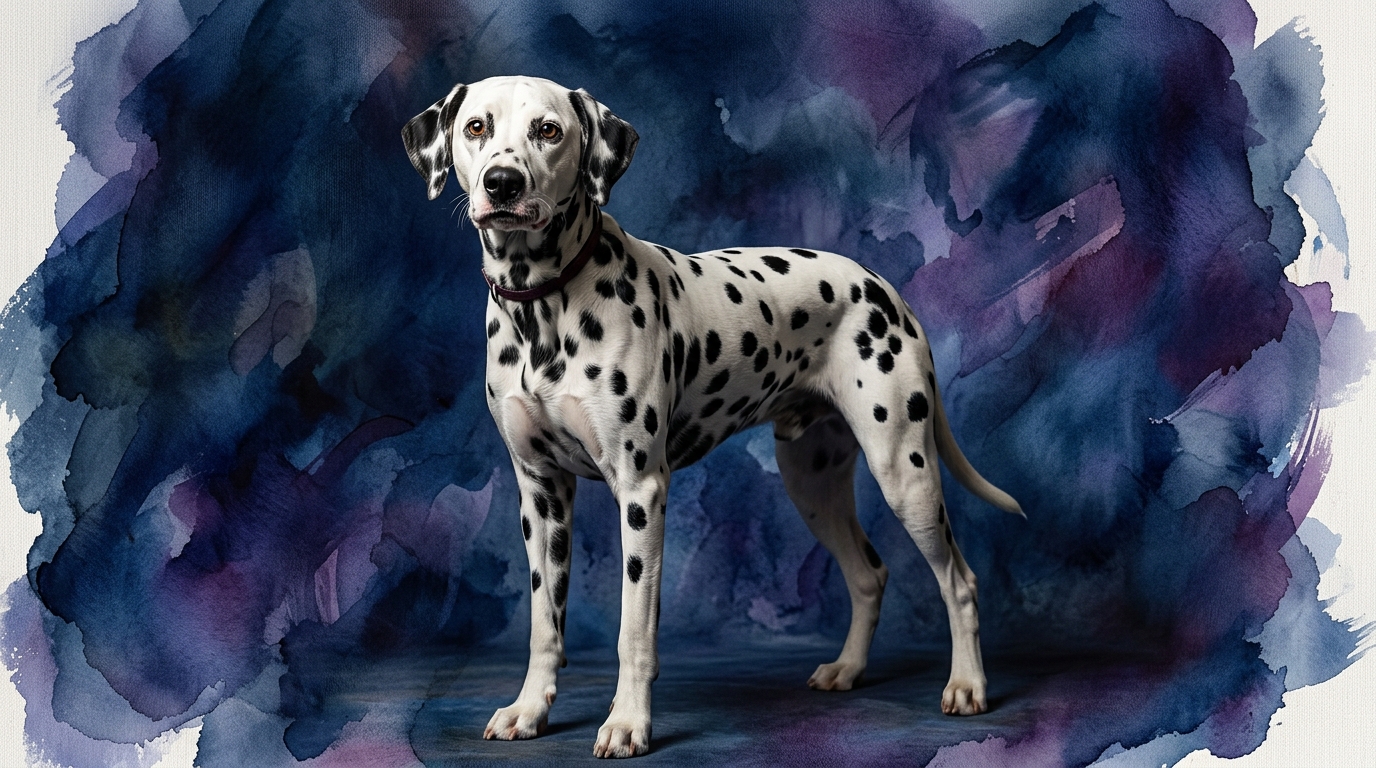
The Dalmatian's Enduring Mindset: A History of Focus and Stamina
Originating from the historical region of Dalmatia in Croatia, this striking large dog of the Non-Sporting group isn't just a visual spectacle; it’s a living testament to specialized cognition. For centuries, Dalmatians were bred for an incredibly demanding task: trotting reliably under horse-drawn carriages for hours on end, often guarding the passengers and property. This wasn't merely a physical feat; it required what we term 'endurance intelligence' – sustained focus, unwavering attention, and remarkable long-distance spatial memory to navigate routes repeatedly and safely.
This unique historical role shaped their mental architecture significantly, emphasizing persistence and an innate understanding of direction and pacing. Their high Instinctive Drive, rated 4/5, combined with exceptional Memory (also 4/5), allowed them to remember complex routes and maintain a consistent, efficient pace for extensive periods. It’s a lineage that required not just physical stamina but profound mental resilience, a trait reflected even in their unique biological development: Dalmatians are born completely white, with their iconic spots appearing gradually over the first few weeks of life, each pattern as distinct as a fingerprint, underscoring their individual journey from birth.
This breed's mental stamina is a far cry from the quick bursts of problem-solving seen in other dogs. A Dalmatian’s brain is wired for the marathon, not the sprint, excelling at tasks that demand sustained mental engagement and the ability to process and recall vast amounts of environmental information over long durations. Understanding this core aspect of their intelligence is key to appreciating their true cognitive strengths and providing the mental enrichment they truly crave.
Beyond Obedience: Decoding the Dalmatian's Cognitive Profile
While often admired for their distinctive appearance, the Dalmatian’s cognitive makeup offers a fascinating study. In Stanley Coren's obedience ranking, this breed stands at a respectable #39 out of 138, indicating a considerable capacity for learning obedience commands. This means a Dalmatian can typically grasp new commands in 15-25 repetitions and will obey known commands on the first try 70% of the time or better. This places them firmly in the 'above average' category for working intelligence and obedience, a far cry from being 'average-brained.'
Their Problem Solving ability, rated 3/5, suggests they are adept at finding solutions to environmental challenges, though perhaps not with the immediate flash of insight seen in some other breeds. Paired with a Training Speed also at 3/5, this indicates Dalmatians are consistent learners who respond well to clear, patient instruction and positive reinforcement, making them capable students for a dedicated owner. They might not be the fastest to pick up every trick, but once they learn, they remember and apply it consistently.
A standout feature of their profile is their Social Intelligence, scoring an impressive 4/5. This reflects their keen ability to read and interpret human cues, form deep bonds, and understand social hierarchies. This trait was invaluable in their historical role, where they needed to be attuned to both horses and human drivers. This strong social acumen means they thrive on interaction and can be surprisingly sensitive companions, capable of understanding and responding to the nuances of their family's emotions and routines. Their overall profile paints a picture of a dog with specific, robust cognitive strengths that, when understood, lead to a remarkably rewarding companionship.
Cultivating the Spotted Intellect: Enrichment for Your Dalmatian
Given their historical vocation, it's no surprise that Dalmatians possess a profound need for both physical and mental stimulation. Their endurance intelligence, coupled with high instinctive drive, means that a bored Dalmatian is often a creative (and sometimes destructive) Dalmatian. Engaging their minds with activities that mimic their ancestral duties can be incredibly beneficial. Long walks, hikes, or runs are excellent for physical exertion, but incorporating challenges that stimulate their spatial memory and sustained focus will truly tap into their cognitive potential.
Consider activities like advanced obedience training that requires sequences of commands, or canine sports like agility and rally obedience which demand both physical coordination and mental processing. Scent work and tracking games are particularly effective for engaging their instinctive drive and memory, allowing them to utilize their natural abilities in a constructive and satisfying way. These activities provide an outlet for their specialized intelligence, preventing mental stagnation and fostering a well-adjusted, confident companion.
Providing consistent mental exercise isn't just about preventing boredom; it's about honoring the sophisticated cognitive heritage of the Dalmatian. By understanding that their brain is wired for purpose and perseverance, owners can unlock the full potential of this magnificent breed, transforming a lively companion into a truly engaged and fulfilling member of the family.
3 At-Home Tests to Measure Your Dalmatian's IQ
These tests are adapted from peer-reviewed ethology research. No equipment is needed beyond items you have at home. Run each test 5–10 times for reliable results.
The Myth: "Dalmatians are just pretty dogs made famous by Disney, with average brains."
✅ While undeniably striking, the Dalmatian's cognitive abilities are far from average; they possess a distinct "endurance intelligence" that enabled them to perform demanding, long-distance tasks for centuries, requiring sustained focus, robust spatial memory, and a keen understanding of their environment. Their problem-solving might be moderate, but their persistent nature, social acumen, and high instinctive drive are impressive and specifically honed for a purpose-driven life.
Dalmatian vs. Similar Breeds
🧠 What's Your Dog's IQ Score?
Our full Pet IQ Lab assessment includes 12+ tests across 5 cognitive dimensions, calibrated for Dalmatians specifically.
Take the Full IQ Test →Frequently Asked Questions
Are Dalmatians difficult to train due to their intelligence ranking?
While ranking #39 out of 138 breeds places them as "above average" for obedience, Dalmatians are not inherently difficult; they require consistent, positive reinforcement training from an early age. Their moderate training speed (3/5) means they benefit from patient repetition and engaging methods, thriving with a clear purpose and mental stimulation rather than solely relying on innate quickness.
Do Dalmatians need a lot of exercise?
Absolutely. Their historical role as carriage dogs means they possess significant physical and mental stamina, rooted in their "endurance intelligence" and high instinctive drive. Daily vigorous exercise, such as long runs, hikes, or extended play, coupled with mental challenges like scent work or advanced obedience training, is essential to keep them happy, healthy, and prevent behavioral issues stemming from boredom or pent-up energy.
The Dalmatian's legacy is far more than spots and cinematic charm; it's a testament to a specialized intellect forged by centuries of demanding work. Understanding their endurance intelligence and unique cognitive strengths unlocks a deeper bond with this remarkable, persistent companion.