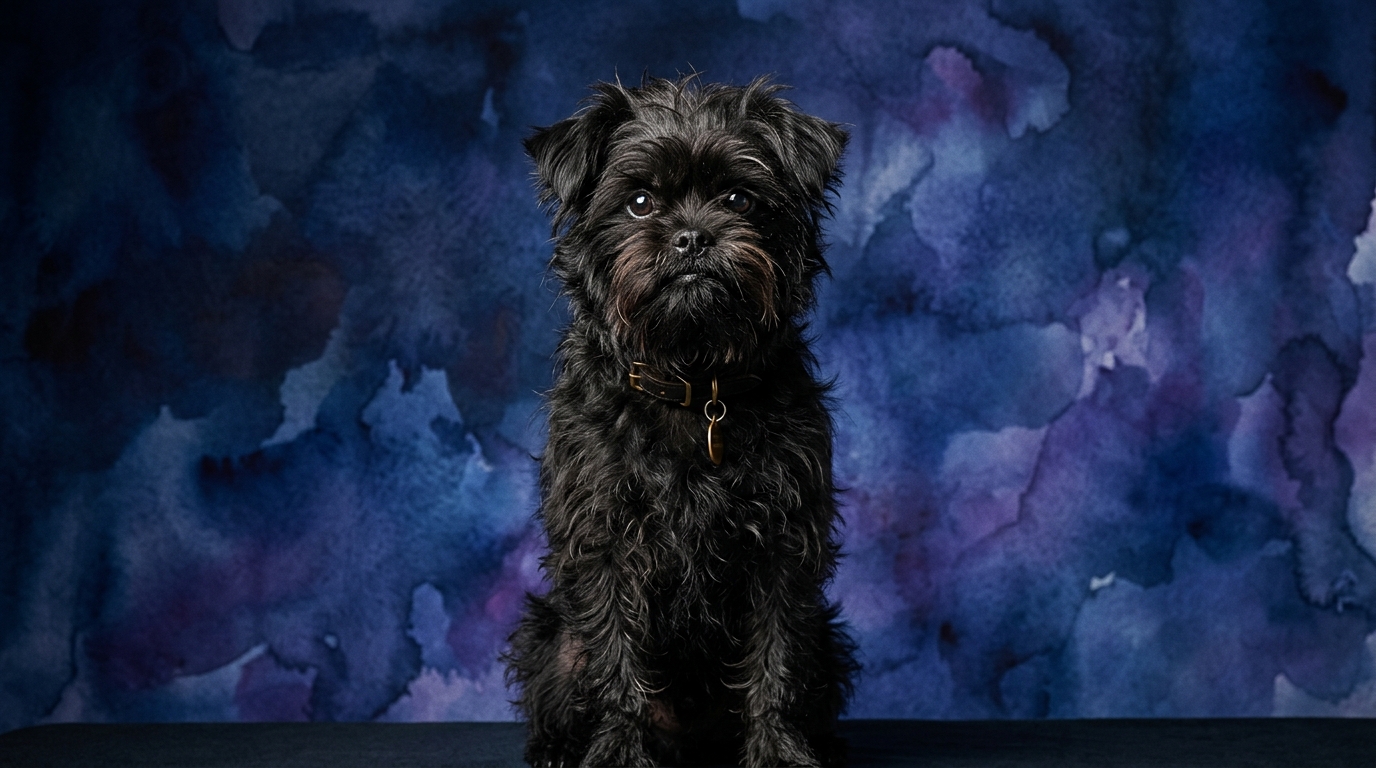

Side-by-Side IQ Profile: Affenpinscher vs Brussels Griffon
**Affenpinscher IQ Profile:**
**Problem Solving (3/5):** This score indicates a moderate capacity for navigating novel situations and simple puzzles. They exhibit a curious, independent approach to environmental challenges, often using trial and error to retrieve a hidden toy or explore new spaces.
**Training Speed (3/5):** Affenpinschers learn new commands at a steady pace, requiring consistent, engaging methods. Their independent spirit means they respond best when training feels like a partnership, occasionally testing boundaries.
**Social Intelligence (3/5):** Forming deep bonds with family, they read owner's moods. While affectionate with their trusted circle, they can be reserved with strangers, taking time to assess new individuals.
**Instinctive Drive (3/5):** Reflecting their terrier heritage, they possess a moderate drive, expressed through vigilance, a keen interest in chasing small objects, and an alert demeanor, fueling their curiosity.
**Memory (3/5):** They demonstrate good memory for routines, familiar people, and learned commands, recalling past experiences to influence future interactions within their home.
**Brussels Griffon IQ Profile:**
**Problem Solving (3/5):** With a 3/5, they adapt to new situations and figure out how to get attention or access comforts. Observant, they learn by watching and often use charming tactics to achieve goals, like nudging for pets.
**Training Speed (3/5):** They learn at a moderate pace, but their sensitive nature means they thrive on positive reinforcement. Opinionated, inconsistent or harsh methods can lead to stubbornness.
**Social Intelligence (3/5):** This breed forms intense, people-centric bonds, interpreting subtle human emotions and cues. Their social acumen drives a constant desire for companionship and close physical proximity.
**Instinctive Drive (3/5):** Not a strong prey drive, their instinctive drive manifests as a powerful desire for companionship and human protection. They are vigilant watchdogs, quick to alert to new sounds, driven by deep attachment.
**Memory (3/5):** They possess good memory for people, places, and routines central to their lives, especially those associated with comfort and positive social interaction, recalling past training cues.
Where the Affenpinscher Wins Cognitively
Despite identical scores, the Affenpinscher often displays a subtle cognitive advantage in areas related to independent exploration and robust environmental engagement. Their problem-solving, rated 3/5, frequently manifests as a more hands-on, physically investigative approach. An Affenpinscher might more readily attempt to dismantle a soft puzzle toy or explore the nooks and crannies of a new room with determined curiosity, driven by their instinctive desire to understand their physical surroundings. This independent streak, combined with their instinctive drive, means they are often more self-reliant in finding their own entertainment, such as discovering and 'hunting' dust bunnies or inventing games with household objects. Their memory, while a 3/5, is particularly strong for spatial layouts and the location of favored items, making them adept at navigating complex indoor environments or remembering where a treat was last hidden, even when out of sight.
Where the Brussels Griffon Wins Cognitively
The Brussels Griffon, while sharing the same 3/5 cognitive scores, often shines brighter in the realm of nuanced social cognition. Their social intelligence, though rated identically, is profoundly human-centric; they possess a remarkable ability to interpret subtle shifts in human tone, body language, and emotional states. This makes them exceptionally skilled at 'reading the room' and adjusting their behavior to elicit desired responses, whether it's comforting a sad owner or charming an extra treat. Their problem-solving prowess, while not overtly physical, is often directed towards social manipulation—figuring out the precise combination of whines, nudges, or gazes that will secure lap time or attention. Furthermore, their memory (3/5) is particularly adept at recalling past social interactions, remembering which people are generous with pets and which routines lead to quality time with their beloved human.
Which is Easier to Train and Why
When it comes to trainability, both breeds present unique considerations despite their identical 3/5 Training Speed score, reflecting that neither is inherently 'easy' but requires different approaches. The Affenpinscher's independent nature and strong instinctive drive can make them more prone to distraction and testing boundaries. Training an Affenpinscher demands a consistent, firm yet playful approach, turning sessions into engaging games to capture their curious minds. They may take longer to master complex commands if not sufficiently motivated, often preferring to make their own decisions. Conversely, the Brussels Griffon's training journey is influenced by their profound sensitivity and deep desire for companionship. While eager to please, harsh corrections can lead to shutdown or stubborn resistance. Their social intelligence means they respond exceptionally well to positive reinforcement and praise. However, their 'velcro dog' tendencies can sometimes translate into a demanding attitude, where training secures constant attention. House-training can also be a particular challenge for many Brussels Griffons due to their small bladders. Ultimately, the Brussels Griffon might *feel* easier for owners who excel at positive reinforcement and leverage connection, while the Affenpinscher requires an owner who appreciates an independent learner and can make training fun and varied.
Which Suits Active Owners vs Relaxed Owners
The subtle cognitive differences between these breeds translate into distinct lifestyle preferences. The Affenpinscher, with its robust problem-solving and pronounced instinctive drive, thrives with active owners who enjoy daily adventures. They appreciate regular walks for exploration, interactive play, and perhaps even participation in canine sports. Their curiosity demands mental stimulation, making them suitable for owners providing varied enrichment and independent investigation. In contrast, the Brussels Griffon, whose social intelligence is deeply tied to human companionship, is ideal for more relaxed owners. While they enjoy short play bursts and brief walks, their primary contentment comes from close proximity to their human, often as a lap dog. They excel where they receive consistent attention, perfect for owners who desire a devoted, cuddly companion prioritizing shared quiet moments over extensive outdoor excursions.
The Verdict
Choose the Affenpinscher if you seek a curious, independent companion who enjoys varied mental challenges and moderate activity, appreciating a spirited, sometimes mischievous personality.
Opt for the Brussels Griffon if you desire a devoted, affectionate "velcro dog" who thrives on constant companionship and is content with a more relaxed pace of life, provided they are always by your side.
🧠 Find Your Pet's IQ Score
Our Pet IQ Lab assessment covers 25+ tests across 5 cognitive dimensions — personalized to your breed.
Take the Full IQ Test →Frequently Asked Questions
Are Affenpinschers and Brussels Griffons good with children?
Both can be good with older, respectful children understanding how to interact gently with small dogs. Their size makes them vulnerable to injury, and their sensitive or independent natures mean they may not tolerate rough play. Supervision is always recommended.
Do these small breeds tend to bark excessively?
Both can be vocal, often serving as vigilant watchdogs alerting owners to new sounds. Their barking tends to be situational rather than constant, but early training helps manage this tendency.
Is house-training a particular challenge for Affenpinschers or Brussels Griffons?
House-training can be challenging for both due to small size and bladders. Brussels Griffons often require extra consistency and positive reinforcement. Consistent routines, frequent potty breaks, and positive reinforcement are key for success.