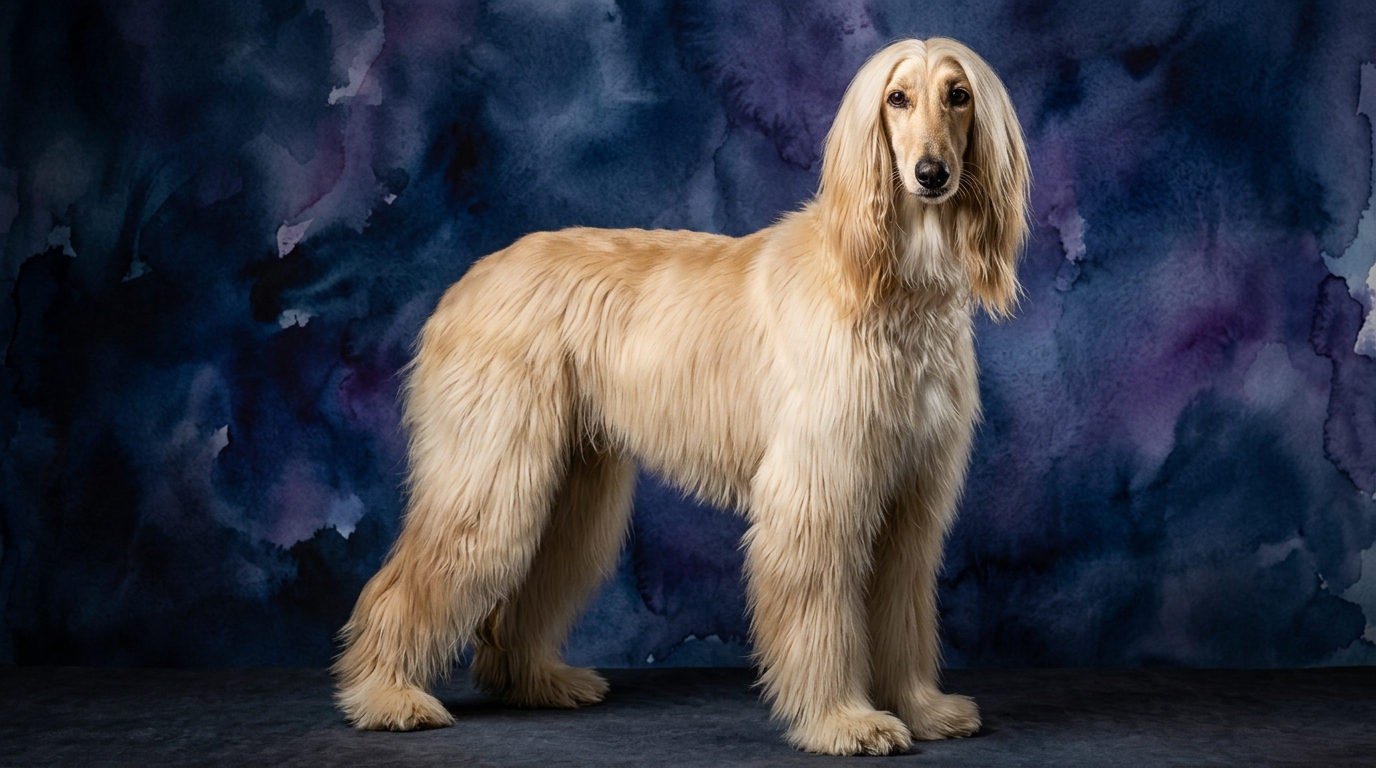
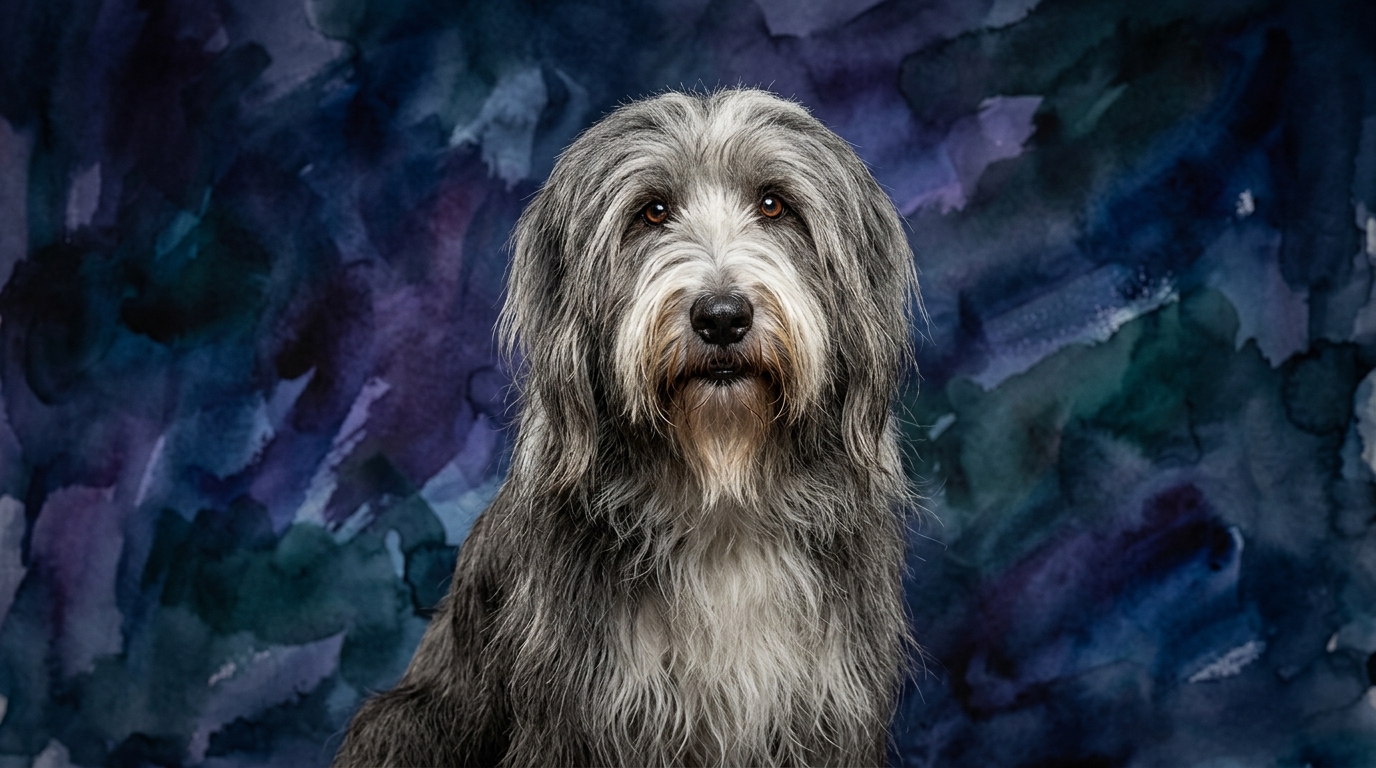
Side-by-Side IQ Profile: Afghan Hound vs. Bearded Collie
The Cosmic Pet Pet IQ Lab employs a multi-dimensional approach to assess canine intelligence, moving beyond simple obedience to explore five distinct cognitive areas. For the Afghan Hound, a breed rooted in ancient sighthound traditions, its profile reveals a Problem Solving score of 4/5, indicating a capacity for independent thought and effective solutions when motivated. However, its Training Speed registers a low 1/5, suggesting a preference for self-direction over rote compliance, making it a challenging student in conventional obedience. Social Intelligence at 2/5 points to a more reserved, less overtly people-pleasing demeanor, while its Instinctive Drive soars at 5/5, reflecting a powerful, intrinsic motivation tied to its original hunting purpose. Memory, at 3/5, suggests a moderate ability to retain learned information and experiences, though perhaps not always in the context of human commands.
In contrast, the Bearded Collie, a breed developed for herding livestock, presents a cognitive profile geared towards cooperation and adaptability. Its Problem Solving also scores 4/5, demonstrating an equal capacity for resourceful thinking, but often applied in a more collaborative manner. A significant differentiator is its Training Speed, rated at 4/5, signifying a keen desire to learn and a quick grasp of new commands and routines. Social Intelligence for the Bearded Collie stands at 3/5, indicating a more engaged and responsive interaction style compared to the Afghan Hound. Its Instinctive Drive is a moderate 3/5, still present but less overwhelming than the Afghan Hound's, focused more on gathering and managing than solitary pursuit. Finally, its Memory score of 4/5 suggests a robust capacity for recall, crucial for retaining complex herding patterns and family routines.
Where the Afghan Hound Excels Cognitively
The Afghan Hound's primary cognitive strength lies squarely in its Instinctive Drive, scoring a perfect 5/5. This isn't merely a physical drive but a deeply ingrained mental framework for independent action and decision-making crucial for a sighthound. When pursuing prey across vast distances, an Afghan Hound had to assess terrain, predict movement, and execute complex chase strategies without direct human intervention. This translates into a dog with an unparalleled self-reliance and an innate ability to make quick, autonomous judgments in dynamic environments. Their 4/5 Problem Solving, when coupled with this powerful instinct, manifests as a breed capable of devising its own solutions to perceived challenges, whether it's navigating a complex scent trail or figuring out how to access a forbidden treat. They are not looking for human guidance in these moments; they are calculating, reacting, and acting based on their own internal algorithms, a testament to their ancient role as independent hunters.
This cognitive autonomy means that while they might not excel in structured obedience, they possess a profound, almost primal form of intelligence. They are masters of their own domain, adept at reading environmental cues and making split-second decisions that would have been vital for survival. Their problem-solving isn't about pleasing a handler; it's about efficacy and self-preservation. This independent cognitive style is a unique strength, setting them apart as thinkers rather than followers, and it requires an owner who appreciates this profound self-sufficiency rather than trying to stifle it. Their memory, while not top-tier, is sufficient to recall important hunting grounds or previous experiences, contributing to their self-directed nature.
Where the Bearded Collie Shines Cognitively
The Bearded Collie's cognitive prowess is most evident in its exceptional Training Speed (4/5) and robust Memory (4/5), underpinned by a more pronounced Social Intelligence (3/5). These traits collectively create a highly adaptable and responsive canine partner. Their quick training speed means they absorb new commands, routines, and tricks with relative ease, making them a joy to teach and engage with in various activities, from basic obedience to advanced dog sports. This isn't just about rote memorization; it's about a cognitive eagerness to understand and perform tasks requested by their human companions, a direct reflection of their herding heritage where cooperation with a shepherd was paramount.
Their strong memory allows them to retain a vast repertoire of learned behaviors and complex sequences, which is invaluable for intricate herding patterns or agility courses. This cognitive retention ensures that once a lesson is learned, it tends to stick, building a reliable foundation for further training. Furthermore, their higher social intelligence means they are more attuned to human communication, body language, and emotional states. They are more likely to seek interaction and respond positively to social cues, making them highly receptive to training methods that rely on positive reinforcement and collaborative effort. This combination of quick learning, excellent recall, and social awareness positions the Bearded Collie as a highly versatile and cognitively agile breed, eager to engage with and understand its human world, a stark contrast to the Afghan Hound's more self-contained intellect. Their problem-solving, while equally strong, often manifests in finding solutions that benefit the group or achieve a shared goal, rather than purely individualistic endeavors.
Training Dynamics: Afghan Hound vs. Bearded Collie
The stark differences in Training Speed and Social Intelligence fundamentally shape the training experience with these two breeds. Training an Afghan Hound, with its 1/5 Training Speed and 2/5 Social Intelligence, requires immense patience, creativity, and a deep understanding of its independent nature. These dogs are not inherently motivated to please; they operate on their own terms and will comply only if they perceive a compelling reason, often a high-value reward, and if the command aligns with their current inclination. Their low social intelligence means they are less inclined to seek human approval as a primary motivator, making traditional, repetitive obedience drills often frustrating for both dog and owner. Owners must accept that an Afghan Hound might understand a command perfectly but choose not to execute it, a behavioral difference rooted in their cognitive autonomy rather than a lack of comprehension. Successful training often involves making the desired behavior seem like the dog's own idea, using lure-and-reward techniques, and keeping sessions short, engaging, and varied to prevent boredom and defiance.
Conversely, the Bearded Collie, with its 4/5 Training Speed and 3/5 Social Intelligence, is typically a much more eager and cooperative student. They enjoy the mental stimulation of learning and the social interaction inherent in training sessions. Their higher social intelligence means they are more attentive to their handler's cues and more motivated by praise and connection. They pick up new commands quickly and are generally keen to perform them, making them excellent candidates for advanced obedience, dog sports, and therapy work. Their strong memory further aids in retaining complex sequences, allowing for progressive skill building. While they still require consistency and positive reinforcement, Bearded Collies tend to approach training as a collaborative game, thriving on engagement and clear communication, a direct reflection of their cognitive readiness to work alongside humans. This behavioral difference is crucial: one breed's cognitive profile leans towards self-direction, the other towards partnership.
Owner Suitability: Active vs. Relaxed Lifestyles
Considering their cognitive profiles, the Afghan Hound and Bearded Collie appeal to very different owner lifestyles. The Afghan Hound, with its profound Instinctive Drive (5/5) and independent problem-solving, is ideally suited for active owners who appreciate a dog with a strong, self-directed spirit and who can manage a significant prey drive. These are not dogs content with a quick stroll around the block; they require regular opportunities to run safely and express their sighthound instincts, often in a securely fenced area where they can stretch their long legs at full speed. Their lower social intelligence means they might not be constantly seeking attention or eager for extensive cuddling, appealing to owners who prefer a more reserved canine companion. They thrive with owners who understand and respect their independence, providing mental stimulation through varied environments and perhaps even lure coursing, rather than attempting to force strict obedience. A relaxed owner who expects an always-compliant, low-maintenance dog would likely find the Afghan Hound's independent nature and exercise needs challenging.
The Bearded Collie, on the other hand, with its high training speed, strong memory, and moderate instinctive drive, is a better fit for active owners who desire a highly engaged, trainable, and cooperative partner. These dogs excel in activities that involve teamwork and mental challenges, such as agility, obedience, herding trials, or even long hikes and runs alongside their owners. Their higher social intelligence means they generally enjoy being part of family activities and thrive on interaction, making them suitable for owners who want a constant, enthusiastic companion. They require significant mental stimulation beyond just physical exercise; their quick minds need puzzles, training, and jobs to do to prevent boredom. While they are active, their activity is often channeled through structured engagement, making them less prone to the independent, instinct-driven escapades of an Afghan Hound. A relaxed owner might find their need for engagement and activity overwhelming, as a bored Bearded Collie can become quite inventive in entertaining itself, often in ways owners don't appreciate.
The Verdict
Choose the Afghan Hound if you are an experienced owner who appreciates profound independence, can manage a strong prey drive, and values a dog's self-directed problem-solving over strict obedience.
Opt for the Bearded Collie if you seek an active, highly trainable, and socially engaged companion eager to participate in various activities and thrive on collaborative learning.
🧠 Find Your Pet's IQ Score
Our Pet IQ Lab assessment covers 25+ tests across 5 cognitive dimensions — personalized to your breed.
Take the Full IQ Test →Frequently Asked Questions
Is the Afghan Hound difficult to train?
Yes, the Afghan Hound is generally considered challenging to train due to its low Training Speed (1/5) and lower Social Intelligence (2/5). They possess independent minds and are less motivated by pleasing their owners, requiring creative, patient, and reward-based methods to achieve compliance.
Which breed is better for dog sports like agility?
The Bearded Collie is typically much better suited for dog sports like agility. Their high Training Speed (4/5), strong Memory (4/5), and cooperative nature make them quick learners and enthusiastic participants in structured activities that require teamwork and precision.
Do both breeds require a lot of exercise?
Both breeds are active, but their exercise needs differ in nature. Afghan Hounds require significant opportunities for fast, free running to satisfy their high Instinctive Drive, while Bearded Collies need consistent physical activity combined with extensive mental stimulation and training to keep their quick minds engaged.