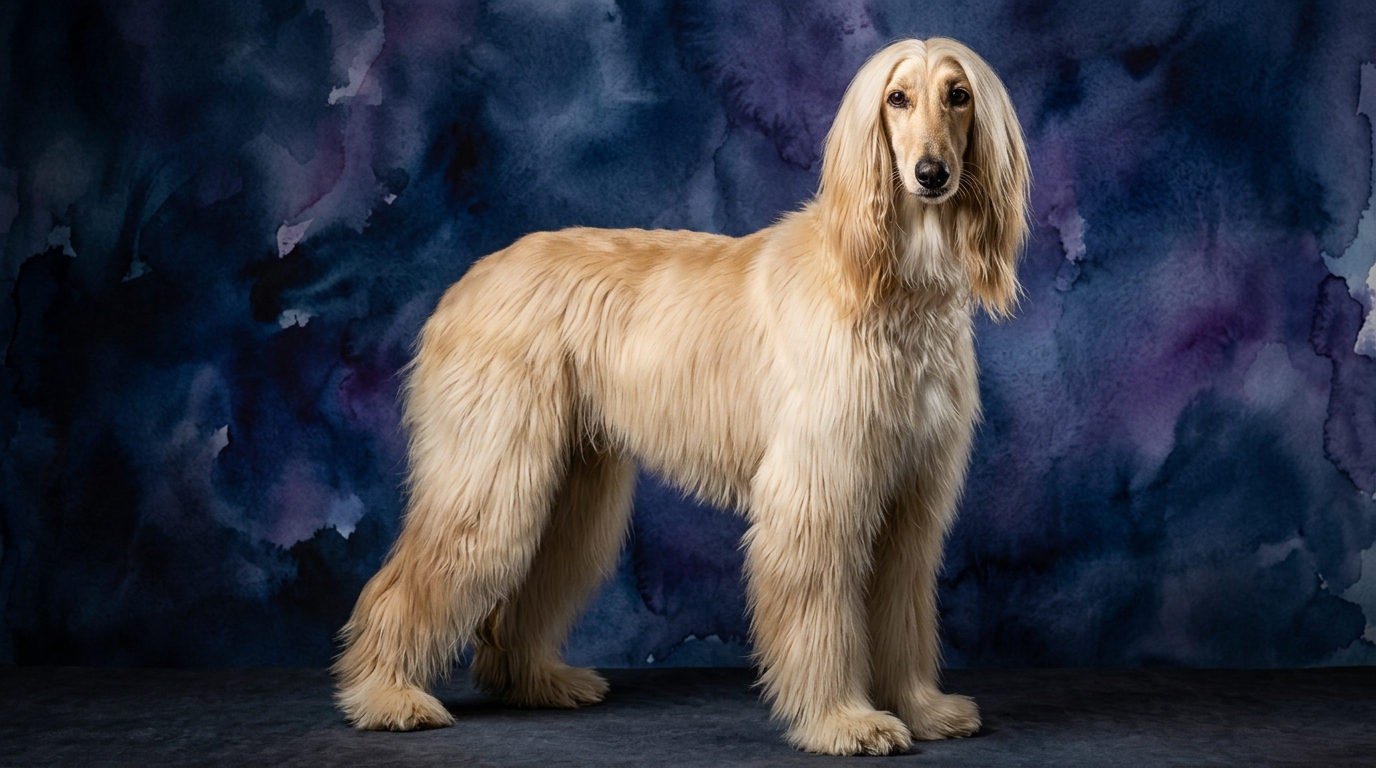
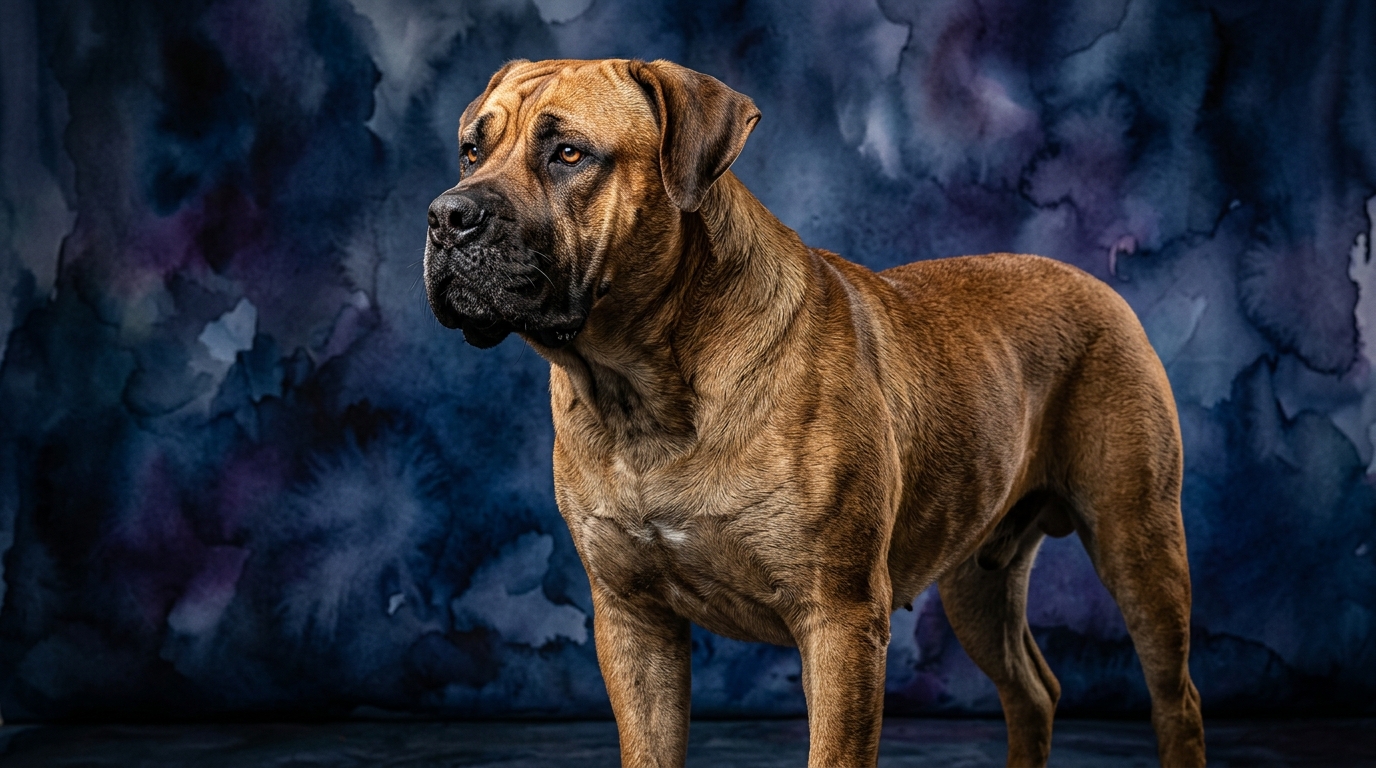
Side-by-Side Pet IQ Lab Profile
Delving into the cognitive makeup of these two breeds, we observe a fascinating divergence in their inherent capabilities and behavioral predispositions. The Afghan Hound, a sighthound, is ranked #79 by Coren, indicating a specific type of intelligence that prioritizes independence over compliance. In contrast, the Boerboel, a working mastiff, is not Coren-ranked, yet exhibits a balanced set of cognitive strengths aligned with its protective duties.
**Afghan Hound Cognitive Profile:** This breed demonstrates a unique blend of sharp, self-directed intellect and a reserved demeanor. Their problem-solving ability scores 4/5, primarily geared towards independent tasks like hunting and navigating complex environments for prey, rather than human-assigned puzzles. Training speed is notably low at 1/5, reflecting a strong independent will and a tendency to question the 'point' of human commands. Social intelligence is 2/5, as they are often aloof with strangers and form deep, but discerning, bonds with their immediate family, not driven by a strong desire to please. Their instinctive drive is exceptionally high at 5/5, dominated by a powerful chase instinct. Memory is rated 3/5, capable of retaining information relevant to their self-directed pursuits and environment.
**Boerboel Cognitive Profile:** The Boerboel presents a more balanced and cooperative cognitive blueprint. Their problem-solving ability is 3/5, enabling them to assess situations, particularly threats, and find effective solutions related to protection. Training speed is 3/5, indicating a moderate responsiveness to learning commands, motivated by a desire to fulfill their role and bond with their family. Social intelligence also scores 3/5; they are deeply bonded with their family, capable of reading their cues, and are protective, though they require careful socialization to manage their wariness of outsiders. Instinctive drive is 3/5, manifesting as strong guarding instincts that are manageable with proper guidance. Memory is 3/5, allowing them to retain training and recall individuals and places associated with their role as a guardian.
Where the Afghan Hound Excels Cognitively
The Afghan Hound truly shines in areas demanding independent thought and specialized instinctive prowess. Their problem-solving ability (4/5) surpasses the Boerboel's, particularly when it involves navigating complex terrain or strategizing a chase without direct human intervention. They are masters of their own environment, adept at finding the most efficient path to their self-determined goals, which may not always align with human expectations.
Furthermore, their instinctive drive (5/5) is unparalleled. This isn't merely about chasing; it encompasses lightning-fast target acquisition, strategic pursuit, and an unwavering focus on visual stimuli. This specialized cognitive function, honed over centuries for sighthunting, represents a profound and powerful aspect of their intelligence, making them incredibly effective in activities that leverage this innate ability.
Where the Boerboel Excels Cognitively
The Boerboel demonstrates clear cognitive advantages in areas emphasizing cooperation and balanced application of their faculties. Their training speed (3/5) significantly outpaces the Afghan Hound's, indicating a greater amenability to learning and performing human commands and routines. Their inherent desire to please their family and fulfill their protective role makes them more receptive to structured guidance and consistent reinforcement.
The Boerboel's social intelligence (3/5) also provides a distinct edge. While both breeds can be reserved, the Boerboel's social acumen often translates into more responsive and predictable interactions within a family unit. They are generally better at interpreting subtle cues from their owners regarding perceived threats or social situations, leading to more appropriate and controlled responses from a guardian perspective. Overall, the Boerboel exhibits a more broadly applicable and balanced cognitive profile, making their intelligence more adaptable to a domestic environment and cooperative tasks.
Training Dynamics: Which is Easier and Why
When considering ease of training, the Boerboel presents a far more straightforward experience than the Afghan Hound. The Afghan Hound's low training speed (1/5) is a direct consequence of their profound independence and powerful instinctive drive (5/5). Their problem-solving skills are primarily geared towards their own sighthound pursuits, not towards deciphering or complying with human commands. Coupled with a moderate social intelligence (2/5), they are not strongly motivated by a desire to please or read subtle human cues for compliance, often viewing commands as optional suggestions. Training an Afghan Hound requires immense patience, creative motivation, and a deep understanding of their sighthound nature, often focusing on management and redirection rather than strict obedience.
Conversely, the Boerboel's moderate training speed (3/5) and social intelligence (3/5) make them considerably more responsive to instruction. They are motivated by their strong bond with their family and their intrinsic guardian role, which often involves maintaining order and responding to their owner's direction. While powerful and requiring firm, consistent guidance, Boerboels are generally eager to learn and cooperate when they understand the purpose of a command, especially if it relates to their protective duties or maintaining harmony within their family unit. Their memory (3/5) ensures that once learned, commands are retained effectively, contributing to their trainability.
Suitability for Active vs. Relaxed Owners
Neither the Afghan Hound nor the Boerboel is suitable for genuinely relaxed or sedentary owners; both are large, powerful breeds with specific and demanding needs. However, the nature of their required activity differs significantly.
The Afghan Hound suits owners who are active in a specific way: those who understand and can manage their intense instinctive drive (5/5). They require ample, securely fenced space for bursts of running and chasing, often in sighthound-specific parks, rather than endurance activities like long jogs. Mentally, they challenge owners with their independent decision-making, requiring an owner who appreciates and respects their unique, sometimes aloof, character without expecting high levels of obedience. They thrive with owners who provide outlets for their instincts and cherish their distinct personality.
The Boerboel demands a consistently active and confident owner committed to ongoing training and socialization. They require regular, vigorous exercise to maintain their physical condition and mental stimulation to prevent boredom, which can manifest as destructive behaviors. Their protective nature (instinctive drive 3/5) necessitates an owner who is proactive in managing their interactions with the world, providing clear leadership and consistent boundaries. They are best suited for owners who are prepared for continuous engagement and responsible guidance of a powerful working breed.
The Verdict
Choose the Afghan Hound if you appreciate an independent, elegant companion whose problem-solving excels in self-directed pursuits and whose unique character thrives with an owner who respects their sighthound instincts above strict obedience. They are for those who cherish a dog's distinct personality and can provide ample, secure space for their powerful chase drive.
Opt for the Boerboel if you seek a devoted, protective family guardian with a more balanced cognitive profile, amenable to consistent training and socialization. They are ideal for active owners who value a strong bond and are prepared to guide a powerful breed responsibly, appreciating their capacity for cooperative learning and situational awareness.
🧠 Find Your Pet's IQ Score
Our Pet IQ Lab assessment covers 25+ tests across 5 cognitive dimensions — personalized to your breed.
Take the Full IQ Test →Frequently Asked Questions
Is the Afghan Hound difficult to train?
Yes, Afghan Hounds exhibit a challenging training speed (1/5) due to their profound independence and sighthound instincts. They often see little value in human commands unless they align with their own motivations, requiring immense patience and creative, positive reinforcement from their owners.
Do Boerboels make good family dogs?
Boerboels can be excellent family dogs, forming strong bonds and exhibiting protective instincts (social intelligence 3/5, instinctive drive 3/5) towards their loved ones. However, their size and guardian nature necessitate early socialization and consistent training to ensure they are well-behaved and safe around children and visitors.
Which breed requires more mental stimulation?
Both breeds benefit from mental engagement, though differently. The Afghan Hound's independent problem-solving (4/5) thrives on opportunities to explore and follow their instincts, while the Boerboel's balanced cognitive profile (problem solving 3/5, training speed 3/5) benefits from structured training, puzzle toys, and activities that engage their protective and cooperative nature.