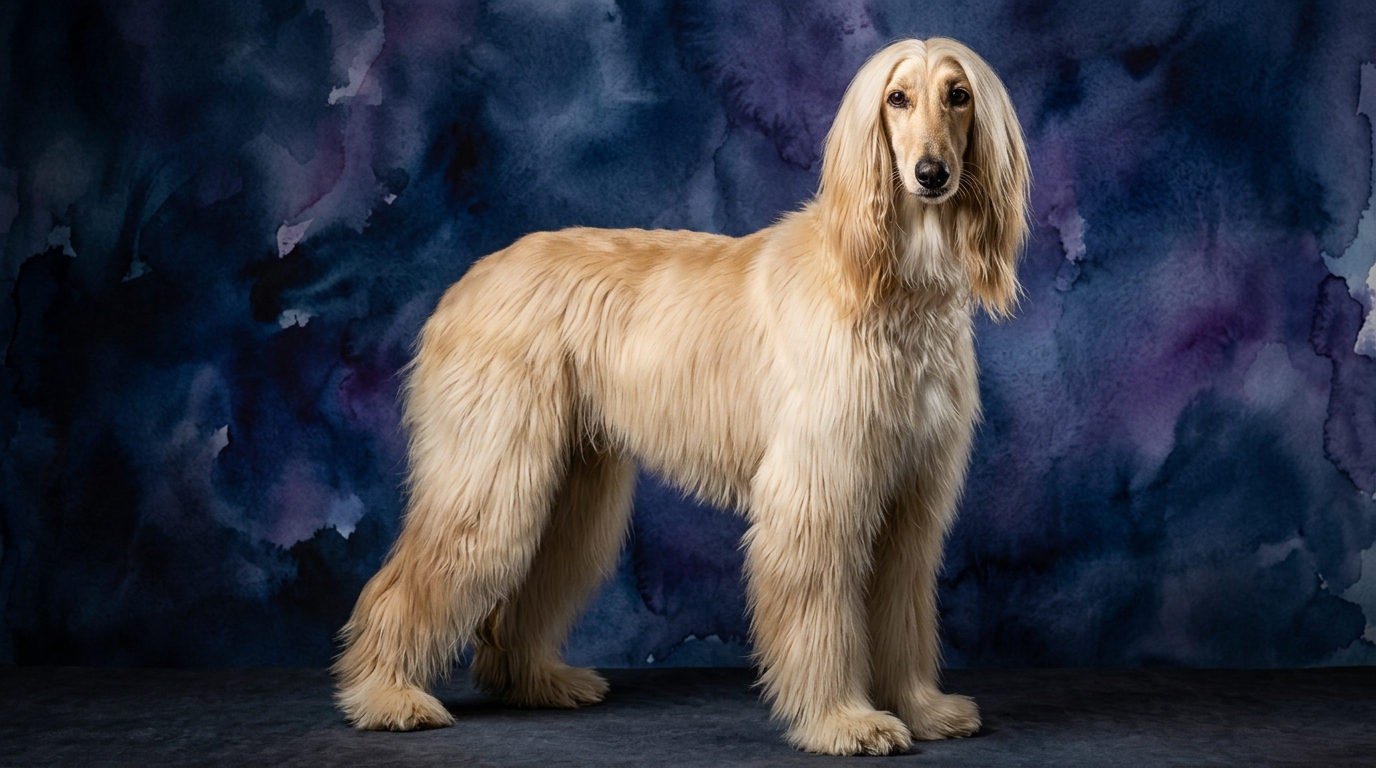
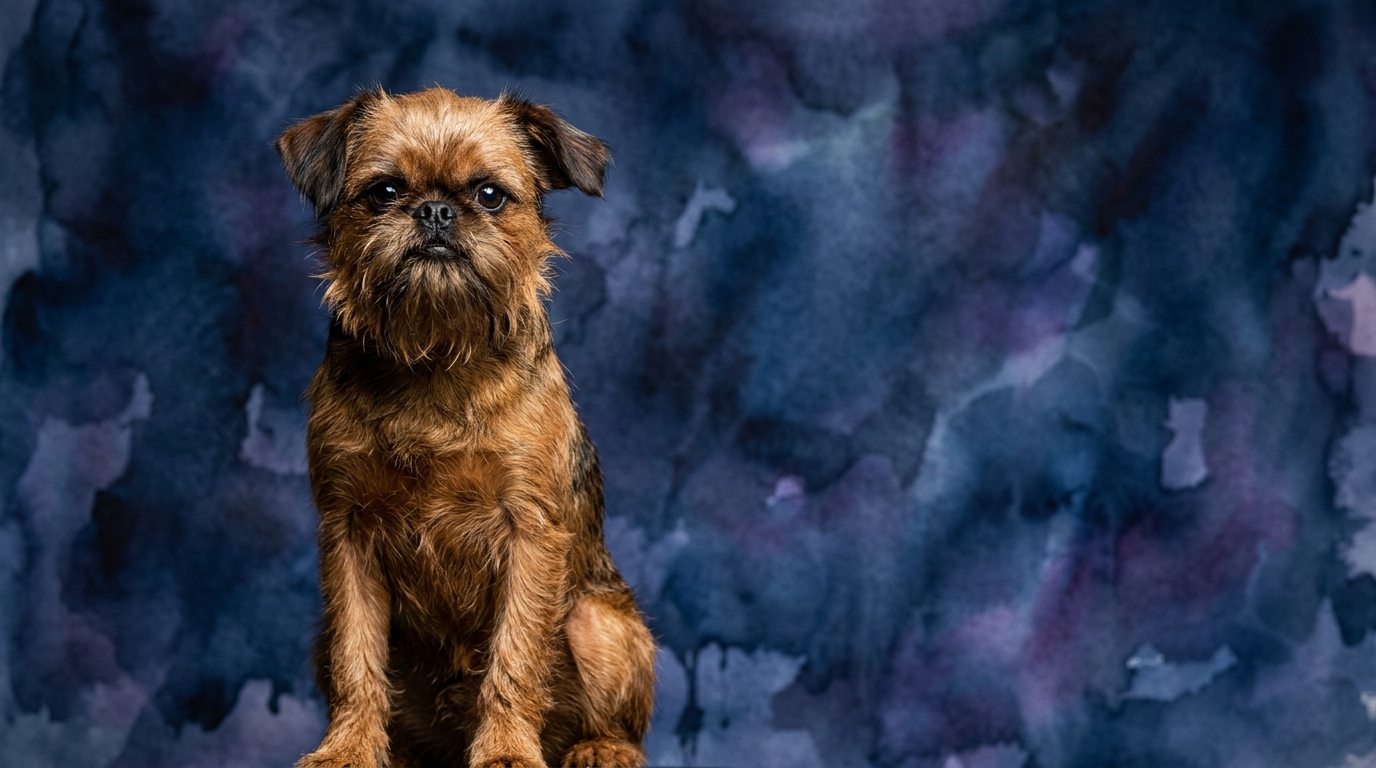
Side-by-Side IQ Profile: Afghan Hound vs. Brussels Griffon
The Cosmic Pet Pet IQ Lab employs a multi-dimensional approach to assess canine cognition, moving beyond simplistic notions of 'smart' to evaluate specific mental aptitudes. For the Afghan Hound, a sighthound with a Coren rank of #79, its profile paints a picture of independent, instinct-driven thought. Its Problem Solving is rated 4/5, indicating a sophisticated ability to navigate complex environments and devise its own solutions to obstacles, often preferring self-reliance over human guidance. Training Speed stands at 1/5, reflecting a slow acquisition rate for formal commands due to its independent nature and lower desire to please. Social Intelligence is 2/5; these hounds are typically reserved, aloof with strangers, and prefer operating independently rather than as part of a close-knit social unit. Its Instinctive Drive is a powerful 5/5, profoundly evident in its unwavering focus on pursuit, a core aspect of its sighthound heritage. Memory is rated 3/5, suggesting a moderate capacity for retaining information, particularly spatial layouts and scents, though less so for non-motivating commands.
The Brussels Griffon, a toy breed not included in Coren's original ranking, presents a more balanced cognitive profile, geared towards companionship and domestic adaptability. Its Problem Solving is 3/5, showing a respectable capacity for figuring out puzzles and manipulating objects to achieve goals within its immediate environment, often using observation. Training Speed is 3/5, indicating a moderate learning pace, as they are often motivated by positive reinforcement and a desire for interaction. Social Intelligence also scores 3/5; these small dogs are generally attuned to human emotions and social cues, forming strong attachments and adapting their behavior to household dynamics. Instinctive Drive is 3/5, a moderate level geared more towards companionship, play, and guarding their territory or favorite people, rather than intense prey pursuit. Memory is 3/5, allowing them to recall learned commands, routines, and the locations of favored items or people, influencing future interactions based on past experiences.
Where the Afghan Hound Wins Cognitively
The Afghan Hound’s cognitive strengths shine in areas demanding independent thought and an intense focus on instinctual tasks. Their 4/5 problem-solving score reflects an inherent capacity to independently strategize within their environment, a trait honed by centuries of hunting across varied terrain. This isn't about solving human-devised puzzles, but rather about navigating complex landscapes, identifying optimal routes, and overcoming physical barriers to achieve a goal, like tracking a scent or pursuing a visual target. Their 5/5 instinctive drive is a profound cognitive advantage when it comes to their primary purpose; they possess an unparalleled ability to process visual stimuli at a distance and commit entirely to a chase, demonstrating a singular, unwavering focus that few other breeds can match. This intense, specialized cognitive processing for pursuit and independent action truly sets them apart, making them masters of their ancestral hunting craft.
Where the Brussels Griffon Wins Cognitively
The Brussels Griffon's cognitive advantages lie in their adaptability and social attunement, particularly within a domestic setting. Their 3/5 social intelligence indicates a greater propensity for understanding and responding to human cues and household routines compared to the more aloof Afghan. This translates into a quicker grasp of social expectations and a willingness to integrate into family dynamics, often anticipating owner needs or moods. While their problem-solving is rated 3/5, it's often applied to more 'human-centric' challenges, such as figuring out how to get attention or manipulate a toy, rather than large-scale environmental navigation. Their balanced instinctive drive (3/5) means their natural inclinations are more easily redirected towards companionship and play, making them more amenable to cooperative activities and less driven by an overwhelming singular instinct.
Which is Easier to Train and Why
Training ease starkly differentiates these two breeds, with the Brussels Griffon proving significantly more amenable. The Afghan Hound’s 1/5 training speed is a direct consequence of their deeply ingrained independence and low social intelligence score of 2/5, meaning they are less inclined to prioritize human directives over their own judgment or powerful instinctive urges. Convincing an Afghan Hound to perform a command often requires immense patience, creativity, and a profound understanding of their motivations, as they rarely seek to please. Their 5/5 instinctive drive can also be a major training hurdle; once they lock onto a visual stimulus, their cognitive resources are almost entirely dedicated to the chase, rendering them temporarily impervious to commands, making consistent recall a significant challenge in open spaces.
In contrast, the Brussels Griffon’s 3/5 training speed and 3/5 social intelligence make them much more receptive. They generally enjoy interacting with their people and are more motivated by praise and treats, making them quicker to associate actions with rewards and more eager to participate in training sessions. Their more moderate instinctive drive (3/5) means they are less likely to be completely consumed by external distractions, allowing for more consistent engagement during training sessions. While not without their own small dog stubbornness, their cognitive profile leans much more favorably towards traditional obedience training and cooperative learning.
Suitability for Active vs. Relaxed Owners
The choice between these breeds heavily depends on an owner's lifestyle and their willingness to engage with distinct cognitive profiles. The Afghan Hound, with its 5/5 instinctive drive and 4/5 problem-solving in an environmental context, is ideally suited for active owners who understand and can accommodate a dog with a powerful, independent spirit. They thrive with opportunities for vigorous, off-leash running in secure areas where they can indulge their sighthound instincts, or participate in activities like lure coursing. Owners must be prepared for a dog that thinks for itself and isn't inherently interested in being a 'yes-dog,' requiring mental engagement that respects their autonomy and channels their profound chase instinct. Relaxed owners might find the Afghan Hound's independent streak and powerful exercise needs overwhelming, potentially leading to frustration for both dog and human, as their physical and mental energy must be adequately met.
The Brussels Griffon, conversely, is a better fit for owners who appreciate a companion animal with a more moderate activity level and a greater inclination for social interaction. Their 3/5 social intelligence and balanced instinctive drive make them adaptable to a variety of home environments, from apartment living to houses with yards. While they enjoy play and walks, their exercise requirements are significantly less intense than the Afghan Hound's, content with regular strolls and indoor games. They flourish with owners who enjoy close companionship, interactive play, and can provide consistent, positive reinforcement for their moderate training needs. Their cognitive profile makes them excellent companions for those seeking a dog that is more attuned to daily human routines and desires to be an integral, interactive part of the family without demanding extensive, specialized athletic outlets.
The Verdict
Choose the Afghan Hound if you are an experienced, active owner seeking an independent, majestic companion motivated by instinct and capable of profound, self-directed problem-solving in open environments, understanding their unique training challenges.
Choose the Brussels Griffon if you desire a socially attuned, moderately active companion who learns readily with positive reinforcement and thrives on close human interaction within a domestic setting.
🧠 Find Your Pet's IQ Score
Our Pet IQ Lab assessment covers 25+ tests across 5 cognitive dimensions — personalized to your breed.
Take the Full IQ Test →Frequently Asked Questions
Does the Afghan Hound's low training speed mean it's not intelligent?
Not at all. Their 1/5 training speed reflects their independent nature and preference for self-directed action over human-led obedience, not a lack of cognitive capacity. They excel at independent problem-solving (4/5) and possess a powerful instinctive drive (5/5), demonstrating intelligence in different, more autonomous ways.
Is a Brussels Griffon a good choice for a first-time dog owner?
Yes, a Brussels Griffon can be a good choice. Their moderate training speed (3/5) and social intelligence (3/5) make them responsive to consistent, positive training, and they generally adapt well to household routines, making them more manageable for those new to dog ownership than more independent breeds.
How do their different instinctive drives impact daily life?
The Afghan Hound's 5/5 instinctive drive means an intense focus on sight and chase, requiring secure leashing and fenced areas to prevent them from pursuing perceived prey. The Brussels Griffon's 3/5 instinctive drive is more geared towards companionship and vigilance, making them less prone to runaway pursuits but potentially more vocal in guarding their home.