Side-by-Side Cognitive Profile
The Cosmic Pet Pet IQ Lab provides a detailed breakdown of each breed's cognitive strengths across five dimensions. Understanding these specific ratings illuminates why these dogs approach the world, and their human companions, so differently.
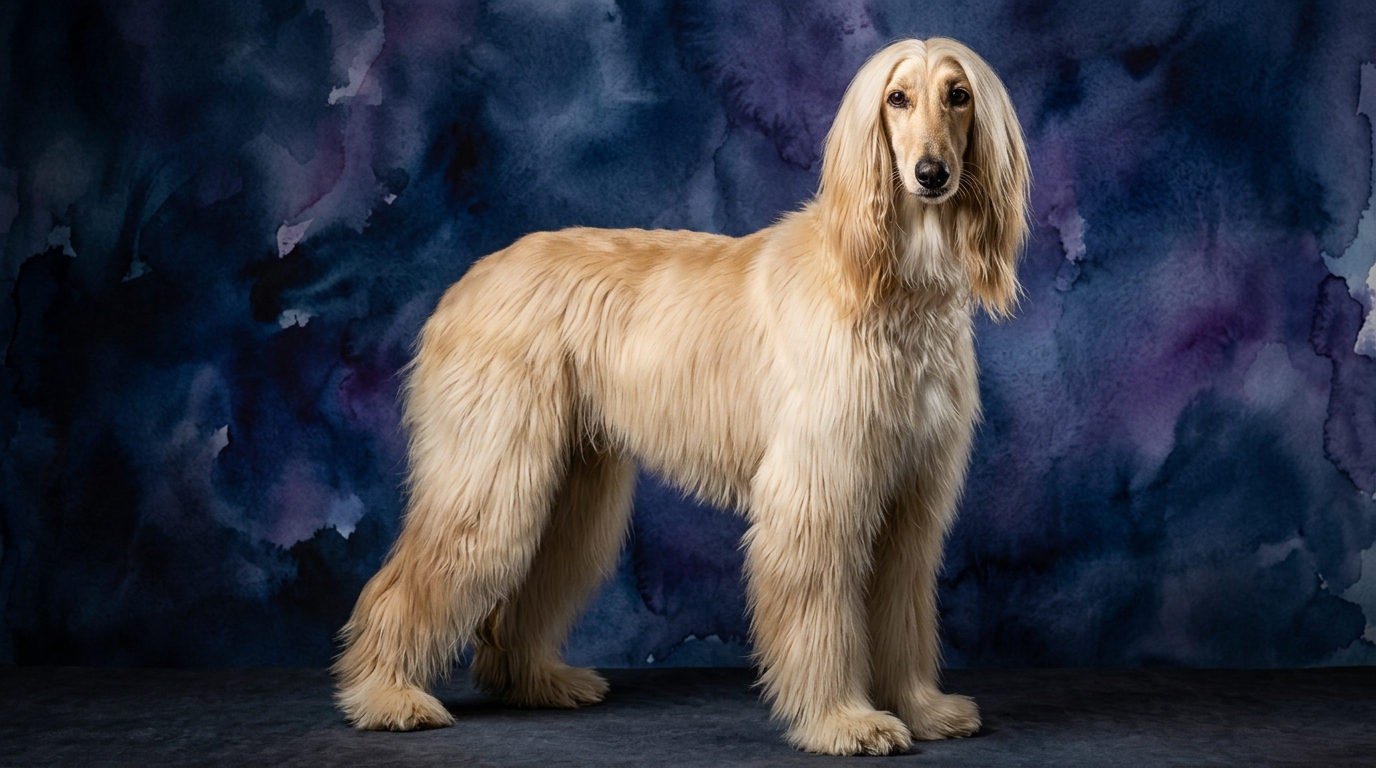
For the Afghan Hound, a breed historically tasked with independent hunting, its cognitive profile reflects this profound self-reliance:
• Problem Solving (4/5): This breed displays a strong capacity for independent thought and navigating complex situations, particularly when achieving a goal like tracking or locating something. They adeptly figure things out without human direction, excelling in practical, self-reliant problem-solving.
• Training Speed (1/5): Their propensity for self-reliance and strong internal motivations means they are slow to consistently learn and execute human commands, often prioritizing their own drives.
• Social Intelligence (2/5): Afghan Hounds exhibit lower attunement to human social cues; while they form bonds, their interaction style is often characterized by independence and aloofness rather than eager cooperation.
• Instinctive Drive (5/5): This breed possesses an exceptionally powerful instinctive drive, primarily focused on prey pursuit, a dominant force guiding much of its behavior and decision-making.
• Memory (3/5): Afghan Hounds demonstrate average memory, sufficient for navigating their environment and retaining information relevant to independent activities.
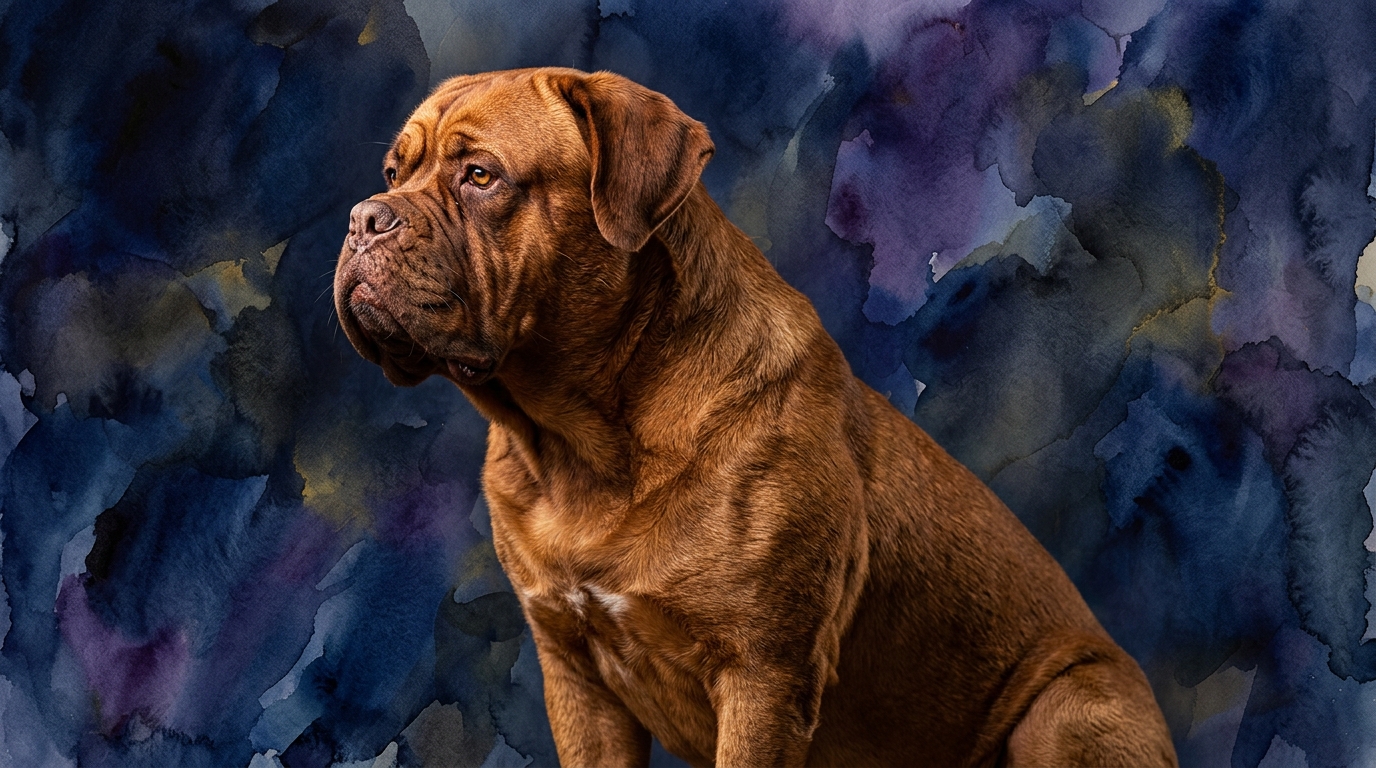
The Dogue de Bordeaux, originating as a working and guarding breed, showcases a more balanced and socially oriented cognitive set:
• Problem Solving (3/5): The Dogue de Bordeaux shows moderate problem-solving, capable of figuring out everyday challenges and understanding cause-and-effect within its environment, often geared towards immediate surroundings and social context.
• Training Speed (3/5): This breed learns new commands and routines at a moderate pace, receptive to consistent instruction and positive reinforcement, making them more cooperative in structured learning.
• Social Intelligence (3/5): Dogue de Bordeaux dogs possess moderate social intelligence, allowing them to read human emotions, understand basic hierarchies, and form strong, interactive family bonds.
• Instinctive Drive (3/5): Their instinctive drive is moderate, present in areas like guarding, but not overwhelming, making it a balanced drive manageable within a domestic setting.
• Memory (3/5): Similar to the Afghan Hound, Dogue de Bordeaux dogs exhibit average memory, enabling recall of past training, familiar people, and routines, contributing to household adaptability.
Where the Afghan Hound Excels Cognitively
The Afghan Hound truly shines in scenarios demanding independent thought and relentless pursuit, a direct reflection of its ancestral role as a sighthound hunting without direct human supervision. Its exceptional problem-solving capacity (4/5) allows it to navigate complex, changing environments to achieve a goal, like tracking a scent through varied terrain or figuring out how to access a desired object. This self-sufficient cognitive processing excels in practical, real-world challenges related to its inherent drives. Furthermore, its unparalleled instinctive drive (5/5) means once it locks onto a target or a task driven by primal urges, its focus and persistence are extraordinary, enabling sustained effort and single-minded dedication that few other breeds can match.
Where the Dogue de Bordeaux Excels Cognitively
Conversely, the Dogue de Bordeaux demonstrates cognitive strengths leaning towards social harmony and structured learning, aligning with its role as companion and guardian. Its moderate training speed (3/5) allows it to absorb and retain commands and routines far more readily than the Afghan Hound, making it a more cooperative student in traditional obedience. Complementing this, its moderate social intelligence (3/5) fosters a deeper understanding of human intentions and emotional states. A Dogue is more likely to pick up on subtle changes in tone, adjusting behavior to maintain social equilibrium within the family unit. While its problem-solving (3/5) is less independently driven, it is perfectly adequate for navigating daily household life, understanding routines, and responding appropriately to common domestic situations, supporting a more interactive and agreeable family presence.
Training: A Tale of Two Temperaments
Without question, the Dogue de Bordeaux presents a significantly easier training experience compared to the Afghan Hound. The Dogue's training speed (3/5) indicates reasonable receptiveness to learning and willingness to engage in structured instruction, largely due to its moderate social intelligence (3/5). This makes it more attuned to human cues and desires, inclined to cooperate and seek approval during training. Its moderate instinctive drive (3/5) is manageable, less likely to override its capacity to listen and learn. In contrast, the Afghan Hound's training speed (1/5) reflects a profound challenge in traditional obedience. Its powerful instinctive drive (5/5) means when a scent or moving object captures its attention, the urge to pursue often completely overshadows learned commands. Coupled with lower social intelligence (2/5), the Afghan Hound is less motivated by human approval; its independent nature means it frequently prioritizes its own internal agenda. This isn't a lack of understanding, but a strong predisposition to act on its own terms, making consistent obedience a long-term, patient endeavor.
Matching Breeds to Lifestyles
When considering lifestyle, the Afghan Hound suits owners who appreciate and can manage a dog with profound independent energy and distinct cognitive motivations, rather than expecting constant engagement. An Afghan Hound owner needs to actively provide outlets for its 5/5 instinctive drive and 4/5 problem-solving, often meaning secure, expansive off-leash areas for running or engaging in activities like lure coursing. These dogs thrive with owners who understand their need for self-directed exploration and are patient with their independent streak, devising enrichment that respects the breed's unique cognitive makeup. The Dogue de Bordeaux, with its more balanced cognitive profile, is better suited for owners seeking a substantial companion who is generally more relaxed but still requires consistent engagement. Its moderate instinctive drive (3/5) and social intelligence (3/5) mean it enjoys being part of family activities, moderate walks, and interactive play, but isn't driven by the same relentless pursuit instincts. They are amenable to a relaxed household routine, provided they receive regular, but not extreme, physical exercise and mental stimulation that reinforce their family bond.
The Verdict
Choose the Afghan Hound if you are captivated by a dog with profound independent problem-solving skills and an unmatched instinctive drive for pursuit, and are prepared for a companion who values its own agenda over eager human direction.
Opt for the Dogue de Bordeaux if you desire a substantial, family-oriented dog that is more socially attuned and trainable, offering a cooperative presence and a moderate, manageable level of activity and instinct.
🧠 Find Your Pet's IQ Score
Our Pet IQ Lab assessment covers 25+ tests across 5 cognitive dimensions — personalized to your breed.
Take the Full IQ Test →Frequently Asked Questions
Is the Afghan Hound truly difficult to train, or just independent?
The Afghan Hound isn't necessarily incapable of learning, but its profound independence and powerful instinctive drive (5/5) mean it's highly motivated by its own internal agenda, often overriding human directives. Its training speed (1/5) reflects a significant challenge in achieving consistent, reliable obedience compared to many other breeds.
How does the Dogue de Bordeaux's social intelligence impact its family life?
With a social intelligence rating of 3/5, the Dogue de Bordeaux is moderately attuned to human social cues and emotions, fostering strong, interactive bonds with its family. This makes them more responsive to household routines and more likely to seek out and enjoy cooperative interactions, contributing to a harmonious family dynamic.
Which breed would be better for dog sports like agility?
Given its training speed (3/5) and moderate social intelligence (3/5), the Dogue de Bordeaux would generally be more amenable to structured dog sports like agility, which require cooperation, focus on the handler, and learning complex sequences. The Afghan Hound's independent nature and low training speed (1/5) would make it a significant challenge for such activities, though lure coursing perfectly suits its instinctive drive.