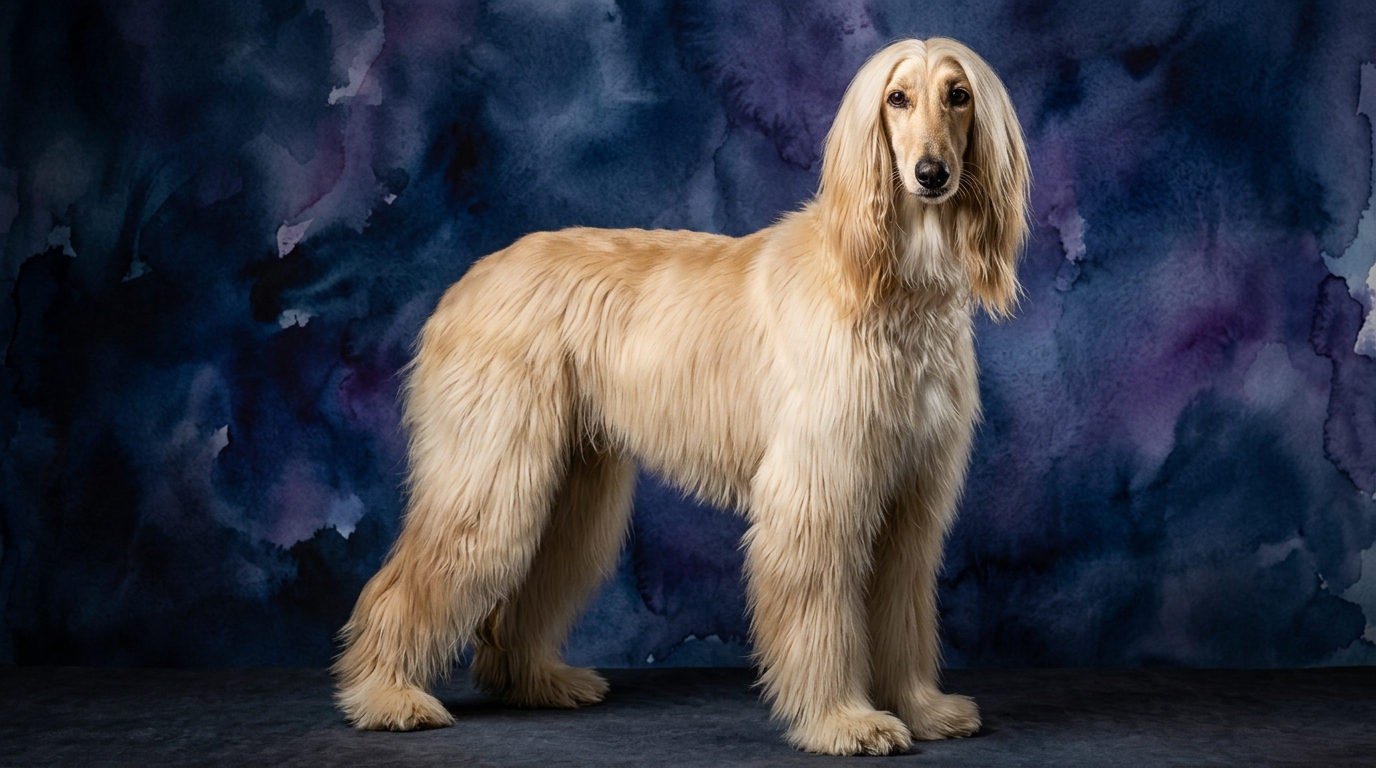

Side-by-Side IQ Profile: Afghan Hound vs. English Setter
The Cosmic Pet Pet IQ Lab provides a detailed lens into canine cognition, offering a nuanced understanding beyond simple 'smart' labels. For the Afghan Hound, a sighthound steeped in ancient lineage, its profile includes a Problem Solving score of 4/5, indicating a capacity for complex thought in pursuit of goals. However, its Training Speed registers a challenging 1/5, suggesting a strong independent streak rather than an eagerness to please. Social Intelligence sits at 2/5, reflecting a more reserved, self-contained nature. Crucially, its Instinctive Drive is a powerful 5/5, showcasing an unparalleled urge for chase and independent action, supported by a Memory score of 3/5, sufficient for recalling crucial hunting strategies.
In contrast, the English Setter, a quintessential gun dog, presents a profile geared towards partnership. It shares the Afghan Hound's robust Problem Solving at 4/5, but dramatically outperforms in Training Speed with a 4/5, indicating a keen desire to learn and cooperate. Its Social Intelligence is a more engaged 3/5, demonstrating a greater attunement to human cues and a desire for interaction. The English Setter's Instinctive Drive, while present, is a moderate 3/5, focused on working alongside a handler rather than independent pursuit. This collaborative spirit is buttressed by a solid Memory score of 4/5, allowing for excellent retention of commands and routines.
Where the Afghan Hound Wins Cognitively
The Afghan Hound's primary cognitive strength lies squarely in its Instinctive Drive, registering an impressive 5/5 compared to the English Setter's 3/5. This isn't just about a desire to run; it's a sophisticated, self-directed cognitive package. This drive fuels an exceptional capacity for independent decision-making in pursuit, allowing them to assess and adapt to dynamic environments without constant human input. Their strong drive translates into a persistent, focused energy for tasks they deem intrinsically rewarding, such as a lure course or an open field run. While both breeds show a 4/5 in Problem Solving, the Afghan Hound's application of this skill is often geared towards overcoming obstacles in its independent endeavors, whether it's navigating complex terrain during a chase or cleverly bypassing barriers to reach a desired object. This distinct cognitive framework makes them unparalleled in tasks requiring sustained, autonomous motivation driven by ancient hunting instincts.
Where the English Setter Wins Cognitively
The English Setter demonstrates clear cognitive advantages in areas crucial for companionship and collaborative work. Its Training Speed, at 4/5, significantly outpaces the Afghan Hound's 1/5. This reflects a canine mind that processes commands quickly, associates actions with rewards efficiently, and possesses a strong inclination to engage with its human partner during learning. This responsiveness makes the Setter a far more malleable student in various disciplines. Complementing this is its superior Social Intelligence (3/5 vs. Afghan's 2/5). Setters are generally more attuned to human emotional states and body language, fostering a stronger bond and making them more receptive to guidance and praise. Furthermore, their Memory score of 4/5, a point higher than the Afghan's 3/5, means they retain learned behaviors, routines, and experiences more effectively, leading to more consistent performance over time. These combined strengths make the English Setter a highly cooperative and teachable companion.
Which is Easier to Train and Why
Without question, the English Setter presents a significantly easier training journey for most owners. This is directly attributable to its higher Training Speed (4/5) and Social Intelligence (3/5). Setters are typically eager to please, finding intrinsic reward in cooperation and positive human interaction. They form associations between commands and actions rapidly, responding well to consistent, positive reinforcement. Their better memory (4/5) further solidifies learned behaviors, making them reliable in recalling cues.
Conversely, the Afghan Hound's 1/5 Training Speed and 2/5 Social Intelligence translate into a much more challenging training experience. They are not inherently motivated by human approval; their independent nature means they often prioritize their own instincts over human directives. Training an Afghan Hound requires immense patience, creativity, and finding motivators that appeal to their sighthound nature, such as chase games or high-value treats, rather than relying solely on praise. Their problem-solving (4/5) is often employed to outwit the trainer if a task isn't engaging or if they find a more appealing alternative, rather than to diligently follow instructions.
Which Suits Active Owners vs. Relaxed Owners
The choice between these breeds hinges significantly on an owner's lifestyle and energy levels. The Afghan Hound, with its profound 5/5 Instinctive Drive and the physical prowess of a sighthound, is unequivocally suited for highly active owners. These dogs require extensive, vigorous exercise daily, ideally in a secure, expansive area where they can unleash their powerful running instincts. Owners must be prepared for long walks, runs, or structured lure coursing sessions to satisfy their inherent need to chase and move. A relaxed owner will quickly find themselves overwhelmed by an under-exercised Afghan Hound, which may manifest in destructive behaviors or an inability to settle. They thrive with owners who appreciate their independence and can provide consistent outlets for their immense physical and mental energy.
The English Setter also requires an active owner, though their needs are generally more adaptable than the Afghan's. While their Instinctive Drive is a moderate 3/5, they are still sporting dogs bred for endurance and field work. They need regular, substantial exercise, including opportunities for off-leash exploration and engagement in activities like fetch or scent work. However, their higher Social Intelligence and Training Speed mean they also benefit immensely from mental stimulation through training, puzzles, and interactive play. A moderately active owner who enjoys daily walks, hikes, and engages in consistent training can meet an English Setter's needs. They are less suitable for truly 'relaxed' owners but can integrate more readily into a variety of active households than the singularly driven Afghan Hound.
The Verdict
Choose an Afghan Hound if you are an experienced dog owner seeking an independent, elegant companion, capable of dedicating substantial time to vigorous exercise and patient, consistent training that respects their unique sighthound nature.
Opt for an English Setter if you desire a sociable, trainable, and cooperative partner, willing to engage in consistent training and provide regular physical activity alongside ample mental stimulation and companionship.
🧠 Find Your Pet's IQ Score
Our Pet IQ Lab assessment covers 25+ tests across 5 cognitive dimensions — personalized to your breed.
Take the Full IQ Test →Frequently Asked Questions
Are Afghan Hounds truly difficult to train?
Afghan Hounds are not 'untrainable,' but their 1/5 Training Speed and 2/5 Social Intelligence mean they are highly independent and less motivated by human approval. Training requires immense patience, creativity, and finding motivators that appeal to their strong instincts, rather than expecting eager obedience.
Do English Setters need constant activity?
English Setters have a moderate 3/5 Instinctive Drive and require regular, substantial exercise, including daily walks, runs, and opportunities for off-leash play. Beyond physical activity, their higher Social Intelligence and Training Speed mean they thrive on mental stimulation from training, interactive games, and companionship.
Which breed is better for a family with children?
Generally, the English Setter's higher Social Intelligence (3/5) and eagerness to please make them more amenable to family life and interactions with children. However, proper socialization and supervision are crucial for any dog breed, and an Afghan Hound's reserved nature might make them less naturally inclined towards boisterous child's play.