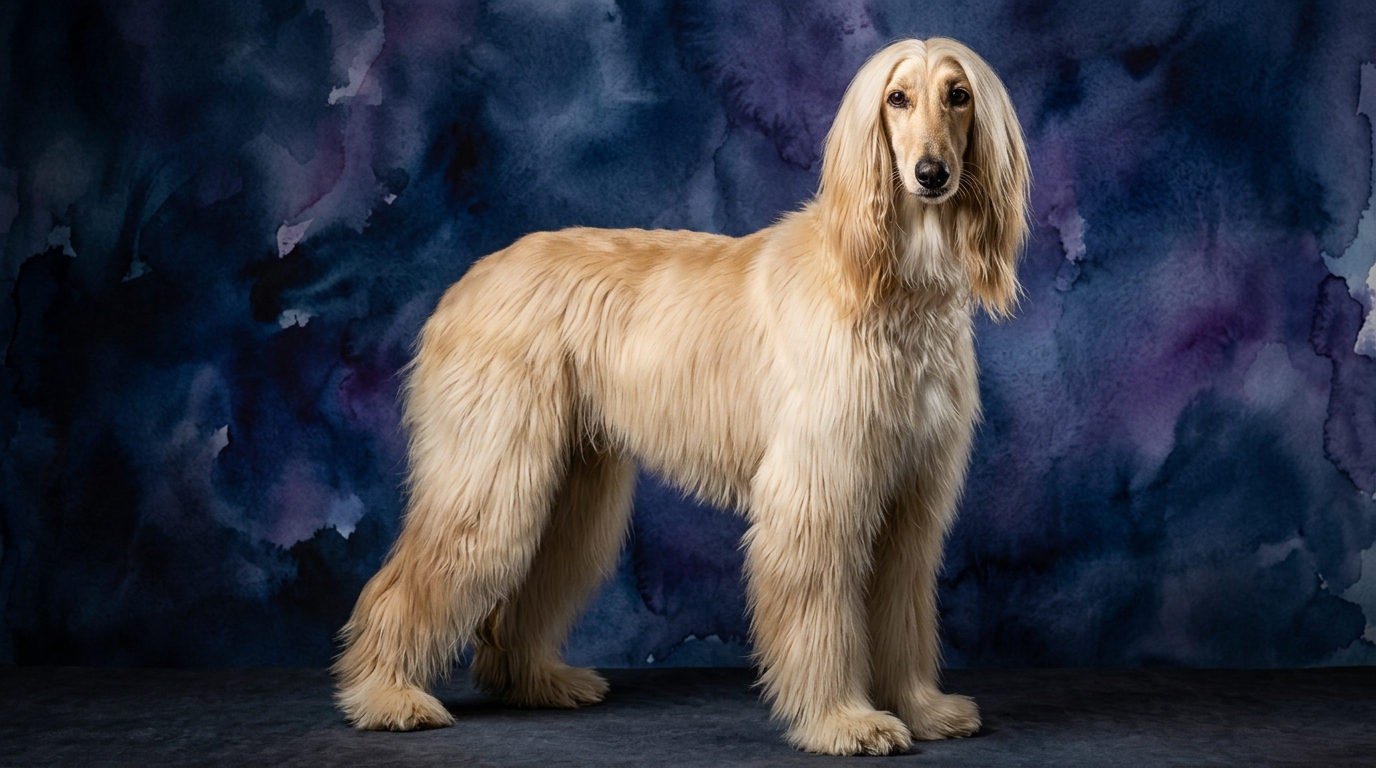

Side-by-Side Cognitive Profiles: Afghan Hound vs. English Toy Spaniel
The Afghan Hound, a distinguished sighthound, presents a cognitive profile shaped by its ancient purpose. Its Problem Solving is rated at 4/5, indicating a notable capacity for independent thought and creative solutions, particularly when faced with environmental challenges or the pursuit of a desired outcome. They often devise their own methods for overcoming obstacles rather than waiting for human direction. However, their Training Speed stands at a challenging 1/5; their inherent self-sufficiency and independent spirit mean they are slow to grasp and consistently perform new commands, demanding immense patience and consistent, positive reinforcement. Social Intelligence for the Afghan Hound is 2/5; while capable of deep bonds with their immediate family, they tend to be reserved and aloof with strangers, focusing their social understanding on their core pack rather than broad interactions. Their Instinctive Drive is exceptionally high at 5/5, reflecting a powerful urge to chase and pursue moving objects, an acute awareness of their surroundings, and a strong sense of self-preservation. Finally, their Memory is 3/5, suggesting a moderate ability to retain information about routines, people, and places, though this memory is often applied selectively, influencing their choices more than dictating strict obedience.
In contrast, the English Toy Spaniel, a devoted companion breed, exhibits a cognitive makeup geared towards interaction and adaptability. Their Problem Solving is 3/5, indicating a moderate ability to navigate simple challenges and learn from experience, often relying on observation and a desire to please their owners to find solutions. Their Training Speed is 3/5, making them moderately receptive to training and capable of learning new commands at a reasonable pace due to their willingness to engage and desire for companionship. The English Toy Spaniel's Social Intelligence is also 3/5; they possess a good understanding of social dynamics, thriving on interaction with both humans and other animals, generally amiable and perceptive to emotional cues, making them excellent, involved family members. Their Instinctive Drive is 3/5, a moderate rating that manifests as a desire for comfort, companionship, and routine, with a natural inclination to be close to their human family rather than a strong prey drive. Their Memory is also 3/5, demonstrating a moderate capacity for retaining learned behaviors, routines, and the identities of people and places within their familiar environment, aiding in their ability to adapt and form lasting bonds.
Where the Afghan Hound Excels Cognitively
The Afghan Hound undeniably excels in Instinctive Drive (5/5) and demonstrates a higher aptitude in Problem Solving (4/5) compared to the English Toy Spaniel. Their powerful instinctive drive is a direct legacy of their sighthound heritage, meaning they possess an extraordinary ability to detect, pursue, and react to stimuli in their environment with incredible focus and speed. This isn't merely about chasing; it's about an acute awareness of their surroundings and an inherent capacity for independent decision-making in pursuit scenarios. Their strong problem-solving skills often manifest as clever, self-directed solutions to perceived barriers or desires, such as figuring out how to open a door or scale a fence to explore. This breed doesn't wait for instruction; it often devises its own path forward, showcasing a unique brand of independent cognitive prowess that prioritizes self-sufficiency and environmental mastery.
Where the English Toy Spaniel Shines Cognitively
The English Toy Spaniel shines in areas related to cooperative learning and social engagement, particularly with its higher Training Speed (3/5) and Social Intelligence (3/5) compared to the Afghan Hound's lower scores. While the Afghan Hound's problem-solving is often self-directed, the English Toy Spaniel's cognitive strengths lean towards understanding and interacting within a social structure. Their moderate training speed indicates a greater willingness and capacity to learn human-initiated commands and routines efficiently, driven by their desire for connection and partnership. Their social intelligence allows them to be more attuned to human emotional states and cues, making them more responsive companions who actively seek interaction and understand their role within the family unit. This breed's cognitive strengths make them more adaptable to structured living and more readily integrate into diverse social settings, valuing companionship and harmony.
Trainability: Afghan Hound vs. English Toy Spaniel
Based on their respective IQ profiles, the English Toy Spaniel is considerably easier to train than the Afghan Hound. The English Toy Spaniel's Training Speed of 3/5, coupled with its Social Intelligence of 3/5, means it is more receptive to learning commands and more motivated by human interaction and approval. They are generally eager to please and will actively engage in training sessions, making the process smoother and more rewarding for both owner and dog. In contrast, the Afghan Hound's Training Speed of 1/5, combined with its profound Instinctive Drive (5/5) and lower Social Intelligence (2/5), presents a significant training challenge. Their strong independent nature and self-reliance mean they often perceive commands as optional suggestions rather than directives. Their powerful prey drive can easily override any learned commands if a compelling scent or movement captures their attention, requiring an extremely dedicated, patient, and consistent owner to achieve even basic, reliable obedience.
Lifestyle Suitability: Active vs. Relaxed Owners
The Afghan Hound is better suited for active owners who appreciate a companion with a strong independent streak and a substantial need for vigorous exercise. Their high instinctive drive demands outlets like lure coursing, long runs in securely fenced areas, or activities that engage their natural chase instincts, preventing boredom and channeling their energy constructively. Owners must be prepared for a dog that thinks for itself and isn't always keen on following directions, requiring a calm, consistent, and confident leader who understands their unique motivations. Conversely, the English Toy Spaniel is an ideal match for more relaxed owners seeking a devoted, affectionate, and relatively low-maintenance companion. Their moderate instinctive drive means they are content with regular walks and indoor play, and their higher social intelligence makes them thrive on close companionship and less demanding physical activities. They are happy to be lapdogs and participate in family life without requiring extensive physical challenges, valuing comfort and proximity to their humans.
The Verdict
Choose the Afghan Hound if you are an experienced, active owner seeking an independent, majestic companion who thrives on engaging its powerful instincts and can appreciate a dog with strong self-directed problem-solving abilities, accepting that consistent obedience will be a significant, lifelong project.
Choose the English Toy Spaniel if you are a relaxed owner desiring a highly sociable, trainable, and affectionate companion who enjoys close human interaction, adapts readily to routines, and will be a devoted, charming presence in a calmer household.
🧠 Find Your Pet's IQ Score
Our Pet IQ Lab assessment covers 25+ tests across 5 cognitive dimensions — personalized to your breed.
Take the Full IQ Test →Frequently Asked Questions
Do Afghan Hounds require a lot of mental stimulation?
Yes, Afghan Hounds benefit from mental stimulation that taps into their problem-solving skills and strong instinctive drive. While not always keen on traditional obedience, activities like lure coursing, puzzle toys that require independent thought, or scent work can keep their minds engaged and prevent boredom, channeling their natural curiosity and independent spirit.
Are English Toy Spaniels good with children?
English Toy Spaniels, with their moderate social intelligence and amiable nature, can be good with respectful children. They generally enjoy companionship and being part of family activities, but their small size means interactions should always be supervised to ensure both the dog and child are safe and comfortable, preventing accidental injury to the dog.
How does the 'Instinctive Drive' rating impact daily life for these breeds?
For the Afghan Hound, a 5/5 Instinctive Drive means a powerful urge to chase, requiring secure containment and careful leash management to prevent them from pursuing perceived prey, making off-leash activities risky outside of fully enclosed areas. For the English Toy Spaniel, a 3/5 Instinctive Drive means they are generally less prone to bolting or chasing, focusing more on companionship, but they still benefit from routine and engaging activities to satisfy their moderate natural inclinations without overwhelming them.