Side-by-Side Cognitive Profiles
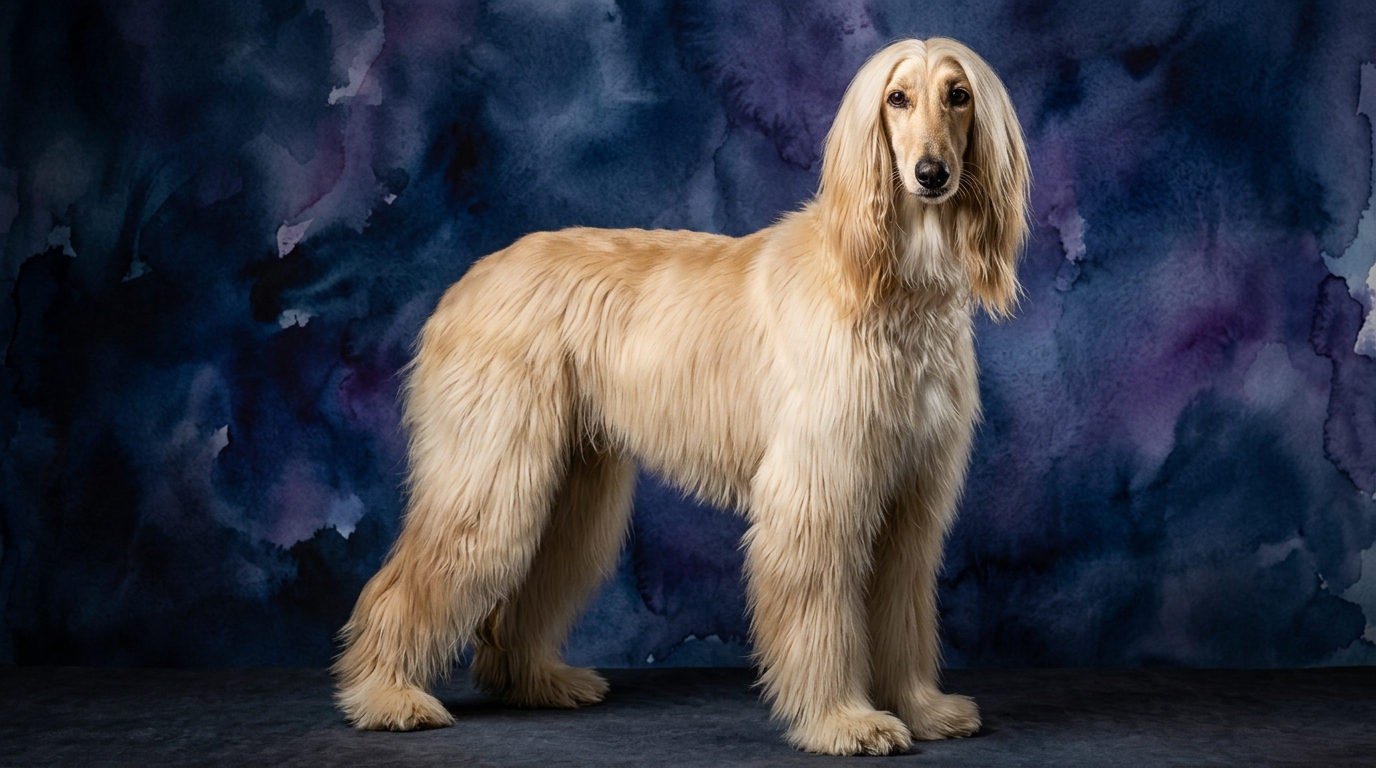
At The Cosmic Pet Pet IQ Lab, we analyze canine intelligence across five critical dimensions, providing a granular view of each breed's mental architecture. For the Afghan Hound, ranked #79 on the Coren scale, we observe a distinct set of cognitive priorities. Their problem-solving capacity registers at a notable 4/5, indicating an ability to navigate complex situations, often independently. However, their training speed is a modest 1/5, reflecting a strong will and a preference for self-directed action over repetitive instruction. Social intelligence stands at 2/5, suggesting a more reserved and selective approach to interactions. Instructive drive is exceptionally high at 5/5, a clear echo of their sighthound heritage, while memory is rated 3/5, solid for crucial information but perhaps less focused on human-initiated commands.
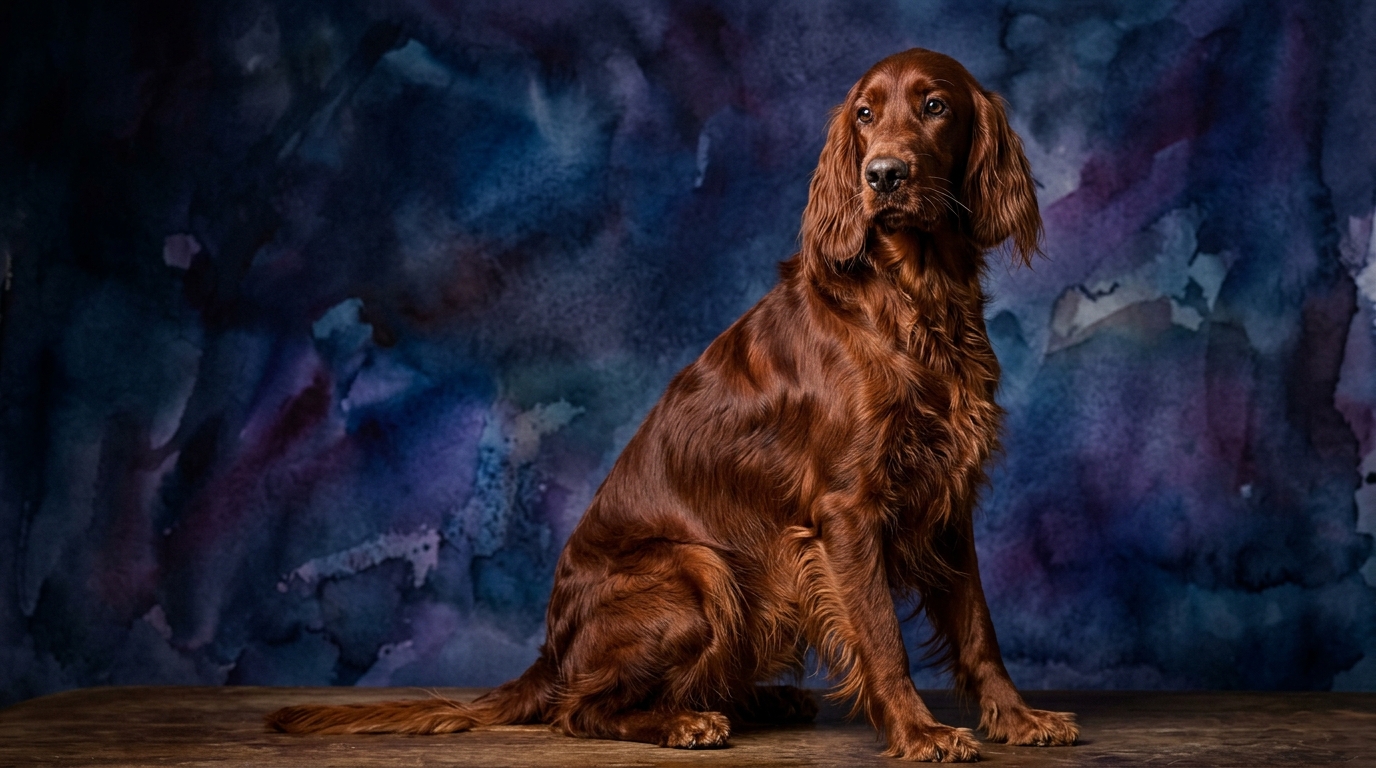
In contrast, the Irish Setter, with a Coren ranking of #35, presents a profile geared towards cooperative engagement and environmental awareness. Their problem-solving ability also scores 4/5, demonstrating an aptitude for navigating challenges, particularly those involving their environment and specific tasks. Where they diverge significantly is in training speed, scoring an impressive 4/5, indicative of an eagerness to learn and respond to human guidance. Social intelligence is robust at 3/5, reflecting their role as companions and working partners. Instinctive drive is a balanced 3/5, embodying their gundog instincts for pointing and retrieving, rather than independent pursuit. Memory is a strong 4/5, suggesting a capacity for recalling extensive learned behaviors and routines.
Where the Afghan Hound Excels Cognitively
The Afghan Hound’s cognitive strengths are deeply rooted in their history as independent hunters, a role demanding sharp, self-reliant decision-making. Their 4/5 problem-solving score isn't about solving puzzles for human approval, but about effectively navigating complex terrains, assessing prey movements, and devising strategies for a successful chase. This manifests as an innate ability to find solutions to obstacles in their environment, whether it's figuring out how to bypass a gate or locate a scent source, often without direct human instruction. This breed's instinctive drive, rated 5/5, is a testament to their profound connection to their primal hunting instincts, allowing them to focus intensely on a target and execute sophisticated pursuit maneuvers with remarkable precision and endurance. This drive isn't just about chasing; it encompasses the entire predatory sequence, from spotting to the final approach, requiring rapid, on-the-fly cognitive processing.
Furthermore, their memory, while not top-tier for rote commands, is highly effective for remembering critical environmental details and experiences. An Afghan Hound might not recall every 'sit' command from a week ago, but they will likely remember the exact location of a rabbit burrow they spotted months prior, or the most efficient route through a familiar park. This selective memory is intrinsically linked to their survival-oriented intelligence, prioritizing information that aids in their primary instinctive behaviors. Their lower social intelligence score doesn't imply a lack of affection, but rather a selective application of their cognitive resources to social interaction, often preferring a dignified independence over constant engagement, which can be a cognitive advantage in situations requiring solitude and focus.
Where the Irish Setter Excels Cognitively
The Irish Setter's cognitive prowess is fundamentally shaped by their heritage as cooperative gundogs, requiring close collaboration with human handlers. Their 4/5 problem-solving score is particularly evident in tasks involving intricate environmental navigation and object retrieval, such as locating hidden game birds or navigating dense cover to bring back a downed bird. This problem-solving is often applied within a framework of partnership, where their solutions contribute to a shared goal, rather than solitary pursuit. Their exceptional training speed, rated 4/5, is a hallmark of their eagerness to engage with humans and absorb new information. This quick assimilation of commands and routines is a direct result of their inherent desire to please and their capacity for sustained focus during learning sessions. They thrive on mental stimulation that involves interaction and structured tasks.
The Irish Setter’s strong social intelligence (3/5) allows them to keenly read human cues, understand complex social dynamics within a family unit, and adapt their behavior accordingly. This makes them highly responsive companions and effective working partners, capable of nuanced communication. Their robust memory (4/5) is another significant advantage, enabling them to retain a vast repertoire of commands, routines, and experiences. This isn't just about remembering basic obedience; it extends to recalling intricate sequences of actions, specific locations of retrieved items, or the patterns of a familiar hunt. This cognitive strength allows them to build a deep, reliable behavioral foundation, making them predictable and consistent in their learned responses, which is invaluable in both working and companion roles.
Training: Independence vs. Cooperation
The stark difference in training speed between these two breeds—Afghan Hound at 1/5 and Irish Setter at 4/5—highlights a fundamental divergence in their cognitive approach to learning from humans. The Irish Setter's high training speed is a direct reflection of their social intelligence and cooperative drive. They are often keen to engage with their handler, respond positively to reinforcement, and find satisfaction in performing tasks as instructed. This makes them generally easier to train for traditional obedience, agility, or specific sporting tasks. Their strong memory allows them to quickly establish and retain a wide array of commands and behaviors, making training a relatively straightforward and rewarding experience for both dog and owner. For instance, teaching an Irish Setter a 'come' command often involves positive association and consistent repetition, leading to reliable recall in various environments.
Conversely, the Afghan Hound's low training speed is not an indicator of a lack of problem-solving ability, but rather a manifestation of their profound independence and discerning nature. They often question the utility of a command, especially if it doesn't align with their own intrinsic motivations or instincts. Their highly developed instinctive drive (5/5) means that if a scent or a movement catches their attention, it can override any previously learned command with remarkable ease. Training an Afghan Hound requires immense patience, creativity, and a deep understanding of their sighthound psychology. Owners must make training sessions engaging and ensure the dog perceives a clear benefit. A 'come' command for an Afghan Hound might require extensive proofing in distraction-free environments before it holds any weight when a squirrel bolts across the park, as their natural drive to chase is a more compelling cognitive priority.
Suitability for Active vs. Relaxed Owners
The distinct cognitive profiles of the Afghan Hound and Irish Setter dictate different ideal ownership environments. The Afghan Hound, with its powerful instinctive drive and independent problem-solving, is better suited for experienced, active owners who appreciate a dog with a strong, self-directed personality. These owners must be prepared for a substantial exercise commitment, including opportunities for safe, off-leash running in securely fenced areas where their prey drive can be indulged without risk. Their preference for independent thought means an owner should not expect constant, eager obedience but rather a dignified companionship built on mutual respect. This breed thrives with owners who can provide consistent, clear boundaries without resorting to heavy-handed tactics, understanding that their cognitive wiring prioritizes instinct and self-preservation over strict adherence to human rules. An active owner for an Afghan Hound isn't just about physical activity, but also about managing a highly driven and independent mind.
The Irish Setter, with its high training speed, social intelligence, and cooperative nature, is an excellent match for active owners who desire a highly engaged and trainable companion. These dogs thrive on participation in family activities, structured training, and opportunities for both physical and mental stimulation. Their moderate instinctive drive (3/5) means they are less likely to become single-mindedly fixated on a chase but still require outlets for their gundog instincts through activities like retrieving games or scent work. Owners who enjoy dog sports, long hikes, or simply having a devoted, responsive partner for daily adventures will find the Irish Setter’s cognitive makeup incredibly rewarding. They are less suited for truly relaxed owners who prefer minimal interaction, as their social intelligence and eagerness to learn require consistent engagement and mental stimulation to prevent boredom and potential behavioral issues.
The Verdict: When to Choose Each
The Verdict
Choose an Afghan Hound if you are an experienced owner who values a majestic, independent companion with a keen, self-reliant mind, capable of solving problems on their own terms and requiring understanding of their profound instinctive drives.
Opt for an Irish Setter if you seek an enthusiastic, highly trainable, and socially intelligent partner for an active lifestyle, thriving on cooperative tasks and consistent engagement with their human family.
🧠 Find Your Pet's IQ Score
Our Pet IQ Lab assessment covers 25+ tests across 5 cognitive dimensions — personalized to your breed.
Take the Full IQ Test →Frequently Asked Questions
Do Afghan Hounds genuinely understand commands despite their low training speed?
Afghan Hounds are capable of understanding commands, but their low training speed reflects their independent nature and selective willingness to comply. They often weigh the command against their own motivations, making consistent, positive reinforcement and patience crucial for effective communication.
How does the Irish Setter's strong memory benefit owners in daily life?
The Irish Setter's strong memory allows them to quickly learn and consistently recall a wide range of commands, routines, and household rules. This makes them highly predictable and reliable companions, simplifying training and daily management for a harmonious home environment.
Which breed requires more mental stimulation to prevent boredom?
While both breeds benefit from mental stimulation, the Irish Setter generally requires more structured mental engagement due to their high training speed and social intelligence. They thrive on learning new tasks and interacting with their owners in problem-solving activities, whereas an Afghan Hound might be content to observe or engage in independent exploration.