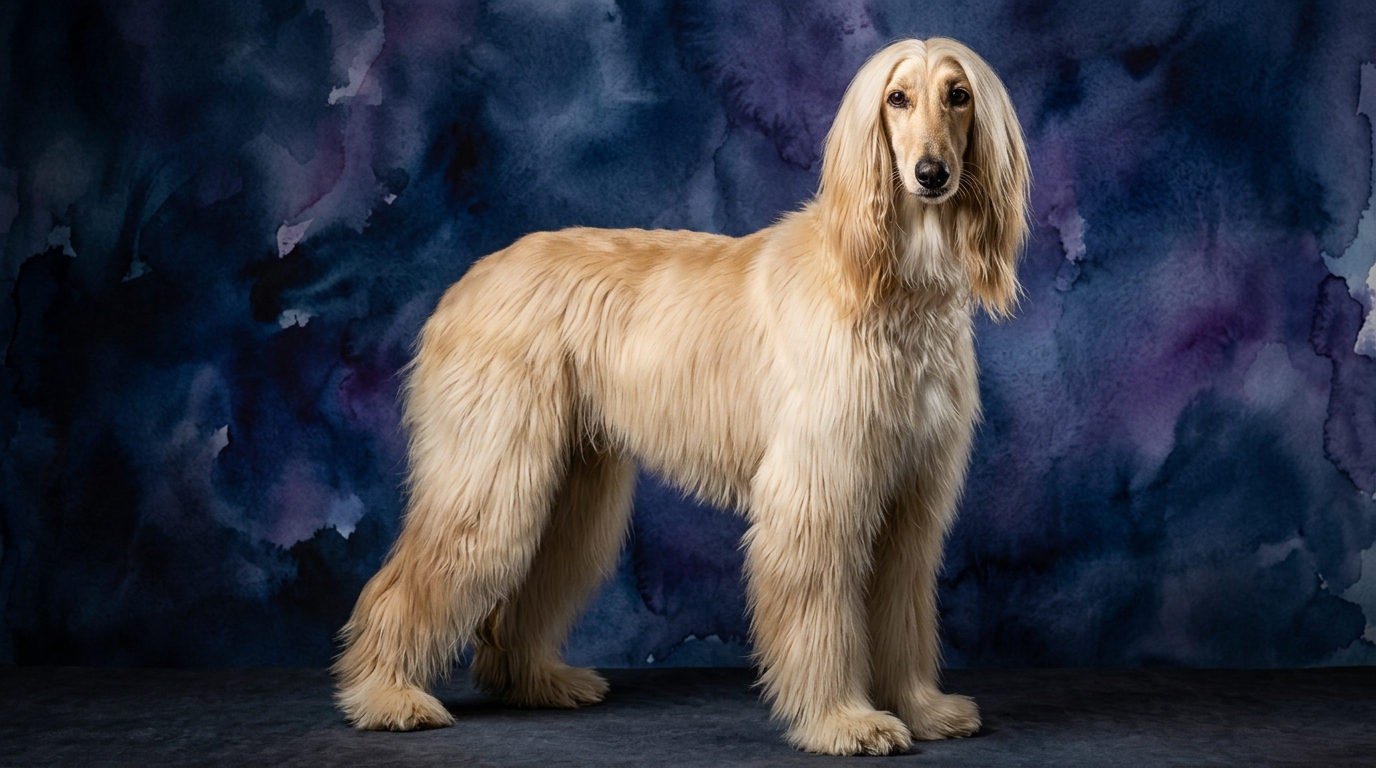
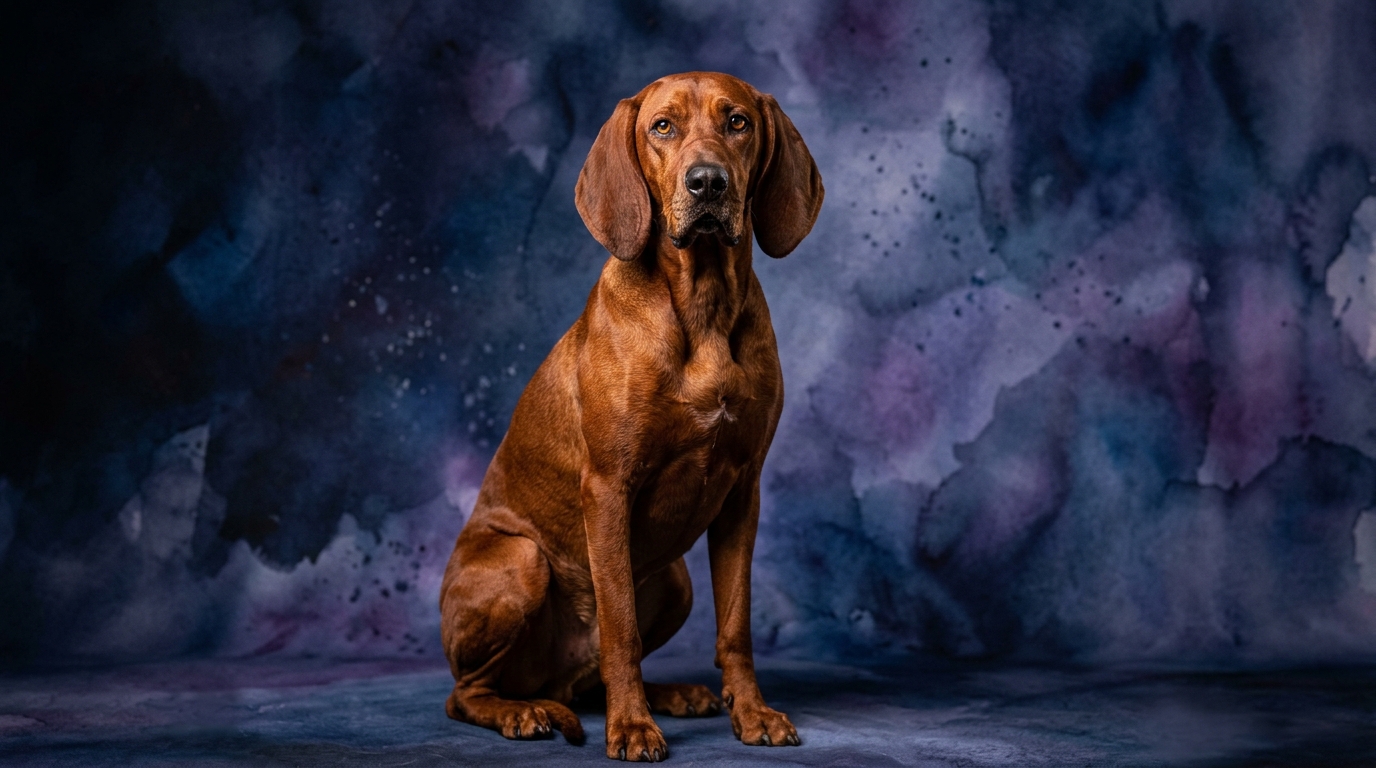
Side-by-Side IQ Profile: Afghan Hound vs. Redbone Coonhound
The Afghan Hound, with a Coren ranking of #79, presents a unique cognitive blueprint shaped by centuries of sighthound utility. Their Problem Solving score of 4/5 indicates a capacity for independent, strategic decision-making, often applied to their own interests or pursuit of visual stimuli. Training Speed is notably low at 1/5, reflecting a reserved willingness to engage in rote obedience, while their Social Intelligence at 2/5 suggests a selective, less overtly people-pleasing demeanor. An Instinctive Drive of 5/5 underscores their intense visual prey drive and endurance, complemented by a Memory score of 3/5, sufficient for routines and spatial recall but less for complex, multi-step commands.
The Redbone Coonhound, while not Coren-ranked, offers a different, more balanced cognitive profile characteristic of a scent hound. Their Problem Solving is rated 3/5, indicative of practical, persistent application to scent-related tasks rather than abstract problem-solving. Training Speed stands at 3/5, suggesting a moderate responsiveness to instruction, making them more amenable to learning. Social Intelligence also scores 3/5, showing a capacity for affection and cooperative engagement with their human companions. Their Instinctive Drive, at 3/5, is strongly scent-oriented and persistent, rather than visually driven, and their Memory of 3/5 supports tracking routes and learned behaviors effectively.
Where the Afghan Hound Excels Cognitively
The Afghan Hound's most pronounced cognitive strength lies in its Problem Solving (4/5) when coupled with its Instinctive Drive (5/5). This combination allows for exceptional independent decision-making in pursuit scenarios, where they must rapidly assess visual cues, calculate trajectories, and adapt their chase strategy on the fly. Their cognitive processing in open, expansive environments for the purpose of a visual chase is a specialized form of intelligence that few breeds can match.
Furthermore, their highly developed instinctive drive, specifically for visual pursuit, means their entire cognitive architecture is geared towards this singular purpose. This isn't just about speed; it's about the sophisticated coordination of visual input, spatial reasoning, and physical execution, demonstrating a focused mental prowess that dictates much of their interaction with the world. This intense focus, while making them challenging to redirect, is a testament to their specialized cognitive design.
Where the Redbone Coonhound Excels Cognitively
The Redbone Coonhound demonstrates a cognitive edge in its balanced and cooperative nature, particularly evident in its Training Speed (3/5) and Social Intelligence (3/5). Unlike the Afghan, the Redbone often shows a greater eagerness to engage with human instruction and finds satisfaction in working alongside their people. This willingness to form a collaborative partnership makes them more responsive to positive reinforcement and structured learning environments.
Their Problem Solving (3/5) is highly effective within the context of their scent-driven work, requiring sustained focus, pattern recognition of scent trails, and persistent effort to resolve a tracking puzzle. This practical, task-oriented intelligence, combined with their moderate instinctive drive, allows them to be directed and motivated towards specific objectives, showcasing a versatile cognitive profile that adapts well to various working roles and family life.
Training Dynamics: Which is Easier and Why
When it comes to ease of training, the Redbone Coonhound (Training Speed 3/5, Social Intelligence 3/5) generally presents a more straightforward experience for most owners. Their moderate training speed suggests they are receptive to learning new commands and routines, especially when motivation is clear and positive reinforcement is used. Their higher social intelligence means they are often more inclined to please their human companions, making them more attentive during training sessions and more likely to comply with instructions. While their scent drive can be a powerful distraction, it can also be channeled into productive activities like scent work, making training a cooperative endeavor.
The Afghan Hound (Training Speed 1/5, Social Intelligence 2/5) offers a significantly more challenging training journey. Their low training speed does not imply a lack of cognitive capacity, but rather a profound independence and a strong inclination to evaluate whether a command serves their own interests. They learn quickly if they perceive value, but rote obedience or repetitive drills often meet with disinterest or elegant refusal. Their reserved social intelligence means they are less motivated by a desire to please, requiring owners to be exceptionally patient, creative, and consistent, understanding that an Afghan's compliance is often a negotiation rather than automatic submission.
Lifestyle Match: Active Owners vs. Relaxed Owners
The Afghan Hound, with its extreme Instinctive Drive (5/5) and need for vigorous physical activity, is unequivocally suited for highly active owners. These individuals thrive when given ample opportunity for intense running, galloping, and open-field exploration in securely fenced areas. Their energy isn't just about daily walks; it's about bursts of incredible speed and endurance, demanding an owner who can consistently provide outlets for this innate drive. A more relaxed owner, unable to meet these needs, would likely find an Afghan Hound to be a restless and potentially destructive companion, as their cognitive and physical energy seeks an outlet.
The Redbone Coonhound, while also requiring an active lifestyle, offers a bit more versatility for owners who might not be marathon runners but are still dedicated to daily engagement. Their Instinctive Drive (3/5) means they need regular exercise, including long walks, hikes, or opportunities for off-leash exploration in safe, contained spaces where they can follow scents. Their higher Social Intelligence (3/5) also means they appreciate interactive play and mental stimulation through training or scent games. They are not suited for truly relaxed, sedentary owners, but an owner who enjoys consistent, purposeful outdoor activity and family involvement would find a Redbone Coonhound a rewarding companion.
The Verdict: When to Choose Each Hound
The Verdict
Choose an Afghan Hound if you are an experienced, active owner seeking an independent, elegant companion who provides a unique training challenge and thrives on intense, visually-driven physical outlets.
Choose a Redbone Coonhound if you desire a more collaborative, scent-driven partner who responds well to training, enjoys social interaction, and thrives with consistent activity and purpose-driven tasks like scent work or hiking.
🧠 Find Your Pet's IQ Score
Our Pet IQ Lab assessment covers 25+ tests across 5 cognitive dimensions — personalized to your breed.
Take the Full IQ Test →Frequently Asked Questions
Are Afghan Hounds truly untrainable?
No, Afghan Hounds are not untrainable, but their training requires significant patience, consistency, and a deep understanding of their independent nature. They respond best to positive reinforcement and when they perceive a clear benefit to themselves, rather than out of a desire to simply please.
Do Redbone Coonhounds need a 'job' to be content?
Redbone Coonhounds definitely benefit from having a 'job' or regular purpose-driven activities that engage their strong scent drive. Activities like scent work, tracking, or even long, exploratory walks where they can follow interesting smells help satisfy their cognitive and instinctive needs, leading to a more content and well-behaved companion.
How do their energy levels compare?
Both breeds are active, but they express it differently. Afghan Hounds require intense bursts of speed and long gallops, needing vast open spaces for exercise. Redbone Coonhounds need consistent, moderate-to-vigorous activity like long walks, hikes, or yard play, and benefit greatly from mental stimulation through scent-based activities.