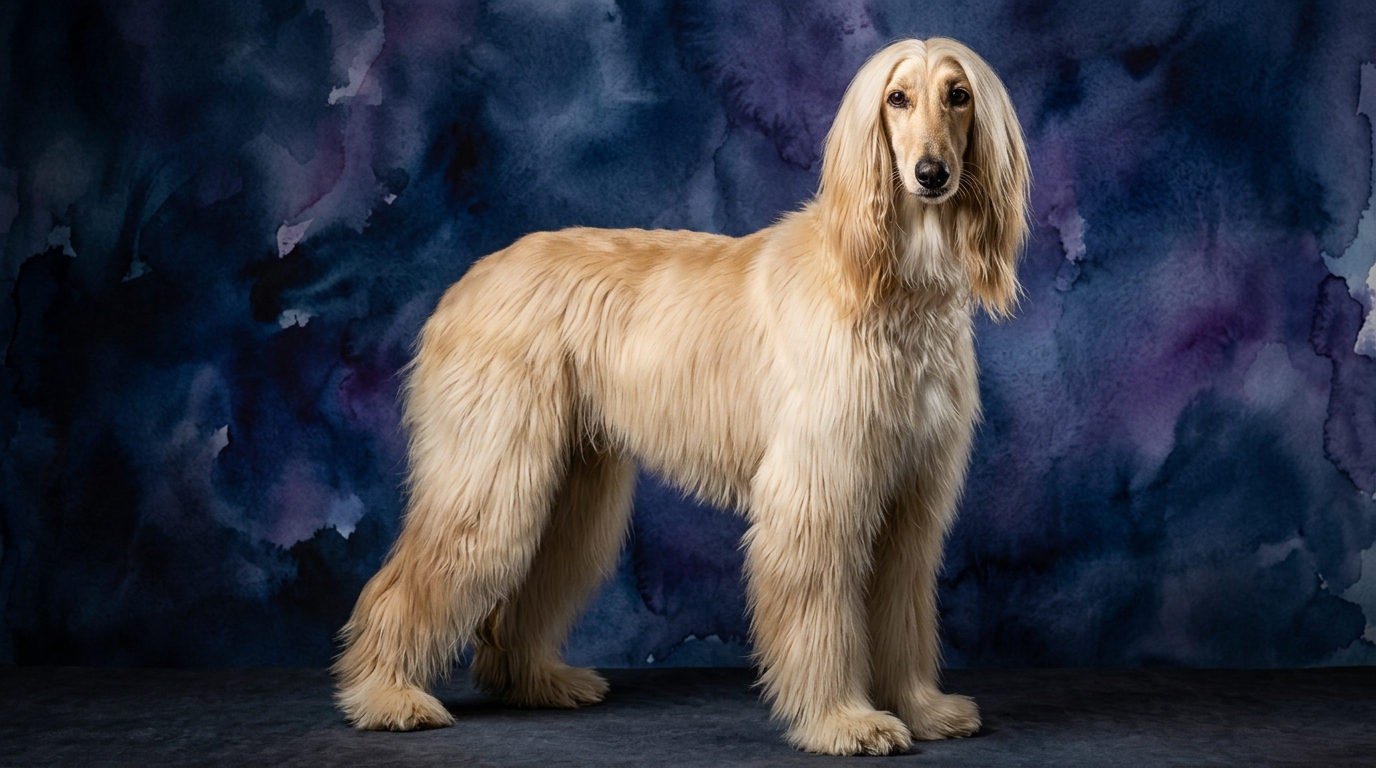
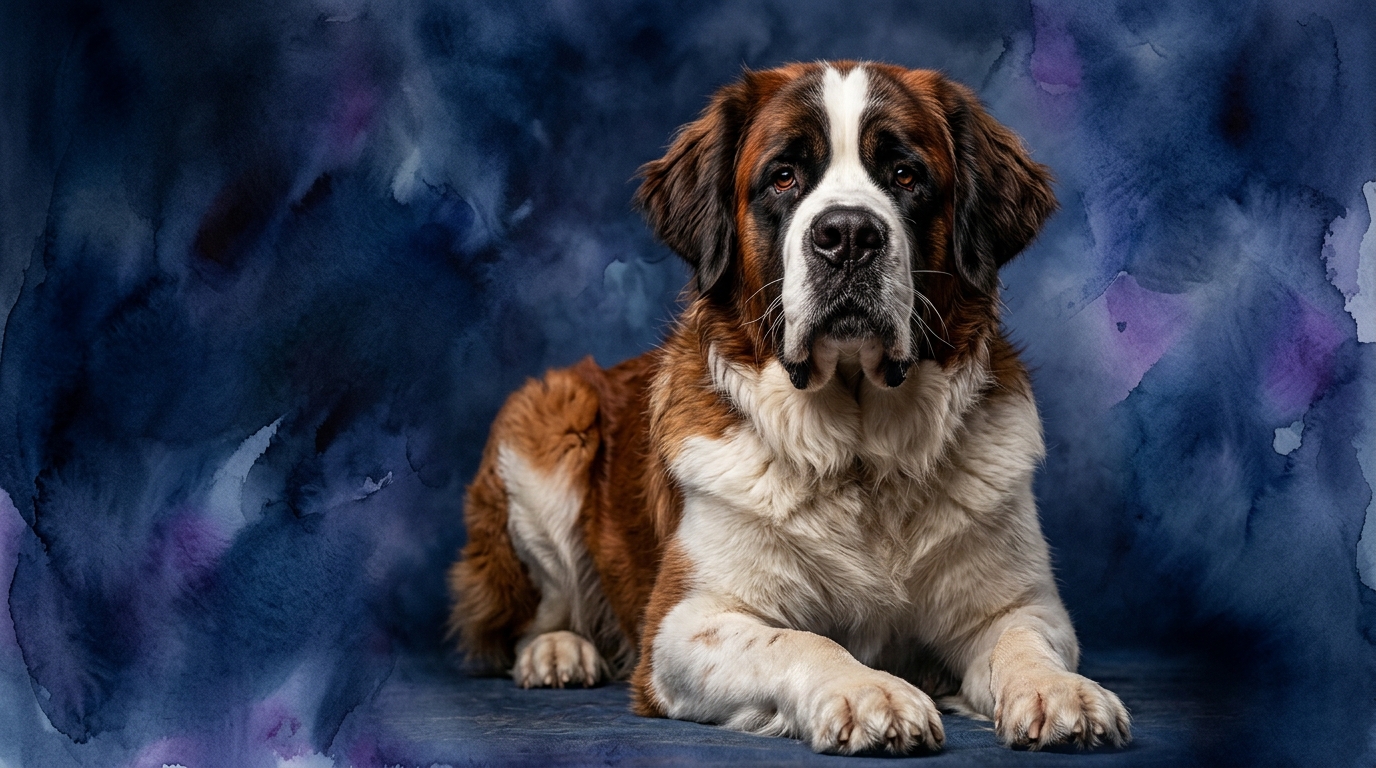
Side-by-Side IQ Profile: Afghan Hound vs. Saint Bernard
The Afghan Hound, a breed originally developed for hunting by sight, exhibits a unique cognitive blueprint. Our lab data places them at Coren rank #79, suggesting an independent learning style rather than a strong desire to please. Their Problem Solving score of 4/5 indicates a keen ability to navigate complex situations and find solutions, often employing their own methods rather than waiting for human direction. However, this independent streak contributes to a Training Speed score of just 1/5, meaning they require significant patience and creative approaches to learn new commands reliably. Social Intelligence is rated 2/5, reflecting their often aloof nature, preferring selective interaction over constant engagement. Their Instinctive Drive, rated 5/5, is exceptionally high, rooted in their ancient hunting heritage, making them highly motivated by scent and chase. Memory stands at 3/5, suggesting they retain information adequately but may not always choose to apply it if it doesn't align with their intrinsic motivations.
In contrast, the Saint Bernard, a breed renowned for its historical role in alpine rescue, presents a different cognitive landscape, positioned at Coren rank #65. Their Problem Solving score of 3/5 indicates a solid capacity for navigating challenges, though perhaps with less independent flair than the Afghan Hound, often relying on learned cues or familiar patterns. Training Speed is rated 2/5, showing they are somewhat more amenable to instruction than Afghans, though still requiring consistent, positive reinforcement due to their large size and sometimes deliberate pace. Social Intelligence shines at 4/5, reflecting their gentle, empathetic nature and strong desire to connect with their human companions, a trait crucial for their historical rescue work. An Instinctive Drive of 5/5 is also present, manifesting as a powerful protective instinct and a deep devotion to their family unit, rather than a prey drive. Their Memory, like the Afghan Hound, is rated 3/5, allowing them to recall past experiences and learned behaviors effectively.
Where the Afghan Hound Wins Cognitively
The Afghan Hound truly excels in the realm of independent Problem Solving, scoring an impressive 4/5. These hounds demonstrate a remarkable capacity to assess situations and devise their own solutions, often without direct human guidance or explicit instruction. This isn't about rote learning; it's about evaluating environmental cues and acting autonomously. For instance, an Afghan might quickly figure out how to open a complex latch on a gate or navigate a novel, intricate outdoor space based on pure observation and spatial reasoning, rather than waiting for a command or being led. Their exceptionally high Instinctive Drive (5/5) synergizes powerfully with this problem-solving ability, allowing them to pursue a goal with unwavering focus once they've identified a path. This makes them adept at tasks requiring self-reliance and quick, unprompted decision-making, such as navigating varied terrain during a lure coursing event, where their internal compass and innate drive dictate their strategic actions without human intervention. This cognitive independence is a hallmark of their specialized intelligence.
Where the Saint Bernard Wins Cognitively
The Saint Bernard's cognitive strengths lie distinctly in their robust Social Intelligence and a comparatively higher Training Speed. Their 4/5 rating in Social Intelligence underscores a profound empathy and connection with humans, making them highly attuned to emotional states and subtle social cues. This trait was paramount in their historical role, enabling them to locate, comfort, and even stay with lost travelers in harsh conditions. They are more inclined to seek interaction and respond to nuanced human signals, fostering a strong, reciprocal bond. Coupled with a Training Speed of 2/5, which is notably higher than the Afghan's 1/5, Saint Bernards are more receptive to learning commands through consistent, positive reinforcement. While they still require patience, their inherent desire to engage and cooperate means they are more likely to internalize and consistently execute behaviors, making them considerably more pliable in structured training environments compared to their independent hound counterparts. This social aptitude makes them exceptional companions.
Which is Easier to Train and Why
When it comes to ease of training, the Saint Bernard generally presents a more straightforward path. Their Social Intelligence score of 4/5 means they are naturally inclined to form strong bonds and are more motivated by pleasing their human companions. This willingness to engage and cooperate provides a crucial foundation for effective training. While their Training Speed of 2/5 isn't exceptional, it signifies a greater openness to instruction and a quicker grasp of new commands than the Afghan Hound. Their historical role as working companions has ingrained a cooperative spirit, making them more likely to repeat desired behaviors when rewarded. In contrast, the Afghan Hound's 1/5 Training Speed and lower Social Intelligence (2/5) mean they are far less concerned with human approval. Their independent problem-solving (4/5) and powerful instinctive drive (5/5) often lead them to prioritize their own impulses over human directives, making training a prolonged exercise in patience, creativity, and understanding their unique motivations, rather than relying on traditional obedience methods.
Which Suits Active Owners vs. Relaxed Owners
For owners seeking a highly active companion, the Afghan Hound, despite its elegant appearance, is a compelling choice, though not in the typical 'fetch-all-day' sense. Their 5/5 Instinctive Drive manifests as a deep need for physical exertion, particularly running and chasing. These are dogs built for speed and endurance, requiring consistent opportunities for long, secure runs or participation in activities like lure coursing. An active owner for an Afghan Hound isn't necessarily one who wants a constant interactive playmate, but rather one who can facilitate their breed-specific need to gallop and explore independently. Conversely, the Saint Bernard, while possessing a 5/5 Instinctive Drive for protection and devotion, aligns better with relaxed owners. Their activity needs are moderate; they enjoy leisurely walks and spending time with their family. Their immense size and often deliberate pace mean they are not built for sustained bursts of speed, but rather for steady companionship and oversight. A relaxed owner who appreciates a calm, gentle giant and can provide consistent, low-impact exercise and ample social interaction will find the Saint Bernard a fulfilling companion.
The Verdict
Choose an Afghan Hound if you appreciate an independent, problem-solving companion who thrives on self-directed activities and you are prepared for a consistent, patient approach to training that respects their unique motivations.
Opt for a Saint Bernard if you desire a socially intelligent, empathetic, and devoted companion who learns more readily and is content with a moderate activity level, prioritizing family interaction.
🧠 Find Your Pet's IQ Score
Our Pet IQ Lab assessment covers 25+ tests across 5 cognitive dimensions — personalized to your breed.
Take the Full IQ Test →Frequently Asked Questions
Are Afghan Hounds truly difficult to train?
Afghan Hounds are not 'difficult' in the sense of lacking cognitive ability, but their 1/5 Training Speed and strong independence mean they are not eager to please. Training requires immense patience, positive reinforcement, and understanding their motivations, focusing on engaging their problem-solving skills rather than strict obedience.
Do Saint Bernards require a lot of exercise?
Saint Bernards have moderate exercise needs; their large size means short, regular walks and playtime are usually sufficient to keep them healthy. While they possess a high instinctive drive for protection, it doesn't translate into a need for intense, prolonged physical activity like some other working breeds.
Which breed is better with children?
The Saint Bernard, with its 4/5 Social Intelligence and gentle nature, is generally more tolerant and patient with children, making them a suitable family companion. Afghan Hounds, while not aggressive, tend to be more aloof and may prefer quieter interactions, requiring careful supervision with very young or boisterous children due to their lower social intelligence score.