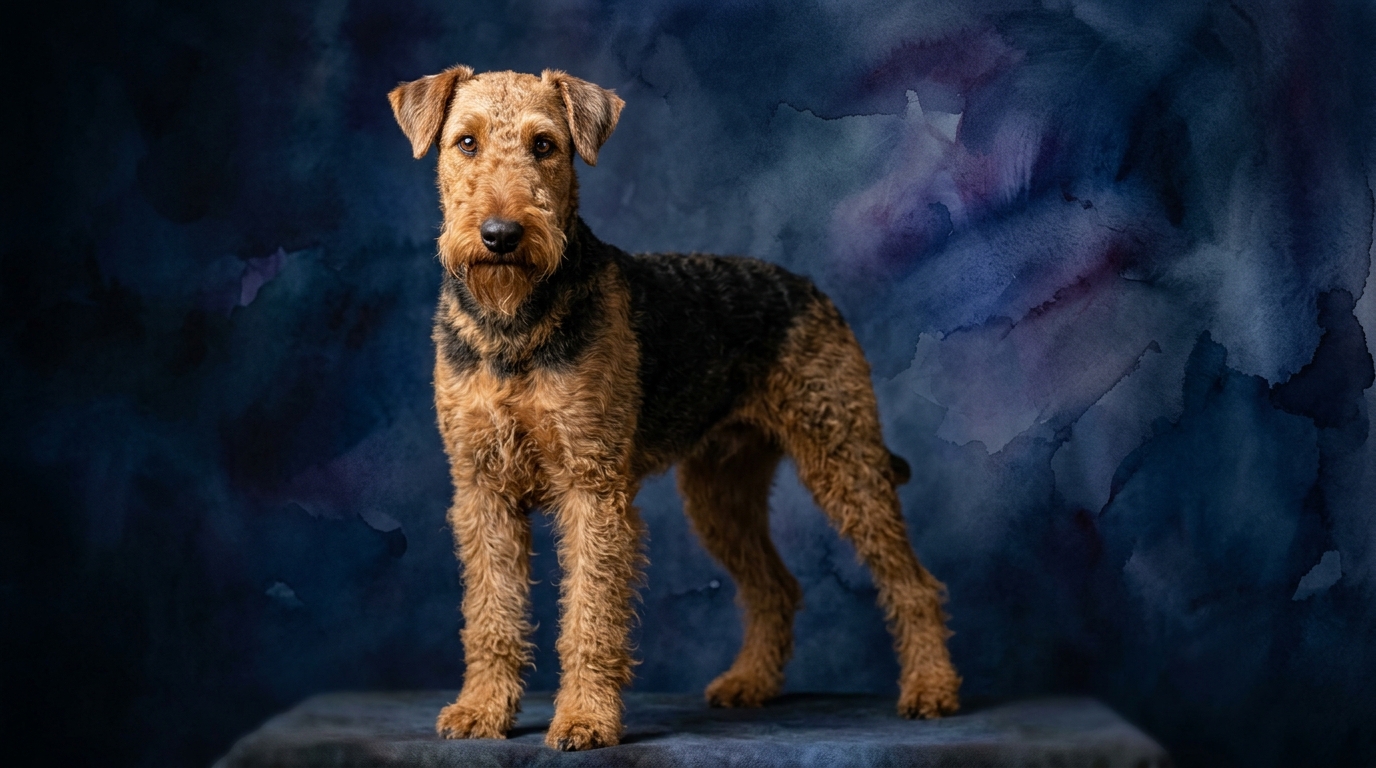
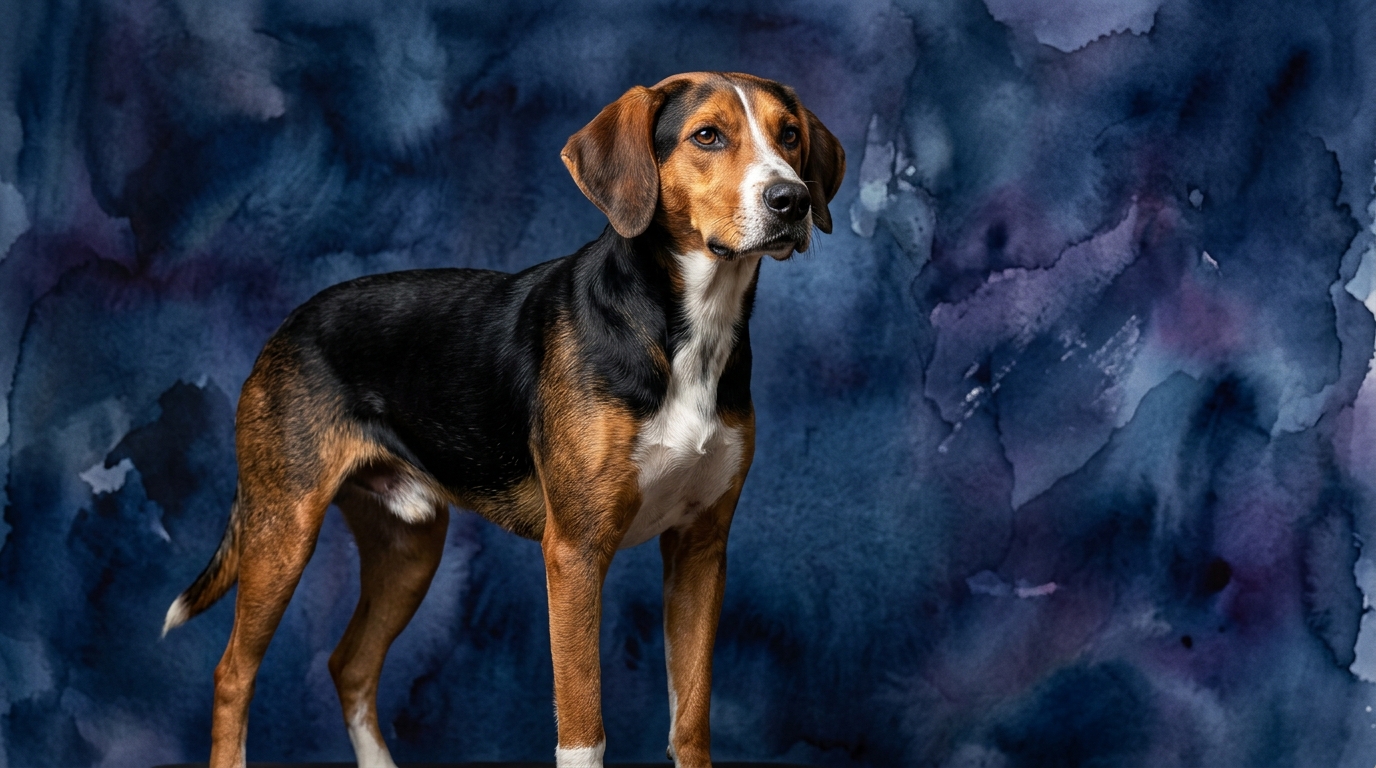
Side-by-Side Cognitive Profile: Airedale Terrier vs. American Foxhound
Understanding the unique cognitive landscape of each breed begins with a close look at their individual IQ dimensions. These metrics offer a window into how each dog processes information, learns, and interacts with their world.
The Airedale Terrier, ranked #29 by Coren, exhibits a robust cognitive profile: Problem Solving 4/5, Training Speed 4/5, Social Intelligence 3/5, Instinctive Drive 3/5, and Memory 4/5. A 4/5 in Problem Solving signifies a dog capable of complex strategic thought, adept at figuring out novel situations and navigating challenges with ingenuity. Their 4/5 Training Speed indicates a remarkable ability to form associations quickly, making them responsive and engaged learners. A 3/5 in Social Intelligence means they are capable of forming strong bonds and reading cues, though their terrier independence can sometimes lead to self-directed actions. Their Instinctive Drive at 3/5 reflects a notable prey drive and a desire to work, manifesting in tracking or guarding behaviors. Finally, a 4/5 Memory score ensures they retain learned behaviors and experiences over extended periods, contributing to their overall trainability.
The American Foxhound, while not Coren-ranked, presents a profile geared towards their specialized purpose: Problem Solving 3/5, Training Speed 3/5, Social Intelligence 3/5, Instinctive Drive 3/5, and Memory 3/5. A 3/5 in Problem Solving suggests they can handle moderate challenges, especially those related to their innate hunting instincts, but might require more structured guidance for abstract tasks. Their 3/5 Training Speed indicates a steady learning pace, though their powerful scent drive can sometimes divert their focus from human instruction. Like the Airedale, their 3/5 Social Intelligence shows they are amiable and capable of harmonious living within a family or pack, though environmental stimuli can often take precedence. The 3/5 Instinctive Drive for the Foxhound is not simply moderate; it represents an incredibly powerful, almost singular cognitive focus on scent, driving tireless pursuit. A 3/5 Memory means they retain basic commands and familiar routes, yet immediate sensory input, particularly compelling scents, can occasionally overshadow recall in distracting environments.
Where the Airedale Terrier Wins Cognitively
The Airedale Terrier's cognitive profile clearly outshines the American Foxhound in several key areas, particularly in versatility and adaptability to diverse learning tasks. With a Problem Solving score of 4/5, Airedales display a superior capacity for abstract thought and strategic thinking. They are adept at navigating complex environments, deciphering puzzles, and devising solutions to perceived challenges, whether it’s figuring out how to open a gate or retrieve a hidden toy. This intellectual nimbleness is further supported by their 4/5 Training Speed, meaning they form associations and internalize commands with remarkable efficiency. An Airedale can often grasp a new concept in just a few repetitions, translating to a dog that learns rapidly and enjoys the mental engagement of training. Their robust Memory (4/5) ensures that once learned, these behaviors and solutions are retained, allowing them to build a comprehensive repertoire of skills and knowledge. This blend of quick learning, strong recall, and adaptive problem-solving places the Airedale Terrier as a highly versatile and mentally agile companion, capable of excelling in various canine activities from obedience to agility.
Where the American Foxhound Wins Cognitively
While the American Foxhound's scores appear lower in traditional metrics, their cognitive strengths are profoundly specialized and invaluable for their intended purpose. Their Instinctive Drive, rated at 3/5, is not merely a moderate score but represents an incredibly powerful, focused cognitive engine for scent work. A Foxhound's brain is wired to process and interpret olfactory information with unparalleled dedication and stamina. They can meticulously follow a cold trail for miles, demonstrating an extraordinary ability to discriminate scents and maintain focus amidst distractions – a complex cognitive feat that few other breeds can match. This specialized intelligence, while not reflected in a high 'Problem Solving' score for human-centric tasks, is a testament to their exceptional ability to solve the 'problem' of finding a quarry. Their moderate Social Intelligence (3/5) ensures they are capable of working cooperatively within a pack or family unit, providing a stable, agreeable temperament. While their Memory (3/5) might be less about abstract concepts, it is certainly effective in recalling specific scents and tracking routes, which is crucial for their work. The Foxhound's cognitive prowess lies in its unwavering, single-minded pursuit driven by an ancient, highly refined sensory intelligence.
Training Dynamics: Airedale Terrier vs. American Foxhound
The Airedale Terrier is generally easier to train due to its superior cognitive attributes in Problem Solving and Training Speed. Their 4/5 Training Speed means they quickly grasp new commands, often delighting in the mental challenge of learning. Airedales are keen observers and active participants in training sessions, making them responsive to cues and eager to engage with their human companions. Their 4/5 Problem Solving ability allows them to understand the 'why' behind commands more readily, leading to faster generalization of learned behaviors across different contexts. This breed thrives on varied training methods and can quickly adapt to new instructions, making them a rewarding partner for those who enjoy consistent mental engagement.
In contrast, the American Foxhound, with its 3/5 Training Speed and moderate Problem Solving, presents a different training dynamic. Their powerful 3/5 Instinctive Drive for scent often means their nose dictates their attention, making them prone to tuning out human commands when a compelling scent is present. This doesn't mean they are 'stubborn,' but rather that their cognitive priorities are different; their brain is constantly processing environmental olfactory data, which can override other stimuli. Training a Foxhound requires immense patience, consistency, and a deep understanding of their breed-specific motivations, often leveraging their love for tracking in positive reinforcement. While an Airedale might learn 'stay' in minutes, a Foxhound might require weeks of dedicated work in varied environments to overcome their innate desire to follow a trail. Their training benefits greatly from a handler who can make learning more rewarding than the allure of an interesting smell.
Lifestyle Match: Active vs. Relaxed Owners
Both breeds generally suit active owners, but their activity needs manifest differently, reflecting their distinct cognitive and physical drives. The Airedale Terrier, with its Coren rank of #29 and higher cognitive scores, thrives with owners who can provide consistent mental stimulation in addition to physical exercise. These dogs need engaging activities like obedience training, agility, puzzle toys, and interactive play that challenge their 4/5 Problem Solving and 4/5 Memory. An Airedale that isn't mentally stimulated can become bored and channel its 3/5 Instinctive Drive (prey drive, digging) into less desirable behaviors around the home. They are energetic and require daily vigorous exercise, but their engagement is often mentally driven. A more relaxed owner might find an Airedale demanding to keep mentally occupied, as their cleverness can lead to mischief if undirected.
The American Foxhound, while also requiring significant activity, leans more towards endurance-based physical exercise. Their 3/5 Instinctive Drive for scent work means they need long, consistent opportunities to run and explore, ideally in secure, open spaces where they can safely follow their nose. While they are amiable indoors, their primary need is for sustained physical exertion outdoors. Their cognitive satisfaction comes less from solving puzzles and more from the deep engagement of tracking and covering ground. A relaxed owner who cannot commit to daily, extensive walks or runs would struggle with a Foxhound's energy levels, which are less about complex mental tasks and more about fulfilling their innate desire for movement and exploration. For both breeds, owners must be active, but the Airedale demands a more interactive, mentally stimulating approach, while the Foxhound thrives on expansive, scent-driven physical exertion.
The Verdict
Choose the Airedale Terrier if you are an owner who enjoys an intellectually engaging companion, thrives on consistent training, and can provide ample mental challenges alongside physical activity for a dog that learns quickly and remembers well.
Opt for the American Foxhound if you are an owner who embraces long, vigorous outdoor excursions, appreciates a dog with an unparalleled dedication to scent work, and possesses the patience to train an independent, pursuit-driven companion.
🧠 Find Your Pet's IQ Score
Our Pet IQ Lab assessment covers 25+ tests across 5 cognitive dimensions — personalized to your breed.
Take the Full IQ Test →Frequently Asked Questions
Are American Foxhounds difficult to train?
American Foxhounds are not inherently difficult, but their powerful instinctive drive for scent can make training challenging. They require consistent, patient training methods that account for their independent nature and strong desire to follow a trail, often needing more motivation than other breeds to stay focused on human commands.
Do Airedale Terriers require a lot of exercise?
Yes, Airedale Terriers require significant daily exercise, both physical and mental. They need vigorous activity like running or playing, coupled with engaging mental challenges such as puzzle toys or advanced training to satisfy their problem-solving nature and prevent boredom.
Which breed is better for first-time dog owners?
Neither breed is typically recommended for entirely novice owners due to their strong personalities and specific needs. However, an Airedale Terrier might be marginally more manageable for a committed first-timer willing to invest heavily in training due to their higher trainability scores and eagerness to learn, while a Foxhound's intense, independent drive requires a more experienced hand.