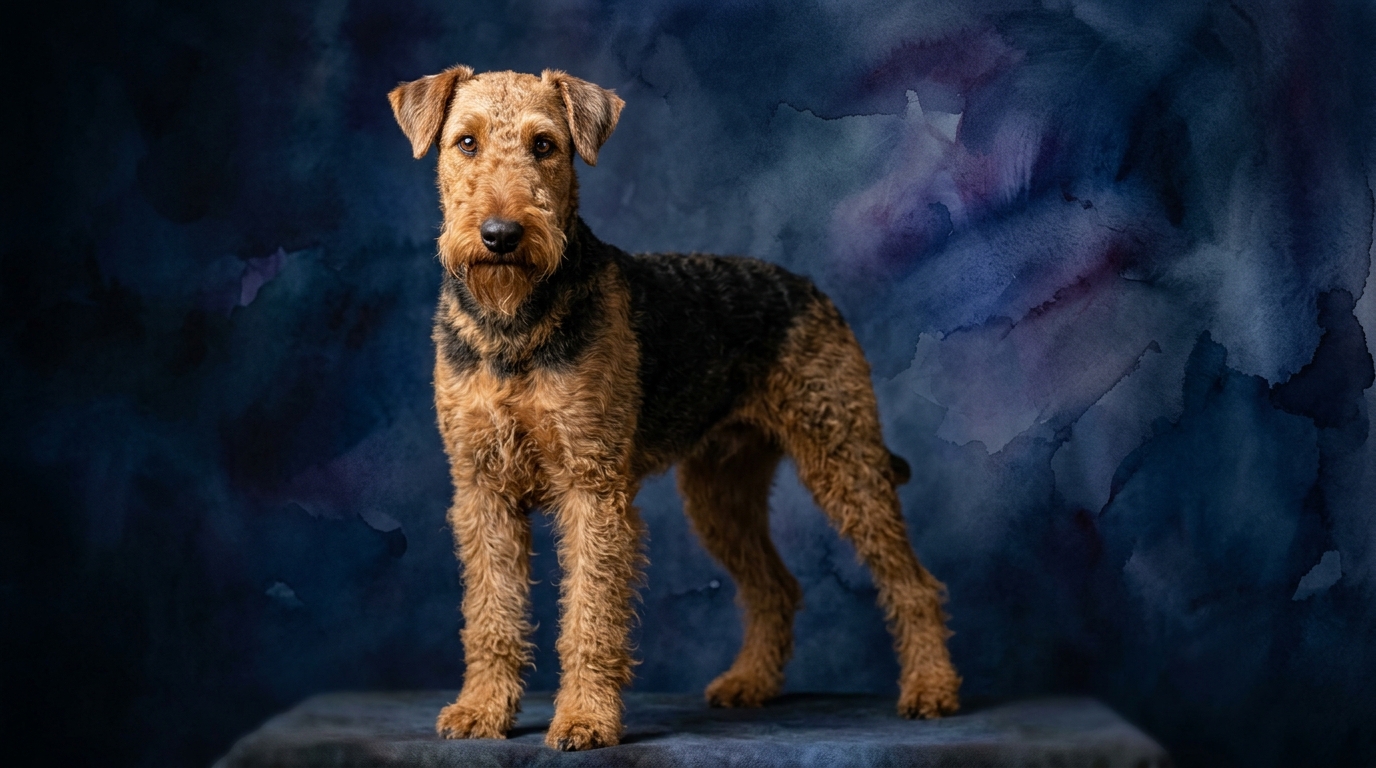
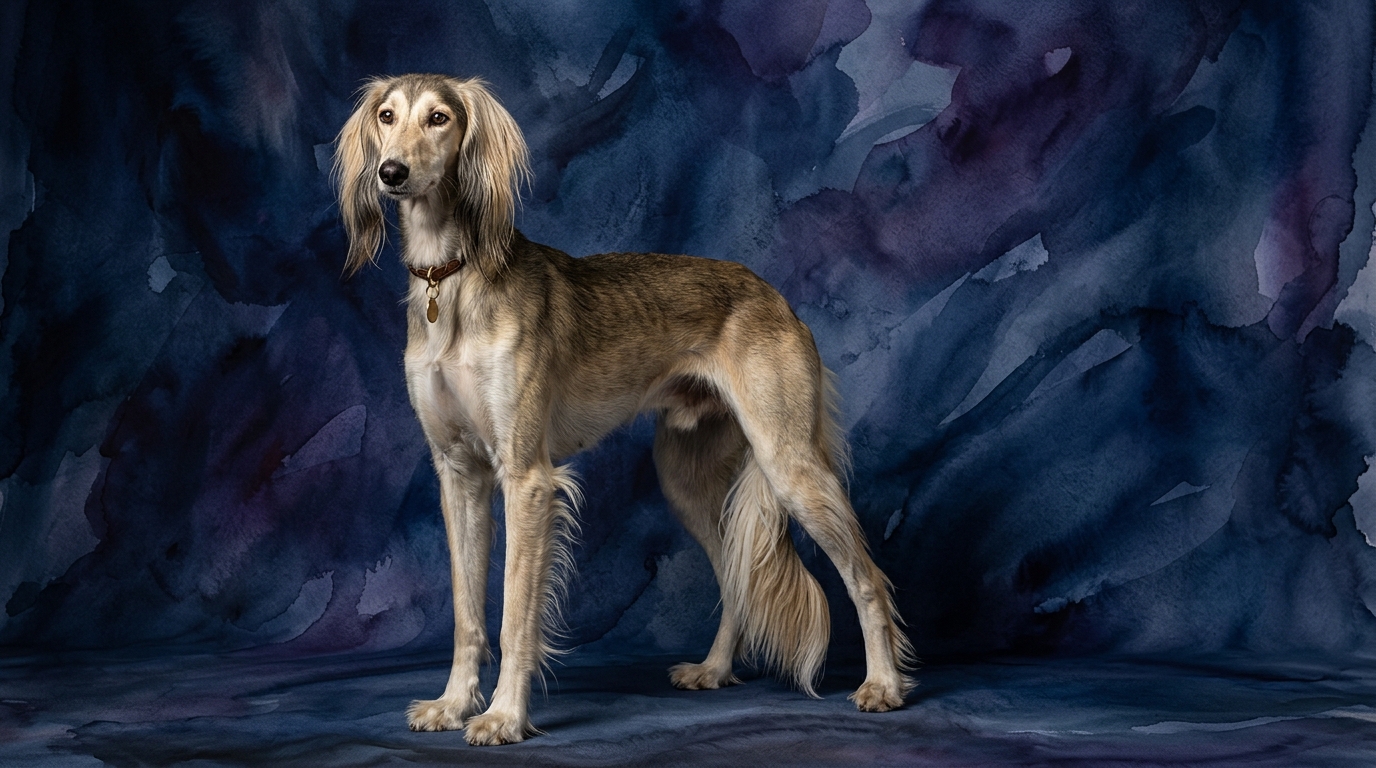
Side-by-Side IQ Profile: Airedale Terrier vs Saluki
The Cosmic Pet Pet IQ Lab employs a five-dimensional framework to assess canine cognition, revealing nuanced differences between breeds. For the Airedale Terrier, a breed frequently noted for its versatility, our data shows a Problem Solving score of 4/5, indicating a resourceful approach to challenges and an ability to independently navigate complex tasks. Their Training Speed is also strong at 4/5, suggesting a quick grasp of new commands and a willingness to engage in structured learning. Social Intelligence registers at 3/5, reflecting their capacity for connection but also their independent streak, while Instinctive Drive is 3/5, encompassing their inherent terrier tenacity for pursuit and exploration. Memory, critical for learning and routine, stands at 4/5, further solidifying their aptitude for retaining complex information and experiences.
In contrast, the ancient Saluki presents a different cognitive profile, reflecting its heritage as a sight hunter. While not listed on Coren's traditional ranking, our Lab's assessment provides insight into their unique mental strengths. Their Problem Solving score is 3/5, indicating an ability to solve practical environmental problems, albeit with less focus on human-directed puzzles. Training Speed is 3/5, demonstrating their capacity to learn but also highlighting their independent nature which can influence compliance. Social Intelligence is 3/5, characterized by deep bonds with family but often reservedness with strangers. Instinctive Drive, particularly for sight-based pursuit, is a strong 3/5, showcasing their specialized predatory focus. Memory also scores 3/5, sufficient for recalling experiences and routines, though perhaps less focused on sequential command retention compared to a working breed.
Where the Airedale Terrier Excels Cognitively
The Airedale Terrier demonstrates clear cognitive advantages in areas requiring active engagement, versatility, and structured learning. Their 4/5 Problem Solving score means they are adept at deciphering novel situations and persistent in overcoming obstacles, whether it's figuring out a complex puzzle toy or navigating an unfamiliar environment. This is complemented by their 4/5 Training Speed, allowing them to absorb new commands and routines with efficiency. An Airedale readily translates human instruction into action, often thriving on the mental stimulation derived from learning.
Their robust Memory (4/5) ensures that these lessons are retained, building a broad repertoire of behaviors and responses. This combination makes them particularly suited for diverse roles, from companion to canine athlete, where adaptability and recall are paramount. The Airedale’s terrier heritage imbues them with a certain robustness in their mental approach, encouraging them to tackle challenges head-on and persist until a solution is found, making them highly capable partners in varied tasks.
Where the Saluki Shines Cognitively
While their scores might suggest a different style of engagement, the Saluki's cognitive strengths lie in their specialized instincts and unique approach to the world. Their 3/5 in Instinctive Drive, particularly in the context of sighthound abilities, represents an unparalleled visual processing capacity. They can spot movement at incredible distances and make split-second decisions for pursuit, a cognitive feat honed over millennia. This translates into a remarkable environmental awareness and self-sufficiency.
Their 3/5 Problem Solving, while not focused on human-centric tasks, excels in real-world scenarios relevant to their survival and comfort, such as finding the most comfortable sunbeam or navigating a complex field. Their Social Intelligence (3/5), though manifesting as reserved, allows for profound, subtle bonds with their chosen family, demonstrating a deep, quiet understanding of their human companions rather than overt displays. They are masters of independent thought, a cognitive trait that allows them to operate effectively without constant human direction, showcasing a self-reliant form of intelligence.
Ease of Training: A Tale of Two Approaches
When considering ease of training, the Airedale Terrier generally presents a more straightforward path for the average owner. Their 4/5 Training Speed indicates they pick up commands quickly, and their natural eagerness to participate in activities with their people makes them responsive to positive reinforcement. They often view training as an engaging partnership, thriving on the mental challenge and the interaction. An Airedale’s terrier tenacity, while sometimes requiring firm guidance, also translates into a persistence in learning new tasks once motivated, making them generally compliant and engaged students.
In contrast, the Saluki, with a 3/5 Training Speed, learns at a steady pace but approaches training with a distinct independence. They understand commands but may weigh compliance against their own perceived priorities, especially if a captivating visual stimulus appears. Their sighthound heritage means their attention can be powerfully drawn by movement, often overriding a cue. Training a Saluki requires immense patience, creativity, and an understanding that their motivation often stems from self-interest or a deep, quiet respect for their handler, rather than an eager-to-please disposition. Consistency and positive, reward-based methods are crucial to navigate their discerning nature and achieve reliable responses.
Matching Breeds to Lifestyles: Active vs. Relaxed Owners
For truly active owners seeking a canine partner for diverse adventures, the Airedale Terrier is an excellent match. Their robust physical and mental stamina means they thrive on consistent engagement, whether it's long hikes, agility courses, or complex obedience work. Owners who enjoy structured activities and can channel the Airedale's problem-solving skills and energy will find a willing and enthusiastic companion. They require regular mental stimulation to prevent boredom and destructive behaviors, making them ideal for those who enjoy a highly involved dog.
The Saluki, while requiring significant physical activity, suits a different type of active owner, or even one who appreciates a more relaxed indoor presence balanced with intense outdoor bursts. They need opportunities for full-speed sprinting in a securely fenced area to satisfy their sighthound instincts; an owner must be committed to providing this specific type of exercise. However, once their physical needs are met, Salukis are often described as elegant "couch potatoes" indoors, content to lounge gracefully. This makes them suitable for owners who might be less inclined towards constant, structured mental exercises but can provide the necessary intense physical outlet and appreciate a calm, independent companion within the home. A relaxed owner who cannot provide the intense sprint sessions would find the Saluki challenging, as their pent-up energy would likely lead to undesirable behaviors.
The Verdict
Select an Airedale Terrier if you seek an engaged, versatile companion who thrives on structured training, problem-solving, and active participation in family life, ready for diverse adventures.
Opt for a Saluki if you admire independence, grace, and a subtle, deep bond, and can provide ample, secure space for their distinctive need for intense sprinting, appreciating their calm indoor demeanor.
🧠 Find Your Pet's IQ Score
Our Pet IQ Lab assessment covers 25+ tests across 5 cognitive dimensions — personalized to your breed.
Take the Full IQ Test →Frequently Asked Questions
Does the Airedale Terrier's instinctive drive make them difficult to manage?
The Airedale's instinctive drive (3/5) translates to a natural tenacity and curiosity. While they require consistent training and socialization to channel these instincts productively, it's a manageable trait that makes them persistent in tasks and engaged with their environment when properly guided.
How does the Saluki's independent nature affect their suitability as a family pet?
The Saluki's independence means they form deep, quiet bonds with their family, often showing affection in subtle ways. They are generally reserved with strangers but devoted to their inner circle, making them loyal companions for those who understand and respect their distinct personality and need for personal space.
Is the Saluki's lower problem-solving score a sign of lower overall intelligence?
Not at all. The Saluki's 3/5 problem-solving score reflects a different cognitive focus, excelling in practical, independent decision-making related to their sighthound purpose and comfort, rather than a strong inclination for human-directed puzzles. Their intelligence is specialized and highly effective within their evolutionary niche, not diminished.