Side-by-Side IQ Profile: Airedale vs. Silky
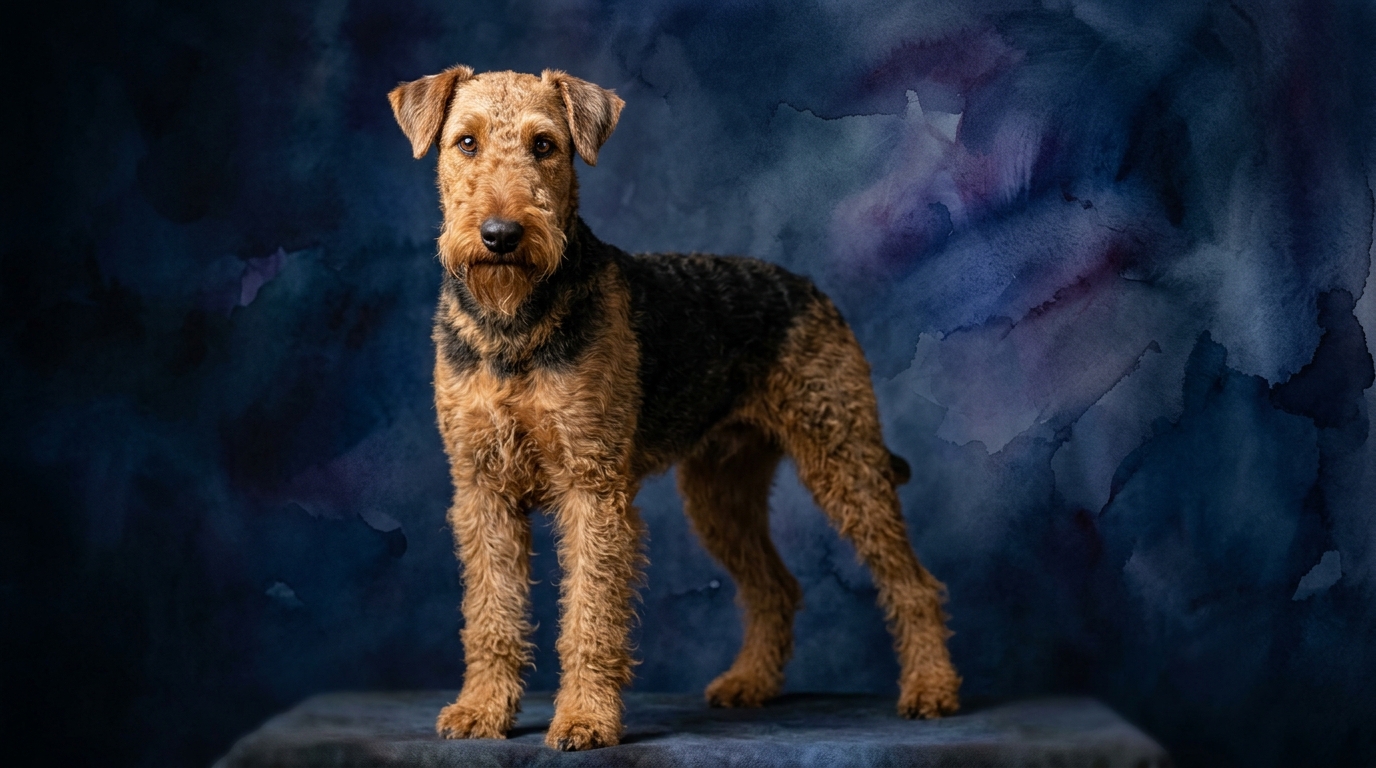
The Cosmic Pet Pet IQ Lab provides a unique lens through which to examine the cognitive strengths of our canine companions, moving beyond generic labels to specific, measurable dimensions. For the Airedale Terrier, often dubbed the "King of Terriers," its profile reveals a robust intellect geared towards complex tasks and rapid learning. Its Problem Solving ability is rated 4/5, suggesting a dog capable of figuring out intricate challenges and adapting strategies effectively. Training Speed also scores 4/5, indicating a quick grasp of new commands and routines, making it responsive to consistent instruction. Social Intelligence is assessed at 3/5, meaning while they are capable of forming strong bonds and understanding human cues, they might also exhibit a degree of independent thought. Their Instinctive Drive, at 3/5, reflects a moderate but present drive for hunting and exploration, characteristic of their working lineage. Finally, their Memory stands at 4/5, underscoring their capacity to retain learned behaviors and experiences over extended periods.
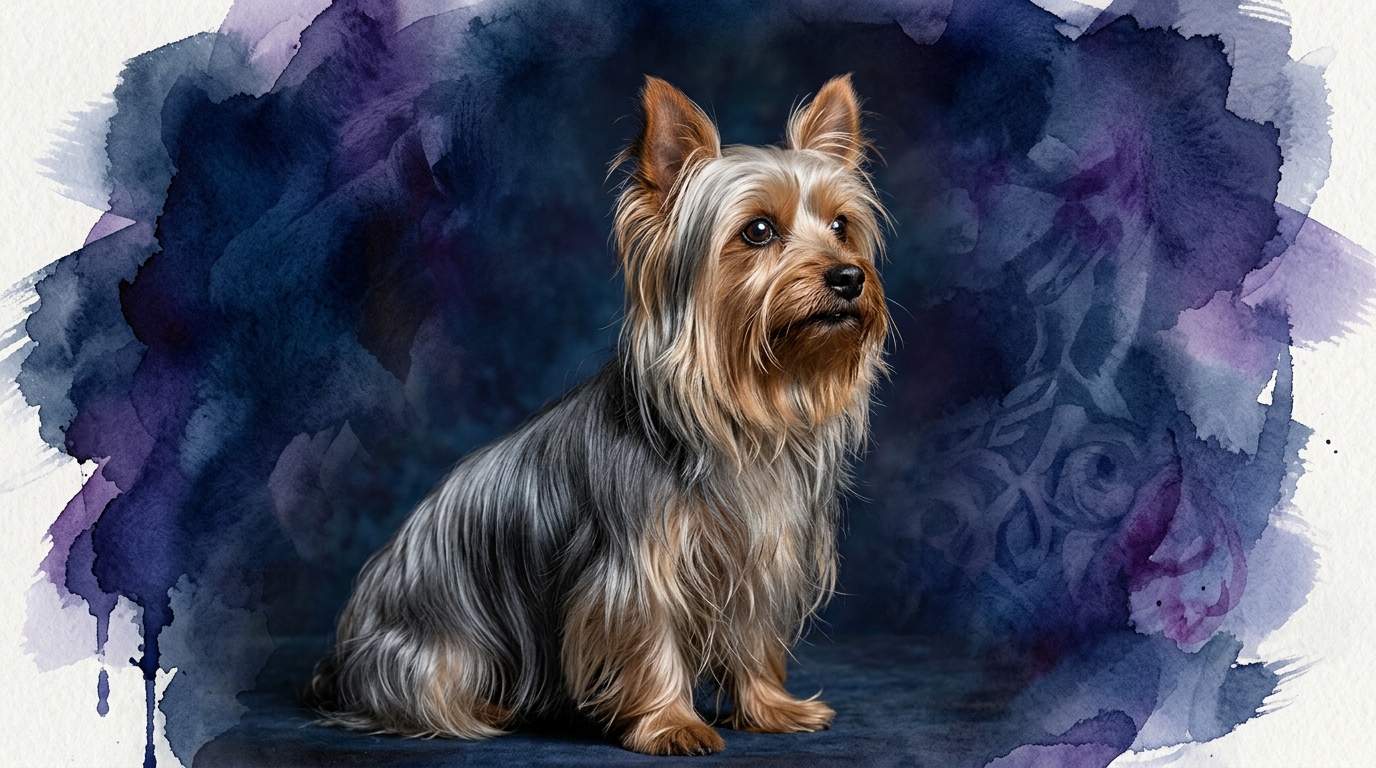
In contrast, the Silky Terrier, a more compact companion from the Toy group, displays a consistently capable, yet less intensely specialized, cognitive profile. Across all five dimensions – Problem Solving, Training Speed, Social Intelligence, Instinctive Drive, and Memory – the Silky Terrier earns a solid 3/5. This consistent scoring indicates a breed that is competent and adaptable, able to learn and interact effectively, but perhaps without the same high-octane drive for complex mental exertion seen in its larger Airedale cousin. Their 3/5 in Problem Solving means they can navigate new situations and puzzles, albeit possibly requiring a bit more guidance than an Airedale. A 3/5 in Training Speed suggests steady learning, not necessarily lightning-fast, but reliable. Social Intelligence at 3/5 points to a companionable nature, capable of nuanced interaction. Their Instinctive Drive, also 3/5, confirms their terrier heritage, manifesting as curiosity and a desire to explore, though typically on a smaller scale. Lastly, a 3/5 in Memory means they retain information adequately, supporting their learning and behavior patterns.
Where the Airedale Terrier Wins Cognitively
The Airedale Terrier demonstrates clear cognitive advantages in areas demanding higher intellectual horsepower, particularly in Problem Solving, Training Speed, and Memory. With a 4/5 in Problem Solving compared to the Silky’s 3/5, the Airedale often exhibits a more sophisticated capacity for independent thought and strategic action. This means an Airedale is more likely to devise solutions to novel challenges, such as figuring out how to open a gate or retrieve a hidden toy through a complex sequence of actions, often without direct human intervention. This aptitude makes them adept at advanced obedience, agility courses, or even roles requiring critical thinking.
Their Training Speed of 4/5 also gives them an edge, allowing them to absorb and execute new commands with remarkable swiftness. Owners often report that Airedales pick up multi-step tasks or complex sequences faster, making the initial stages of training more efficient and opening doors to a wider range of activities. Furthermore, the Airedale’s 4/5 Memory score suggests a superior ability to recall learned behaviors, commands, and even specific experiences over time. This robust memory contributes to their reliability in performance and their capacity to build on past training, making them excellent candidates for long-term skill development and consistency in behavior, even after breaks in practice.
Where the Silky Terrier's Cognitive Profile Excels
While the Airedale boasts higher scores in specific cognitive areas, the Silky Terrier’s consistent 3/5 across all IQ dimensions presents a distinct advantage in its balanced and predictable cognitive profile. This uniformity means that while a Silky might not exhibit the same bursts of problem-solving brilliance or rapid training uptake as an Airedale, it offers a reliably capable and less cognitively demanding companion. For owners seeking a dog whose intellectual needs are consistent and manageable, the Silky’s moderate scores are a clear benefit.
Its 3/5 Instinctive Drive, for instance, means it possesses the engaging curiosity and occasional independent streak of a terrier, but typically without the intense, large-scale hunting or working drives that require significant channeling in an Airedale. This can translate to a more easily contained and managed desire for exploration in a home environment. The Silky's cognitive 'win' lies in its proportional intelligence for its size and role as a companion, requiring a steady, engaging approach rather than a constant stream of high-level intellectual challenges. Its balanced profile means it's less prone to boredom-induced destructive behaviors stemming from unmet extreme cognitive needs, provided it receives regular, moderate mental stimulation fitting its temperament and stature.
Which is Easier to Train, and Why?
Determining which breed is 'easier' to train involves nuance, as their cognitive profiles suggest different approaches. The Airedale Terrier, with a 4/5 Training Speed, generally grasps new commands and concepts more quickly than the Silky Terrier, which scores 3/5. This rapid learning curve means an Airedale can progress through basic and advanced obedience lessons at a faster pace. However, the Airedale's 3/5 Instinctive Drive and strong terrier independence mean that while they learn fast, they also possess a tendency to think for themselves and might test boundaries. Their larger size and powerful physical presence mean that consistency, firm but fair leadership, and early socialization are paramount to channel their sharp intellect and ensure their cooperation. Without proper guidance, their resourcefulness can be directed towards less desirable behaviors.
In contrast, the Silky Terrier's 3/5 Training Speed suggests a more gradual learning process, requiring patience and repetition. They will learn, but perhaps not with the same immediate understanding as an Airedale. However, their smaller stature and generally less intense instinctive drive can make managing their independent terrier traits somewhat easier in a home setting. While still possessing a terrier's stubborn streak, a Silky is less likely to challenge an owner with the same physical force or overwhelming drive as an Airedale. Therefore, while an Airedale might learn *faster*, a Silky might be perceived as *easier to manage* during training for some owners due to its scale and slightly less demanding temperament, provided the owner is committed to consistent, positive reinforcement over a longer period. The key for both is early, consistent, and positive training, but the Airedale demands a more assertive and mentally stimulating approach to harness its considerable cognitive horsepower.
Active Owners vs. Relaxed Owners: Finding the Right Fit
The distinct cognitive profiles of the Airedale and Silky Terrier naturally align with different owner lifestyles. The Airedale Terrier, with its higher scores in Problem Solving (4/5), Training Speed (4/5), and Memory (4/5), is an ideal match for active owners who thrive on providing consistent mental stimulation and physical engagement. These owners are often keen on dog sports like agility, advanced obedience, tracking, or even mock hunting scenarios where the Airedale’s sharp intellect and robust memory can be fully utilized. An Airedale requires an owner who can commit to daily training sessions, puzzle toys, and ample outdoor exploration to prevent boredom and channel its considerable energy and cognitive drive. Their independent, problem-solving nature means they need tasks to perform and challenges to overcome.
Conversely, the Silky Terrier, with its balanced 3/5 across all cognitive dimensions, is well-suited for owners seeking a capable yet less intensely demanding companion. While not a couch potato, a Silky’s cognitive needs are met through regular walks, interactive play, and consistent, moderate training sessions that reinforce good manners and basic commands. They appreciate engagement and mental enrichment but don't typically *require* the same level of complex, high-stakes intellectual challenges as an Airedale. This makes them a better fit for owners who enjoy regular interaction and activity but perhaps have a less rigorous schedule or prefer a dog whose cognitive demands are more consistently manageable, allowing for a more relaxed, yet still engaging, companionship.
The Verdict
Choose an Airedale Terrier if you are an active, experienced owner eager to engage a sharp intellect in demanding training, dog sports, or working roles, and can provide consistent mental and physical challenges for a resourceful, independent companion.
Opt for a Silky Terrier if you seek a consistently capable and engaging companion whose cognitive needs are moderate, fitting a lifestyle that values regular interaction, playful engagement, and a balanced temperament without requiring intense, high-level intellectual output.
🧠 Find Your Pet's IQ Score
Our Pet IQ Lab assessment covers 25+ tests across 5 cognitive dimensions — personalized to your breed.
Take the Full IQ Test →Frequently Asked Questions
Do Airedales need more mental stimulation than Silkys?
Yes, Airedale Terriers generally require more mental stimulation due to their higher Problem Solving (4/5), Training Speed (4/5), and Memory (4/5) scores. Their keen intellect and independent nature mean they thrive on complex tasks, puzzle toys, and consistent training to prevent boredom, whereas Silkys, with consistent 3/5 scores, are content with moderate, regular mental enrichment.
Are Silky Terriers good apartment dogs despite their terrier nature?
Silky Terriers can adapt well to apartment living, provided their owners commit to regular exercise and mental engagement. While they possess a 3/5 Instinctive Drive common to terriers, their smaller size means their need for exploration can often be satisfied with daily walks and indoor play, making their terrier traits more manageable in confined spaces compared to a larger, more driven Airedale.
How does the 'instinctive drive' score impact daily life for each breed?
For both breeds, a 3/5 Instinctive Drive means they possess a natural curiosity and desire to hunt or chase, though it manifests differently. In the larger Airedale, this can translate to a stronger prey drive requiring careful leash management and secure fencing, alongside a propensity for digging. For the smaller Silky, this drive might appear as keen interest in small critters or enthusiastic digging in the garden, generally on a less impactful scale but still requiring appropriate outlets and training.