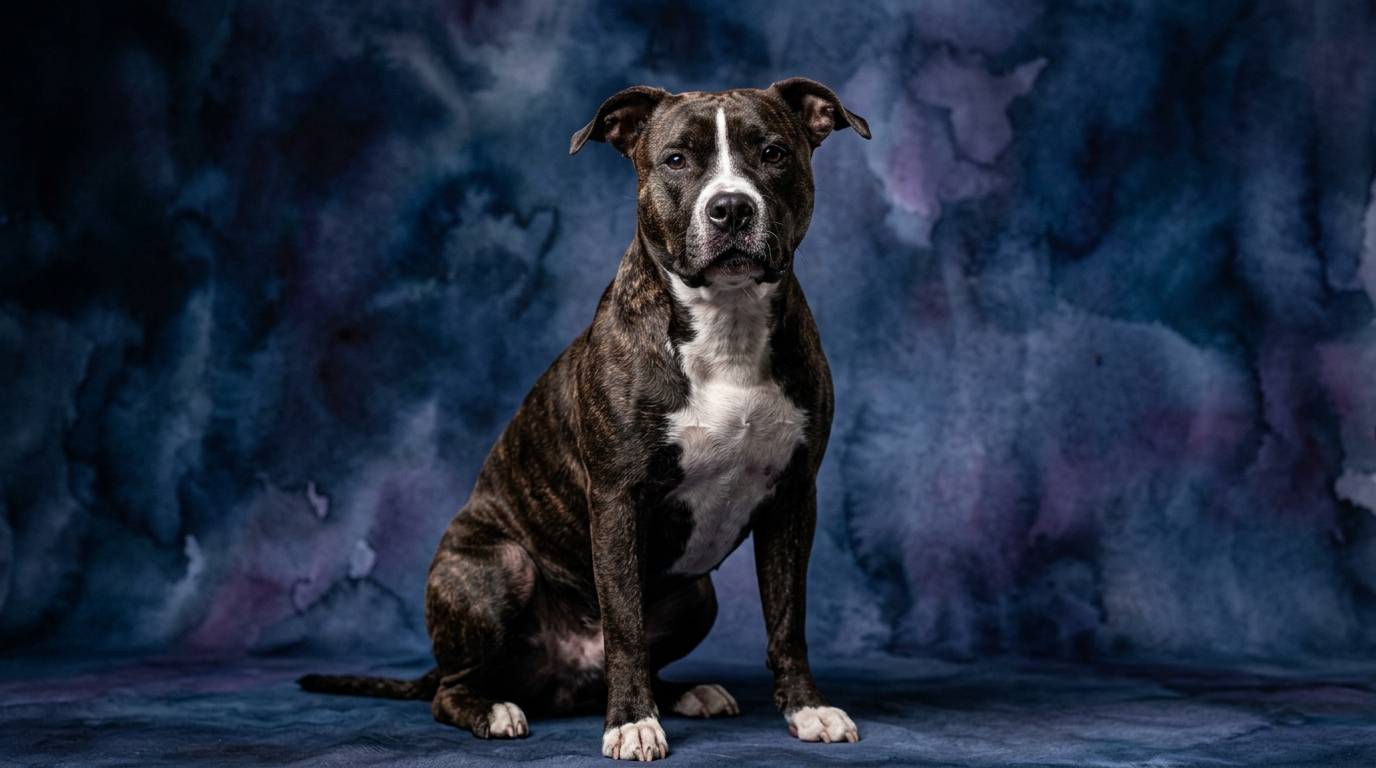
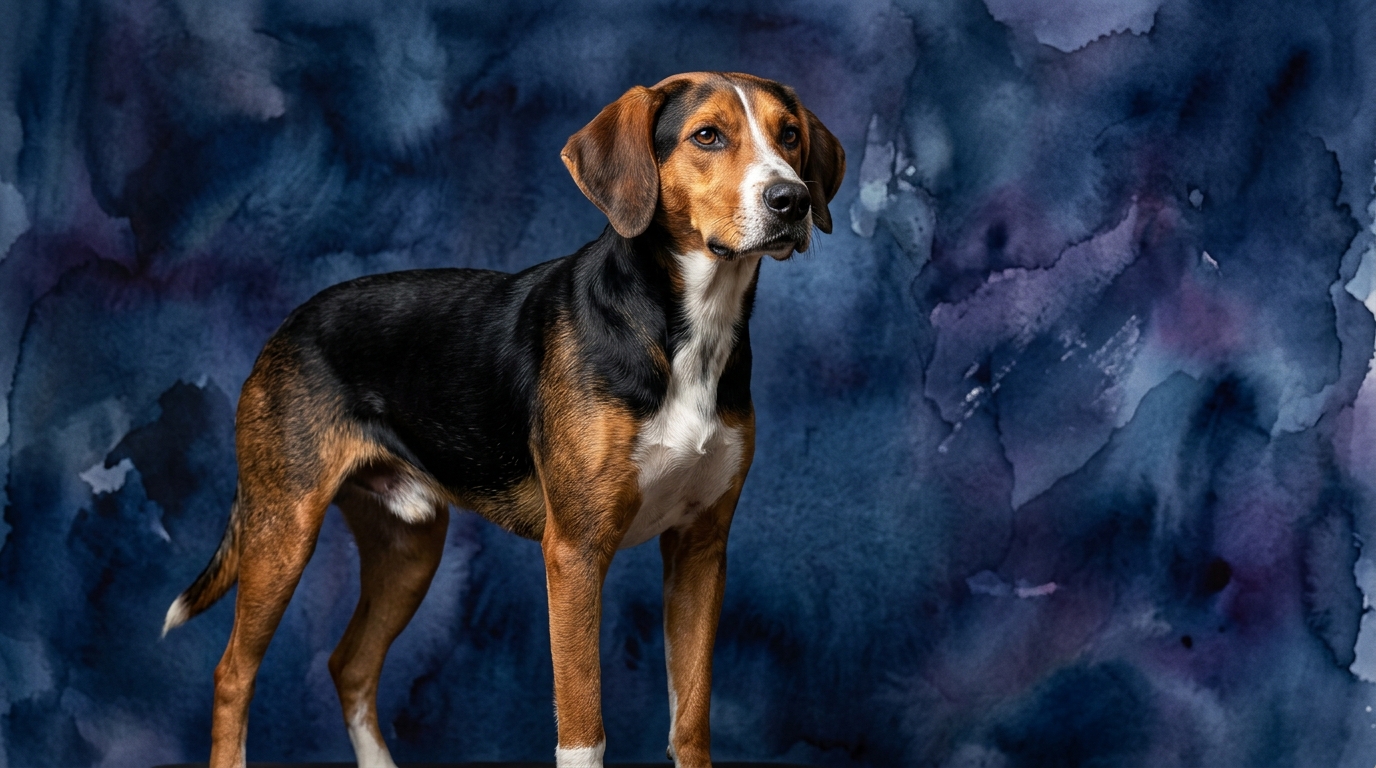
Side-by-Side IQ Profile: Digging into Cognitive Dimensions
The Cosmic Pet Pet IQ Lab employs a multi-faceted approach to assess canine cognition, moving beyond singular metrics to provide a richer understanding of each breed's mental strengths. For the American Staffordshire Terrier, its Coren rank of #48 places it solidly in the middle tier of working and obedience intelligence, a foundational indicator of its general trainability and problem-solving capacity. The American Foxhound, however, does not possess a Coren rank, suggesting its cognitive strengths may lie outside traditional obedience contexts or simply haven't been as widely studied in that framework.
Delving into the specific IQ dimensions, both breeds share a Problem Solving score of 3/5. This indicates a moderate capacity for navigating novel challenges and figuring out solutions, whether it's opening a gate or understanding a new command sequence. Neither breed is prone to immediate, intuitive leaps in complex problem-solving, but both can learn through repetition and experience.
In Training Speed, both the American Staffordshire Terrier and the American Foxhound also score 3/5. This suggests they require a moderate amount of repetition and consistent effort to grasp new commands and behaviors. Owners should anticipate a steady learning curve rather than instant mastery, necessitating patience and clear communication.
Social Intelligence is another area where both breeds align with a 3/5 score. For the American Staffordshire Terrier, this often manifests as a strong bond with its human family, understanding social cues, and responding to emotional states. The American Foxhound's social intelligence, while numerically similar, is historically geared towards pack dynamics, understanding hierarchy, and cooperative effort within a group setting, even if it might appear less focused on individual human interaction than the AmStaff.
Their Instinctive Drive also stands at 3/5 for both, yet the manifestation of this drive differs significantly. For the American Staffordshire Terrier, this score often reflects its terrier tenacity, a persistent prey drive, and a protective instinct towards its family. The American Foxhound's 3/5 instinctive drive is almost entirely dedicated to scent-tracking, endurance, and the pursuit of quarry over long distances, driven by an innate desire to follow a trail.
A key differentiator emerges in Memory. The American Staffordshire Terrier boasts a 4/5 score, indicating a superior ability to recall learned commands, past experiences, and routines over time. This cognitive strength contributes significantly to its trainability and ability to retain complex behaviors. The American Foxhound, with a 3/5 memory score, still possesses functional recall, but may require more frequent refreshers or struggle with remembering intricate sequences compared to the AmStaff.
Where the American Staffordshire Terrier Wins Cognitively
The American Staffordshire Terrier's cognitive profile presents a clear advantage in areas benefiting from strong recall and a general aptitude for human-directed tasks. Its memory score of 4/5 is a significant differentiator; an AmStaff is more likely to remember a command learned weeks ago or the precise location of a hidden toy. This enhanced memory facilitates more advanced training, allowing for the building of complex behavioral chains and a greater retention of house rules and social boundaries over time.
Furthermore, the AmStaff's Coren rank of #48, while not a specific IQ dimension, signifies a breed generally more responsive to obedience training and human instruction. This overall cognitive disposition, combined with its social intelligence score of 3/5, means the AmStaff often excels in family integration, understanding household routines, and responding to nuanced human communication. While its problem-solving and training speed are moderate, its superior memory allows it to build upon these learning experiences more effectively, leading to a more consistently trained and adaptable companion.
Where the American Foxhound's Cognition Shines
While the American Foxhound doesn't outscore the AmStaff in any individual dimension, its cognitive strengths are uniquely tailored to its historical purpose. Its 3/5 in Problem Solving and 3/5 in Memory, when combined with its 3/5 Instinctive Drive, are masterfully applied to scent work and endurance. A Foxhound's mind is exceptionally adept at processing olfactory information, making complex discriminations between scents, and maintaining focus on a trail for hours on end, a sophisticated form of problem-solving specific to its hunting heritage.
The Foxhound's social intelligence, also 3/5, is particularly refined for pack cooperation. This means it understands social hierarchies and communication within a group of dogs, a vital cognitive skill for hounds working together. While this might translate differently to human interaction compared to an AmStaff, it represents a specialized form of social processing. Its sustained focus and determination in following a scent, even when distractions are present, highlights a unique cognitive resilience that, while not reflected in a higher raw score, is undeniably a powerful mental attribute for its intended role.
Which is Easier to Train and Why?
Considering the specific IQ dimensions, the American Staffordshire Terrier generally presents as the easier breed to train for a typical companion role. Its higher memory score (4/5 versus the Foxhound's 3/5) is a significant asset, meaning an AmStaff will retain commands and learned behaviors with fewer repetitions and for longer periods. This translates to quicker progress in obedience classes and a more reliable recall in various environments.
While both breeds share a 3/5 Training Speed, the AmStaff's Coren rank of #48 further indicates a breed that typically responds well to structured training. Its 3/5 instinctive drive, while present, is often more manageable and can be channeled into constructive activities like protection sports or agility. The American Foxhound's equally strong 3/5 instinctive drive, however, is intensely focused on scent-tracking, which can make consistent recall challenging in environments rich with interesting smells. Its independent nature, a hallmark of many hound breeds, means it often prioritizes following a scent over responding to a command, requiring a more dedicated and creative training approach to overcome these innate tendencies.
Suiting Active vs. Relaxed Owners
The American Staffordshire Terrier, with its moderate instinctive drive (3/5) and robust physique, thrives with active owners who enjoy engaging in structured exercise and mental challenges. They benefit from consistent walks, play sessions, and opportunities for problem-solving activities like puzzle toys or obedience training. While they enjoy downtime with their families, their moderate energy levels and need for mental stimulation mean they are not suited for entirely relaxed, sedentary lifestyles. Owners who are prepared to be consistent leaders and provide ample engagement will find a rewarding companion.
The American Foxhound, by contrast, is unequivocally suited for exceptionally active owners, particularly those who appreciate its unique drive for endurance and scent work. Its 3/5 instinctive drive, focused on long-distance tracking, means it requires extensive daily exercise, ideally involving opportunities to run and explore scents in a safe, enclosed area. A relaxed owner who cannot meet these profound exercise needs will likely find themselves with a restless, vocal, and potentially destructive companion. Owners who enjoy hiking, running, or even participate in scent work or field trials will find the Foxhound to be an unparalleled partner, as its cognitive and physical makeup are geared towards sustained outdoor activity.
The Verdict
Choose the American Staffordshire Terrier if you seek a moderately active, highly trainable companion with excellent memory, adaptable to family life with consistent guidance.
Opt for the American Foxhound if you are an extremely active individual or family, passionate about endurance activities and providing extensive opportunities for scent-driven exploration.
🧠 Find Your Pet's IQ Score
Our Pet IQ Lab assessment covers 25+ tests across 5 cognitive dimensions — personalized to your breed.
Take the Full IQ Test →Frequently Asked Questions
How does the Coren rank impact the AmStaff's intelligence compared to the Foxhound?
The AmStaff's Coren rank of #48 indicates a breed generally more responsive to obedience training and human instruction, suggesting a higher aptitude for learning and retaining commands compared to the unranked American Foxhound in traditional obedience contexts.
Can an American Foxhound be trained for advanced obedience despite its lower memory score?
Yes, an American Foxhound can learn advanced obedience, but its 3/5 memory score means it may require more frequent practice and refresher sessions than a breed with higher recall. Patience and consistent, positive reinforcement are crucial.
Are American Staffordshire Terriers good at scent work, given their 3/5 instinctive drive?
While AmStaffs have a 3/5 instinctive drive, it typically manifests as a prey drive or protective instinct rather than a specialized scenting ability. They can participate in scent work, but their cognitive profile isn't as naturally geared towards sustained, long-distance tracking as the American Foxhound's.